

Is Biopharmaceuticals Still an Economic Weakness in 2019? Insights and Product Overview
In ancient Greece, there were only three true disciplines in the world: theology, philosophy, and medicine. Theology studies the relationship between humans and God; philosophy encompasses a wide range of fields, including engineering, technology, humanities, and law; and medicine examines the relationship between humans and themselves. After more than 2,000 years of exploration, humanity has yet to find a perfect interpretation of this self-relationship. However, some argue that a revolution in life sciences and technology will emerge within the next decade.
At the inaugural China (Shijiazhuang) International Biopharmaceutical Science and Technology Development Forum, held on December 14–15, 2018, more than 1,000 attendees—including Nobel laureates, domestic and international experts, academicians, and representatives from leading enterprises—convened in Shijiazhuang to engage in discussions on trends and opportunities in the biopharmaceutical industry, as well as strategies for better integration into global competition. As an official supporting media outlet, VCBeat (WeChat ID: vcbeat) participated in and covered the forum throughout its duration.
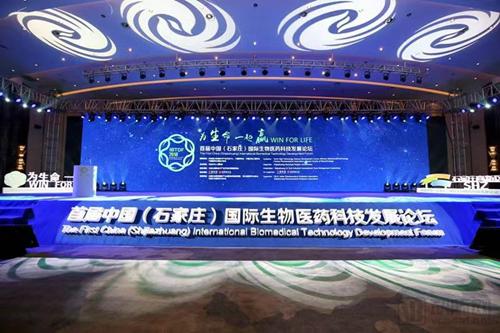
On-Site at the 1st China (Shijiazhuang) International Biopharmaceutical Science and Technology Development Forum
The forum was held at the Yiling Health City in Shijiazhuang, hosted by the Shijiazhuang Municipal People’s Government and organized by the Administrative Committee of Shijiazhuang High-Tech Industrial Development Zone. The event was moderated by renowned Phoenix TV commentator Qiu Zhenhai. Zhao Wenfeng, Deputy Mayor of Shijiazhuang and Secretary of the Party Working Committee of the High-Tech Zone, and Sun Xianze, Chairman of the Chinese Pharmaceutical Association, delivered opening remarks.
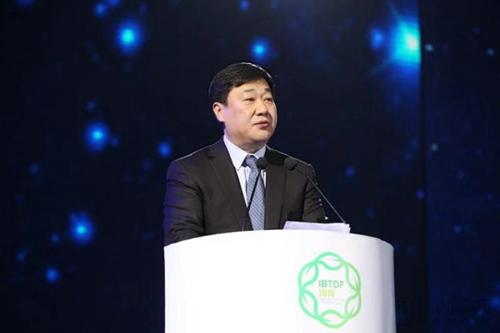
Address by Zhao Wenfeng, Deputy Mayor of Shijiazhuang and Secretary of the Party Working Committee of Shijiazhuang High-Tech Industrial Development Zone
As one of the first national bio-industry bases in China, Shijiazhuang High-Tech Industrial Development Zone has witnessed rapid growth in its biopharmaceutical sector in recent years, emerging as one of the largest modern integrated biopharmaceutical industry bases nationwide. Data show that in 2017, 44 newly introduced biopharmaceutical and health industry projects, with a total investment of RMB 31.2 billion, were implemented and under construction; 443 new biopharmaceutical enterprises were registered; and the biopharmaceutical industry achieved operating revenues of RMB 56.565 billion, accounting for 58.6% of the province’s total.
In 2018, Shijiazhuang established a “4+4” modern industrial development framework, explicitly identifying “accelerating the optimization and strengthening of the biopharmaceutical industry” as a key priority. The inaugural China (Shijiazhuang) International Biopharmaceutical Science and Technology Development Forum demonstrated Shijiazhuang High-Tech Industrial Development Zone’s commitment to embracing the global market and building a world-class biopharmaceutical industry base.
The forum, themed “For Life, Win Together,” featured a keynote summit and five parallel forums on different topics.
At the High-Level Forum, Nobel laureates—including George Smoot, Professor at the University of California, Berkeley and known as the “Father of Cosmic Embryology”; Hartmut Michel, Foreign Member of the Chinese Academy of Sciences; Edvard Moser, Member of the Norwegian Academy of Science and Letters; and Shuji Nakamura, Professor at the University of California, Berkeley—delivered keynote addresses on cutting-edge international topics in biomedicine, such as genomic big data, genomic management, membrane proteins, and the research and application of AI technologies in neurological healthcare.
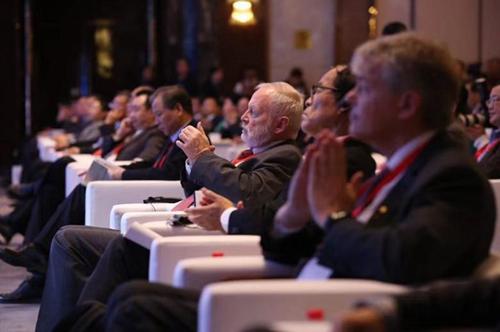
Four Nobel Laureates Delivered Keynote Speeches Onsite
Held concurrently with the conference was the awards ceremony for the 1st Shijiazhuang High-Tech Industrial Development Zone Biopharmaceutical Innovation and Entrepreneurship Competition. The competition’s preliminary and final rounds took place in November, where 40 projects and teams shared a total prize pool of RMB 10 million after fierce competition.
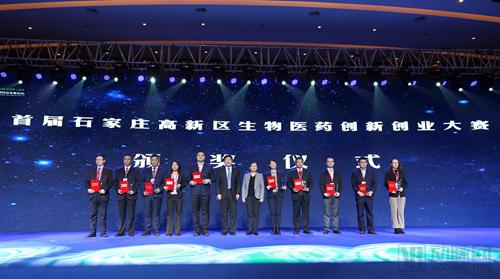
Award Ceremony for the 1st Shijiazhuang High-Tech Zone Biopharmaceutical Innovation and Entrepreneurship Competition
Furthermore, the forum was extensively promoted through global media channels. By introducing Ifeng.com’s branded column “Zheng Neng Liang” and organizing the “Phoenix Night Talk” series, participants engaged in in-depth discussions on the theme: “New Era, New Actions—Setting Sail During the Golden Age of Biopharmaceutical Development.”
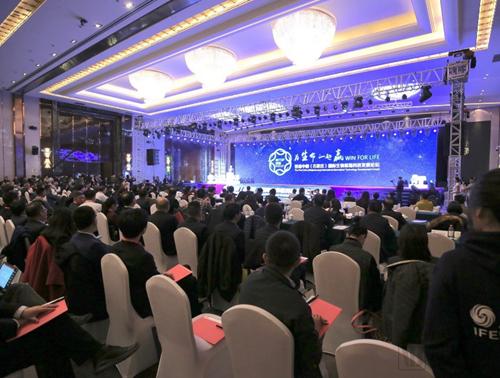
On-site at the 1st China (Shijiazhuang) International Biopharmaceutical Technology Development Forum
The First China (Shijiazhuang) International Biopharmaceutical Science and Technology Development Forum has opened a door for the biopharmaceutical industry in Shijiazhuang High-Tech Industrial Development Zone to engage in global dialogue, sparking greater intellectual exchange and yielding more collaborative outcomes. Shijiazhuang High-Tech Industrial Development Zone welcomes enterprises from around the world to invest, establish operations, and settle here, contributing to the enhancement and strengthening of the biopharmaceutical sector.
Mr. Gao Qiang, former Minister of Health of China, and Mr. Fan Daiming, Academician of the Chinese Academy of Engineering and former Vice President, delivered insightful speeches titled “National Investment in and Expectations for the Biopharmaceutical Industry” and “Reverse Research in Medicine,” respectively, opening up new avenues for innovative exploration by biopharmaceutical entrepreneurs.
Biopharmaceuticals Remain a Weak Link, Requiring Multi-Pronged Efforts from the State and Society
Mr. Gao Qiang pointed out that those engaged in technological innovation in biomedicine dare to think what has never been thought before, achieve what has never been achieved before, tread paths never taken before, and seek knowledge never pursued before. They are not driven by immediate gains or quick profits, do not rest content with superficial understanding, do not engage in sensationalism for public attention, and do not change their course at the sight of something new. Through perseverance in the face of setbacks, unwavering resolve in adversity, rigorous refinement, and enduring countless hardships, they ultimately achieve meaningful success.
Mr. Gao Qiang believes that scientific and technological innovation in China’s biopharmaceutical sector remains a weak link in the development of the national economy. First, per capita pharmaceutical consumption is low. Second, R&D capabilities in biopharmaceuticals are highly fragmented, with small, medium, and micro-sized manufacturers dominating the landscape. Third, generic products predominate, while innovative products account for only a minimal share. Fourth, there is an imbalance in import and export, with exports consisting primarily of active pharmaceutical ingredients (APIs). “This situation warrants serious reflection. We must explore ways to enhance the quality and sophistication of the biopharmaceutical industry.”
Meanwhile, China’s biomedical science and technology innovation is facing unprecedented opportunities for development. On one hand, the nation is vigorously advancing the Healthy China Strategy; on the other, population aging is driving substantial demand for biomedical products and services.
The World Health Organization (WHO) uses three indicators to assess a country’s health status: life expectancy per capita, infant mortality rate, and maternal mortality rate. These metrics focus solely on survival, without considering quality of life. In contrast, China’s concept of “comprehensive health” emphasizes healthy birth, growth, living, and longevity. Mr. Gao Qiang believes that this approach sets a bar far higher than the WHO’s three criteria, creating unprecedented opportunities and market space for the innovative development of China’s biomedical technology industry.
Mr. Gao Qiang emphasized that the ultimate goal of technological innovation in biomedicine is to improve human health. “If the outcome of innovation aligns with the objective of enhancing people’s health, then our direction and path are correct; conversely, if it fails to improve people’s health and merely increases the financial burden on the public, then we are on the wrong path.”
Entrepreneurs in the field of biopharmaceutical technology should scientifically select their innovation projects based on their actual circumstances and societal needs. So-called high-end technological innovation refers to overcoming global challenges that remain unresolved, particularly major diseases that severely impact human health and life safety, such as cancer. For such high-end technological innovation, it is essential to have unified organization by the government, led by national strength.
For mid- to low-end innovations, such as improvements in drug efficacy and indications, as well as process optimization, it is necessary to integrate dispersed social resources. Building upon the existing foundation, these efforts should be grounded in reality, aligned with national conditions, and based on current capabilities and levels of expertise, so as to achieve scientific and effective outcomes.
Academician Fan Daiming believes that the development of modern medicine has made immense and indispensable contributions to humanity, but the resulting drawbacks cannot be overlooked. He summarizes these issues using two “O”s and one “F”: the first “O” refers to excessive specialization, the second “O” to oversubspecialization, and “F” to the fragmentation of medical knowledge.
“OOF” presents three major issues: first, the large volume of medical papers coupled with a low translation rate, with only 3% having reference value; second, clinicians lack holistic understanding and treatment capabilities; third, there is an increase in iatrogenic mortality among patients.
In 2013, U.S. FDA statistical data showed that antidepressants were the most effective drugs worldwide, with 60% of patients benefiting from treatment; antineoplastic agents were the least effective, with only 25% of patients deriving benefit from medication.
Academician Fan Daiming cautions biopharmaceutical entrepreneurs that if they fail to adjust their direction in a timely manner, they may end up back at the starting line with nothing to show for their efforts.
Capital Will Concentrate in Leading Projects
The high-level forum concluded with the release of the highly anticipated “2018 China Biopharmaceutical Industry Ecosystem Report” and five specialized rankings, including the Top 10 Most Innovative Listed Biopharmaceutical Companies in China (2018), the Unicorn Enterprises List, and the Innovative Medical Device Enterprises List. Meanwhile, 27 biopharmaceutical projects were signed at the conference and officially launched in the Shijiazhuang High-Tech Industrial Development Zone.
Mr. Yang Hongfei, founder of Firestone Creation, released the ranking and used data to analyze the current status and prospects of China's biopharmaceutical industry.
Mr. Yang Hongfei first shared an observation on the current landscape: in countries with mature biopharmaceutical industries, such as the United States and Japan, generic drugs still account for a significant proportion of the market, yet their supply is concentrated among a small number of manufacturers. In the future, China’s generic drug market may undergo a consolidation, with the number of manufacturers shrinking from over 4,000 to just over one hundred.
Subsequently, Mr. Yang Hongfei presented the development achievements of China's biopharmaceutical industry in recent years through data.
First, there was a rapid expansion in the total number of institutions. Calculated by the total number of institutions across various sectors including hospitals, distribution, R&D, and manufacturing, the figure stood at 599,000 in 2014 and grew to 1.905 million by 2018, representing a threefold increase over five years. Among these, the fastest growth was seen in institutions within the pharmaceutical distribution sector, primarily driven by internet e-commerce platforms.
Secondly, regional clustering has begun to take shape. Chinese biopharmaceutical companies are increasingly concentrating in the Bohai Rim, the Yangtze River Delta, the Pearl River Delta, and Central China. In the Beijing-Tianjin-Hebei region as a whole, more than 28,000 new enterprises in the life and health sector were established in 2018; among them, Shijiazhuang accounted for 3,915 new enterprises, representing 13.85% of the total for the entire Beijing-Tianjin-Hebei region.
Third, niche sectors are undergoing new changes. Domestic monoclonal antibody drugs are transitioning from biosimilars to improved and innovative agents; however, a large number of companies are concentrating on a limited number of popular targets, and research into truly innovative targets remains insufficiently rapid. “Fortunately, this trend is beginning to diverge.” In addition, gene sequencing products developed and manufactured by Chinese companies are breaking the upstream monopoly. Meanwhile, the increasing specialization within the biopharmaceutical industry has enabled contract research organizations (CROs) to play a pivotal role in supporting new drug development. The new model for drug creation, characterized by innovative small teams coupled with large-scale resource service providers, is becoming the future trend.
Another emerging trend in a specialized sector is the widespread implementation of artificial intelligence technologies in areas such as assisted diagnosis, target discovery, small-molecule compound screening, and elucidation of disease mechanisms.
Fourth, investment and financing amounts increased significantly. Mr. Yang Hongfei demonstrated through data that the driving factor behind the substantial growth in investment and financing in the biopharmaceutical sector in 2018 was the increased proportion of mid-to-late stage projects, “indicating that capital began to reap returns in the biopharmaceutical field.” Meanwhile, leading companies emerged across various sub-sectors, with the total financing amount of the top 15 deals accounting for nearly 25% of the full year’s 600 investment and financing transactions. Furthermore, due to tighter IPO review standards, the number of initial public offerings this year decreased by half year-on-year.
From an investment perspective, capital focus is shifting from healthcare service projects to new drug development and precision diagnostics initiatives.
Regarding the new trends in the biopharmaceutical industry in 2019, Yang Hongfei put forward four viewpoints: First, the biopharmaceutical industry will further cluster and develop; second, investment will further concentrate on leading projects, and mergers and acquisitions will accelerate; third, generic drugs will undergo further consolidation, while innovative drugs will experience rapid growth; fourth, artificial intelligence and big data will support research, development, and innovation in the biopharmaceutical field at the application level.