

Jianqiaoyuan Biotech Files IPO Prospectus: Pioneering Broad-Spectrum Immunoassay for HPV Detection Based on Novel Conserved Epitope
Among the “Top Killers of Women’s Health,” cervical cancer is often dubbed the “Ultimate Killer.” Setting aside these alarming titles, it is the only cancer with a clearly identified cause (human papillomavirus, HPV) that is both screenable and preventable. This has given rise to a substantial market for HPV testing.
Over the nearly 40 years from the 1980s to the present, HPV testing has progressed through stages of technological emergence, market education, and competitive market consolidation. However, due to the complexity and variability of the HPV virus, coupled with ever-growing market demand, current HPV testing technologies still face a dilemma in balancing specificity, sensitivity, and broad genotype coverage.
In a multi-billion-yuan market with a penetration rate of less than 50%, Jianqiaoyuan is seeking to become an alternative pioneer. It is developing innovative immune-based HPV detection methods based on the HPV targets it has identified.
The Elusive HPV
Jianqiaoyuan is a preclinical-stage biotechnology startup headquartered in Yichang, Hubei Province. Its core business focuses on the research and development of technologies for the screening, prevention, and treatment of tumors caused by human papillomavirus (HPV). The company’s primary product under development is an immunohistochemistry (IHC) assay kit for HPV infection screening. This marks the first product in a planned series, developed based on key HPV targets identified by the company.
More than 200 subtypes of human papillomavirus (HPV) have been identified to date, among which approximately 40 are high-risk oncogenic types. However, even the most widely used and highest-coverage nonavalent vaccine covers only seven of these types (two of which are low-risk).
“The greatest challenge in HPV testing and prevention lies in the large number of genotypes; even after screening for certain genotypes, it remains uncertain whether the remaining ones are carcinogenic,” Xiao Changyi, founder of Jianqiaoyuan, told VCBeat.
Currently, the mainstream HPV detection methods on the market are based on molecular biology-based DNA testing. Over nearly 40 years of technological development, the primary advancement in molecular biological detection has been the expansion of HPV genotype coverage; however, comprehensive coverage of all HPV genotypes has yet to be achieved. Furthermore, since the 1980s, the number of identified HPV genotypes has shown a gradual increasing trend, driven by heightened viral mutation rates.
Molecular Biological Detection Methods vs. Immunological Detection Methods
Xiao Changyi stated that molecular biological detection methods boast extremely high accuracy in certain testing areas, thanks to their “specialized capability” within a single domain. However, when confronted with HPV viruses comprising over 200 genotypes, this method inevitably becomes “overwhelmed.”
Based on the critical HPV target it identified—a conserved amino acid sequence located at the C-terminus of the major capsid protein (L1) polypeptide chain—Jianqiaoyuan has pioneered an immune-based HPV detection method. This sequence, approximately 30 amino acid residues in length, exhibits a high degree of conservation. Compared with other conserved regions, this sequence extends outward from the main protein body and forms the “binding arms” that link L1 protein pentameric capsomeres (capsids), thereby being exposed on the viral surface and recognizable by antibodies.
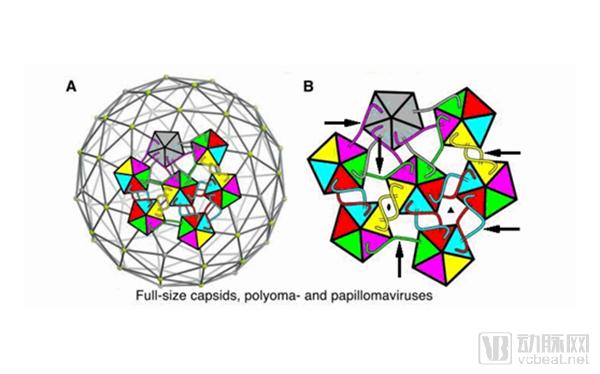
Image provided by Jianqiaoyuan
With clearly defined targets and increasingly mature technologies, antibody preparation has become relatively much easier.
Jianqiaoyuan used this target as an immunogen to induce antibody formation, producing broad-spectrum antibodies capable of reacting with multi-genotype HPV L1 proteins, and plans to use them in the form of monoclonal antibody panels for clinical testing. The company employs combinations of multiple monoclonal antibodies to achieve a many-to-one mobile recognition strategy that addresses viral variations, effectively improving both genotype coverage and accuracy of the antibodies.
In preclinical testing, Jianqiaoyuan’s immune-based HPV assay demonstrated strong identification rates and accuracy, achieving an overall accuracy of approximately 86% for HPV detection, which is comparable to the detection rates of commonly available commercial kits on the market. Xiao Changyi stated that in current trials, they have not yet identified any known HPV types that cannot be detected by this assay—a feat difficult to achieve with molecular biological detection methods currently available on the market. However, he also emphasized that more specific results await validation through further clinical trials.
Notably, compared with the currently prevalent molecular biological detection methods, this immune-based HPV assay reduces costs by tens of times. High pricing remains one of the major obstacles to the widespread adoption of HPV testing.
Jianqiaoyuan is the first biotechnology company to adopt an immunological HPV detection method. Xiao Changyi stated that their first immunohistochemistry (IHC) test kit for HPV infection screening has completed the preclinical R&D phase, and in November, the company signed a cooperation agreement for regulatory approval with Wuhan Baichuanghui International Biotechnology. It is reported that the company is currently seeking its first round of financing to support medical device registration procedures and clinical trials.
“Given the substantial market demand, there is no shortage of trial participants; therefore, if all goes well, the clinical phase could be completed in as little as two years, allowing for market entry,” said Xiao Changyi.