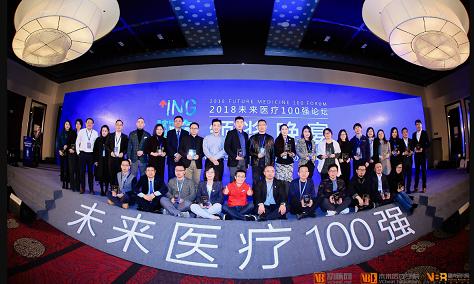
Riding the Tide Toward a Broader World: 2018 Future Healthcare 100 Forum Kicks Off in Beijing
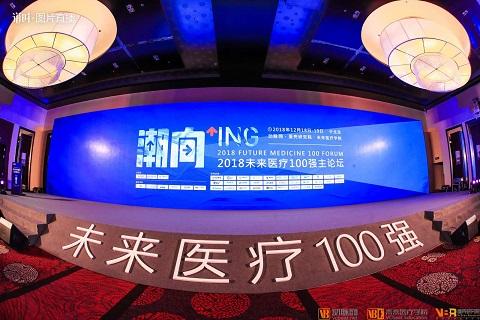
On December 18, the “2018 Top 100 Future Healthcare Companies,” hosted by VCBeat, Eggshell Research Institute, and Future Healthcare Academy, and co-hosted by Legend Capital, BV Baidu Venture Capital, KPMG China, and Health Intelligence Valley”The forum kicked off in grand style at the Beijing R&F Renaissance Hotel. This annual brand forum, hosted by VCBeat, saw extensive participation from the innovative healthcare industry, with over 2,500 attendees.
The theme of this forum is “Trend ING,” aiming to bring together the most leading healthcare innovation enterprises, listed companies, financial institutions, and medical organizations from both domestic and international arenas. It seeks to explore the future direction of the great tide in healthcare from perspectives such as industry transformation trends, technological evolution, edge innovation, traditional sector transformation, and capital flows.
The Future Healthcare 100 Forum features 12 themed sessions, namely: the Main Forum on Future Healthcare, Internet+ Smart Hospital Forum, Innovative Health Insurance Forum, BIO/NGS Frontier Forum, Innovative Health Management Models Forum, Intelligent Imaging Innovation Practice Forum, Super Unicorn Forum, Specialized Chain Healthcare Innovation and Development Forum, Oncology Innovative Drug Industry Development Forum, Medical Big Data Technology and Industrial Application Forum, and Third-Party Medical Services Forum, covering the ten most watched areas in 2018.
Two Landmark Reports Released
VCBeat has consistently monitored the development of internet hospitals. In November 2016, it released the *2016 White Paper on China’s Internet Hospitals*, which provided a comprehensive assessment of the service maturity of 25 internet hospitals then in operation by analyzing five dimensions: medical services, medical qualifications, breadth of connectivity, depth of connectivity, and dimensional connectivity. In March 2017, VCBeat published the report *Analysis of Industrial Models of Internet Hospitals*, offering an in-depth analysis of the industrial models of 48 internet hospitals operating online at that time.
Now, standing at the new stage of internet hospital development, VCBeat has released the "2018 Internet Hospital Report". Based on in-depth research of approximately 119 internet hospitals across China, this report provides a comprehensive analysis of their implementation status, construction standards, operational guidelines, and business models, aiming to offer reference and guidance for industry practitioners.
At this forum, in addition to the “2018 Internet Hospital Report,” VCBeat also released the “2018 Future Healthcare Industry Report.” These two landmark reports are expected to have a profound impact on the development of the industry.
Highlights of Key Insights from Guest Speakers
At the themed forum “The Direction of the Great Tide: A Broader World” held on the morning of the 18th, the following guests were invited to attend: Kang Yong, Chief Economist at KPMG China; Chen Chao, Deputy Director of the CIC Institute; Zhang Zhiying, a medical science communicator and cardiologist; Liu Wei, CEO of BV Baidu Ventures; and Liu Qian, a pharmaceutical writer and Vice President of AstraZeneca China. Below are selected excerpts from their speeches:
"Macro Forecast of China's Industrial Innovation in the Post-Globalization Era"
— Kang Yong, Chief Economist at KPMG China
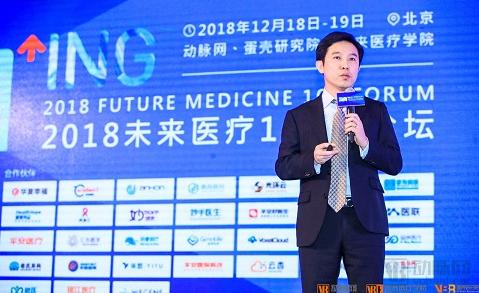
Supply-side structural reform has played a significant role in China’s economy over the past few decades. We believe that economic development next year may still face numerous challenges, including the Sino-U.S. trade friction, which will have some impact on the real economy. However, deleveraging in 2019 will be more scientific and prudent, so macro financing conditions are expected to improve slightly compared with this year. On another front, factors such as population aging continue to drive substantial demand for China’s healthcare industry. Yet, due to rising costs and strengthened government regulation, the healthcare sector should integrate more closely with technology.
“New Landscape, New Momentum: 2019 Macroeconomic Outlook and Asset Allocation”
—Chen Chao, Deputy Dean of China Investment Research Institute
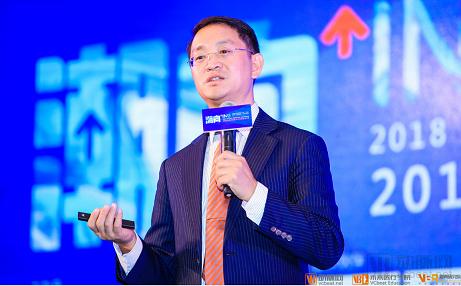
For medium- to long-term investments, we need to focus on four major themes: the demand for robotics and healthcare driven by China’s aging population; the surge in consumer spending fueled by urbanization; the upgrading of traditional manufacturing spurred by industrialization; and the digital transformation—particularly the disruptive integration of big data, cloud computing, artificial intelligence, and the Internet of Things (IoT)—which is reshaping industries across the board, including healthcare. As a result, medical big data has increasingly become a critically important area for investment.
“China’s Rebuilding Five-Year Consumer Psychology and the Migration Trajectory of Physician Group Consciousness”
——Medical science writer and cardiologist, Zhang Zhiying
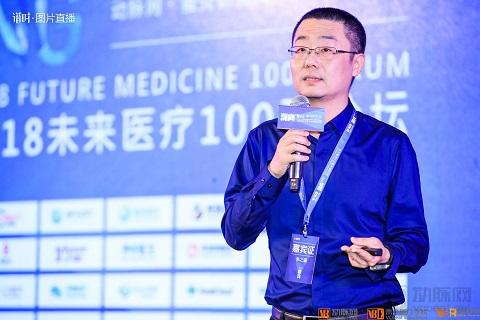
If physicians step outside the traditional institutional framework, they should foster a stronger spirit of collaboration and avoid prioritizing medical considerations above all else. The mindset of “medicine first” needs to be tempered; instead, one should align more closely with entrepreneurial and practical, action-oriented thinking. An exclusive focus on medical priorities can hinder momentum for growth. That said, it is essential for entrepreneurs to possess a solid understanding of the medical field.
"Perception, Computation, and Living Organisms: Three Keywords on the Endgame of Investment"
——Liu Wei, CEO of BV Baidu Ventures
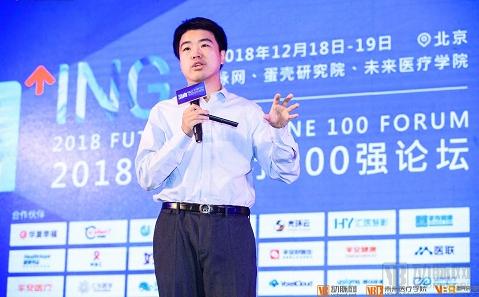
The Relationship Between AI and Healthcare: From my perspective, AI’s integration with any industry ultimately reshapes it into a living entity. Through perception and computation, it breaks down existing boundaries, integrates all elements, and transforms them into a vast, interconnected organism characterized by deep human-machine synergy.
《Challenges Facing the Pharmaceutical Industry》
— Liu Qian, Vice President of AstraZeneca China
![{]X5TH9O4W58}H_}7E)PYWL.png](https://cdn.vcbeat.top/upload/image/09/12/18/45/1545126319806118.png)
As a veteran of the pharmaceutical industry, I believe that the primary innovations capable of delivering short-term results for pharmaceutical companies are concentrated in these five areas:
First, new drugs. Without new drugs, there is no future; this depends on the company’s strength and luck.
Second, shift from a physician-centered model to a patient-centered one.
Third, it is essential to penetrate grassroots markets and seek growth opportunities within them.
Fourth, addressing innovations in patient access to medications—including hospital formulary inclusion, medical insurance coverage, and affordability—may be more critical for patients than so-called technological innovations.
Fifth, there is significant waste in the marketing efficiency of internal sales and marketing teams within pharmaceutical companies; precision marketing is the inevitable next step for pharmaceutical marketing.
The themed forum “Where the Wind Rises: The Leap of Technology,” held on the afternoon of the 18th, aims to help people understand the core forces driving future growth in healthcare enterprises through an analysis of key companies at the forefront of critical technologies. Featured guests included: Li Datao, Founder of VCBeat; Wang Xiaocen, Partner at CEC Health Fund; Demetri Terzopoulos, Chief Scientist at VoxelCloud; Wang Tianmiao, Professor at Beihang University; Chen Si, Head of Asia-Pacific at Medopad; Ji Pengsong, Chairman of Anhan Medical; Hu Songnian, Director of the CAS Key Laboratory of Genomic Science and Information; Zhou Daixing, CEO of Berry Genomics; Shi Fei, Solutions Architect at Amazon AWS; Zhang Bin, Deputy Director of the Wuxi Medical Internet of Things Research Institute; and Li Kang, Chief Scientist at Diyingjia. The following are the key highlights from the guests’ speeches:
"Chao Xiang ING - 2018 Relativity of Evolution in the Innovative Medical Industry"
— Li Datao, Founder of VCBeat
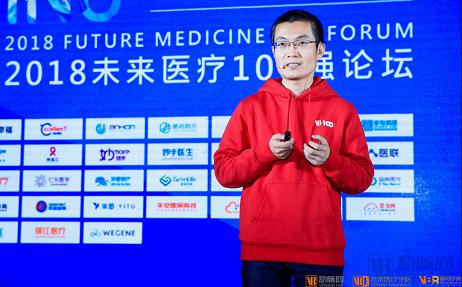
The healthcare industry can be interpreted from three dimensions.
The first dimension is the digitalization of the supply side, leveraging data tools to enhance productivity and optimize processes. Another aspect involves supply chain integration; for instance, a project in the primary healthcare sector provides SaaS platforms to village clinics, thereby improving the diagnostic and treatment capabilities of village doctors, achieving effective information aggregation and efficient drug distribution.
At the second level, for a large number of innovative healthcare service providers, their core challenge is how to acquire traffic at low cost and achieve high-quality user retention.
Third, innovation not only requires starting from small initiatives but also demands that innovators possess a holistic vision and the ability to craft strategic blueprints. We have observed that numerous domestic startups in China, after achieving breakthroughs at specific points, attempt to implement comprehensive layouts across the entire landscape. This is what Wang Xiaocen referred to earlier as “becoming like a department store.”
——Wang Xiaocen, Partner at CEC Health Fund

Internet hospitals have become a major surge point this year. However, I raise four questions for everyone to consider carefully. First, will internet hospitals become a standard feature of hospitals in the future? If you are a party involved in construction versus one responsible for operations, what are the differences between these two roles? Second, operational success is never achieved overnight; what is your core advantage in operating an internet hospital? Third, an internet hospital is not merely a simple digital reflection of traditional hospital functions; how do you identify mobile healthcare scenarios and define the value of your services? Fourth, while many argue that a key profit model for internet hospitals lies in the outflow of prescriptions, regulatory frameworks for electronic prescriptions associated with this outflow have yet to be established; therefore, caution is still advised regarding prescription outflow.
“Development and Prospects of Future Surgical Robots”
——Beihang UniversityProfessorWang Tianmiao
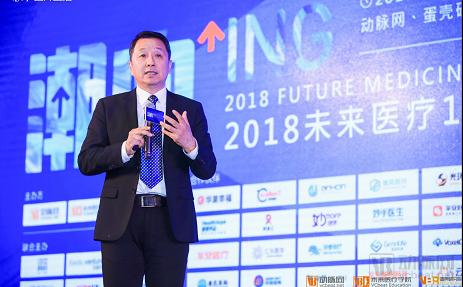
"Overseas Implementation of Digital Healthcare"
——Chen Si, Head of Medopad Asia-Pacific
![E@M$UFCFG)T$]CMO8ZXH34K.png](https://cdn.vcbeat.top/upload/image/11/12/18/59/1545134390543992.png)
“Disruptive Innovations in Gastrointestinal Disease Screening”
— Ji Pengsong, Chairman of Anhan Medical
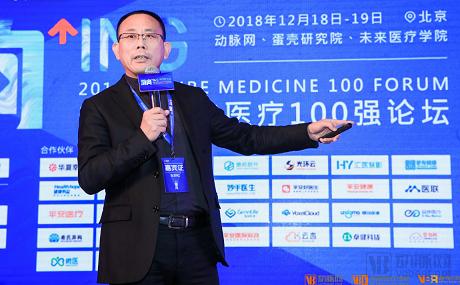
Anhan Medical’s robotic system for gastric examinations can automatically navigate based on the patient’s lesion requirements, or achieve millimeter-level precision under manual control, enabling the detection of lesions as small as 0.1 mm. Our artificial intelligence technology is highly advanced, currently achieving a 97% accuracy rate in diagnosing major diseases of the digestive tract, particularly those affecting the stomach.
"Prospects for the Application of NGS Technology in Pharmacogenomics"
——Hu Songnian, Director of the CAS Key Laboratory of Genomic Sciences and Information
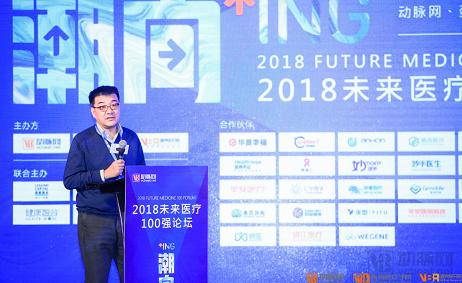
“The Next Frontier in the Gene Sequencing Industry”
——Berry Genomics CEO Zhou Daixing

《AWS Cloud Superpowers Boost the Development of the Healthcare Industry》
— Shi Fei, AWS Solutions Architect at Amazon
![CB)]9G{[0O44C[ZK@7)(P4R.png](https://cdn.vcbeat.top/upload/image/12/12/18/49/1545137397608110.png)
《Standard System and Progress of the Internet of Things in Healthcare》
——Zhang Bin, Deputy Director of Wuxi Medical Internet of Things Research Institute
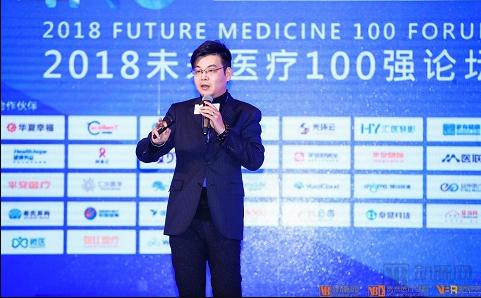
First, the absence of various standards and application specifications for data transmission from sensing devices in the Medical Internet of Things (MIoT) has led to conflicts between new technologies and existing medical services and care models, hindering the rapid scalability and replication of new technologies and products during their promotion.
Second, the development of management platforms. The entire application of the Medical Internet of Things lacks national- and provincial/municipal-level management platforms.
Third, the business model. Including Mandala, we have done a lot of “Internet Plus" and "IoT+" applications, none have established a robust profitability model. The prevailing expectation in the internet economy was that costs would be subsidized by third-party payers (the so-called 'shearing the pig's wool' strategy), but it has become evident that such viable third-party payers are largely absent in the healthcare sector.
“A Brief Discussion on the Application and Prospects of Artificial Intelligence in Digital Pathology”
——Li Kang, Chief Scientist at Diyingjia
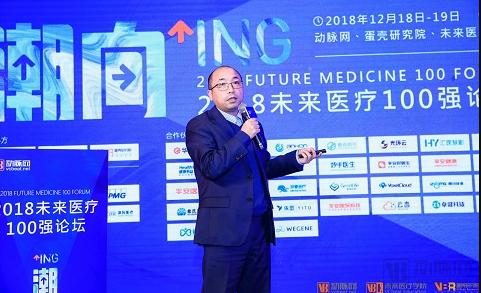
VCBeat’s “2018 Future Healthcare 100” List Unveiled
Following the forum presentations, VCBeat also released four main lists: “China Healthcare Top 100,” “China Pharmaceuticals Top 100,” “China Health Top 30,” and “Overseas Top 100” from the “2018 Future Healthcare 100.”
Furthermore, since 2018, VCBeat has added sub-rankings (Top 5) for specialized sectors (including 12 areas such as rehabilitation robotics, DTP pharmacies, and third-party medical services), as well as the “China Ranking: Top 10 Industrial Parks” and “China Ranking: Top 10 Cities.”
In 2018, the “Top 100 Future Healthcare Companies” list was curated through a three-stage process of preliminary selection, review, and final approval, identifying the most promising enterprises across various segments of the healthcare industry. The initiative aims to set benchmarks for innovative companies, provide guidance for investment institutions, and deliver value to its audience.
For details on the rankings, please click to view:VCBeat Officially Releases the “2018 Top 100 Future Healthcare Companies” List, with the Top-Ranked Company Valued at RMB 55.3 Billion!
Selection of Awards in Three Major Categories: “Innovative Enterprises,” “Investment,” and “Industrial Chain”
Since its inception in April 2014, VCBeat’s core mission has been to “encourage innovators and take pride in changemakers.” To this end, in December 2015, VCBeat launched an awards program for innovative enterprises, investment institutions, and industry chain participants, based on data from its coverage of innovative companies and the “Top 100 Future Healthcare” rankings. The aim is to highlight benchmark enterprises experiencing rapid growth, thereby mapping the profound transformations underway in the healthcare industry and gaining insights into the patterns of industrial evolution in this era of rapid change and significant challenges.
At this Top 100 Forum, a series of awards were presented to enterprises, institutions, or individuals that have made outstanding contributions to the field of innovative healthcare this year. Jointly selected by VCBeat, VBInsight, and an anonymous panel of expert judges, the final awards comprised seven honors across three major categories: “Innovative Enterprises,” “Investment,” and “Industry Chain,” including:
2018 Future Healthcare Top 100 · Annual Innovative Enterprise
2018 Future Healthcare 100 · Annual Potential Enterprise
2018 Future Healthcare 100 · Annual Investment Institution
2018 Future Healthcare 100 · Annual Investor
2018 Future Healthcare 100 · Hospital Director of the Year for Innovation
2018 Future Healthcare Top 100 · Innovative Department Director of the Year
2018 Future Healthcare 100 · Annual Innovative Listed Company