

16 Healthcare Leaders on Value-Based Care: Insights from VB100 Forum
On December 19, the “2018 Top 100 Future Healthcare Companies” forum, hosted by VCBeat, Eggshell Research Institute, and Future Healthcare Academy, and co-hosted by Legend Capital, BV Baidu Venture Capital, KPMG China, and Health Intelligence Valley, continued to generate significant momentum at the Renaissance Beijing Capital Hotel.
Day 2 of the Future Healthcare Main Forum comprised two mutually independent yet interconnected sessions: a morning session and an afternoon session. In 2018, internet healthcare and biopharmaceuticals garnered significant attention. Yet behind the enthusiasm from capital markets and industry stakeholders, have the pain points in healthcare been effectively addressed? Do high-priced innovative healthcare projects in the capital market truly possess high value? How can one identify efficient business models that achieve both critical acclaim and commercial success? VCBeat has invited 16 leaders of China’s most prominent healthcare innovation projects to engage in thoughtful discussion and analysis.
The morning session, themed “Dragon and Fish Tide Dance: The Awakening of the Force,” was moderated by Mr. Liu Hui, CIO of VCBeat. Mr. Xiang Peng, Vice President of Jiande First People’s Hospital; Mr. Li Tiantian, Founder and Chairman of DXY.com; Mr. Zhao Ran, Marketing Director of Ping An Health Checkup Center; Ms. Li Zhaozi, General Manager of the Strategic Marketing Department at WeDoctor; Mr. Shao Zongzong, Chairman of Malo Clinic China; Mr. He Haiyang, Founder and CEO of Johnson Medical; Mr. Lin Feng, Chairman of Bodajialian Doctor Group; and Mr. Lu Gang, Partner at Legend Star, attended the event and delivered keynote speeches.
The afternoon session, themed “Tidal Resonance: Traditional Medicine in New Attire,” was moderated by Mr. Bi Yuanfeng, COO of VCBeat. Attendees who delivered keynote speeches included Mr. Wang Hang, President of the Yinchuan Internet + Medical Health Association; Mr. Liu Yi, Chairman of Andon Health Co., Ltd.; Mr. Wan Yougang, General Manager of the Terminal E-commerce Division of Jointown Pharmaceutical Group; Mr. Zheng Yi, Deputy General Manager and Chief Medical Officer of Ping An Health Insurance Technology; Ms. Zhang Leidi, Managing Director of China Life Equity Investment; Ms. Zeng Yongqin, Senior Director of Philips Healthcare Innovation Hub; Mr. Zhang Jiang, Managing Partner of Ping An Ventures; and Mr. Wang Letian, General Manager of Sinopharm Online.
VCBeat has compiled the insightful perspectives of 16 guests as follows.
Xiang Peng: Hospital Innovation Thinking from the Inside Out
Around 2012, when a wave of electronic medical record (EMR) adoption swept across China, Jiande First People’s Hospital (hereinafter referred to as “Jiande First Hospital”) failed to identify a suitable entry point. It later partnered with a Taiwanese enterprise to build a novel EMR architecture that operated independently of the Hospital Information System (HIS). With a highly open mindset, Jiande First Hospital procured an immature product and independently established its Clinical Data Repository (CDR).
Mr. Xiang Peng believes that due to high entry barriers, the development of medical informatization is relatively lagging, and AI products have not yet been directly integrated into clinical practice. This necessitates support from interdisciplinary professionals who possess expertise in both healthcare and technology.
To deeply integrate hospitals into the development environment, product development should be driven by the technical requirements raised by physicians. As digitalization efforts deepen, the entire hospital system and its organizational culture are undergoing transformation. Hospitals are no longer merely purchasing products from external vendors; instead, there is a growing emergence of needs and solutions originating from within. Jiande First People’s Hospital maintains a highly open stance. Since big data products must ultimately be implemented in real-world hospital settings, Jiande First People’s Hospital welcomes such internally-driven products and fosters collaborative partnerships between product developers and the hospital.
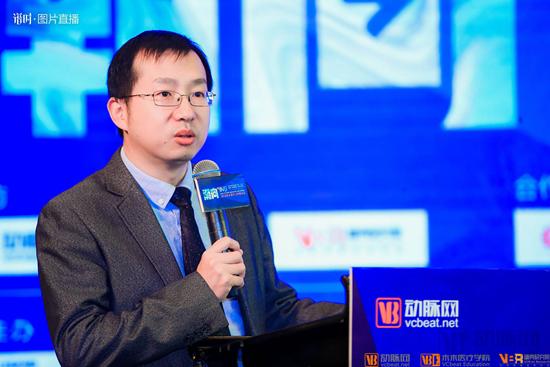
Mr. Xiang Peng, Vice President of the First People's Hospital of Jiande City
Li Tiantian: Transformation of Service Models in the Era of New Technologies
The greatest advantage brought by new technologies in the healthcare industry is that the channels and methods for data acquisition have become significantly more diverse than before. As technology advances, devices for collecting medical-grade data have evolved from wearables to implantable devices.
High-tech products must be integrated with innovative service models to maximize their benefits. Taking chronic disease management as an example, patients are essentially battling human nature itself; without a transformation in service delivery, merely providing devices and instruments proves ineffective.
For chronic disease management using a “device-plus-service” model, it is essential to carefully select conditions that are amenable to effective and easily demonstrable management, thereby ensuring relatively lower risk and higher feasibility. For major diseases, combining devices and services with social network–driven engagement can yield favorable outcomes.
Furthermore, Mr. Li Tiantian shared his three insights on the transformation of service models in the context of emerging technologies.
First, the importance of professionalism must be emphasized;
Second, data-driven services should be prioritized;
Third, delivering services in a continuous and holistic manner generates greater value.
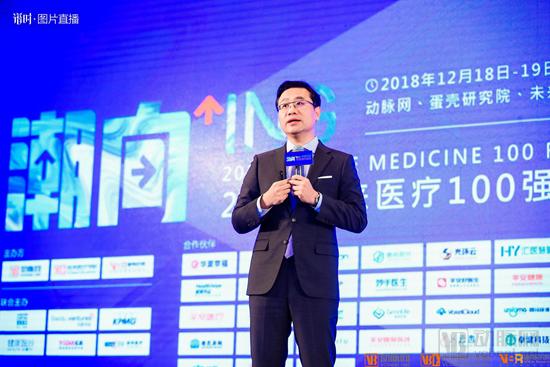
Mr. Li Tiantian, Founder & Chairman of DXY
Zhao Ran: The Path to Cost Shifting—Third-Party Healthcare Services in a Parallel Universe
Ping An’s health services lack a physical customer service component. In China, most on-the-ground services are provided by public hospitals, and the patient experience needs improvement.
The prerequisite for truly implementing tiered diagnosis and treatment is an ample supply of third-party medical services. The emergence of third-party medical service institutions should support the healthcare system—comprising public hospitals, private hospitals, and primary care facilities—in delivering appropriate services to patients.
In the future, third-party medical service providers will face increasingly stringent professional requirements, greater cost pressures, and more pronounced demands for innovation.
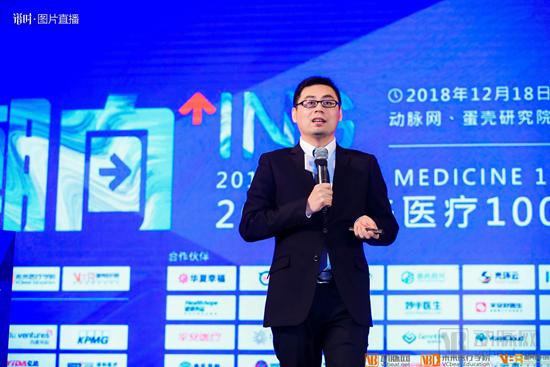
Mr. Zhao Ran, Marketing Director of Ping An Health Checkup Center
Li Zhaozi: The Evolutionary Path of Internet + Healthcare
The greatest application opportunity for artificial intelligence lies in healthcare, the largest application scenario for healthcare is in China, and the most significant scenario in China is at the primary care level.
As national policy shifts from a medical care-centric to a health-centric model, the healthcare system will undergo three stages of evolution. Stage 1.0 is characterized by the optimization of medical consultation processes, providing flexible healthcare services to the general public. Stage 2.0 features a “Cloud + HMO” model, delivering more services to users by shifting scenarios upstream. Stage 3.0 will achieve integrated coordination among medical services, pharmaceuticals, and health insurance (the “Three Medicals”). Currently, we are in Stage 2.0.
In Phase 3.0, on one hand, convenient medical insurance settlement, online payment, and prescription sharing will become the norm; on the other hand, driven by diagnosis-related group (DRG) payment models and medical insurance policies, the sharing and application of national health and medical big data, long advocated by the state, will be truly realized. Furthermore, the vision where 50% of common diseases and medical needs are addressed at home, 35% of diseases are managed at primary care institutions, and 15% of severe cases are referred to large hospitals will become a reality.
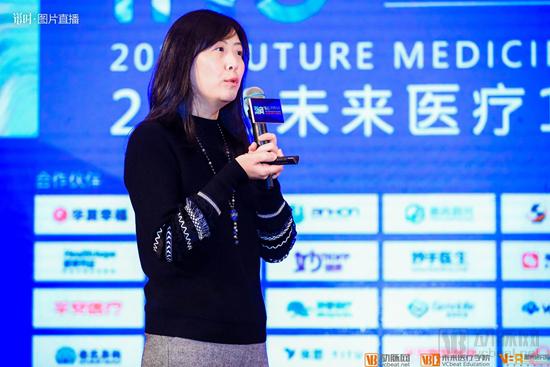
Ms. Li Zhaozi, General Manager of the Strategic Marketing Department at WeDoctor
Shao Zongzong: Explorations and Practices in Specialty Chain Medical Service Institutions
Dentistry and medical aesthetics are currently the hottest trends in chain healthcare services or healthcare institutions, with high average transaction value being a key contributing factor.
Any healthcare institution, whether public or private, domestic or international, must steadfastly focus on two critical imperatives: first, establishing a clinical discipline development system characterized by specialized expertise and driven by continuous R&D and innovation; and second, maintaining an academic-medical system continuously managed by discipline leaders. These are the keys to the future of healthcare institutions.
As of today, a portion of the surgical procedures performed by Malo Clinic’s core medical team can only be completed by them worldwide, which is the result of Malo Clinic’s continuous advancement in its disciplinary development system.
The core of healthcare services lies in quality and patient reputation. This sector is free from the hype, bubbles, rapid expansion, and storytelling characteristic of the internet industry. Healthcare clinics do not compete on quantity but on quality. So-called quality hinges on the healthiness of growth in volume and scale. While a single clinic may achieve economies of scale through operational excellence, excessive and overly rapid investment can lead to corporate disaster.
Furthermore, Malong Dental has several valuable experiences to share. First, productize medical services by approaching them with a product-oriented mindset. Second, establish a financial operational system based on convolutional neural networks (CNNs) to uncover data patterns through deep learning. Third, explore and venture into the upstream industry chain, striving for independent R&D breakthroughs in products and technologies.
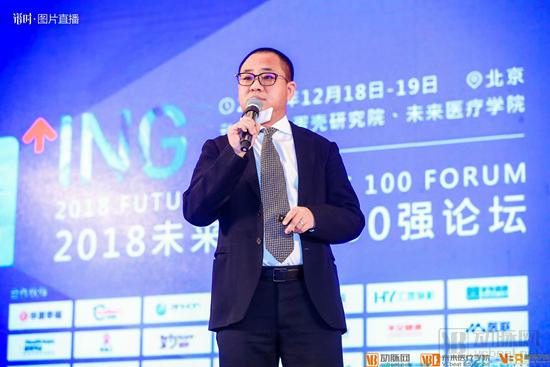
Mr. Shao Zongzong, Chairman of Malong Dental China
He Haiyang: How to Break the “Connected but Not Locked” Dilemma—What Should Clinics Lock In?
Johnson Medical positions itself as the “Starbucks” of community healthcare for middle-class families. Mr. He Haiyang shared nine key insights from Johnson Medical’s operational experience.
First, healthcare services are a relatively offline and regionalized scenario, requiring an effective layout strategy that begins by securing a foothold in a first-tier city;
Second, due to the rapid pace of urban development, the allocation of medical resources in new urban districts is weak, leaving significant market gaps;
Third, locking in branded residential areas and high-quality communities is crucial for offline service site selection decisions;
Fourth, target middle-class families born in the 1970s to 1990s;
Fifth, focus on common diseases, frequently occurring diseases, and chronic diseases;
Sixth, we not only focus on the existing consumer market but also continuously expand the incremental business-to-business market;
Seventh, IT management tools are indispensable for building an effective chain brand;
Eighth, build a high-quality product system that emphasizes value-based and insurance-integrated payment models;
9. Secure talent through business model innovation.
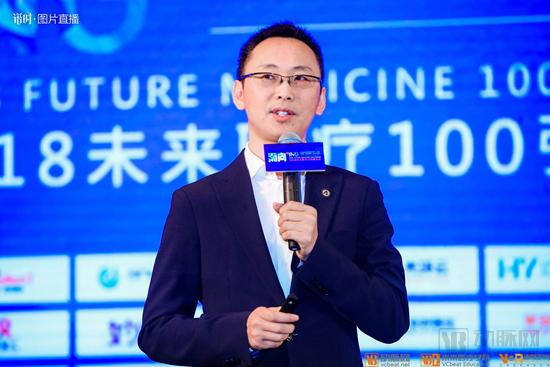
He Haiyang, Founder and CEO of Johnson Medical
Lin Feng: The Painful Reality of Implementing Physician Groups—An Inescapable Challenge
The biggest problem in China's healthcare system is the overall mismatch of medical resources.
The lagging development of physician groups in China is because medical resources are institutionally entrenched in physical spaces rather than being attached to individual physicians.
Prior to the government’s purchase of basic medical insurance payment services, physician groups should not attempt to engage in profit-sharing with public medical institutions, nor should they exploit public resources through medical insurance payment mechanisms. Mr. Lin Feng believes that such practices violate social ethics.
Public hospitals, by virtue of their government-mandated role in providing essential healthcare services to the public, cannot serve as operational venues for physician groups.
Although private hospitals are intended to serve as vehicles for high-end medical care, the quality of private hospitals in China is uneven. Most lack a platform-oriented mindset and struggle to deliver advanced, specialized medical services, making them less than ideal settings for the implementation of physician groups.
Moreover, clinics are not an ideal setting for the implementation of physician groups, as chain clinics without backend support would face catastrophic consequences.
Bode Jialian’s solution is a capital-intensive, self-built hospital platform that leverages the platform to support physician teams, who in turn deliver high-quality care to patients.
Mr. Lin Feng also noted that healthcare services have regional characteristics and must be implemented locally.
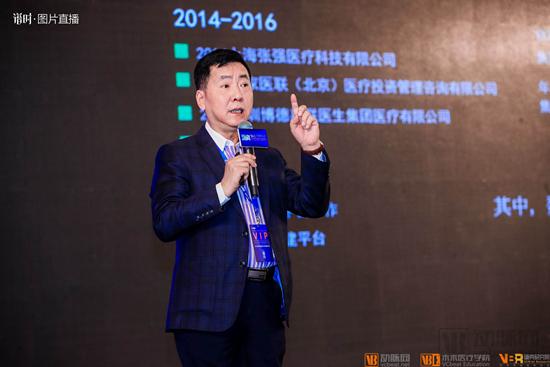
BodeMr. Lin Feng, Chairman of Jialian Medical Group
Lu Gang: Piercing Through the Fog to Uncover the Simple Business Logic Behind Innovative Models
In recent years, innovations in various forms of medical services and medical technologies have been highly popular, yet few have achieved profitability, and none have truly addressed the pain points in healthcare. Mr. Lu Gang believes that this is due to a deviation in business logic, where innovation has failed to touch upon the essence of commerce; instead, it should revolve around rigid demands.
Furthermore, Mr. Lu Gang pointed out that the healthcare industry ecosystem is extremely complex and fraught with constraining factors, necessitating a protracted effort and a stratified approach to the service market. During this period, on one hand, distortions such as the practice of subsidizing healthcare providers through drug markups must be corrected, which requires leveraging mechanisms from the new healthcare reform; on the other hand, attention should be paid to the fact that project development in the healthcare industry will undergo three stages.
Phase I is the connectivity and empowerment stage, Phase II is the transaction stickiness stage, and Phase III is the ecosystem formation stage. Currently, we are still in Phase I, where boundary conditions remain unclear, making profitability unattainable. At this juncture, improvements in social insurance efficiency and the gradual expansion of commercial insurance are critical factors.
In the healthcare services sector, fragmentation is a relatively long-term phenomenon, and market consolidation into a single dominant player is unlikely. Moreover, the market is sufficiently large that even without such unification, numerous opportunities remain. However, Mr. Lu Gang also pointed out that a capital winter does not necessarily equate to a winter for entrepreneurship.
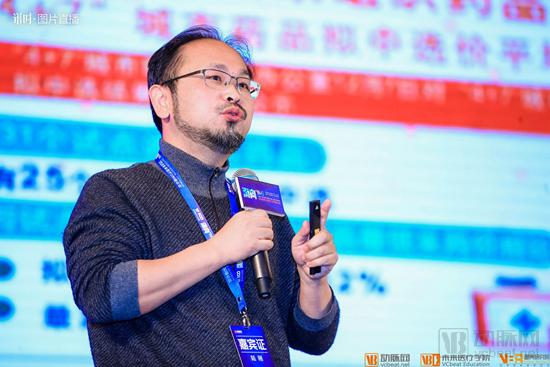
Mr. Lu Gang, Partner at Legend Star
Wang Hang: Practices and Reflections on Online Medical Consultation
The internet healthcare industry has experienced significant development each year, with investment activity serving as a major driving force behind this growth.
Next, Mr. Wang Hang shared his reflections and outlook on his work in the internet hospital industry.
First, in the healthcare industry, when a business fails to secure support from the government or the general public, entrepreneurs should consider whether the value their business delivers to its current user base is addressing critical needs (“providing charcoal in snowy weather”) or merely adding incremental benefits (“adding flowers to brocade”). In grassroots settings and remote areas of western China, addressing critical needs holds significant value.
Second, what every doctor cares about most is the growth of their personal brand and whether their work can bring long-term value to their career. With online follow-up consultation services and prescription rights, doctors can leverage their professional expertise to establish online clinics during their spare time, which is actually an important form of independent practice in the future.
Third, guided by policies on tiered diagnosis and treatment, large hospitals will establish more strategic partnerships with third-party platforms in the future. For internet companies, operating offline hospitals is neither a strength nor a necessity; thus, collaboration between the two parties will inevitably evolve into a complementary partnership.
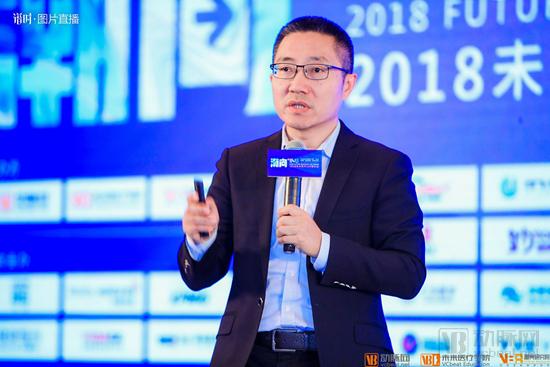
Mr. Wang Hang, President of the Yinchuan Internet + Medical Health Association
Liu Yi: From Hardware to Connectivity to Services—The Path of Transformation and Upgrading for Home Medical Devices
In the internet era, we have yet to see a single digital health company that truly resolves core issues. The fundamental problem facing all digital health companies is singular: whether they genuinely add value to medical services themselves.
A key reason why internet healthcare has struggled to take off is that the value of physicians’ time has not been maximized. Nevertheless, lower-cost and higher-efficiency models of healthcare delivery are still being explored.
AI replacing doctors may be a reality two decades from now. However, mobile internet and IoT devices have already addressed two critical challenges in healthcare: on one hand, patients no longer need to wait until their conditions become critical before seeking medical attention; on the other hand, physicians are no longer required to collect medical data through face-to-face interactions. The role of new technologies is to triage patients’ conditions, enabling doctors to provide differentiated care and allocate their time to more valuable diagnostic and therapeutic activities.
Disease severity stratification can fundamentally address the challenge of extending medical services from in-hospital to out-of-hospital settings, thereby achieving patient-centered care.
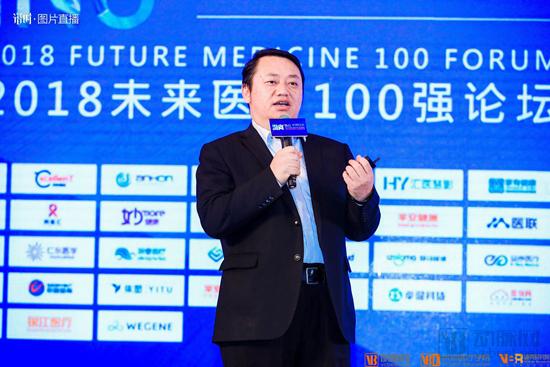
Mr. Liu Yi, Chairman of Andon Health
Wan Yougang: The Path of Transformation and Innovation at Jointown Pharmaceutical
The internet should not be viewed merely as a tool, but rather as a mindset—a catalyst for innovating corporate processes and management models, necessitating the disruption of traditional transactional paradigms.
Jointown’s Transformation and Innovation Can Be Divided into Three Stages: The first stage focuses on online integration and connectivity, establishing a unified information system within the group; the second stage emphasizes interconnection and efficiency enhancement, improving market circulation efficiency through inter-enterprise connectivity; the third stage centers on integration and symbiosis. Jointown has already completed the first two stages and is now entering the third stage.
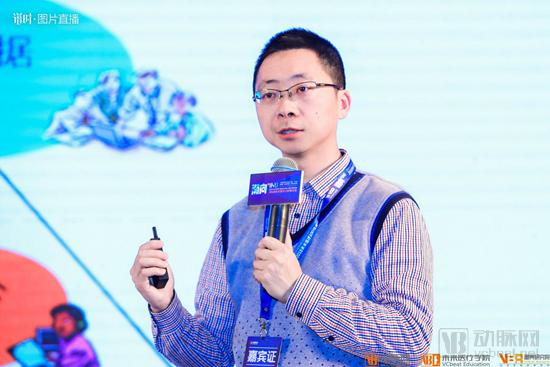
KyushuMr. Wan Yougang, General Manager of the Terminal E-commerce Division of Tong Pharmaceutical Group
Zheng Yi: Technology-Driven Innovation in Insurance and Health Management
In the future, it will be necessary to integrate commercial insurance with big data to achieve better product innovation, pricing, and risk management. Customer-centric, value-driven, and outcome-oriented approaches are also emerging trends in the future innovation of insurance and health management.
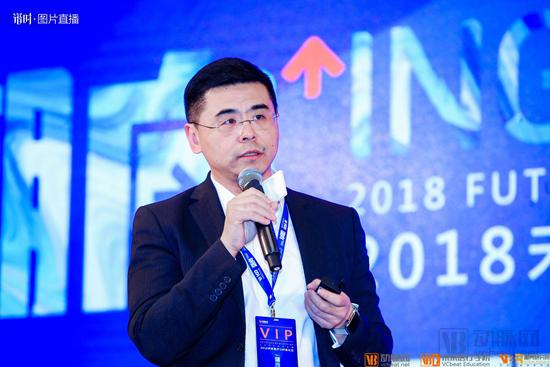
Mr. Zheng Yi, Deputy General Manager and Chief Medical Officer of Ping An Health Insurance Technology
Zhang Leidi: Investment in the Big Health Industry in the New Era
Everyone is talking about the significant development opportunities in the broader health industry. Factors such as population aging, urbanization, and the rise of the middle class have generated substantial new demand. However, on the other hand, the challenges are equally immense. The challenge lies in the fact that despite greater demand, if the payment issue is not resolved, this demand remains illusory.
Entrepreneurs in the healthcare innovation industry need to consider whether the problems they address are truly core issues, whether their proposed solutions can gain genuine acceptance, and what position and strategic landscape they will occupy amidst future healthcare transformations.
First, clearly identify who the actual payer is;
Second, clearly define the genuine value that your business model and platform can deliver to the industry;
Third, the healthcare industry itself is characterized by very long cycles, making explosive growth a practical impossibility.
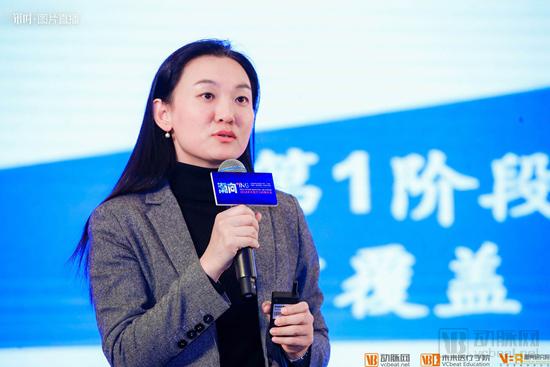
Ms. Zhang Leidi, Managing Director of Equity Investment at China Life
Zeng Yongqin: The Barbarian’s Guide to Philips’ Innovation
It is imperative to engage in co-innovation with frontline clinical practitioners to develop comprehensive solutions that most effectively address their pain points. Medical innovation must be end-goal oriented; only in this way can the resulting products gain widespread acceptance. These two principles serve as the guiding philosophy for our innovation efforts.
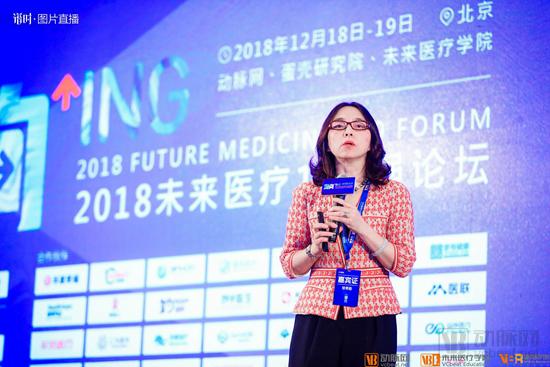
Ms. Zeng Yongqin, Senior Director of Philips Health Innovation Works
Zhang Jiang: Ping An Insurance’s Investment Logic in Healthcare
Globally, Ping An Ventures primarily targets companies driven by technological innovation. Despite recent challenges, Ping An Ventures has maintained a cautious approach. Should investment opportunities continue to emerge, its primary focus will be on technology-driven platforms, which are often rooted in universities.
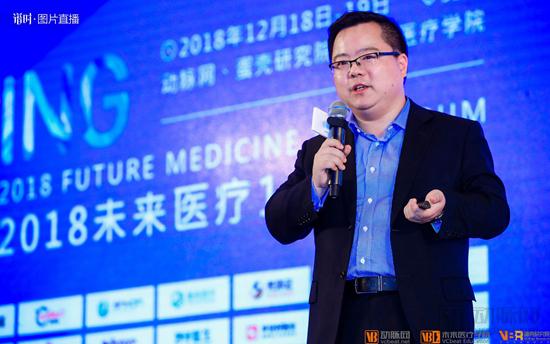
Mr. Zhang Jiang, Managing Partner of Ping An Capital
Wang Letian: The New Landscape and Future of Pharmaceutical Distribution
Future New Pharmacies, After New Retail Transformation, Will Fully Rely on Socialized Pharmacies and an Internet-Based Platform to Track Medications.
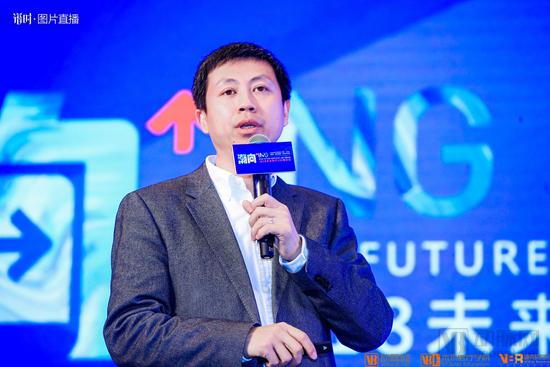
Mr. Wang Letian, General Manager of Sinopharm Online