

Reconstructing the Value Chain of Healthcare Big Data in Drug Discovery, Precision Medicine, and Clinical Research: VB100 Insights
The 2018 Future Healthcare Top 100 Medical Big Data Technology and Industrial Application Forum was themed “The Transformation of Big Data.”
At the Forum on Medical Big Data Technology and Industrial Applications, Mu Tang, CTO of Zhiyun Health; Liu Liyu, CEO of Life Singularity; Li Xiarong, CEO of Judao Technology; Zhao Lu, CEO of Taimei Medical Technology; Lu Xiuling, VP of Zechuang Tiancheng; Yu Jurong, Partner at Qingke Medical; and Jiang Yanye, Partner at Honghui Capital, participated in the forum and delivered insightful speeches.
The forum’s themes included chronic disease management, artificial intelligence and big data technologies, the networked, data-driven, and intelligent transformation of precision medicine, the information superhighway for new drug development, the role of physician communities in medical big data, as well as industry transformations and investment logic surrounding electronic health records (EHR). VCBeat has compiled the highlights from the speakers’ presentations.
Mu Tang: Chronic disease management is the integration of in-hospital and out-of-hospital management.

Chronic Disease Management: Three Key Elements
1. Out-of-Hospital Management. Enhance patient medication adherence through social media platforms.
The second component is the integration of in-hospital and out-of-hospital services. Establishing an AI and big data platform for holistic chronic disease management, which connects inpatient care within hospitals with post-discharge care outside hospitals, is key to linking upstream pharmaceutical manufacturers with midstream pharmacies.
The third component builds on the aforementioned two points to facilitate B2C interaction, thereby driving scalable revenue growth.
Liu Liyu: The Core of Modern Medicine Is Evidence-Based Medicine

The core of modern medicine is evidence-based medicine, but in reality, the emphasis on evidence in China is still insufficient.
The efficiency of the evidence system is directly equivalent to the supply capacity of the healthcare industry. Currently, the primary contradiction in healthcare is not connectivity or other factors, but rather supply capacity.
The evidence system has the following characteristics: The efficiency of evidence application and promotion is relatively slow, with a very lengthy process from evidence generation to application. The current evidence system is characterized by unidirectional inefficiency, featuring prolonged drug development timelines, substantial investment requirements, and low overall efficiency. Current evidence-based medicine has limitations, as evidence derived from 3% of the population is applied to the remaining 97%, resulting in low generalizability of therapies.
The future solution framework will be a data-driven learning system that integrates research and practical information to form an iterative cycle. Such a system requires two key pillars: first, artificial intelligence technology; and second, a sufficiently large-scale data network.
Furthermore, the implementation of such a system faces three primary barriers: data quality, data networks, and interdisciplinary professional expertise.
Overcoming Barriers: The Newly Constructed Data-Driven Healthcare System Features the Following Characteristics: First, networked data sources combined with intelligent learning capabilities generate evidence; second, networked data sources paired with intelligent evidence recommendation facilitate evidence application; third, the integration of product research and development, clinical application, patient experience, and payers creates an information closed loop and continuous learning capability. Finally, through AI, comprehensive solutions composed of diverse evidence are provided to clinicians, rather than isolated data points.
Li Xiarong: Precision Medical Data Technology, Based on Informatized Business Systems, Collaborates with Upstream and Downstream Partners to Enhance Industry Efficiency
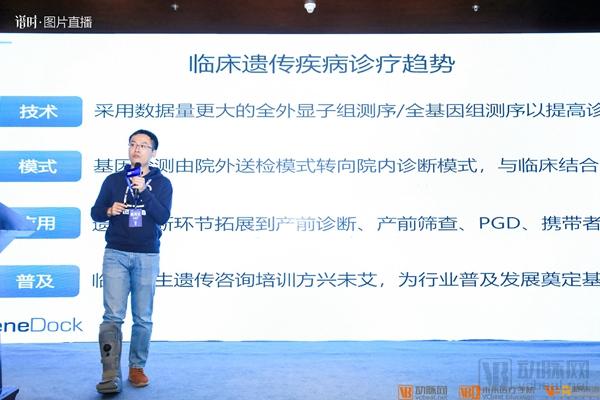
Low efficiency in the diagnosis and treatment of genetic diseases is mainly attributed to the following reasons: difficulty in selecting monitoring methods; uncontrollable testing quality; and complex genetic counseling that is difficult for patients to understand, thereby hindering proactive intervention.
Several Trends in the Diagnosis and Treatment of Hereditary Diseases: Due to cost constraints, genetic testing was previously limited to only one or two genes; top-tier (Grade A tertiary) hospitals in China are establishing their own genetic testing laboratories; in addition to diagnostic testing for pathogenic genes, carrier screening is becoming a trend; clinicians are increasingly recognizing the importance of genetic medicine and are participating in training programs to learn genetic counseling.
Overall, precision medicine data technology is built upon advanced health information systems, fosters collaboration across the upstream and downstream value chain, and thereby enhances industry efficiency. By leveraging high-quality data to generate inclusive value and support service-related decision-making, it can empower the entire clinical ecosystem.
Zhao Lu: The Information Superhighway of New Drug Development Will Restructure the R&D Value Chain

China’s share of global investment in new drug R&D will continue to rise in the coming years, reaching approximately 20% annually, while new drug development is shifting toward stricter regulation, heavier capital investment, and greater innovation.
In the drug development process, the biggest bottleneck remains clinical application, which is mainly manifested in: the clinical research process is highly complex; clinical research has far higher requirements for quality standards and reliability than routine diagnosis and treatment; and informatization tools have not significantly improved the efficiency of pharmaceutical R&D, as the core issue lies in considering only the unilateral needs of pharmaceutical manufacturers.
The most innovative solution in the industry is to build an “information superhighway”—a comprehensive, end-to-end collaboration platform. On this basis, the value chain of R&D will be restructured, and stakeholders in new drug development will no longer be segmented by software or software services, but will instead transform their business models.
Lu Xiuling: To transition medical big data from a “guerrilla” to a “regular army” approach, high-quality research data and support from methodological experts are required.
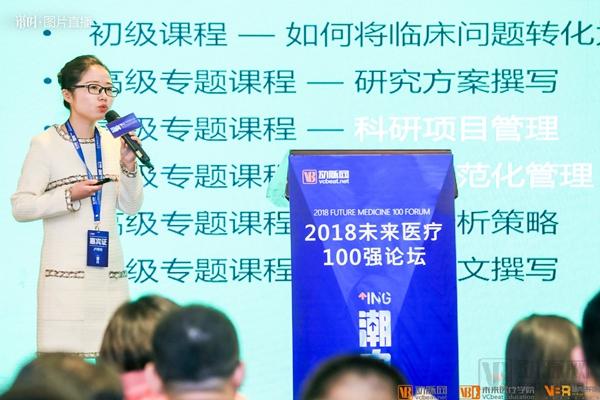
The creation of big data in health and medicine involves several processes: first, facilitating effective data exchange among different medical institutions; second, establishing a medical terminology system that better aligns with clinical practices in China; third, introducing relevant policies and regulations to protect patient privacy; fourth, improving data quality at the source by using relatively accurate variables to address scientific questions; and fifth, leveraging medical questions to drive the generation of scientific value from data.
To effectively leverage big data to advance medical research and facilitate the transformation of clinical data into research data, physicians should focus on three key areas: first, the discovery and formulation of hypotheses; second, the collection of high-quality research data and rigorous quality control; and third, robust support in terms of methodological expertise or analytical tools.
Yu Jurong: The Path of EHRs Will Advance from Recording the Entire Medical Process to Full Lifecycle Management
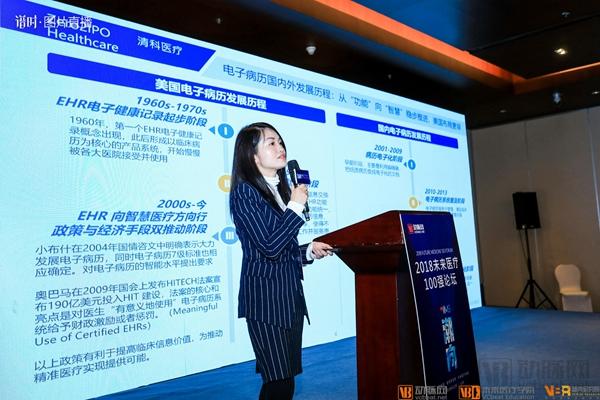
Medical informatics is currently advancing from the management information stage to the clinical information stage, with smart healthcare beginning to take shape based on big data.
Electronic Medical Record (EMR) systems serve as the linchpin of clinical informatization and form the foundation of smart healthcare.
From an overall trend perspective, electronic medical records (EMRs) are evolving from functional systems to intelligent platforms. China’s EMR development is likely to follow the path of the United States, advancing from comprehensive documentation of the entire medical process toward full lifecycle management.
Currently, the foundational big data applications that have garnered attention are largely based on three technologies: those leveraging Clinical Decision Support Systems (CDSS), those built upon data integration and specialty-specific electronic medical records (EMR), and those integrating clinical and genomic data.
Investment risks in the information technology sector, represented by electronic medical records (EMR), are mainly reflected in two aspects: cash management and implementation capability.