

Tumax, Huiying Medical, VoxelCloud, and Hisun AI Reaffirm: The AI Winter Has Not Arrived – VB100 Insights
From December 18 to 19, the “2018 Top 100 Future Healthcare” Forum, hosted by VCBeat, Eggshell Research Institute, and Future Healthcare Academy, and co-hosted by Legend Capital, BV Baidu Ventures, KPMG China, and Health Intelligence Valley, grandly opened at the Renaissance Beijing Capital Hotel. This is an annual flagship event organized by VCBeat, featuring active collaboration from innovative healthcare institutions and distinguished guests, with over 2,500 attendees in participation.
At the Intelligent Imaging Innovation Practice Forum held on the afternoon of December 19, Zhong Xin, Founder and CEO of Tuma Shenwei; Wang Jie, Senior Partner at Huiyi Huiying; Ding Xiaowei, CEO of VoxelCloud; Song Jie, Founder and CEO of Cihetero; Gao Yunlong, Partner at Yizhan Medical Group; Huang Yedong, Chairman of Xi’an Yinggu; and Ning Ke, Senior Vice President and Chief Medical Officer of Yimai Yangguang Group, attended the event and delivered insightful speeches. Shi Chengxi, Investment Vice President at Changling Capital, participated in the forum as the moderator of the roundtable discussion.
Guests delivered speeches on topics such as the application of artificial intelligence in the medical field, exploration of AI in medical imaging, and the future development of artificial intelligence. VCBeat has compiled the guests’ insightful perspectives.
Zhong Xin: AI Has Not Entered a Winter, and Will Break Moore’s Law
Artificial intelligence will help healthcare achieve, in the future: first, speed; second, safety; third, precision; fourth, cost-efficiency; and fifth, quantification.
Moore’s Law predicts a doubling cycle of 18 months. However, since the 21st century, artificial intelligence has broken some predictions based on this curve, with growth in computing power surpassing the pace of Moore’s Law. According to forecasts by the U.S. think tank “Market Digits Analysis,” the compound annual growth rate is expected to reach 40% per year from 2018 over the following six years.
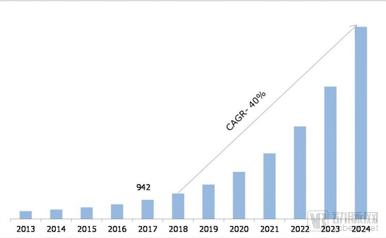
Source: Market Digits Analysis
Although some in the industry believe that an AI winter has arrived, Zhong Xin stated that the application of artificial intelligence in healthcare has become an integral part of physicians’ daily diagnostic workflows, and doctors have grown indispensable to this product.
As shown in the figure below, first, according to the investment data for 2018, the total AI investment volume indeed declined in China but increased in the United States.
Second, while the number of domestic investments has declined, the total investment amount has shown an upward trend. This indicates, first, that investors are becoming more rational and no longer blindly following the crowd in funding various enterprises; second, it suggests that individual deal sizes have increased, with capital increasingly flowing into more mature companies at later stages.
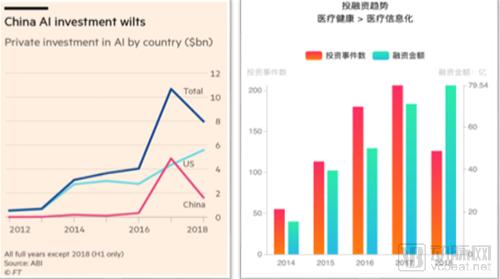
Source: FT/IT Juzi
This also demonstrates that artificial intelligence is currently in a state of rapid development, undergoing a phase of intense selection and consolidation, yet its future remains bright.
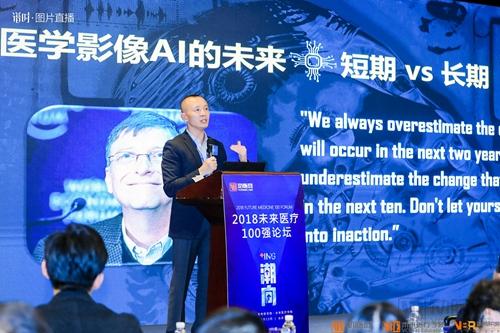
Zhong Xin, Founder and CEO of Tumor Deep Vision
Wang Jie: AI Data-Driven Medical Innovation
In many fields, such as industrial manufacturing and sales, the accumulation of large volumes of data generates precise value. This trend is now unfolding in the healthcare sector…
Medicine may evolve from an experience-based discipline into a data-driven one, with the diagnostic process shifting toward digital health and precision medicine. Wang Jie believes that medical imaging could become a central data hub for hospital treatment in the future.
Medical AI is driven by three core factors: algorithms, computing power, and data.
In terms of algorithms, AI products in daily life, such as autonomous driving and facial recognition, require training on hundreds of millions of data points, whereas medical AI is mostly trained on tens of thousands of data points. The medical field requires algorithmic models adapted to small datasets and the implementation of diverse algorithms suitable for image and big data analysis.
In terms of computing power, the development of GPUs has improved computational efficiency; advancements in chip technologies such as FPGAs have expanded the application scenarios of AI algorithms; and the growth of cloud computing has facilitated multi-center collaboration models and remote operation modes.
In terms of data, the development of medical informatics has been relatively slow compared to other industries, with a lower level of digitalization. However, with the advancement of medical informatics, multi-dimensional big data in medicine has been accumulated; medical imaging provides standardized and interference-free datasets; mobile healthcare and wearable devices have enriched patient information, leading to an increasing accumulation of data.
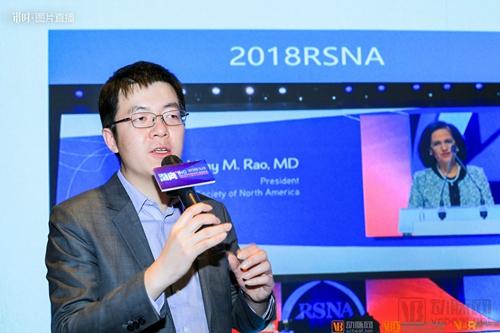
Wang Jie, Senior Partner at Huiyi Huiying
Ding Xiaowei: Precise Population Segmentation Is the First Step in AI Empowerment
AI should not select by disease type, but rather by individual. Ding Xiaowei stated that people should be categorized into three groups: patients, pre-patients, and healthy individuals. So, what can medical AI do for these three populations?
For healthy populations, AI-assisted screening is employed. Traditional screening methods, such as chest CT scans, cover limited aspects and make it difficult to detect small lesions. With the aid of AI, however, it is possible to monitor all types of lesions, including lymphadenopathy, cardiac calcification, pulmonary nodules, bronchiectasis, and diffuse lung cancer.
For patients, AI enables comprehensive and precise analysis. Traditional precision analysis was time-consuming and not always thorough; in some cases, a full general anesthesia was required for a single examination, posing significant risks. With the assistance of AI, it is now possible to achieve risk prediction, non-invasive screening, and precise analysis.
For prospective patients, AI can provide self-assessment and triage guidance. Previously, users had to predict their potential health issues in advance and then screen for those specific conditions to determine if they were affected. With micro-features derived from accumulated AI data, users can now conduct self-assessments of their health concerns.
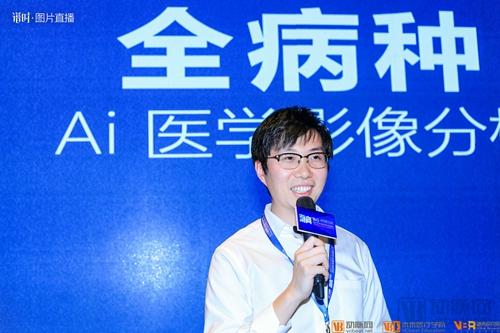
Ding Xiaowei, CEO of VoxelTech
Song Jie: Core Elements of Medical AI at the Current Stage
The core elements of medical AI at this stage are, first, understanding; second, grasping the product direction; third, preemptively mitigating legal risks; fourth, the ability to integrate healthcare resources; and fifth, capital reserves. Additionally, R&D experience and technical capabilities are essential. In Song Jie’s view, gaining a profound understanding of the medical AI industry requires careful consideration:
First, the core of the healthcare industry is medical services, including diagnosis, consultation, medication, and injections. The closer one gets to this core, the more profitable it becomes, and what AI needs to do is to move closer to this core.
Second, AI multiplies medical resources. Currently, the scarcest resource in the healthcare industry is highly skilled physicians. By leveraging AI—the key to unlocking the potential of the healthcare sector—we can prioritize addressing physician shortages, effectively amplifying the capacity of a single doctor to that of 100.
Third, China has only two core advantages in AI: first, a more lenient legal framework, and second, state-led direction. However, these benefits will not last forever; therefore, enterprises must leverage this momentum for development and plan ahead for future challenges.
Fourth, medical AI is both a technology and a product; the two are mutually causal. However, from the perspective of commercial entities, AI must ultimately be a product that is implemented in real-world applications.
How to ensure the practical implementation of R&D outcomes is currently a key concern. At this stage, the medical AI sector is no longer “buying into concepts”; instead, it prioritizes tangible clinical value. First and foremost, medical products must be genuinely usable and deliver direct value. Whether to initially focus on specific “points” or broader “areas” should ultimately be determined by end users. Furthermore, medical products must possess independence and reliability, streamline workflows, and allow for precise product control.
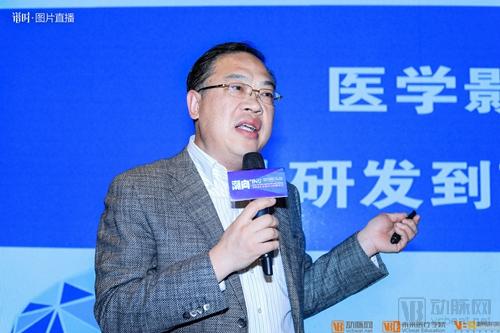
Song Jie, Founder and CEO of Xishi Yigou
Gao Yunlong: Medical AI Requires Support from Open Platforms
The development of medical AI is a process that requires continuous boundary-breaking and integration. In Gao Yunlong’s view, as the number of artificial intelligence enterprises increases, all AI companies face the challenge of commercial implementation.
First is the transmission issue. Previously, data transmission relied solely on intranets; now, it can be conducted via the public internet and home broadband connections. With the advent of the 5G era, data transmission will become increasingly seamless.
Secondly, medical artificial intelligence requires an open platform. Given that there are currently tens of thousands of disease types suitable for AI research and development, it is impractical for any single enterprise to cover them all due to resource constraints. Therefore, we must pursue diverse specialized areas. For instance, some companies focus on gastrointestinal endoscopy, while others delve deeply into fundus imaging. By comprehensively covering these various domains, the platform can facilitate the efficient allocation of relevant resources, thereby achieving a win-win outcome for all stakeholders.
Ultimately, with a diagnostic platform and the capability to output diagnoses, the key lies in enhancing physicians’ efficiency. If you were a physician with 50 AI products installed on your desktop, wouldn’t you feel overwhelmed? This would inevitably lead to decision fatigue. Therefore, in the future, we envision that products will be hosted on a cloud-based platform, similar to the Apple App Store, allowing physicians to select their preferred product directly from their diagnostic interface.
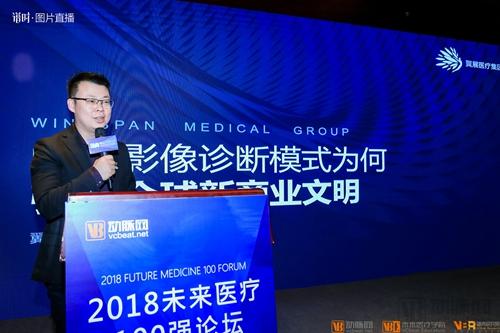
Gao Yunlong, Partner at Yizhan Medical Group
Huang Yedong: AI Is Not a Product or Technology, but a Service
Industrial transformation requires the complete disruption of traditional models, including technological architecture and business models.
To enable more medical institutions and physicians to leverage AI empowerment across diverse scenarios. Huang Yedong believes that a management channel should be provided for all AI companies, allowing them to monitor who is using their AI solutions and assess user satisfaction. This visibility will help AI companies enhance user experience, advance model evolution, and ultimately achieve viable business models.
Enable deep integration of medical AI into healthcare business scenarios, precisely targeting the key areas where AI adds value. AI companies can leverage the AI Store—a platform for third-party AI service providers—that offers a comprehensive onboarding and management system, facilitating the convenient release, management, and evolution of AI applications. This helps healthcare institutions establish precise AI access points and channels with a broader range of AI service providers.
Empowered by AI, the new generation of medical technology platforms will completely redefine traditional PACS across infrastructure, applications, deployment, operations and maintenance, and business models. This transformation will establish a comprehensive, closed-loop product ecosystem encompassing productivity enhancement, clinical support, collaboration, education, operational management, medical data translation, and patient experience.
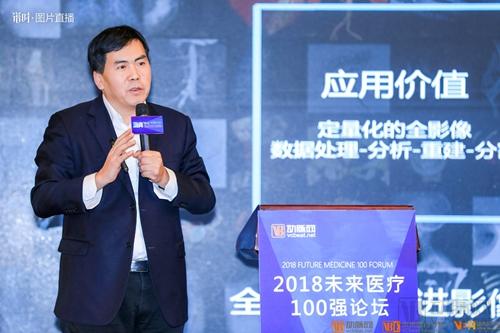
Huang Yedong, Chairman of Xi'an Yinggu
Ningke: Imaging-Guided Clinical Practice, Data-Driven Services
In Ning Ke’s view, the medical imaging sector can leverage sales services to export operational management capabilities while simultaneously broadening data acquisition channels.
Medical imaging requires a comprehensive service solution, encompassing consulting services, equipment utilization services, site planning and design services, training services, informatics services, and operational management services.
Precise diagnosis through medical imaging can drive clinical advancement, enhance the patient care experience, and elevate the professional status of radiologists.
Furthermore, data-driven services can establish imaging data service scenarios using imaging data, enabling the development of new technologies on data platforms.
To expand the number of medical imaging centers and scale up the enterprise, the following three points must be addressed:
First, establish a data production factory to acquire data service capabilities while simultaneously enhancing medical service capabilities.
Second, form a high-quality data chain from production data and deploy it in cloud platform scenarios.
Third, monetize data applications by leveraging data combined with service capabilities.
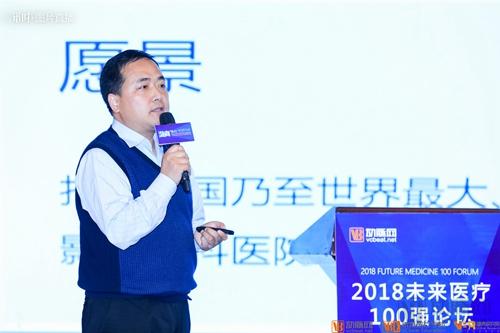
Ning Ke, Senior Vice President and Chief Medical Officer of Yimai Yangguang Group