

Third-Party Medical Services Market Holds Immense Potential in AI Diagnostics, Sterilization Supply, Chronic Disease Management, and Rehabilitation Nursing: VB100 Insights
The 2018 Top 100 Future Healthcare “Internet+ Smart Hospital” Forum, themed “Trend ING,” was held on August 18–19, 2018, at the Renaissance Beijing Chaoyang Hotel in Chaoyang District, Beijing.
At the Third-Party Medical Services Forum held on the afternoon of December 19, Song Zhigang, Deputy Director of the Department of Pathology at the Chinese PLA General Hospital; Xu Jing, General Manager of Julikang; Wang Jian, Deputy General Manager of Wuhan Landing Medical; Gao Xing, CEO of Aishen Medical; Lu Ji’en, CEO of Ruihua Xinkang; Sun Zhaochang, Chairman of Kaipu Imaging; and Zou Guowen, Partner at Daotong Investment, participated in the forum and delivered insightful speeches.
VCBeat has compiled and edited the key highlights from the guest speakers’ presentations; the selected content is presented below.
Song Zhigang, Deputy Director of the Department of Pathology, Chinese PLA General Hospital
Topic: Pathological Diagnosis System for Gastric Diseases—From Methodology to Implementation
Mr. Song Zhigang summarized the two major pain points in current cancer treatment:
1. Cancer treatment is becoming increasingly personalized, and the ever-finer subtyping of tumors has led to a significant increase in the time physicians spend on each case; however, the current number of pathologists in China is disproportionately low relative to demand.
2. Diagnostic criteria vary among physicians due to subjective influences.
These pain points can all be addressed with the help of AI. AI technology can identify issues from multiple perspectives, much like an infrared camera, offering specific advantages such as tireless operation, prevention of missed diagnoses, consistent standards, and continuously improving diagnostic accuracy.
Therefore, to develop robust AI models, computer engineers require physicians to “train” them using large volumes of data.
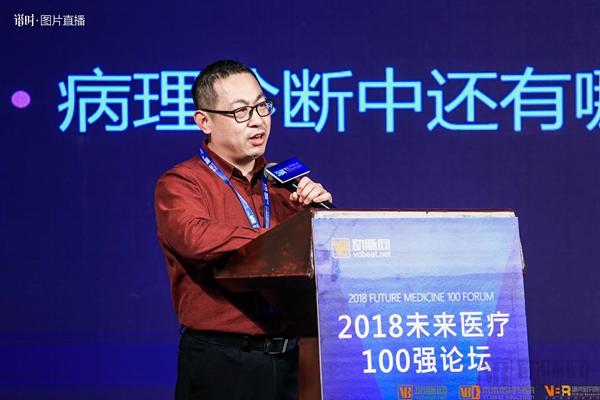
Data has a significant impact on AI-based diagnosis, but data accumulation is a gradual process. Throughout this process, it is essential to ensure the accuracy and objectivity of the data, establish qualification criteria for data annotators, and conduct multiple rounds of review and verification.
Without sufficient data support, AI may overdiagnose inflammation as tumors; however, as the volume of data increases, the likelihood of such overdiagnosis continues to decline.
Mr. Song Zhigang introduced the pathological diagnosis system for gastric diseases at the Chinese PLA General Hospital.
By applying this system, digital slides can be uploaded to the server via high-throughput scanners. The server performs background analysis, generating an auxiliary diagnostic conclusion for each case in approximately ten seconds.
After logging into the physician client, doctors will see an analysis page displaying the likelihood of lesions, sorted by lesion area size. Doctors can review and verify the cases with the highest probability and largest area. If the physician’s diagnosis aligns with the AI-assisted diagnostic results, they can directly draft the diagnostic report without further microscopic examination of physical tissue sections, enabling remote operation at any time and from any location.
This diagnostic system is highly scalable and can be applied not only to gastric cancer but also to colorectal and esophageal cancers.
Mr. Song Zhigang stated that future plans aim to improve the specificity of AI diagnostic models, maximize the identification of negative cases, and strive to cover the full spectrum of malignant tumors, thereby achieving the true goal of screening for malignancies. The next step will involve incorporating benign lesions into the benign tumor category, with the aim of completing product development as soon as possible.
Xu Jing, General Manager of Julikang
Topic: Collaborative Work Platform and Management for Third-Party Sterile Supply Centers and Healthcare Institutions
In hospitals, sterilization services are referred to as the Sterile Supply Department, a hospital-affiliated subspecialty that provides supporting assurance to mainstream clinical specialties. As external providers, they are known as Regional Sterile Supply Centers, which deliver standardized management models to ensure the supply of sterile items for healthcare institutions.
China’s market for sterile supply services in medical institutions is approaching RMB 50 billion, a scale that will catalyze the emergence of numerous service providers and enterprises. The robust growth of the third-party sterile supply industry is primarily driven by four key factors:
1. Regulatory pressure resulting from the implementation of standards;
2. In-hospital infection control: mandatory testing;
3. Cost Control Requirements in Hospital Accreditation;
4. Support from National Policies.
In 2010, Julikang established its first regional sterile supply center in Shanghai, and currently operates seven centers across China. Ms. Xu Jing used Julikang as a case study to introduce how third-party sterile supply centers collaborate with healthcare institutions in terms of operations and management.

The entire service process of the Sterile Supply Department involves both in-hospital and out-of-hospital operations, with external services primarily interfacing with hospitals through the sterile item supply chain. All internal supplies adhere to the same standards as those implemented by the hospital, covering areas such as the contaminated zone, inspection zone, and distribution of sterile items. Data sharing with the hospital regarding operational models, quality control processes, market data, and workload reports is achieved through an internal MS management platform.
In the operating room client system, Julikang has installed a sterile inventory management system. Staff members review tracking data collected throughout the day for hospital inspections, while control personnel enter the operating rooms to assist hospitals with backend data organization.
Julikang has also achieved integration with hospital internal systems for the quality traceability of sterile items. In the event of any disputes from patients or medical staff, all physical parameters and operation logs of the items can be directly traced via QR code scanning, truly realizing the principle of “outsourcing services, but not quality” for sterile items.
For large-scale tertiary Grade A hospitals with high patient volumes, Julikang places greater emphasis on integrating in-hospital and out-of-hospital operations. An emergency supply activation center has been established within the hospital, where urgent items are processed on-site, while routine items are returned to third-party providers for handling. Ms. Xu Jing stated that, for in-hospital sterilization rooms, items must be linked to specific personnel during use to enable true traceability of supplies on the management platform.
Sterile supply services, as a third-party offering, require the establishment of a collaborative management platform with hospitals. This platform should not only deliver services and standardized management but also foster a quality-and-safety-focused system for ensuring the integrity of sterile items. Julikang is committed to building a third-party sterile item supply chain platform and is currently expanding its project portfolio on this platform. One such initiative is the Precision Operating Room Management Module developed for Grade III Class A hospitals, which manages surgical equipment and instruments.
Ms. Xu Jing stated that Julikang will next provide comprehensive services for the use of operating room instruments, including leasing solutions for surgical instruments. It is expected that by the end of 2019, 19 precisely intelligent sterile supply centers, incorporating warehousing, logistics, and item identification, will be operational.
Wang Jian, Deputy General Manager of Wuhan Landin Medical
Topic: The Revolution and Innovation in Tumor Cell Diagnosis Triggered by AI and Cloud Diagnostic Technologies
Mr. Wang Jian introduced the revolution and innovation in tumor cell diagnosis driven by AI-powered cloud diagnostics, based on Landing Medical’s AI-based cervical cancer screening system.
Traditional cervical cancer cytology screening relies on physicians or technicians making diagnoses under a microscope based on their experience. In contrast, AI-powered cervical cancer screening systems can assist clinicians in accurately detecting early precancerous lesions, making cervical cancer highly likely to become the first malignant tumor eradicated through preventive screening.
Currently, there are approximately 300 million women in China who require regular and repeated cervical cancer screening. The supply-demand imbalance in this area has made it impossible to conduct comprehensive cervical cancer screening exclusively at large hospitals, necessitating that such services be provided primarily at the primary care level. However, the most pressing issue in China today is the shortage of pathologists at the primary care level, coupled with inadequate diagnostic technologies and equipment.

Against this backdrop, Landing Medical has developed an AI-powered cervical cancer screening system. This system leverages a combination of artificial intelligence and cloud-based diagnostics: the analysis software is hosted on Landing’s Alibaba Cloud platform. Primary care physicians can upload images to the cloud platform via scanners, where automated intelligent diagnosis is performed. The diagnostic results are then transmitted to physicians or relevant technical personnel. These professionals screen and verify abnormal cells, and directly send the final diagnostic results to patients via mobile phones. The entire process is completed within one hour and is not constrained by geographic location, thereby achieving true remote diagnosis.
In the field of cervical cancer screening, in addition to diagnosis, Linding Medical has established a management system that enables expert quality control and government oversight, while allowing screened women to track the entire process.
It is reported that Landin’s AI-powered cervical cancer screening system has been deployed in more than 300 hospitals across China, capable of completing over 8,000 scans and diagnoses per day.
Through AI-powered cloud diagnostics, third-party medical service providers and healthcare institutions can achieve shared technology, data, resources, and expertise. Mr. Wang Jian stated that in the future, Landin Medical will fully integrate the Internet of Things (IoT), internet technologies, artificial intelligence, cloud computing, and big data to effectively address the challenges of time, space, and depth in tumor cell diagnosis.
Gao Xing, CEO of Aishen Medical
Topic: Exploring a Full-Cycle Management Platform for Kidney Disease
Kidney disease is a chronic condition that demands strict dietary management. However, most public hospitals in China do not offer specialized nutritional services for kidney patients. Therefore, at its inception, AiShen Medical chose patient education on renal nutrition as its entry point. After more than a year of development, AiShen Medical has now partnered with over 500 public hospitals across China to provide educational services on kidney disease nutrition.
Mr. Gao Xing stated that by entering the market through renal nutrition, the company can quickly achieve profitability and help Ai Shen Medical acquire precise kidney disease patients at a low cost. Ai Shen Medical has established a community for kidney disease patients, and currently, more than 500 patients join the renal nutrition community each week without any marketing expenses.
Following the completion of its platform development, AiShen.com has also been providing support to third-party medical institutions. Every month, nephrology experts from various hospitals engage in professional exchanges on the AiShen.com platform. For third-party hemodialysis centers, AiShen.com assists with brand building, marketing promotion, and patient referral.
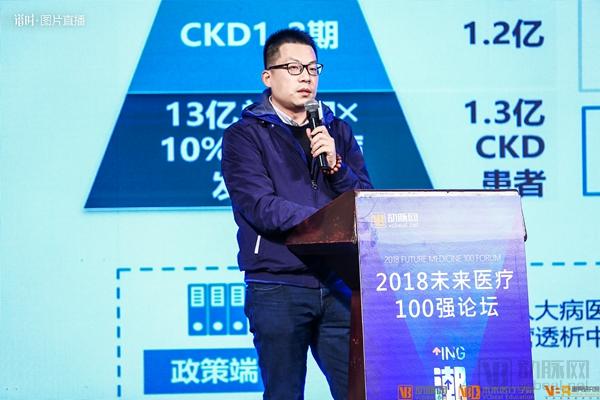
AiShen Medical is also collaborating with Fortune 500 pharmaceutical companies to conduct new drug surveys within the AiShen Web community. Following pharmaceutical reforms, new drugs seeking distribution through public hospitals and other channels can also be marketed via AiShen’s own specialized nephrology hospitals and internet hospitals.
According to Mr. Gao Xing, hemodialysis centers are currently facing challenges such as insufficient patient volume and a singular revenue model. A single dialysis center typically serves only slightly over 100 patients; however, by integrating with an internet hospital, it can manage a larger population of chronic disease patients. For instance, patients in the early stages of kidney disease can undergo screening at Ai Shen Medical’s offline dialysis centers or specialized nephrology hospitals. Following diagnosis, long-term medication management and follow-up care can be conducted via the internet hospital. Conversely, if patients require in-person examinations or dialysis treatment, these services can be provided at Ai Shen’s offline dialysis centers or through third-party medical institutions.
In the second half of this year, Aishen Medical established a procurement platform tailored for the supply chain of third-party hemodialysis centers, operating as a B2B e-commerce platform. This approach helps medical institutions within the Aishen Medical network, as well as third-party healthcare providers, reduce procurement costs and improve purchasing efficiency. The platform has been live for only three months, with monthly procurement volume already exceeding RMB 1 million.
Next, Aishen Medical aims to deepen its collaboration with third-party medical institutions through an integrated online-offline model, thereby facilitating the offline implementation of more online services.
Lu Jien, CEO of Ruihua Xinkang
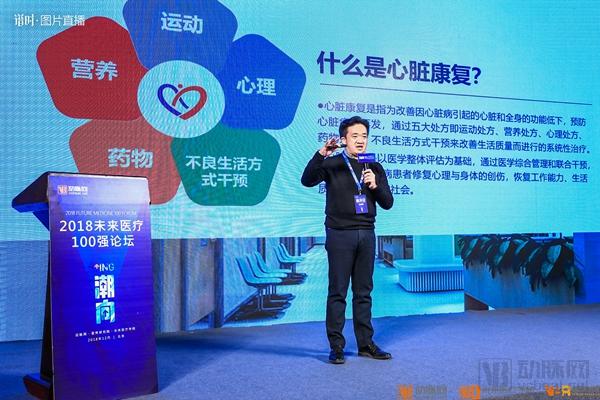
Title: Current Status and Development of Cardiac Rehabilitation in China
The concept of cardiac rehabilitation emerged in 1921, with significant advancements made in each subsequent decade. Cardiac rehabilitation can reduce the incidence of cardiovascular events, lower mortality rates, extend patient life expectancy, improve quality of life, decrease healthcare costs, and conserve social resources.
Currently, the three countries leading in cardiac rehabilitation are the United States, Japan, and Germany. In 1986, the United States established its first cardiac rehabilitation association composed of cardiology specialists. Japan ranks first in Asia but lags behind the United States in terms of refined management. Germany provides legislative support for cardiac rehabilitation; if patients do not undergo cardiac rehabilitation, the government will not reimburse the costs of their prior surgeries.
In 1997, China established the Cardiac Rehabilitation Committee. It was not until 2013, after the State Council issued the "Several Opinions on Promoting the Development of Health Services," that large-scale construction of cardiac rehabilitation centers began. Currently, there are 500 cardiac rehabilitation centers in China, with a higher concentration in the Northeast and North China regions. However, the vast majority of these 500 centers are departments within Grade A tertiary hospitals, rather than independent cardiac rehabilitation facilities.
There is still significant room for development in cardiac rehabilitation in China. Currently, cardiovascular disease accounts for the highest proportion of total mortality, with rates of 44.6% in rural areas and 42.51% in urban areas; on average, two out of every five deaths are attributable to cardiovascular disease. Without the implementation of cardiac rehabilitation programs in China, the number of patients with cardiovascular disease will continue to rise.
Cardiac rehabilitation is not covered by medical insurance in China. However, the cardiac rehabilitation market in China holds significant growth potential. It is essential to integrate, draw upon, and absorb new technologies and innovations tailored to the healthcare characteristics of the Chinese population, thereby forging a path for cardiac rehabilitation development with distinct Chinese features.
Lu Jien outlined a closed-loop treatment chain for cardiac rehabilitation: surgical procedures are performed at tertiary hospitals, followed by postoperative care at specialized cardiac rehabilitation hospitals, then long-term management is transferred to community health centers; if complications arise, patients are referred back from community health centers to tertiary hospitals.
Sun Zhaochang, Chairman of Kaipu Imaging
Topic: Third-Party Medical Imaging – How to Effectively Unlock Service Capacity
Sun Zhaochang stated that the market share of China's medical imaging examination industry is currently widely estimated at approximately RMB 400 billion, a figure that continues to grow steadily.
On November 28, 2016, Kaipu Imaging opened China’s first third-party medical imaging center in Harbin. Currently, four centers are officially operational—two in Harbin and two in Shenyang. Two additional centers in Jilin City and Changchun are scheduled to commence operations shortly. With this, Kaipu Imaging has essentially completed its strategic layout in Northeast China. In addition to these six centers, seven more are under construction across China.

All 13 of Kaipu Imaging’s currently operational and under-construction imaging centers are located within Grade A tertiary hospitals. Mr. Sun Zhaochang explained that this model places the centers closest to both specialists and patients, whereas smaller hospitals lack such expertise and equipment. Although situated within hospitals, Kaipu Imaging’s medical imaging centers operate independently.
Kaipu Imaging has also developed a cloud service platform, which currently connects dozens of private hospitals. In addition to preparing reports for its own imaging centers, its team of experts also provides services to third-party medical institutions.
Kaipu Imaging has completed its Series B financing round of RMB 150 million. The number of imaging diagnosis cases is projected to grow from several hundred per day to over ten thousand per day within the next three years, with the aim of establishing approximately 50 imaging centers by 2021.
Currently, Kaipu Imaging has three development directions:
1. Continue to establish imaging centers nationwide;
2. CT R&D and Manufacturing. Since its establishment in 2015, Kaipu Imaging has developed two spectral CT models;
3. Veterinary Medical Imaging. Kaipu Imaging divides its business into two segments: the Human Imaging Center and the Animal Imaging Center.
Zou Guowen, Partner at Daotong Investment
Title: The Pie and Pitfalls of Investing in Third-Party Medical Services
The key drivers of third-party medical services consist of two aspects: policy and payment. Only by adopting a "technology + service" model while simultaneously building their brand can third-party medical service enterprises establish a competitive moat.
Daotong primarily invests in healthcare services and innovative technologies, largely adopting a closed-loop strategy. While it may appear to target specific points, the investments actually form an ecosystem with mutual synergies. Mr. Zou Guowen stated that only projects with both demand and supply that create a closed loop are worth investing in, as this also facilitates post-investment management.

Mr. Zou Guowen shared VCBeat’s “Four Investments and Four Non-Investments” principle:
1. Do not invest in areas where public hospitals can already meet mass-market demand. For services that public hospitals are capable of providing, private enterprises should not merely fill gaps but rather compete directly; however, competing with public hospitals is extremely challenging.
2. Avoid projects whose revenue heavily relies on medical insurance reimbursements and pharmaceutical sales. Medical insurance regulations and drug inspections will become increasingly stringent; with the elimination of markup allowances, other profit margins will also be adversely affected;
3. Do not invest in high-risk critical projects. Such projects, should issues arise, would have a significant social impact;
4. Do not invest in non-profit organizations. There are fundamental obstacles to the public listing of non-profit organizations.
The “Four Targets” are: mid-to-high-end; self-pay; non-critical care; and for-profit institutions.