

Pathways to Innovation in Health Management Models: Insights from VB100
On December 18, the “2018 Future Healthcare Top 100” forum, hosted by VCBeat, Eggshell Research Institute, and Future Medical Academy, and co-hosted by Legend Capital, BV Baidu Venture Capital, KPMG China, and Health Intelligence Valley, grandly opened at the Renaissance Beijing Capital Hotel. As an annual flagship event organized by VCBeat, it featured active collaboration from innovative healthcare institutions and distinguished guests, with attendance exceeding 2,500 participants.
The conference featured a parallel forum on innovation in health management models, where distinguished guests from the fields of medical devices, mental health, traditional Chinese medicine conditioning, medical nutrition, and community health management, as well as representatives from the investment community, explored innovative approaches to health management from diverse perspectives.
In 2016, the issuance of the “Outline of the ‘Healthy China 2030’ Plan” ignited China’s health management sector. In 2017, leading companies secured substantial financing, while tech giants, real estate developers, and insurance firms—well-capitalized players from other industries—crossed over to carve out their share of the market. In 2018, the health management sector did not witness the introduction of major policy initiatives as it had in the previous two years. This pre-diagnostic market segment, with innovative business models as its primary entry point, remained largely in its early stages, with profitability models still under exploration.
What are the viable monetization pathways for health management? Which companies are the darlings of capital? What new scenarios are emerging for the practical application of technology in the health management sector? Centered on these questions, this Health Management Model Innovation Forum will conduct in-depth discussions.
Guests and Topics of the Sub-forum:
Guan Yan, Secretary-General of the Smart and Mobile Healthcare Branch of the China Association for Medical Device Industry
Keynote Address: Current Status and Development Trends of Medical Devices in the Health Management Industry
MiaoHealth CEO Kong Fei
Keynote Speech: The 2018 Unhealthy Dictionary
Ji Jun, Founder and CEO of Wanling Pangu
Keynote Speech: AI-Empowered Mental Health: How Business Models Can Help
Yisheng Daojia CEO Sun Jinzheng
Keynote Speech: Building a New Model of Health Management with Traditional Chinese Medicine Conditioning Framework
Chen Yuxin, Founder and CEO of Yingkang Technology
Keynote Speech: Innovative Development of Professional Medical Nutrition Services
Zhang Peng, Founder of Jia You Jian Kang
Keynote Speech: Model Innovation in Community Health Management Services
Zheng Yufen, CEO & Managing Partner of Yueyin Medical Fund
Keynote Speech: New Models in Health Management
This article is compiled from the guest’s sharing, with edits and abridgments. The main text follows.
Guan Yan, Secretary-General of the Smart and Mobile Healthcare Branch of the China Association for Medical Device Industry
[Current Status and Development Trends of Medical Devices in the Health Management Industry]
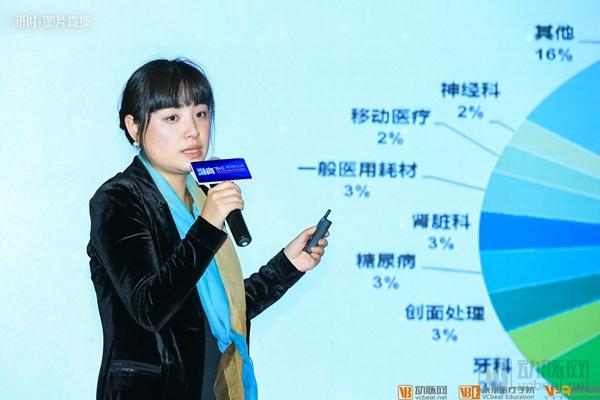
Guan Yan, Secretary-General of the Smart and Mobile Healthcare Branch of the China Association for Medical Devices Industry
Currently, global sales of medical devices have rapidly increased from $309 billion in 2009 to $371 billion in 2015, with a growth rate exceeding the GDP growth during the same period. In 2017, the global medical device market grew by approximately 5.9%, and in 2018, it grew by about 5%.
In the global medical device industry landscape, IVD has become the largest sector. The cardiovascular field ranks second with a market size of approximately $50 billion. Due to the slower update cycle of imaging equipment, it has been gradually surpassed by cardiovascular diagnostics, dropping from the top position to third place, with a market size of around $45 billion.
In terms of innovation in the global medical device industry, the United States, Europe, and Japan maintain a leading position in both the speed and level of innovation, accounting for nearly 90% of the market share. In recent years, the medical device markets and industries in China, India, Russia, Brazil, and other countries have also experienced rapid growth. Regarding innovation in medical devices, the United States ranks first in innovation capability; in 2016, the U.S. innovation rate was 7.1%, while China’s was 3.4%, ranking 11th.
Currently, a complete industrial chain has been established in the global medical device sector, with upstream industries including electronics, biotechnology, and materials, and downstream sectors comprising hospitals, other health-related industries, and individual households. The industry is maintaining a high growth rate, characterized by increasing globalization, enhanced industrial services, and continuous innovation. As the global medical device industry enters an era driven by capital, escalating regulatory pressures have become a significant challenge for companies worldwide.
According to data from the Ministry of Industry and Information Technology, the annual growth rate of the medical device industry was approximately 15% from 2014 to 2016. The total output value of medical devices reached roughly RMB 504.99 billion in 2017, and rose to RMB 700 billion from January to September 2018, representing a year-on-year increase of 29.65%. Over the next five to ten years, the growth rate of the medical device sector is expected to stabilize, similar to trends observed in developed countries, maintaining a range of 5%–8%.
From a data perspective, the medical device industry boasts promising prospects but also faces numerous challenges. First, marketing models have shifted, with significant gross profits being eroded in distribution channels. Second, market focus has transitioned from mainstream hospital markets to primary healthcare settings and even the home-use medical device segment. Third, profit margins have shrunk: while gross margins for medical devices and in vitro diagnostics (IVD) once reached 90%, net profit margins later stood at 30%, and currently, the overall net profit margin for the entire medical device sector is below 30%.
Therefore, the health management sector has become the next potential market for medical devices to develop.
In the 1950s, the United States introduced the concept of health management. In 1969, the U.S. federal government implemented a policy to incorporate health management into the national healthcare program. In 1973, the U.S. federal government formally passed the Health Maintenance Organization Act, authorizing health maintenance organizations to establish gatekeeping mechanisms to curb excessive medical services and control rising healthcare expenditures. In 1978, the University of Michigan established the Health Management Research Center, aimed at studying lifestyle behaviors and their impact on lifelong health, quality of life, vitality, and healthcare utilization. Currently, over 90 million Americans are enrolled in Preferred Provider Organization (PPO) plans, which are low-cost health insurance programs, and seven out of every ten Americans have access to health management services.
The United States categorizes health management into six types: lifestyle management, demand management, disease management, catastrophic illness and injury services, disability management, and integrated population health management. In each category of health management, medical device products are essential and play a critical role.
In China, due to the objective realities of a rapidly aging population, challenges in chronic disease management, and difficulties and high costs associated with accessing medical care, there is an urgent demand for health management services. However, public awareness of health management remains low. For many people, health management is still a novel concept, and its practice in China is currently at a nascent stage.
Currently, there are four primary models of healthcare and health management in China. The first is the management model of affiliated hospital institutions, where inherent medical equipment cannot be differentiated from subsequent diagnostic, therapeutic, and health management services. The second is the health management model of community health service institutions, characterized by outdated medical equipment that fails to align with health management systems. The third is the health management service model of specialized physical examination centers, which feature relatively simple equipment and are primarily profit-driven. The fourth is the third-party management model, comprising non-professional health management institutions whose equipment consists largely of unbranded, unlicensed, and substandard products, resulting in highly variable quality.
Based on the above, medical devices in China’s health management industry will follow two major development trends. The first is the global trend toward digitalization. In 2018, the global digital health market was valued at RMB 179.8 billion, and it is projected to reach RMB 3.6 trillion in the future, indicating immense growth potential for digital healthcare worldwide.
However, it is important to note that the digitalization of healthcare begins with the digitalization of medical equipment. Digital medical devices are the most critical foundational infrastructure in the construction of both healthcare service systems and public health systems. Currently, digital medical devices in China still face certain challenges, such as a heavy reliance on imported core components, insufficient product functionality and performance to effectively meet clinical needs, and gaps in stability and reliability. Therefore, digital transformation is a long-term process, and the digital transformation of healthcare may be even more protracted.
The second trend is the advancement of artificial intelligence. Currently, medical AI has four key areas of focus: medical imaging, virtual assistants, health management, and drug research and development. However, as George A. Mensah, Director of the Center for Translation Research and Implementation Science at the National Heart, Lung, and Blood Institute (NHLBI) of the U.S. National Institutes of Health (NIH), has pointed out, there are several challenges in AI-driven health management. These include ensuring data quality, acquisition, harmonization, processing, visualization, and interoperability; leveraging computational tools to improve data access and facilitate data analysis; providing user-friendly, intuitive devices and compatible formats for decision support; employing tools capable of tracking patient information and delivering rapid feedback for personalized healthcare; formulating and implementing policies for privacy protection and data sharing; and addressing the shortage of health data analysts despite the abundance of health data by strengthening relevant training and education.
Kong Fei, CEO of Miao Health
[2018 Unhealthy Dictionary]
Miao Health CEO Kong Fei
What Is Health Management? In essence, the core of health management lies in two key aspects: “management” and “rationale.” “Management” refers to adherence—following prescribed guidelines and requirements. “Rationale” involves clarifying the underlying principles, including the reasons for and benefits of such practices.
In the past, health management was merely health education, lacking both “management” and “organization.” When patients with diabetes visited hospitals, doctors would advise them to take their medications on time and to “watch their diet and increase physical activity.” However, how were patients supposed to implement this advice? The recommendation was too vague to be termed “health management”; it did not even qualify as health education. What Miao Health aims to deliver is genuine health management.
Typically, healthcare is a low-frequency scenario that inherently lacks internet characteristics. Miao Health’s logic for health management is to excel in delivering health management services, thereby transforming low-frequency scenarios into tools for traffic monetization. Based on this logical design, approximately 1.16 million people use Miao Health’s products daily, generating 67.28 million M-Values (M-Value refers to the Health Behavior Index).
We primarily address two issues in health management:
First, transform health education into health management by leveraging data to track health plans, thereby fulfilling the role of health management.
Second, by leveraging artificial intelligence to create comprehensive health profiles for each user, establishing a repository of clinical expertise, and employing algorithms to match individuals with personalized health management plans, we ultimately derive a Health Living Index.
Data from the Miaojiankang backend shows that individuals aged 30 to 50 account for 70% of the user base. Through data analysis, we have developed profiles for this demographic and identified several common categories of individuals engaging in unhealthy behaviors:
The first category is the "Chair-Bound" group, primarily comprising individuals aged 20 to 50, who account for 44% of the entire backend population. Sedentary behavior is particularly prevalent among younger individuals, and prolonged sitting is a significant risk factor for chronic diseases.
The second group is the “Steady Heart” faction. Many of them apply the best facial masks while staying up late into the night. Although they are aware that sleep deprivation is harmful, they still consistently get less than six hours of sleep per day.
The third category is “Waiwei Ren,” referring to individuals who order food delivery. In first-tier cities such as Shanghai, Beijing, and Hangzhou, the population of food delivery users is substantial.
The fourth category is the “misclassified obese.” Tianjin has the highest obesity rate, followed by Shanxi, and then Liaoning, Hebei, and other regions.
The fifth category is the “health novice.” These users download the Miaojiankang app but never use it; after registration, they become churned users. Many of them are unwilling to learn even the most basic health knowledge.
Therefore, we hope to analyze and distill insights from the data tracked over the past two years that offer valuable references for the development of the industry and health management, for your consideration.
Meanwhile, we have also developed solutions for regional health management and gamified health management operations. Gamers are prone to addiction, but it is not the games themselves that they are addicted to; rather, it is the sense of comfort and relaxation that gaming provides. Therefore, we may be able to incorporate these feelings into health management. Over the next two to three years, Miao Health will make some attempts in this area.
Ji Jun, Founder and CEO of Wanling Pangu
【AI-Empowered Mental Health: How Business Models Can Help】
Ji Jun, Founder and CEO of Wanling Pangu
As a technologist, my greatest aspiration is to make unequal and non-universal resources universally accessible. Healthcare resources are inherently non-universal, with mental and psychological health services representing the most underserved segment within this already disadvantaged sector. Therefore, I aim to leverage artificial intelligence to “technologize” expert resources—currently utilized by only a select few—and provide them on a universal basis to the broader population. This target population is not limited to patients, as psychological issues exist independently of formal clinical diagnoses.
Most people do not have mental illnesses; they are merely experiencing psychological issues. A 2017 survey by the Institute of Psychology, Chinese Academy of Sciences, revealed that only about 11% of individuals are completely mentally healthy, while 89% exhibit varying degrees of psychological problems. The remaining 10% constitute clinical cases requiring management, screening, diagnosis, and intervention.
Early symptoms of mental and psychological disorders can be screened through AI-assisted physician evaluation. Clinicians have limited time to interact with each patient during face-to-face consultations, whereas AI offers ample availability. By collaborating with specialists, AI can engage patients in dialogue and generate preliminary diagnostic results based on knowledge graph data analysis, thereby enabling experts to make more accurate diagnoses during in-person consultations.
In daily life, many people experience somatic symptoms that lack a clear medical explanation, such as back or neck pain. Hospital examinations often reveal no abnormalities. This does not reflect inadequate clinical competence; rather, these symptoms have not progressed to the stage of organic pathology. This patient population accounts for approximately 100 million outpatient visits annually. We aim to identify these individuals within the hospital setting and guide them to the appropriate medical departments.
We collaborate with top-tier experts to establish a closed-loop model, powered by machine intelligence, that spans screening, diagnosis, and intervention. Our primary focus is on disease screening and prognosis management. Our original aspiration is to leverage technology to make expert care accessible to every individual in need.
In this closed-loop model, we begin with screening, which has a wide range of application scenarios, including physical examinations, somatic assessments, and psychological screenings. The diagnostic phase is also equipped with relevant tools. Interventions include both pharmacological and non-pharmacological approaches. Psychiatric medications can have significant stimulatory effects on the brain, while non-pharmacological interventions encompass various schools of thought, such as psychological counseling and cognitive behavioral therapy (CBT). CBT can be standardized into protocols, allowing us to trace back to the root causes and modify patients’ behaviors through Cognitive Processing Therapy (CPT).
From diagnosis to intervention, our primary technologies are deep learning and natural language processing. Application scenarios include health checkup early-warning systems, where AI engages patients in conversations to identify potential health gaps. Knowledge graphs assist us in screening and intervention; experts continuously label data, enabling the system to extract relevant knowledge via algorithms and integrate it into the machine, ultimately forming an application model that combines “mechanisms + data.”
Sun Jinzheng, CEO of Yisheng Daojia
【Building a New Model for Health Management with Traditional Chinese Medicine Conditioning】
Yisheng Daojia CEO Sun Jinzheng
Health management is a medical service dedicated to the long-term maintenance of human health, encompassing sub-health conditioning, health screening, health management, and medical consultation services. Establishing a complete service chain is the true essence of health management.
The true focus of health management lies beyond disease itself. Therefore, in the future, health management will evolve into a service that is closely integrated into people’s daily lives, readily accessible, and capable of addressing their health concerns. Traditional Chinese Medicine (TCM) holds that “the superior physician treats disease before it arises.” In fact, such a physician must not only prevent disease but also effectively treat established conditions.
Our goal is to provide health management services through Traditional Chinese Medicine (TCM) conditioning. TCM holds significant value in health management, as it not only treats diseases but also helps patients regulate and improve their overall health.
The essential attributes of Traditional Chinese Medicine (TCM) are “simplicity, convenience, efficacy, and affordability.” Simplicity means that problems can be resolved without the need for any special equipment or materials. Convenience refers to easy accessibility across various settings. Efficacy denotes significant clinical effectiveness. Affordability indicates low cost; TCM conditioning can be tailored to individual needs, thereby conserving resources and providing tangible health benefits to the general public.
Currently, the primary pain point in the grassroots health services market is the disconnection among medical institutions, national requirements, and residents’ needs, which must be addressed through healthcare innovation.
So, how can medical services serve as an entry point? The first challenge to address is frequency. It is difficult for medical services to act as an entry point on their own; however, by leveraging Traditional Chinese Medicine (TCM) conditioning, we can establish strong connections with users and will integrate additional services in the future. Secondly, TCM conditioning features broad market applicability, enabling coverage across all age groups, from children to the elderly. Thirdly, TCM conditioning demonstrates high user stickiness, resulting in strong retention and stability.
We provide users with a comprehensive service ecosystem through a “physician + technology” model, encompassing home visits, self-operated clinics, community hospitals, and corporate physiotherapy rooms, enabling convenient access to testing and a broader range of medical services. By partnering with numerous companies, we can establish an integrated healthcare platform that leverages a large front-end user base and extensive back-end data. Through the sharing of users and data, this platform aims to improve health outcomes for a wider population.
We ultimately aim to use Traditional Chinese Medicine (TCM) conditioning as the entry point for medical services, thereby bridging the last mile of health management services.
Chen Yuxin, Founder and CEO of Yingkang Technology
[Innovative Development of Professional Medical Nutrition Services]
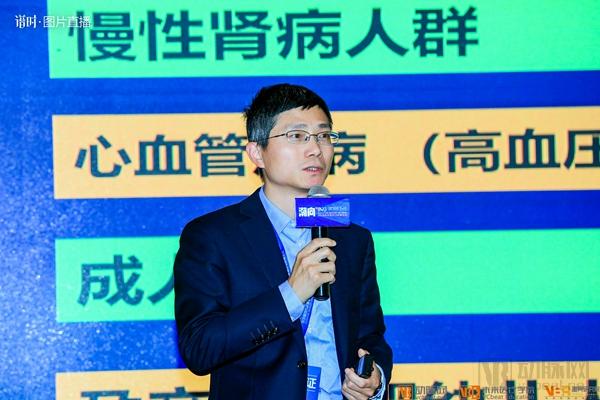
Chen Yuxin, Founder and CEO of Yingkang Technology
It is often said that today’s patients exhibit three characteristics: a growing patient population, an increasing prevalence of chronic diseases, and a nationwide emphasis on health preservation. This suggests that nutrition is both familiar and unfamiliar to the general public.
Many people hold misconceptions about “nutrition,” believing that it merely involves the use of nutritional education and preventive measures to treat and improve certain nutrition-related diseases. This is not the case.
Professional dietitians hold physician practice certificates or have received specialized professional training. They are individuals with a background in clinical nutrition, serving patients with nutrition-related diseases. The target populations for medical nutrition include cancer patients, individuals with kidney disease, those with cardiovascular conditions, adults with obesity, and pregnant women and young children.
Survey data indicate that 57% of hospitalized patients suffer from moderate to severe malnutrition. Additionally, a subset of patients experiences weight loss and other nutrition-related complications following chemotherapy during hospitalization. The population requiring medical nutrition therapy exhibits three distinct characteristics: first, the patient base is substantial; second, nutrition-related diseases are difficult to cure; and third, these patients are initially admitted for other primary conditions, yet require medical nutrition support throughout both their hospital stay and rehabilitation process.
Although the population base is large, medical nutrition remains a challenging field. The primary reason is the lag in policies and regulations; it was not until 2009 that China began establishing clinical nutrition departments in hospitals and developing nutrition disciplines in academic institutions. Secondly, there is a lack of nutritional awareness among clinicians. While doctors in major cities are gradually improving their awareness, those in smaller cities still generally lack sufficient knowledge in this area. Thirdly, the department of nutrition started late, with a weak foundation and a lack of effective drivers for development. Fourthly, public awareness of nutrition is relatively low, as the population has been primarily influenced by the health supplement market rather than receiving proper nutritional education.
How Can Yingkang Break Through in the Field of Medical Nutrition?
First, perseverance: this signifies confidence in the industry’s future, coupled with a strategic assessment of whether one can establish sustainable market barriers. Second, rethinking operational models: the future landscape will inevitably involve numerous physicians serving hundreds of millions of users, a scenario that necessitates robust service connectivity and collaboration, underpinned by technological support. Third, integrating physician resources. Fourth, leveraging AI and big data to alleviate physicians’ workload. Fifth, fostering open collaboration.
After two to three years in the mobile health sector, we have firmly chosen to expand into offline services, prioritizing support for physicians and, ultimately, enhancing care for patients. Meanwhile, we will build a specialized database through extensive clinical practice. Thirdly, we will focus on addressing the nutritional needs of hospitalized patients by delivering high-quality in-hospital patient services.
Therefore, our business architecture comprises three segments: software services, product services, and physician group services.
In terms of software business, we meet all the needs of nutritionists for the software and fulfill the core development requirements necessary for business growth.
In terms of product business, we have established partnerships with all nutritional product manufacturers through specialized services to jointly meet the diverse product needs of patients.
In the business operations of physician groups, focus on the core entities providing professional out-of-hospital services to cultivate the out-of-hospital market.
Medical nutrition has undergone positive changes in recent years. The discipline began to take shape in 2009, and by 2016, medical nutrition had entered a stage of standardized development and industrialization. Meanwhile, supportive policies promoting the industrialization of medical nutrition have been successively introduced. Clinicians’ awareness of nutrition has improved, and the standing of nutrition departments within hospitals has risen. These developments indicate that medical nutrition is rapidly progressing in a favorable direction, suggesting that its “spring” is just around the corner.
Founder of Jia You Health, Zhang Peng
[Model Innovation in Community Health Management Services]
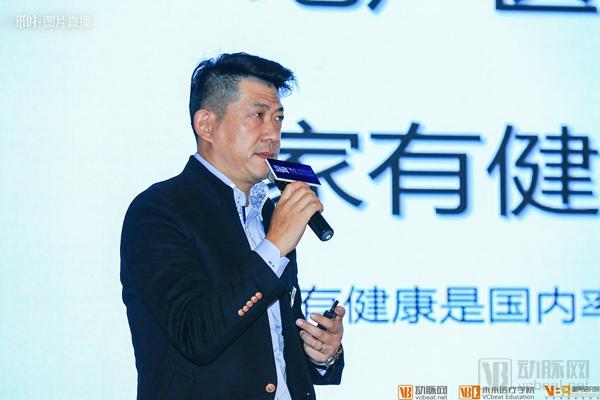
Zhang Peng, Founder of Jia You Jian Kang
What are the differences between real estate-integrated healthcare, traditional healthcare, and internet-based healthcare? Real estate-integrated healthcare not only assumes the responsibilities of traditional healthcare but also empowers real estate developers, for instance, by enhancing the quality and appeal of their properties.
Home Health Choice adopts a real estate-medical model, primarily providing pre-hospital medical services that are not covered by tertiary hospitals.
The primary profit driver for family healthcare lies in disease prevention and control.
Disease prevention starts with the daily lives of ordinary people, helping them address common minor issues such as mite removal and fitness. Disease control primarily focuses on extending the window for emergency intervention, thereby buying more time for emergency services like 120 and 999.
This is an essential function of community medical institutions and a genuine need of the general public. The greatest advantage of Jia You Jian Kang’s partnership with real estate developers is that it saves the cost and time required to build trust with the public.
Secondly, "Jiayou Health" is transitioning from medical care to medical services, which holds market potential.
Recent data show that in 2016, the service sector accounted for 73% of the United States’ GDP. South Africa ranked second globally, with its service sector contributing 38% of GDP, whereas China’s share was only 14%, indicating that China’s service industry has not yet reached the level of advanced economies. Meanwhile, Jia You Jian Kang is transitioning from healthcare delivery to healthcare services, supported by “hard” infrastructure such as standardized medical service management centers and quality control centers, as well as “soft” capabilities including a Medical Director and a Product Director.
Third, reduce costs and improve service efficiency through intelligent healthcare.
Jiayou Health has independently developed a community management Hospital Information System (HIS), micro-clinics, home robots, and intelligent mobile consultation vehicles, leveraging AI to collect basic data, medical data, genetic data, exercise data, nutritional data, psychological data, and lifestyle habit data.
Zheng Yufen, CEO & Managing Partner of Yueyin Medical Fund
[A New Model of Health Management]

Zheng Yufen, CEO & Managing Partner of Yueyin Medical Fund
Healthcare boils down to three things: competing for doctors, competing for patients, and competing for hospitals. However, both doctors and patients must engage in the provision and receipt of services within healthcare institutions.
The defining characteristic of medical services is the simultaneous production, delivery, and consumption. As such, they differ significantly from ordinary goods. Medical services serve as the critical link connecting the core elements of the healthcare industry chain: both pharmaceuticals and medical devices rely on medical services for their commercialization.
China has 270 million patients with chronic diseases and an aging population of 222 million. There are also numerous patients suffering from hypertension, hyperlipidemia, and diabetes. Expenditures on chronic disease management account for 70% of total medical costs, yet China’s medical resources remain relatively scarce, with only 4.55 hospital beds per 1,000 people. From the perspectives of venture capital, macroeconomics, or specific market segments, the health management market is sufficiently large.
What VCs need to do is assess whether a company has sufficient growth potential, a clear business model, and has reached the tipping point—where everything is in place except for capital.
Generally speaking, angel investors are akin to kindergarten teachers, fostering corporate standardization while providing abundant resources to support business growth. Private equity (PE) firms, on the other hand, resemble high school teachers; prior to a company’s initial public offering (IPO), PE firms leverage their expertise to guide companies toward achieving outstanding performance, ultimately propelling them to prominence through a successful IPO. Therefore, companies should strive for strategic alignment when raising capital, seeking out investors or investment institutions whose characteristics match their respective development stages, while ensuring that corporate valuations remain reasonably justified.
To secure financing or leverage capital for growth, companies must build their core competitiveness, such as by recruiting scientists with strong research capabilities or achieving unique results in fields like genomics, proteomics, metabolomics, and microbiology. Relying solely on business model innovation is unlikely to impress investors.
Currently, the landscape of health management is evolving. Homecare has become widespread in the United States, while China has developed its own distinctive model—the “Medical Mall.” This integrated concept combines commercial retail with accessible medical services, allowing people to receive treatment for common minor ailments while shopping.
Over the next three to five years, the direction of healthcare reform will become clearer. In Europe, many large hospitals primarily handle inpatient care, while outpatient services are opened up to private hospitals or institutions. Whether China will adopt this model remains worth watching.
However, medical AI, virtual nurses for risk identification, and multi-dimensional diagnostics are all hot sectors, with medical AI already giving rise to numerous highly valued companies. All venture capitalists are closely focused on how to select business models, products, and services; how to establish distribution channels; and how to identify target customers.