

AI and Big Data Innovations from the Perspective of Unicorns: VB100 Insights
On December 19, the 2018 Future Healthcare Top 100 Super Unicorn Forum, themed “Trendsetting ING,” kicked off at the Renaissance Beijing Capital Hotel.
At the Super Unicorn Forum, Huan Dandan, Vice President of Anhan Medical; Fang Cong, Vice President of Yitu Healthcare; Zhang Tianze, CEO of LinkDoc Technology; Tu Zhiliang, Chairman and President of Gushengtang; Zhou Jun, Partner at Kunyuan Assets; Jiang Xiaodong, Managing Partner at Changling Capital; Yang Yunxia, Managing Director at Sequoia Capital China; Wang Jianfei, Managing Director at Legend Capital; Ren Ai, Board Secretary of Hygeia Healthcare; and Yao Jun, Assistant to the President of Yida China, participated in the discussion and delivered insightful speeches.
This article is compiled from guest shares, with edits and abridgments. The main text follows.
Huan Dandan, Vice President of Anhan Medical
Title: "From 0 to 1: Anhan Medical's Path to Becoming a Unicorn"
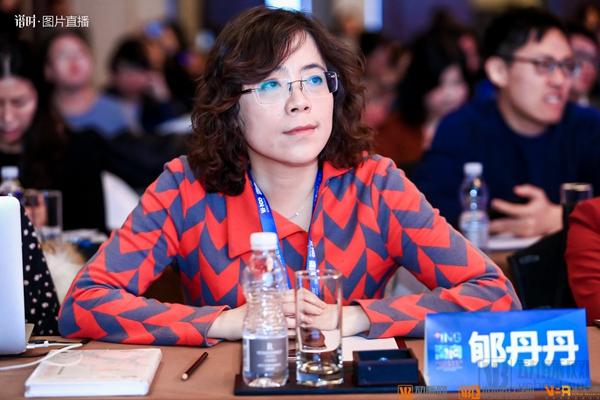
Huan Dandan, Vice President of Anhan Medical
Anhan’s technological advancement has achieved a breakthrough in size, from 1 meter to 27 millimeters.
Disruptive Innovation in Gastric Cancer Screening: Starting from the Healthcare Triangle Model We Frequently Cite. Within this healthcare triangle model, under the existing system, achieving accessibility to medical resources, quality of medical services, and reduction in overall healthcare costs simultaneously constitutes an unsolvable trilemma.
In countries with high incidence rates of gastric cancer, such as South Korea and Japan, the early screening rate has reached 50% due to the widespread implementation of screening programs over many years. However, China still faces several significant hurdles in achieving large-scale population-based screening for gastric cancer. First, the disease itself often lacks sensitivity in terms of symptomatic presentation; many types of gastric cancer remain largely asymptomatic even at advanced stages. Big data analysis from search engines reveals that one of the primary concerns people have regarding screening stems from the discomfort associated with traditional gastroscopy. Second, using Japan and South Korea as benchmarks, China lacks a sufficient number of physicians to support such an extensive screening program for gastrointestinal diseases.
According to this triangular model, the only solution to achieve gastric cancer screening is to introduce a new technological increment to trigger an expansive adjustment of the production network.
Fang Cong, Vice President of Yitu Healthcare
Topic: "AI-Empowered Healthcare Big Data"
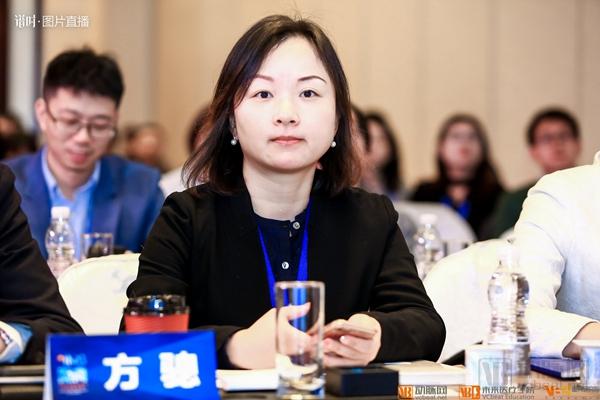
Fang Cong, Vice President of Yitu Healthcare
The Advanced Capabilities of AI Will Certainly Manifest in the Healthcare Sector
The ultimate frontier of future healthcare will undoubtedly be patient-centered medical solutions. In this paradigm, every individual’s physiological data will be digitized from birth. Realizing this vision hinges on two core elements: first, the underlying technology; and second, the ability to leverage this powerful technology to unlock clinical application scenarios.
Among the technologies included are:
Image-based visual recognition. It includes data from radiology, ultrasound, and pathology.
Natural Language Processing Technology. Because a large amount of medical data exists in the form of pathological natural language.
Voice Platform. Taking Yitu’s latest voice platform as an example, it achieves an end-to-end closed loop between humans and machines, enabling AI to enhance the accuracy of medical services.
The capability of clinical unlocking reflects the deep integration of AI technology and medical data. This model is grounded in large volumes of raw, artificially generated medical data. By leveraging artificial intelligence technologies for in-depth analysis and standardization—such as image recognition combined with deep learning algorithms—and integrating with medical knowledge graph databases, this data is transformed into valuable, actionable big data for healthcare intelligence.
LinkDoc CEO Zhang Tianze
Theme: “Industrial Innovation Empowered by Medical Big Data in the New Healthcare Ecosystem”
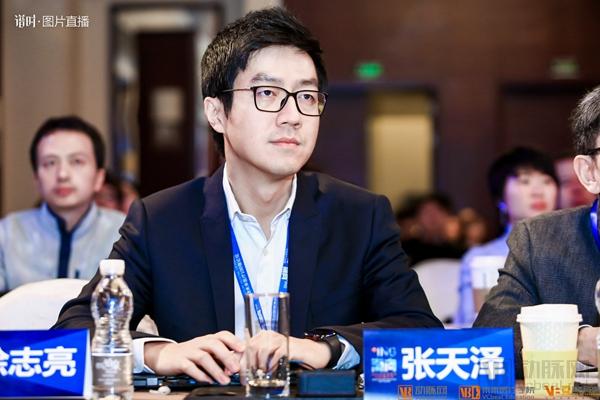
Lingke Technology CEO Zhang Tianze
Looking back over the past two years, the most frequently cited terms for medical big data companies, including LinkDoc, have been the “bigness” and “abundance” of data. Today, we are more inclined to set aside this narrative and acknowledge that data is merely a raw material, not a product.
Medical data and AI are like two sides of the same coin. Together, they highlight the current state of the entire healthcare industry, which is characterized by inefficiency, inadequate capabilities, and high costs in many areas. To move beyond the “data product” mindset and truly empower the healthcare industry with medical data and AI, it is essential to position them at the hub of a new industrial framework, connecting data on one side and industry demands on the other.
Medical data does not represent a process of acquiring or integrating new resources, but rather one of effectively developing and refining existing resources. According to information released by the largest oncology society in North America, the annual incidence of cancer patients in the United States exceeds 2 million, yet only 3% of clinical cases are enrolled in clinical trials. Nearly all global market R&D derives from this 3% of clinical cases.
Tu Zhiliang, Chairman and President of Gushengtang
Theme: "Historical Opportunities for Traditional Chinese Medicine in Its Millennia-Long Development"
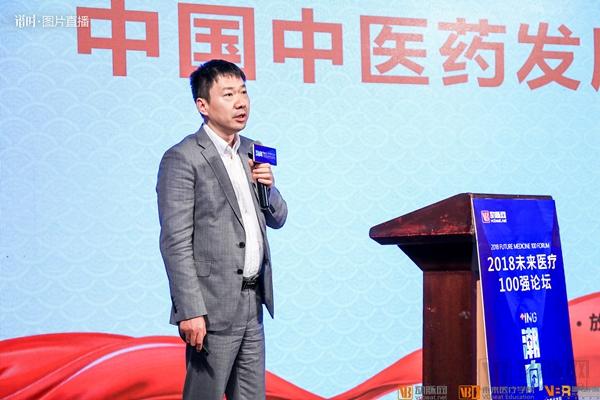
Tu Zhiliang, Chairman and President of Gushengtang
Reviewing the development of Traditional Chinese Medicine (TCM), Gushengtang’s outpatient service proportion stood at 19% in 2009; it reached 24% by 2015, and I estimate that outpatient visits may have accounted for approximately 30% around 2020. This year, the annual number of TCM outpatient visits in China has risen to approximately 1.8 billion.
This means that in recent years, the proportion of traditional Chinese medicine (TCM) has been steadily rising throughout the growth of outpatient visits across China.
Underlying reasons include, from the perspective of disease trends, a sustained rise in the prevalence of chronic diseases across society; growing public awareness of health and wellness; and increasing cultural confidence.
From the supply-side perspective, traditional Chinese medicine (TCM) herbal decoction pieces are excluded from the drug revenue ratio calculation and are permitted to carry markups, significantly enhancing the operational status of TCM departments within general hospitals. Following the promulgation of the Traditional Chinese Medicine Law, folk TCM practitioners are allowed to legally obtain TCM physician qualifications through examinations, and additional pathways such as apprenticeship-based certification have further expanded the TCM physician workforce.
Accordingly, Gushengtang has integrated its foundational data with operational data, revealing through repeat-visit statistics that the return rate for traditional Chinese medicine (TCM) outpatient clinics is as high as 82%.