

Huang FanZhi: The Entrepreneurial Journey of Doctor Groups Has Just Begun
Editor’s Note: This article is republished from Kan Yi Jie, with authorization granted to VCBeat for republication.
“From an investor’s perspective, although the term ‘physician group’ may sound unusual, its essence remains that of a healthcare startup.” On December 15, 2018, at the “2018 Shanghai Medical Fair & The First China Shared Healthcare Conference,” co-founded by Huang Fanzhi and attended by various guests, investment perspectives on financing in healthcare startups were shared. The event was hosted by Kan Yi Jie Media, with support from Zhang Qiang Physician Group, Donglei Brain Hospital Physician Group, Penguin Almond Group, Shanghai New Hongqiao International Medical Center, and Yuanhe Medical, and strategic partnerships with Ping An Health (Testing) Center, Haier Industrial Finance, and Beijing Jingdu Children's Hospital.
More than 700 participants, including renowned scholars from across China, government officials, founders of physician groups, experts in shared platform development, investors, and hospital administrators, attended this prestigious event. The following is a summary of the speech delivered by Mr. Huang Fanzhi.
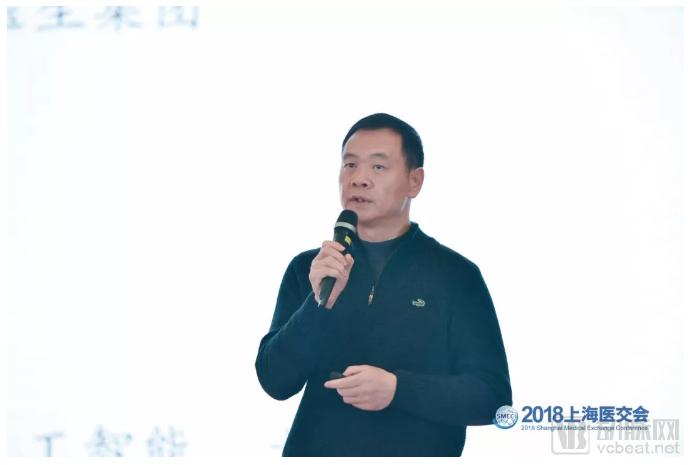
Hello everyone, I am delighted to have the opportunity to share with you. The topic suggested by the organizer for today is “Investment and Financing of Physician Groups.” As we specialize in early-stage financing within the healthcare sector, investors may view us as somewhat unique due to our designation as a “physician group.” However, from our perspective, we are fundamentally healthcare startups. Therefore, today I would like to discuss investment and financing in healthcare entrepreneurship.
We specialize in investing in early-stage startups, primarily focusing on Series A, Pre-A, and even angel rounds. We evaluate early-stage startups every day, and I personally believe there are “three highs and three lows”:
1. The level of uncertainty is extremely high; in technology- and service-oriented startups, no one can predict with certainty at the outset whether the chosen path will prove viable or lead to success.
2. High degree of inadequacy. At the inception of entrepreneurship, what was termed a "physician group" often began with a single individual taking the lead yet claiming the status of a group. The necessary talent, various social and financial resources, management capabilities, and other essential elements were, in fact, insufficient. Starting from a single individual, these capabilities were gradually expanded over time, eventually leading to a mature stage.
3. High level of insecurity. True venture capital (VC) refers to early-stage investment; once a company reaches the Pre-IPO stage or becomes involved in mergers and acquisitions, it is no longer considered venture capital. At this stage, both entrepreneurs and investors face significant risks.
4. Low verifiability. I believe that when Dr. Zhang Qiang first embarked on his entrepreneurial journey, the model for the physician group was not clearly defined. Over the past two to three years of practice, we have observed continuous iteration and adjustments on an annual basis. In other words, there was no predefined, ready-made formula for success from the outset, resulting in very low verifiability.
5. Low Quantifiability. Just now, Mr. Dong from Donglei mentioned venture capital valuation adjustment mechanisms (VAMs), which is actually a misconception. We invest in early-stage companies and basically never engage in VAM agreements. This is because it is fundamentally impossible for us to enter into such bets with you. Let alone betting on profits, how could we bet on when you will generate revenue or achieve break-even? Neither you nor I know this, making such bets unrealistic and meaningless. So-called VAM arrangements are typically adopted at the growth stage, where you use financial metrics and profits to justify high valuations; in such cases, it is reasonable for investors to request VAM clauses. For early-stage venture capital, there are no VAMs, because the degree of quantifiability at this stage is extremely low. Since neither party can clearly define these future outcomes, entering into such bets holds no significance.
6. Low comparability. Physician groups are highly diverse, and their operational models vary significantly. One cannot assume that adopting another entity’s successful path will guarantee similar success. For instance, in the shared bicycle industry, why did Mobike survive while Ofo disappeared? This highlights the low comparability across different cases.
YC is a world-renowned accelerator and incubator that has invested in numerous companies. YC co-founder Jessica Livingston stated that YC has never found a fixed formula to determine which company will become a unicorn or how to cultivate great entrepreneurs. She also believes that there is no such thing as a perfect startup; every company has its own issues, and beneath the surface lies a certain degree of madness. It is essential to recognize that this journey is like a roller coaster ride, where everything can collapse right before your eyes.
Renowned Chinese investor Xue Manzi put it more bluntly: “Early-stage investing isn’t all that nuanced; successful bets are largely a matter of luck.”
There is some truth to that, but it’s not entirely accurate. Investing in healthcare cannot be purely based on guesswork; his point is simply that there is a significant degree of uncertainty involved.
How Do Investors View Entrepreneurs? Since everyone seeking to raise capital and launch startups must secure financial support, it is crucial to understand how investors think and how they perceive you.
1. Entrepreneurial Spirit. Regardless of the venture, entrepreneurs must first possess an entrepreneurial spirit. Why did we invest in Zhang Qiang? We believe he was the first to “dare to be a pioneer” among physician entrepreneurs. Moreover, we observed entrepreneurial traits in him—traits that may not have been fully evident before he left the public healthcare system, but which become crucial and gradually emerge when one truly enters the market-driven arena.
2. Professional Background. Healthcare entrepreneurship differs from consumer-focused entrepreneurship. For investors in consumer internet services or consumption upgrades, founders over the age of 30 are often considered too old, with a perceived lower adaptability to new trends and business models. However, in healthcare entrepreneurship, professional background is critical. This holds true for both service-oriented and product-driven ventures. Rarely do healthcare founders launch startups before the age of 30; the prime age for healthcare entrepreneurs is typically after 40, as they require substantial professional experience and deep domain expertise.
3. Leadership. Entrepreneurship is not a one-person endeavor; it necessarily involves building a team. It requires the ability to engage with society and interact effectively with various stakeholders, rather than relying solely on surgical expertise or R&D capabilities. It is crucial to assess whether you can serve as the core around which a team rapidly coalesces and matures, thereby eliminating the need for you to micromanage every task.
4. Dynamic Adjustment. There is no predictable path on the journey of entrepreneurship; we need to make continuous adjustments. We may encounter setbacks repeatedly, making adjustment crucial.
5. Focus and Perseverance. On any entrepreneurial journey, it is difficult to achieve success without focus and perseverance.
6. The capacity for continuous learning. This encompasses many emerging developments, including shared healthcare. While the concept of the sharing economy has been discussed for years, true shared healthcare models have only emerged in recent years. For instance, as Zhang Qiang noted, day-surgery clinics represent a form of shared practice. Medical Mall is another example of a shared business model. Staying abreast of such innovations requires constant vigilance, sustained curiosity, and ongoing cognitive engagement with new developments.
7. Vision and Magnanimity. During the investment process, we have observed that many corporate failures are, in fact, linked to the entrepreneur’s stature, magnanimity, and strategic vision. This includes their approach to profit sharing, their inclusiveness toward other talents, and their ability to attract and recruit top-tier professionals.
The Challenges Currently Facing Physician Groups in ChinaAs I mentioned in a previous conference, I believe that physician groups in China are currently running a marathon. We have only completed the first 5 kilometers; the remaining 40 kilometers represent a much longer journey. Since their emergence in 2014, the number of physician groups has grown to 500–600. In the past, this period could be described as one of “wild growth” or the “Spring and Autumn Period,” characterized by a hundred schools of thought contending and a hundred flowers blooming. However, today we are gradually entering the “Warring States Period,” marked by the dominance of a few major players. Most of the diverse smaller entities have disappeared, market concentration is increasing, and branded institutions are gradually emerging. The common challenges facing physician groups include:
1. Business Model. At present, we cannot claim that any physician group has a fully clear-cut business model; rather, some models are relatively well-defined. For instance, the Zhang Qiang Doctor Group has achieved a relatively clear model through continuous iteration and adjustment.
2. Acquisition of resources, including funding, patient sources, insurance, academic, and social resources, among others.
3. Capacity building: The first step is the transformation from physician to entrepreneur, a role transition that many may find difficult to navigate. This also involves team building, business model iteration, and brand development.
4. Balance of interests, including the balance of interests within the team, and with partners and stakeholders both inside and outside the system.
1. Investment Logic. Healthcare entrepreneurs are best advised to partner with specialized healthcare investment firms. First, you must understand the investment thesis of the investor and their firm. While this may seem abstract, it is crucial for truly grasping the dynamics of investment; it can help pave the way for long-term growth and support sound decision-making in the future.
2. Professional Expertise. If healthcare investors lack medical knowledge, they will struggle to make sound professional judgments and offer limited value to your future development.
3. Industry Resources: Is their investment in healthcare enterprises sporadic, or is it structured around systematic, sector-specific, and ecosystem-driven strategies? A well-structured layout can also benefit your future development.
4. Key Competencies. Key competencies are crucial for early-stage investment. First, the ability to make judgments under uncertainty. Second, the ability to identify highlights. I have always maintained that in early-stage investment, the ability to spot highlights is more important than the ability to identify problems or flaws. Early-stage projects are invariably riddled with issues; you can easily find a hundred reasons not to invest, but it is far more challenging to find one compelling reason to commit confidently. This hinges on the investor’s capacity for judgment under uncertainty and their ability to discern highlights. Third, the ability to make timely decisions; negotiations should not drag on for six months or a year without resolution. Fourth, strong communication and collaboration skills. Capital investment involves not only funding but also the value-added support investors provide in other areas, which is even more critical when executed well.
A Few Pieces of Advice for Investors:
1. Select strategic directions and make dynamic adjustments;
2. Reasonable equity structure, clear organizational framework;
3. Maintain a steady pace and implement in stages;
4. Recruit top talent and share the benefits;
5. Balance advancement and retreat to achieve win-win cooperation;
6. Keep pace with the times and broaden your horizons;
7. Secure financing early and lower expectations;
Let me emphasize the importance of "reasonable equity structure." Some physician groups are now experiencing fragmentation, primarily due to poorly designed equity structures at inception—either overly egalitarian distributions or excessive capital ownership that leaves founders with little decision-making authority. Such arrangements are generally inappropriate.
Finally, let’s discuss fundraising: raise capital early and lower your expectations. Why do we say this? What is the current state of the capital market? Since last year, the capital market has experienced a sharp decline. The domestic secondary market has plummeted, with the market capitalization of most listed companies dropping by more than two-thirds. In Hong Kong IPOs, many medical unicorns—such as Ping An Good Doctor, which represent popular domestic projects combining both services and medical technology—have seen 70% of them trade below their IPO price. Moreover, their post-IPO valuations are generally inverted compared to their final pre-IPO funding rounds. In the first 11 months, a total of 203 Chinese enterprises went public; over 103 chose overseas listings, while 100 listed domestically. This represents a significant decrease compared to the previous year, which saw more than 400 IPOs. Thus, the IPO landscape remains severe. In the first three quarters of 2018, VC/PE fundraising amounts dropped by 60% year-over-year compared to the same period in 2017. This indicates that institutions such as VCs and PEs are currently facing extreme difficulties in raising funds. We predict that at least two-thirds of VC/PE firms will disappear within the next two years. Bubbles in the primary market will burst, and valuations will return to rational levels. The fundraising cycle for startups will lengthen considerably, and the difficulty of securing funding will increase substantially.
A final piece of advice: Abandon your illusions and lofty expectations, return to rationality and realistic valuations, build deep defenses and accumulate ample resources, prioritize survival first, and then pursue development.