GengMei APP Releases '2018 China Medical Aesthetics Industry White Paper': Legitimate Market Size Reaches RMB 495.3 Billion, Guangdong Leads Nation in Growth
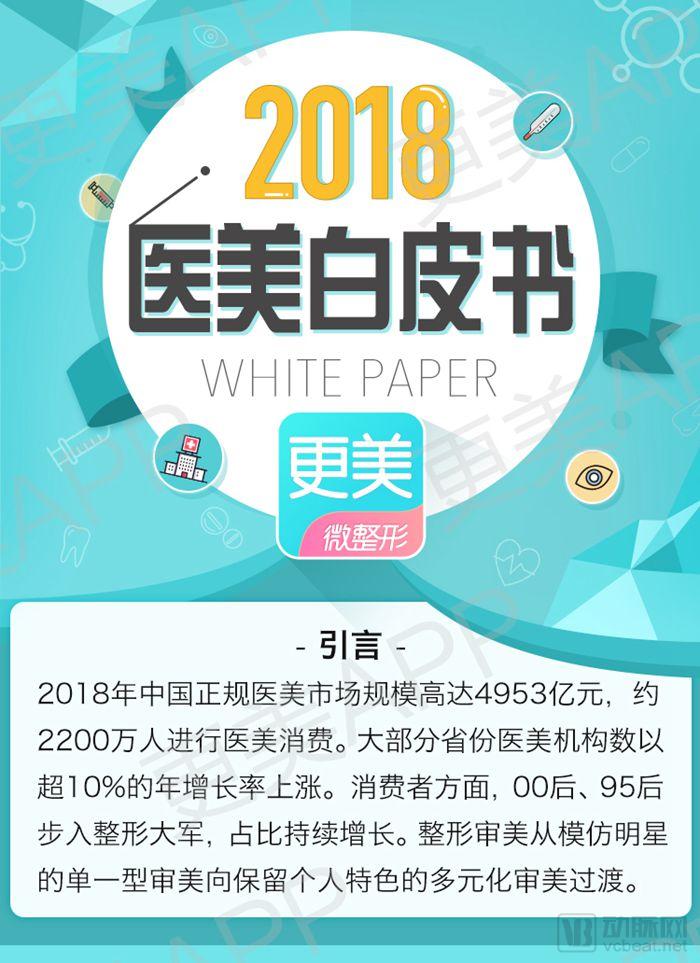
VCBeat (WeChat ID: vcbeat) has learned that on December 20, 2018, Gengmei APP, a leading medical aesthetics and health service platform in China, released the “White Paper on China’s Medical Aesthetics Industry 2018.” This marks the fourth consecutive year that Gengmei has published its white paper on the medical aesthetics industry.
Based on data research involving 36 million backend users, big data from e-commerce platforms, and over 8,000 medical aesthetic institutions, this report outlines the current state of China’s medical aesthetics industry in 2018 and summarizes the latest consumption trends. In 2018, the market size of China’s regulated medical aesthetics sector reached RMB 495.3 billion, with the number of medical aesthetic institutions in most provinces growing at an annual rate exceeding 10%. On the consumer side, approximately 22 million people in China engaged in medical aesthetic spending; individuals born after 2000 and after 1995 have increasingly joined the ranks of those undergoing cosmetic procedures, with their proportion continuing to rise. Aesthetic preferences in plastic surgery are shifting from a singular, celebrity-imitation style toward a diversified approach that preserves individual characteristics.
In 2018, the market size of China's formal medical aesthetics industry reached RMB 495.3 billion, with Guangdong ranking first in the growth rate of supply-side entities.
The formal medical aesthetics market in China has experienced rapid growth, with its size reaching RMB 308.8 billion in 2016 and soaring to RMB 495.3 billion in 2018. Alongside the expansion in market size, the growth rate has increased year by year, maintaining a range of 20%–30% in 2016, 2017, and 2018.
According to Gengmei’s “2018 White Paper on China’s Medical Aesthetics Industry,” the ten provinces and municipalities with the largest number of medical aesthetics institutions—and thus the most developed medical aesthetics sectors in China—are Guangdong, Beijing, Zhejiang, Sichuan, Shanghai, Hubei, Jiangsu, Henan, Shandong, and Liaoning.
Guangdong Province claimed the top spot for the highest number of medical aesthetic institutions, with a total of 868 facilities, and ranked first in growth rate at an impressive 22.87%. Several cities in Guangdong, including Huizhou, Dongguan, and Foshan, were listed among the top ten cities nationwide with the fastest growth in medical aesthetic institutions. This highlights the strength and potential of Guangdong’s supply side in the medical aesthetics sector. Other cities with rapid supply-side growth include Hangzhou, Suzhou, Chengdu, Haikou, and Sanya.
In terms of demand for medical aesthetics, Beijing, Guangzhou, and Shanghai remain the top three cities in order volume. Among the ten cities with the highest demand for medical aesthetic services, Beijing has the highest average transaction value at 4,800 yuan, while Zhengzhou ranks last with an average transaction value of 4,095 yuan. This means that residents of the capital pay the most to enhance their appearance, whereas those in Zhengzhou spend the least.
China Has 22 Million Medical Aesthetics Consumers, Over Half Under Age 28
The white paper reveals that in 2018, 22 million Chinese consumers engaged in medical aesthetics spending, with an average annual expenditure of RMB 22,000 per user. Consumers from first-tier and new first-tier cities accounted for 58.7% of the total, constituting the primary driving force of consumption. The number of medical aesthetics users in second- and third-tier cities was only half that of first-tier and new first-tier cities.
According to ISAPS (International Society of Aesthetic Plastic Surgery), China’s current aesthetic surgery penetration rate stands at 2%. If China reaches the average penetration rate of 10% seen in developed countries such as the United States and Brazil, over 100 million people in China will consume medical aesthetic services in the future.
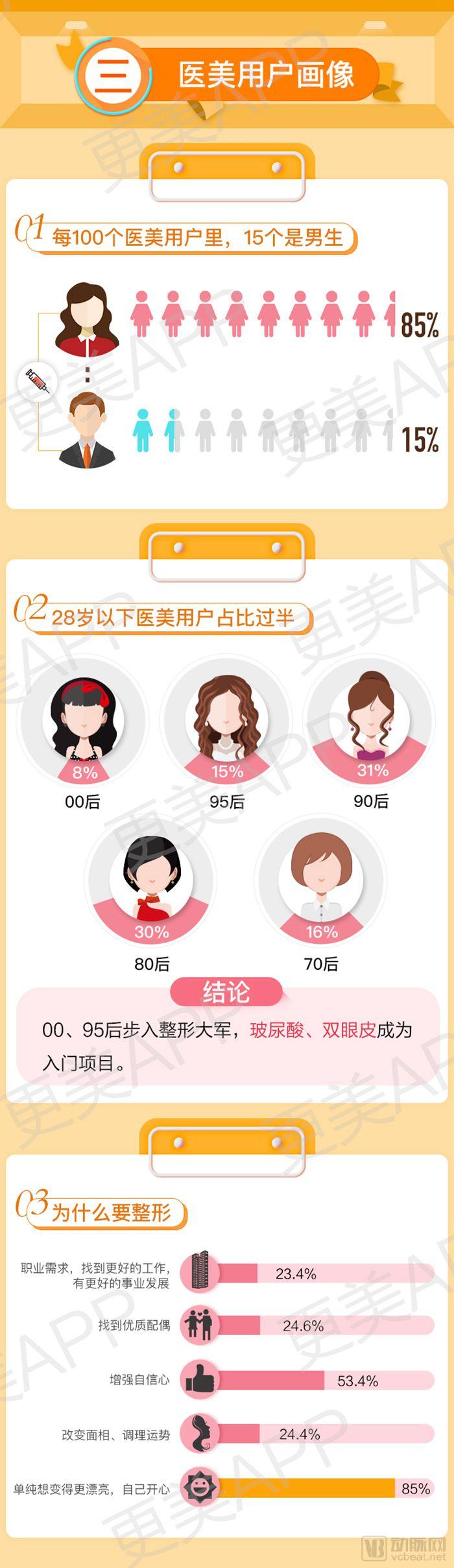
The report also shows that 54% of medical aesthetics users are under the age of 28, marking those born in the 1990s, mid-to-late 1990s, and post-2000s as the main force in plastic surgery. Individuals born after 2000 and between 1995–1999 account for 8% and 15% respectively of this growing demographic, with hyaluronic acid fillers, intense pulsed light (IPL) skin rejuvenation, and double eyelid surgery becoming their preferred entry-level procedures.
In terms of the gender ratio, male aesthetic medicine users account for 15%, equivalent to 15 males per 100 plastic surgery users, indicating that the male user market holds development potential.
Aesthetic Preferences Are Becoming More Diverse: The “New Generation” of Post-95s No Longer Bring Celebrity Photos for Plastic Surgery
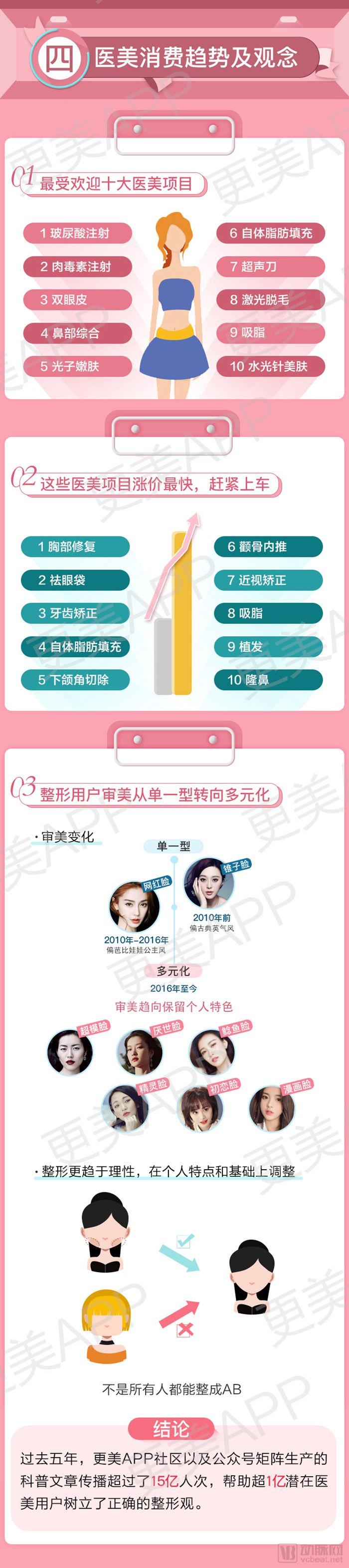
The white paper points out that before 2010, the aesthetic preference of Chinese people was still for a "V-shaped" face, leaning towards a classical and heroic style. From 2010 to 2016, the "internet celebrity face" became popular, characterized by a Barbie doll princess style, exemplified by Angelababy. During this period, aesthetic standards in plastic surgery were relatively monolithic.
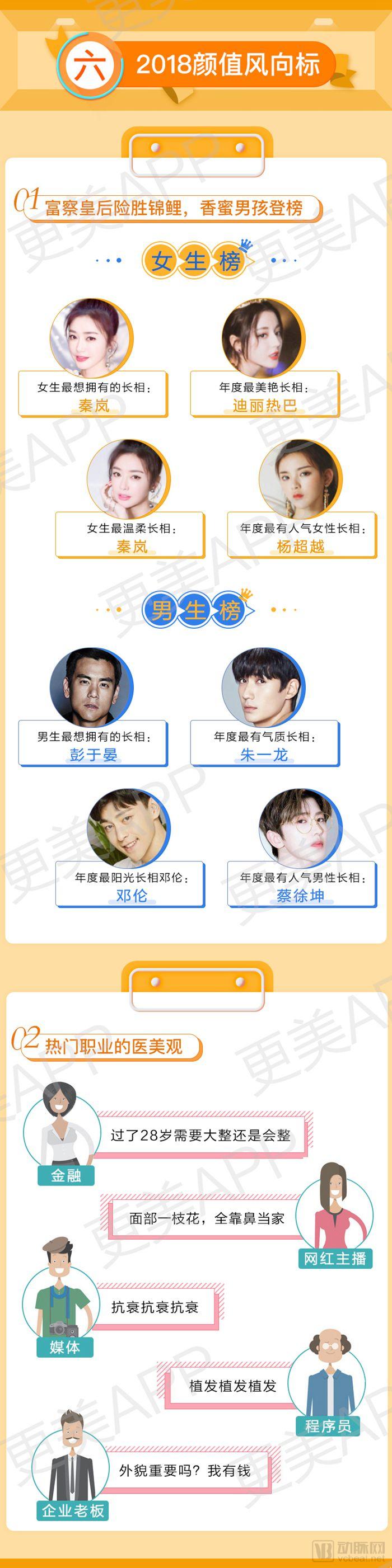
Since 2016, aesthetic preferences in China have become increasingly diverse. Today, a wide variety of facial aesthetics—such as the “elf face,” “sophisticated face,” “ingenue face,” “catfish face,” “world-weary face,” and “supermodel face”—coexist and flourish, with people showing greater appreciation for beauty that reflects individual character. Patients seeking cosmetic procedures are also more inclined to pursue adjustments based on their unique features and underlying structure, rather than simply conforming to celebrity or influencer templates.
Over the five years since its establishment in 2013, the Gengmei APP community and its official account matrix have continuously produced educational content on medical aesthetics. These articles have reached a cumulative audience of 1.5 billion, helping over 100 million potential users establish correct values regarding cosmetic procedures. As the “new generation” entering the market during this period, post-95s demonstrate more mature and scientific awareness of plastic surgery.
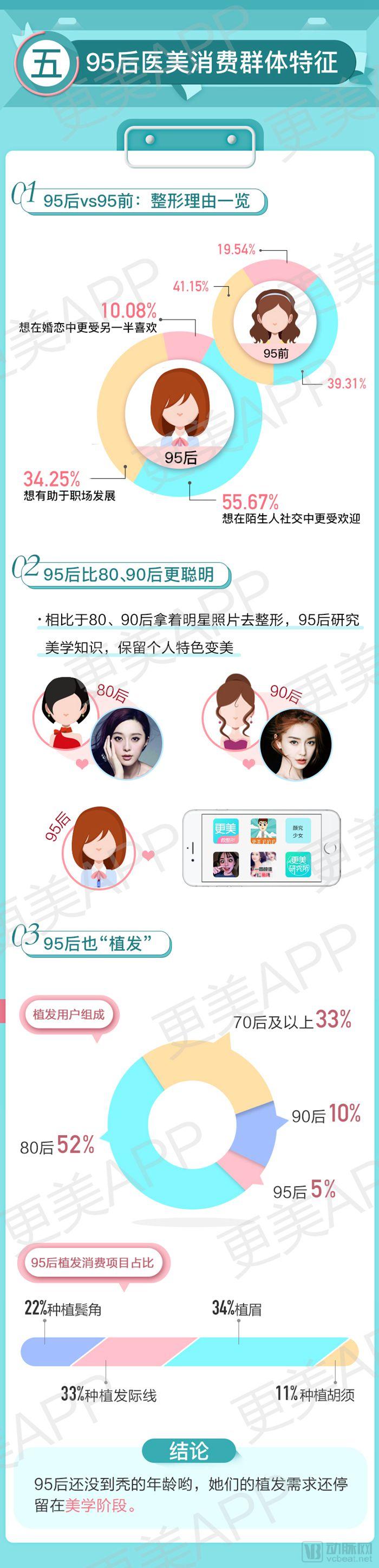
Unlike the post-80s and post-90s generations, who brought celebrity photos to plastic surgery clinics as references, the post-95s are more savvy. They prefer to first consult information on medical aesthetics apps, study aesthetic principles, and analyze their own stylistic features before selecting the most suitable procedures for enhancement. The post-95s have voted Qin Lan as their beauty role model, believing that she exemplifies how to enhance one’s appearance while preserving individual characteristics.
Everyone Loves Beautiful Skin: With Hair Transplants and Orthodontics Getting Pricier, Act Fast Before It’s Too Late
The top ten aesthetic medicine procedures by order volume in 2018 were hyaluronic acid injections, botulinum toxin injections, double eyelid surgery, comprehensive rhinoplasty, intense pulsed light (IPL) skin rejuvenation, autologous fat grafting, Ultherapy, laser hair removal, liposuction, and mesotherapy for skin rejuvenation. Half of these procedures are related to skin care. Whether it involves hydrating the skin with hyaluronic acid and mesotherapy, reducing wrinkles with botulinum toxin, minimizing pores with IPL skin rejuvenation, or combating aging with Ultherapy, these treatments have made skin care procedures virtually essential for every aesthetic medicine consumer.
Furthermore, the white paper also unveiled the top ten aesthetic medicine procedures with the fastest price increases in 2018, namely: breast revision, lower blepharoplasty, orthodontic treatment, autologous fat grafting, mandibular angle resection, zygomatic reduction, myopia correction, liposuction, hair transplantation, and rhinoplasty. As highly sought-after popular procedures, lower blepharoplasty, hair transplantation, and orthodontic treatment experienced a round of price hikes each quarter in 2018. Consumers who are still hesitating about these procedures should act promptly.
Gengmei App, established in 2013, is a leading consumer healthcare platform in China, offering services in plastic surgery, minimally invasive cosmetic procedures, dentistry, ophthalmology, and anti-aging treatments. Gengmei serves 36 million users, with nearly 20,000 professional doctors and over 8,000 medical institutions registered on the platform, which also features 4 million authentic case studies documented as “cosmetic surgery diaries.”
In 2018, the Gengmei app completed a Series D financing round worth tens of millions of U.S. dollars. Over five years, Gengmei secured five rounds of funding. Its investors across these rounds have included Tencent, Sequoia China, CHJ Jewellery, Matrix Partners China, Vivo Capital, Meitu, Fosun Pharma, Legend Capital, and China Securities Co., Ltd., among other listed companies and renowned investment institutions.
The following is from the Gengmei APP's "2018 White Paper on China's Medical Aesthetics Industry":