

Israeli Tech Incubators: Nurturing Over 1,800 Startups, Driving $5B+ in Funding, and Producing 10+ IPOs
Israel has long been hailed as the “Start-up Nation.” This country, with a population of only around 9 million, has produced an astonishing array of scientific and innovative achievements, becoming a model for many nations worldwide. Government-led policies and financial support are crucial to fostering innovation, with the incubator model serving as a key component of this ecosystem.
Israel’s Technology Incubator Program, launched in 1991, has become a key service provider for Israeli startups, nurturing 60–70 new ventures annually. The program’s primary objective is to transform innovative technological concepts from the early stages of research and development into tangible startup companies, while assisting them in securing investment and financing.
VCBeat (WeChat: vcbeat) has translated a report co-authored by the Israel Innovation Authority and PwC, excerpting content related to incubators in Israel’s healthcare industry, as presented below:
I. Israeli Technology Incubator Program: Supporting medical startups and promoting the commercialization of scientific and technological achievements;
II. List of 19 Incubators, Focused on the Life Sciences and Digital Health Sectors.
The Israeli Technology Incubator Program currently comprises 18 technology incubators and one designated biotechnology incubator. These incubators are established by experienced entities or individuals, such as venture capital funds, multinational corporations, and private investors. Distributed across Israel, they were selected through a competitive process and hold licenses valid for eight years.
From 2008 to 2017, approximately 600 companies participated in various incubator programs, with medical device companies accounting for 28% and biotechnology/biopharmaceutical companies accounting for 11%. In 2017, the majority of companies participating in incubator programs were from the life sciences sector, a field considered relatively high-risk for entrepreneurs and investors.
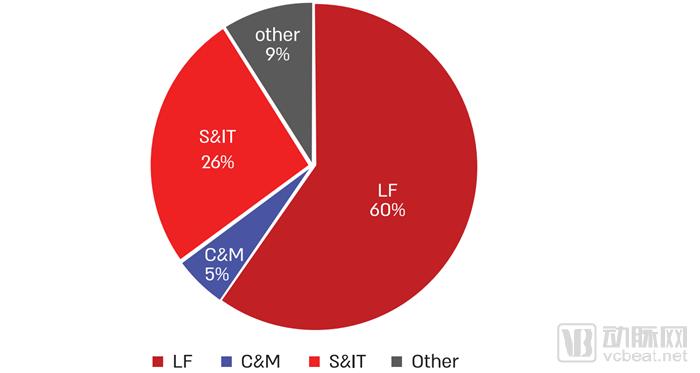
(Companies participating in incubator programs in 2017; data source: Israel Innovation Authority)
As this project falls under both the life sciences and healthcare sectors, the Israel Innovation Authority has categorized it under two distinct funding sources:
1. Technology Incubator: For projects with a two-year duration, the budget is 3.5 million New Israeli Shekels (the official currency of Israel);
2. Specialized Biotechnology Incubator: For three-year projects, the budget is 8.1 million new shekels. (1 Israeli new shekel ≈ 1.83 RMB)
Of this, 85% of the budget was government-funded and reimbursed only upon project success, while the remaining 15% was provided by incubators. Since its launch, the government has subsidized more than 2,000 startups, with cumulative investments exceeding $750 million. Over 1,800 enterprises participated in the incubator program, of which 60% successfully secured private investment, raising a total of more than $5 billion. As of the end of 2015, 35% of these enterprises remained operational.
The incubator has successfully nurtured several life sciences companies, including ReWalk, Compugen, Simbionix, Protalix, Prolor, Mazor Robotics, Enzymotec, CollPlant, Valtech, and Dune Medical. Many of these companies have gone public in Israel or the United States, and they have also secured additional funding through various programs offered by the Israel Innovation Authority.
Meanwhile, Israeli authorities also support multinational corporations in conducting R&D and innovation within Israel. Previously, the Israel Innovation Authority introduced a new incentive program to encourage multinational companies to establish R&D centers in Israel or relocate certain economic activities there, thereby expanding their operations in R&D, technological innovation, or manufacturing, particularly in the fields of biotechnology, medical devices, or digital health.
According to Medison Pharma, the Israel Innovation Authority announced in late 2017 its plan to establish a second biotechnology incubator in northern Israel. The head of the incubator has already engaged with potential industry partners, and the Israel Innovation Authority intends to officially launch the facility in 2018.
1.Alon-MedTech VenturesLtd. – Medical Devices and Digital Health
Alon-MedTech was founded in 2013 and is located in Yokneam, Israel. The incubator’s primary investor is the renowned Israeli entrepreneur Dr. Shimon Eckhouse, founder of Lumenis and Syneron, a company listed on the NASDAQ.
Alon-MedTech owns 12 companies specializing in medical devices, health, and cosmetics technology, including: ClipTip Medical and Anchora Medical (laparoscopic equipment), EVA Visual (handheld high-resolution 3D scanners), ArchimedUS Medical (cosmetic application devices), and BrainMARC (wearable EEG devices).
In March 2016, Alon Medtech signed an agreement with Tsinghua University to select several R&D projects from the XIN Center (jointly established by Tsinghua University and Tel Aviv University) for further development within its incubator.
2.BioInc——Therapeutics
BioInc, established in 2012 and currently part of M Ventures (the corporate venture capital arm of Merck), is an independent laboratory spanning 500 square meters. Equipped with state-of-the-art R&D facilities, it is located within Merck’s leading R&D site in Israel.
BioInc is currently investing in several seed-stage companies, such as Metabomed (a drug development company focused on cancer and metabolism) and ARTSaVIT (a company researching cancer cell apoptosis that has developed art mimetics).
3.eHealth Ventures——Digital Health
eHealth Ventures was founded in 2016, with investors including Medison Pharma (a leading international pharmaceutical company based in Israel), Maccabi Healthcare Services (the second-largest health maintenance organization in Israel), Cleveland Clinic Innovations (an affiliate of the U.S.-based Cleveland Clinic), Amgen (a global leader in biopharmaceuticals), and SCI (Shanghai Chuangrui Investment).
eHealth Ventures aims to incubate 40 startups over an eight-year period and is currently seeking companies in the digital health sector, including those focused on telemedicine/remote diagnostics, information technology management and decision support systems for hospitals or clinics, big data and predictive analytics, Internet of Things (IoT) devices, behavioral science-related applications, and gamified systems for health improvement.
The incubator continuously evaluates new projects and currently holds six companies across multiple fields, including AllerGuard (developing devices for detecting food allergens), OsteoSee (bone density measurement as a screening and monitoring tool), and Mind's Eye (monitoring and diagnosis of ADHD). eHealth Ventures also plans to raise additional funds for follow-on investments in these portfolio companies over the next two to three years.
4.ExploreBio—— Healthcare and Life Sciences
ExploreBio, established in 2018 and headquartered in Yavne, Israel, is a privately held company. It was founded by four investment funds—M Ventures, Arkin Bio Holdings, Pontifax, and WuXi AppTec—with a primary focus on early-stage biotechnology companies in Israel.
ExploreBio will invest $20 million over the next five years in the investment and management of proof-of-concept experiments in the biotechnology sector. Explore Bio plans to invest $1 million to $1.5 million annually in four companies over a five-year period, helping startups secure funding rapidly while collaborating with M Ventures’ bio-incubator.
In 2018, two companies were established with the assistance of ExploreBio—Explore Bio 1 (researching novel T cells) and Pantheon Bioscience (researching bacterial defense mechanisms)—both located within the M Ventures biotech incubator.
5.FutuRX——Biotechnology
FutuRX, established in 2014 with the support of the Israel Innovation Authority and based in Ness Ziona, was jointly founded by JJDC (Johnson & Johnson), OrbiMed Israel Partners (affiliated with the global venture capital firm OrbiMed Healthcare Fund Management), and Takeda Ventures (the corporate venture capital arm of Japan’s Takeda Pharmaceutical Company).
FutuRX has invested in 11 biopharmaceutical startups, including HepaRx (clinical-stage, developing small-molecule anticancer drugs), XoNovo (preclinical-stage, developing small molecules for the treatment of neurodegenerative diseases), and Mitoconix Bio Ltd. (developing mitochondrial fission inhibitors for the treatment of Huntington’s disease and other neurodegenerative disorders).
In 2017, two companies incubated by FutureRx raised substantial funding: in September 2017, Mitoconix Biowanchen completed a $20 million Series A financing round, and in May 2017, BiomX (a microbiome therapeutics company) raised $24 million. Meanwhile, RM Global contributed $30 million to support companies incubated by FutureRx.
6.Galil Ofek——Biomedical Technology
Galil Ofek was established in 2016 in Katzrin, with support from the Israel Innovation Authority, focusing primarily on the medical device and biotechnology sectors, followed by the internet and software industries.
Galil Ofek was co-founded by MIkal (an investment firm), Next North (focused on the technology sector, venture capital, and business development), Paz Atid (focused on the medical device sector), Tav Medical (focused on technology startups and business development), and Mor Research (affiliated with Clalit Health Services).
Galil Ofek has currently incubated four companies: Marpe Technologies (computer-aided skin cancer screening), Vicut Medical (manufacturer of devices for removing visceral polyps), Biobetter (protein manufacturing and biopharmaceutical purification technologies), and Epic MD (developer of fascial closure devices).
7.Incubit Technology Ventures——Innovative Technology
Incubit Technology Ventures, established in 2014 with the support of the Israel Innovation Authority and based in Beersheba, is wholly owned and backed by Elbit Systems, Israel’s largest publicly traded high-tech company.
Incubit has incubated a total of eight companies, two of which are in the life sciences sector: EchoCare (developing non-wearable, self-service home monitoring devices for elderly care) and Collage Medical (developing optical biopsy technology for microscopic diagnosis of cancerous tumors within organs).
8.Incentive Incubator ——Software and Life Sciences
Incentive Incubator was established in 2012 and is located at Ariel University in Samaria. Peregrine Ventures, a life sciences and digital health venture capital firm, is its sole shareholder.
Incentive Incubator has invested in 19 life sciences companies and 15 software companies. To date, Incentive Incubator has helped these enterprises raise more than $160 million.
In 2016, two of its subsidiaries were acquired: in August, NLT Spine (scalable products and technologies for minimally invasive spine surgery) was acquired by the U.S. company SeaSpine for $43 million; in November, Valtech Cardio (transcatheter repair of mitral and tricuspid valves) was acquired by the U.S. company Edwards Lifesciences for $340 million. Additionally, in December 2016, Otic Pharma (focused on ear diseases) announced its merger with Tokai Pharma.
In January 2018, CartiHeal, a company incubated by Incentive Incubator that develops therapies for articular surface lesions, secured $2.5 million from Bioventus. Combined with its Series A financing from aMoon, JJDC Inc., Peregrine Ventures, and Elron, the company’s total funding reached $21 million.
9.Lonza Collaborative Innovation Center(CIC)——Engineering, Software, and Life Sciences
CIC was established in 2017, is located in Haifa, Israel, and operates as a private enterprise. Its objective is to leverage Israel’s scientific strengths in engineering, software, and cellular/molecular biology to help Lonza unlock additional biological and manufacturing technologies, thereby advancing R&D projects within Lonza’s Pharmaceutical and Biotechnology divisions.
CIC will establish a dedicated R&D team in Israel, which will collaborate with local enterprises and experts. In addition, Lonza has already conducted talent recruitment at Tel Aviv University, the Israel Innovation Authority, and the Weizmann Institute of Science.
10.MEDX Xelerator——Medical Devices and Digital Health
MEDX Xelerator was founded in late 2016 and is located in Or Yehuda. Its investors include MEDX Ventures Group (a medtech investment and management firm), Boston Scientific (a global medical device manufacturer and operator), Invention Science Fund (in which Bill Gates has invested), and Sheba Medical Center (the largest hospital in Israel).
MEDX Xelerator aims to invest in 40 companies over eight years, with a focus on non-invasive medical devices. Since its official launch in September 2016, MEDX Xelerator has successfully incubated two companies: CanaryCheck (early detection of postoperative risks) and Endoways (robotics and microcatheters).
11.MindUp——Digital Health
MindUp was established in early 2016, jointly founded by Medtronic (a global leader in medical technology), IBM, Pitango Venture Capital (a leading venture capital firm in Israel), and Rambam Medical Center (a leading medical center in Israel).
MindUP focuses on investments in big data, predictive analytics, telemedicine, cloud computing, wearable and implantable sensors, medical diagnostics, personalized medicine, genomic analysis, and hospital information technology systems.
MindUp currently owns five companies: Gait Better (reducing fall rates and improving mobility in the elderly), Hemonitor (autonomous, continuous, and non-invasive ultrasound system), preyese (non-contact home blood pressure monitor), 4C Diagnostics (fully automated home stool sampling), and Resmetrix (novel respiratory disease management system).
12.NGT3——Medical Devices and Life Sciences Technology
NGT3 was established in 2013 in Nazareth with the support of the Israel Innovation Authority. NGT is a technology incubator founded in 2002 by medical investors from Europe, the United States, and Israel.
NGT3 has invested in 11 startups, primarily focusing on innovative medical devices and the life sciences sector. These include PamBio (pharmaceutical therapies for treating acute hemorrhage), Parasonic (a home-use device for removing head lice), and Aqueduct and Guide In Medical (intubation guidance systems).
In 2017, NGT3 also participated in investments in two companies: EIO Biomedical (prevention of post-surgical adhesions) and Barcode Diagnostics (cancer drug screening).
13.PMatX——Electronic Products
PMatX was established in 2013 in Yavne, with support from the Israel Innovation Authority. The incubator was founded through a partnership between M Ventures (the corporate venture capital arm of Merck), Flextronics International (a multinational technology manufacturer), HP (Hewlett-Packard), and Battery Ventures (a global investment firm).
PMATX is an open innovation laboratory dedicated to leading the development of Israel’s next-generation electronics ecosystem by combining advanced materials with novel manufacturing methods. Spanning 400 square meters and located adjacent to the M Ventures BioIncubator, the lab is primarily used for the synthesis, analysis, printing, and production of electronic devices, while also receiving technical guidance from Flex and M Ventures.
PMatX is dedicated to developing next-generation electronic products, covering fields such as flexible electronic sensors, nanomaterials, organic electronics, and advanced manufacturing technologies. PMatX’s current R&D portfolio includes interconnect devices, functional additives, and applications capable of integrating with non-standard form factors, such as compact wearable devices.
14.RAD BioMed Accelerator——Medical Devices, Ophthalmology, Biopharmaceuticals, Diagnostics
RAD BioMed Accelerator, located in Tel Aviv, was founded in 1992 by Yehuda Zisapel and Professor Nava Zisapel (former founders of Neurim Pharmaceuticals) and operates as a private enterprise.
RAD Biomed Accelerator, launched by RAD Group, a world-leading provider of voice and data communication technologies, comprises 18 portfolio companies. These include Moebius Medical (a clinical-stage biotechnology company that has licensed its osteoarthritis pain management therapy to Indian pharmaceutical giant Sun Pharma), Laminate Medical (which manufactures devices designed to improve vascular patency and has completed an $8 million Series B financing round), and SteadyMed (which develops drug delivery platforms and secured $30 million in financing in early 2017).
In June 2017, Belkin Laser, a company incubated by Rad Biomed (specializing in automated laser therapy for glaucoma), completed a $5 million financing round. Singapore’s Zicom Holdings and China’s Rimonci Capital invested $2.5 million, with the remainder funded by the EU-certified GLAUrious Program.
15.Sanara Ventures——Medical Technology
Sanara Ventures, established in early 2016 and based in Ra’anana, is a joint venture founded by Teva Pharmaceutical Industries and Philips Healthcare.
Sanara has invested in 12 medical technology companies, including eWay (a handheld nebulizer for pulmonary drug administration), Myhomedoc (remote examination and diagnosis via smartphones), Purecare (innovative chewing gum therapy), Lensfree (devices that reduce CT radiation exposure), BReatheme (a spirometer and asthma management application), and SpirCare (spirometry).
16.Terralab Ventures——Technology
Terralab Ventures was established in 2013 with the support of the Israel Innovation Authority and is located in Yokneam Illit. The incubator belongs to Terra Venture Partners, a joint venture capital firm with investors from the United States, Europe, and several family-owned enterprises, including Terra Ventures, Veolia Environmental Trust, Energias de Portugal, Cleanweb Initiative, and General Electric.
Terralab Ventures has a broad business scope, encompassing wearable solutions, water purification, environmental solutions, energy, and clean technologies. In addition, the incubator has nurtured five life sciences companies: Sphinx (pediculosis treatment), Epitech (dry eye disease treatment), Kytera (home-based activity monitoring system for the elderly), Neurolief (non-invasive brain neuromodulation technology), and Augmedics (augmented reality-guided surgery). Among these, Augmedics completed an $8.3 million Series A financing round in September 2017, with investors including AO Invest, the Israel Innovation Authority, and Terra Ventures.
17.Trendlines Medical(Formerly Misgav Technology Center) – Medical Technology
Trendlines Medical was established in 1996 with the support of the Israel Innovation Authority and is a subsidiary of the publicly listed company Trendlines.
In addition to Trendlines Medical, Trendlines also operates an agricultural incubator (Trendlines Agtech), a medical incubator and internal innovation center located in Singapore (Trendlines Labs). Trendlines Medical has invested in 33 companies, including Venisca Medical (treating overactive bladder without botulinum toxin injections), Acruo Medical (meniscus repair system), and Gordian Surgical (abdominal wall management during laparoscopic surgery).
Trendlines Medical has successfully incubated five companies to date: E.T. View Medical (sold to Ambu A/S in September 2016), FlowSense (sold to Baxter in September 2013), InnoLap Surgical (sold to Teleflex in September 2013), Inspiro Medical (sold to OPKO Health in April 2014), and PolyTouch (sold to Covidien in April 2012).
In April 2018, Trendlines announced the sale of assets belonging to Stimatix (a colostomy care company) to a subsidiary of the German medical device company B. Braun Group. Under the terms of the transaction, Trendlines currently holds a 28.2% stake in Stimatix, valued at $42.6 million.
18.Van Leer Xenia Incubator— Technology, Digital Health, and Life Sciences
The Van Leer Xenia Incubator was established in 2012 with the support of the Israel Innovation Authority and is located in Jerusalem, Israel. The incubator was formed through the merger of the Xenia Venture Capital incubator and the Van Leer Fund incubator.
Van Leer Xenia Incubator has incubated nine companies, primarily focusing on high-tech, medical devices, pharmaceuticals, and digital health. These include: EyeYon Medical (ophthalmic medical devices), Camereyes (high-quality retinal examinations), Eximore (medications for treating eye diseases), Ninox (devices for treating obstructive sleep apnea), Omnix Medical (R&D of antibiotic-resistant strains), and TP Cera (R&D of immunomodulatory compounds for treating autoimmune diseases).
19.Youdim Pharmaceuticals Incubator——Drug Development and Diagnostics
Youdim Pharmaceuticals Incubator, established in 1997 and located in Yokneam Illit, is a wholly-owned subsidiary of Youdim Pharmaceuticals.
Youdim has invested in four companies, primarily focusing on the diagnosis and treatment of neurological disorders and cancer: N2B (anti-Parkinson’s disease drugs), Curewize (personalized diagnostics for cancer), BioShai (Parkinson’s disease diagnosis via blood tests), and Glaucopharm (glaucoma treatment).
References
http://www.iati.co.il/files/files/IATI%20Israeli%20Life%20Sciences%20Industry%20final.pdf