

Can Next-Generation Single-Molecule Immunoassay Technology Reshape the Multi-Billion-Dollar IVD Market?
Immunoassay diagnostics has emerged in recent years as one of the largest, most rapidly expanding, and most diversified segments within China’s in vitro diagnostics (IVD) industry. According to research statistics from New Era Securities, chemiluminescence immunoassays now account for over 70% of the total immunoassay diagnostics market. The domestic IVD market is projected to exceed RMB 45 billion this year, maintaining an annual growth rate of 15%. However, because chemiluminescence immunoassay products operate as closed systems integrating instruments and reagents, they entail high technical barriers. Domestic self-developed chemiluminescence products remain scarce, with the market predominantly reliant on imports, thereby resulting in relatively high testing costs.
Current chemiluminescent immunoassay technologies, whether Abbott’s acridinium ester-based chemiluminescence or Roche’s electrochemiluminescence, rely on luminescent reactions and achieve quantitative analysis by measuring the overall light intensity of the solution. Consequently, the detection sensitivity is inherently limited by the methodological principles underlying these assays.
Single-molecule immunoassay technology breaks through the sensitivity bottleneck of existing luminescence-based detection systems by enabling quantitative analysis through the direct counting of individual antigen molecules. With the advancement of single-molecule immune detection, it is poised to become the next-generation immunoassay technology, potentially replacing chemiluminescence as the core methodology in immunodiagnostics.
“We aim to leverage next-generation immunoassay technologies to break the intellectual constraints that have dominated the entire field of immunodiagnostics for over a decade, whether in theoretical frameworks or industrial applications,” said Guan Zhichao, founder of Xiamen Yuce Biotechnology, in an interview with VCBeat.
Yuce Bio has developed a highly mature single-molecule-level immunoassay system, the Astra System, based on MCQ (Molecule Counting Quantification) technology. The system represents an advanced level in terms of detection sensitivity, speed, stability, and cost control for both reagents and equipment.
Compared with existing chemiluminescence technologies, the Astra System achieves a 2–4 order-of-magnitude improvement in detection sensitivity and a dynamic detection range of 5–6 orders of magnitude without dilution. “The Astra System will drive the transformation of the in vitro diagnostics market from the current mainstream chemiluminescence technology to next-generation single-molecule-level immunoassay technology,” said Guan Zhichao proudly.
Regarding the future applications of the Astra System, Guan Zhichao mentioned that the company will initially focus on the immunoassay market, developing and promoting next-generation single-molecule immunoassay reagents and instruments. In the future, leveraging the advantages of the Astra System’s single-molecule detection technology, the company will attempt to achieve integrated platform convergence of immunoassays and molecular diagnostics.
“The Astra System, with its unique technology, leads existing chemiluminescence technologies in terms of detection sensitivity, as well as the accuracy and reliability of test results.”
Regarding reagent costs, Guan Zhichao stated, “The MCQ technology employed by the Astra System is a single-molecule detection technology with fully controllable testing costs. It enables higher-sensitivity detection at a lower reagent cost than chemiluminescence or fluorescent immunochromatographic strips.”
In terms of equipment cost, the adoption of more affordable optical detection components—by completely eliminating photomultiplier tubes (PMTs) for photon-counting optical detection—results in lower production costs, which are roughly comparable to those of fully automated POCT testing devices.
“Since the Astra System’s technology is fundamentally different from chemiluminescence and enables ultra-high-sensitivity detection, it offers greater adaptability and flexibility in the market. The Astra System can trade off a certain degree of sensitivity to further reduce testing costs or significantly shorten assay turnaround time,” said Guan Zhichao. “For example, most existing high-sensitivity cardiac troponin assays require 12–20 minutes to complete, whereas our product, in rapid-testing mode, can deliver results within 7 minutes with a lower limit of detection below 10 pg/mL, comparable to most current chemiluminescence platforms. Reducing the average turnaround time from 15 minutes to under 7 minutes enables physicians to initiate appropriate emergency interventions for myocardial infarction patients more rapidly, thereby lowering the risk of sequelae.”

Guan Zhichao, Founder of Yuce Bio
Prior to founding Yuce Bio, Guan Zhichao was engaged in the research and development, manufacturing, and regulatory approval applications for novel POCT technologies, accumulating extensive experience in R&D, production, management, and product registration.
“Our core technical team has nearly a decade of R&D experience in the field of single-molecule detection.” Reflecting on the company’s R&D journey, Guan Zhichao shared his deep insights. Leveraging the scientific and technological expertise of Professor Yang Chaoyong’s research team, the company’s core technical personnel underwent a strategic transition over ten years of research—from digital PCR to digital ELISA, and finally to point-of-care testing (POCT) applications based on microfluidics technology—ultimately achieving the development of single-molecule immunoassay technology suitable for the in vitro diagnostics market.
“Our independently developed products are expected to pass through the Special Examination and Approval Procedure for Innovative Medical Devices, with CE and NMPA certifications or approvals anticipated within the next two to three years.” Regarding the company’s strategic plans, Guan Zhichao disclosed that the company has completed the R&D of all underlying detection technologies, reagent manufacturing processes, and prototype units, and is currently in the initial stage of transitioning to mass production. In addition, the development of rapid-test kit solutions for acute diagnostic indicators, including those for myocardial infarction, has been largely completed. The company plans to gradually expand into domestic and international markets by leveraging its differentiated product advantages.
Yuce Biotech has established collaborative partnerships with multiple hospitals, including Renji Hospital Affiliated to Shanghai Jiao Tong University and the First Affiliated Hospital of Xiamen University. Furthermore, it maintains scientific research collaborations with institutions such as Shanghai Jiao Tong University, Xiamen University, and Henan University.
Currently, the company is undergoing angel-round financing. This round of funding will be primarily used for the research and development and production of fully automated equipment, as well as preparatory work prior to medical device registration.
Regarding single-molecule detection technologies in immunology, the currently commercialized products abroad mainly include the SiMoA system developed by Quanterix (USA) and the SMCxPro system, which Merck has begun promoting this year. Detection instruments based on SiMoA technology achieved sales revenue exceeding USD 20 million in 2017; the SMCxPro system has been promoted in China since May 2018, with each unit priced at over USD 200,000, making it highly expensive.
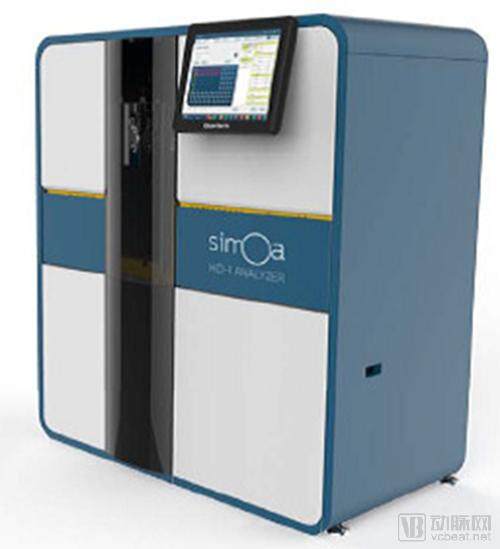
SiMoA HD-1 Analyzer Device Diagram
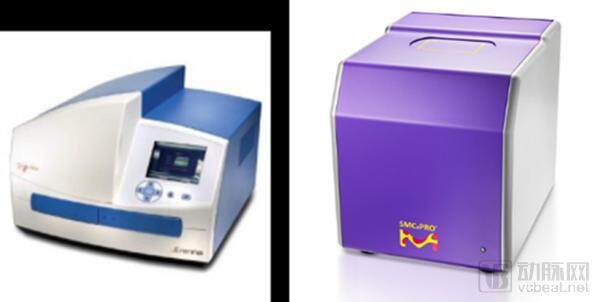
SMCxPRO Device Diagram