

Shao Yuan of Antai Innovation Outlines Three Core Capabilities for Next-Generation Internet Hospitals in IPO Filing
Internet healthcare can be categorized into three forms based on its stages of development. The earliest form was the “Online Baidu + Offline Putian System” model, a product of the PC era that continues to exist today. The second form emerged after 2012 in the mobile internet era, dominated by internet companies such as Chunyu Doctor and Wuzhen Internet Hospital. This model was characterized primarily by lightweight online consultations, with limited offline medical services. By 2018, internet healthcare entered a new phase, in which a large number of offline physical hospitals began providing services online, marking the true commencement of the “Internet + Healthcare” era.
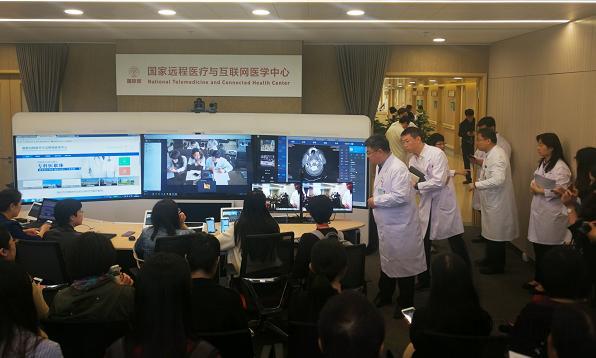
On April 28, 2018, the General Office of the State Council issued the “Opinions on Promoting the Development of ‘Internet + Healthcare’.” The Opinions state that medical institutions may use “Internet Hospital” as their secondary name, leverage internet technologies to provide safe and appropriate medical services based on physical hospitals, and permit online follow-up consultations for certain common and chronic diseases.
In September, the National Health Commission and the National Administration of Traditional Chinese Medicine jointly issued the “Notice on Printing and Distributing Three Documents, Including the ‘Administrative Measures for Internet-based Diagnosis and Treatment (Trial)’,” aiming to regulate internet-based diagnosis and treatment practices, leverage the positive role of telemedicine services, improve the efficiency of medical services, and ensure medical quality and safety.
Only when a substantial volume of offline medical resources is truly mobilized to provide online services, and physical hospitals begin establishing internet hospitals, will internet healthcare genuinely enter a substantive stage in terms of resource allocation and service delivery.
Therefore, the key to building an internet hospital lies in how physical hospitals can go online.
Data, processes, and medical consortiums must all go live.
The key to hospital system implementation lies primarily in the migration of hospital data. Physicians require complete patient clinical and medical history data to support precise diagnosis and treatment.
Therefore, core clinical data from hospitals must be brought online. The challenge lies in the fact that medical data scattered across various information systems is not only diverse in type but also massive in volume.
The second key point is the implementation of hospital workflows. Implementing these workflows means that core services of physical hospitals must go online, including online follow-up consultations, prescription issuance, ordering of tests and laboratory examinations, appointment scheduling for diagnostic procedures, online image review, and remote consultations—rather than merely offering simple online registration and consultation services.
The third key point is the launch of the Medical Consortium.
According to Shao Yuan, CEO of Antai Innovation, internet healthcare is closely linked with offline services, such as postoperative rehabilitation and follow-up imaging examinations, which are strongly dependent on the geographic location and service radius of physical hospitals. Internet hospitals must “not only ascend to the cloud but also take root in the real world.”
Service outlets of medical consortia led by core hospitals enable the practical implementation of “Internet Hospitals.” By rationally allocating medical resources within the consortium, efficient medical collaboration and remote consultations are achieved. Letting data do the legwork ensures that patients can access high-quality medical services close to home. Therefore, medical consortia constitute a critical structural foundation for building effective Internet Hospitals.

Shao Yuan, CEO of Antai Innovation
Information Heterogeneous Integration Platform: The Foundation of Internet Hospitals
As is well known, the diverse data structures of numerous operational systems within hospitals have led to the fragmentation of patient diagnosis and treatment data, making it inconvenient for physicians to access this information in real time and to engage in collaborative discussions.
Within medical consortia, collaborative exchange of medical data is particularly challenging.
Collaboration among medical consortia typically requires substantial time to collect patients’ complete diagnostic and treatment records before clinical decisions can be made.
Taking remote consultations as an example, traditional approaches require the prior integration and collection of patient diagnostic and treatment data. During the consultation, physicians must spend considerable time reviewing these records before they can proceed with the discussion. This often results in a scenario where “two hours are spent on preparation for just five minutes of conversation.”
Internet hospitals are high-traffic platforms. High-quality physician resources are extremely valuable, and information technology is needed to enhance the efficiency of service delivery. Traditional methods of information integration fail to meet the demands of internet hospitals.
In response, Antai Innovation’s independently developed “Information Heterogeneous Integration Platform” employs non-invasive technology to efficiently integrate patient data without replacing hospitals’ existing systems, enabling rapid connectivity to medical consortium networks and facilitating online consultations and case discussions among physicians. This represents a novel architectural framework for collaborative services within medical consortia.
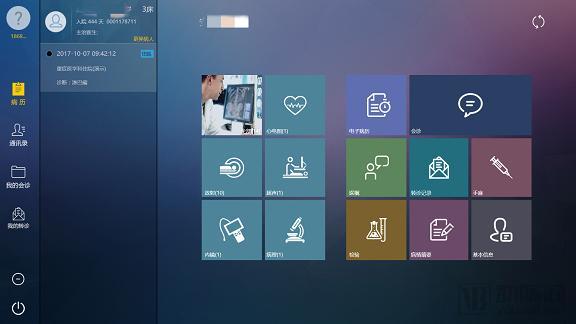
Leveraging extensive project experience, Antai Innovation’s heterogeneous integration platform can connect systems and hospital data within two weeks.
In terms of data security, Antai Innovation’s system provides a secure and convenient data access channel under hospital authorization. In other words, Antai Innovation will not transfer data to the cloud or to other hospitals without explicit authorization from the hospital.
Under this architecture, lower-tier hospitals within the medical consortium retain the initiative; if they do not initiate case discussions or request consultations, upper-tier hospitals cannot access the patients' relevant diagnostic and treatment data.
Raw Images and Panoramic Medical Records: The Key to Internet Healthcare
As previously mentioned, the integration of hospital information systems forms the foundation of internet hospitals. Equally important is the quality of medical data.
In modern medicine, the majority of diagnoses and treatments are based on morphology. In particular, with the rapid development of medical imaging in recent years, medicine has entered an era where “no image, no truth.”
Therefore, raw imaging data serves as a critical foundation for diagnosis and treatment. However, due to the massive volume of such data, online sharing and real-time access are difficult to achieve in complex network environments, leading to inefficiency and high costs in medical collaboration.
Therefore, Shao Yuan believes that “to ensure high-quality, medical-grade remote consultations, comprehensive medical records that include original imaging data are key.” The challenge, however, lies in enabling physicians to access original imaging online within the constraints of hospitals’ narrow-bandwidth network environments.
To address this challenge, Antai Innovation, which originated in imaging technology, spent five years developing cloud imaging technology that has been granted a national invention patent. This technology enables the opening of complete, lossless DICOM original images at millisecond-level speeds even on standard 4G networks.
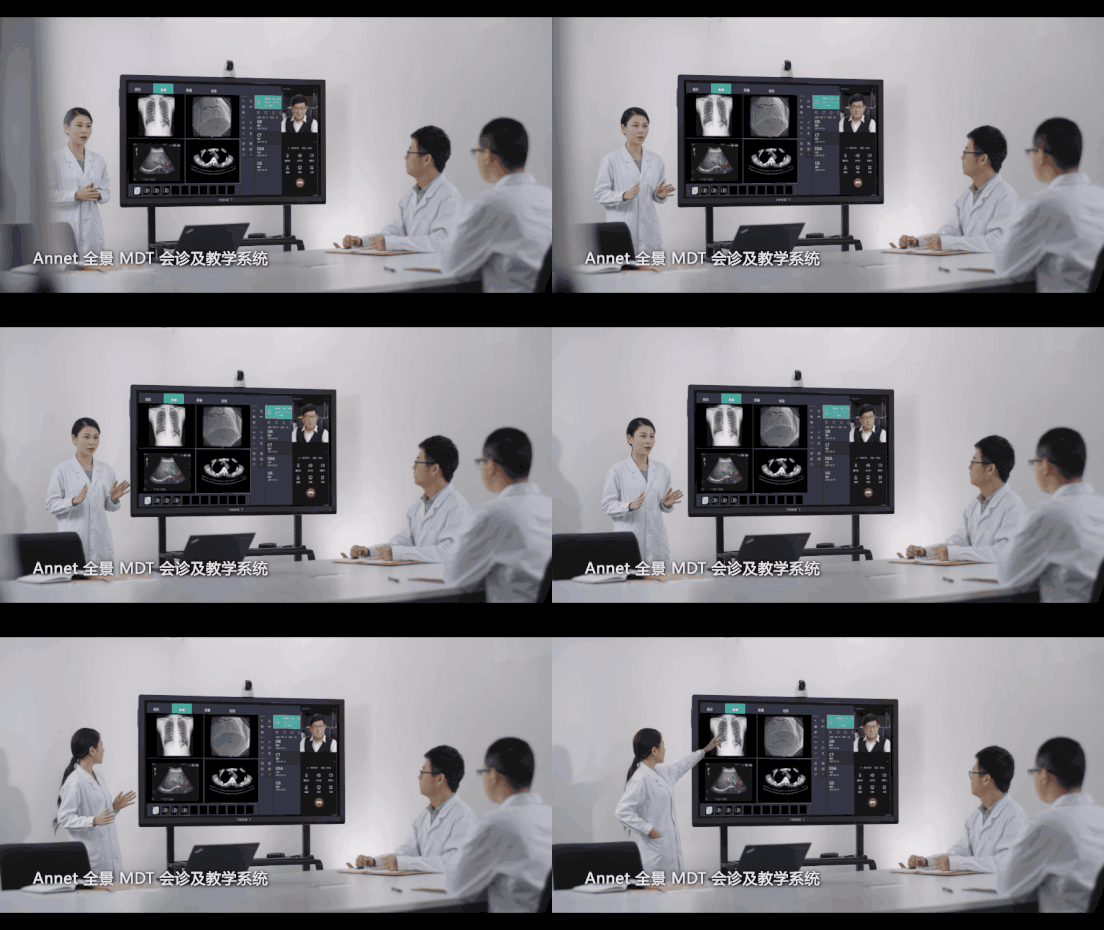
Unlike internet healthcare companies that started with appointment registration, light consultations, and insurance, Antai Innovation has always been deeply engaged in medical data and medical imaging, which is also the "alternative" model for Antai Innovation to enter the internet hospital market. Its products cover 28 provinces and municipalities across China, with a market share of up to 30% among the top 100 hospitals nationwide.
Recently, Antai Innovation was named to the “Top 50 Most Innovative Companies in China 2018” list by Fast Company, a globally renowned business media outlet. This prestigious ranking serves as an authoritative barometer of innovation trends in China, further underscoring Antai Innovation’s distinctive strengths in healthcare innovation.
The construction of internet hospitals in the new era requires the participation of companies with innovative capabilities suited to this new age. In this regard, Antai Innovation has already taken the lead with its strategy of leveraging data and streamlining online processes. Looking ahead, Antai Innovation is poised to achieve a qualitative leap in areas such as big data mining and AI-assisted diagnosis, driven by its robust foundational capabilities in medical data, thereby promoting the upgrading and iteration of internet healthcare.