

Current Status and Future Outlook of Medical Imaging AI Research and Development
Speaker: Liu Shiyuan
Editor's Note: 12June 15–16: The First China Medical Imaging AI Conference Held in Shanghai. This article is a transcript of the keynote address delivered by Mr. Liu Shiyuan, Chairman of the Conference and Chairman of the China Medical Imaging AI Industry-Academia-Research-Application Innovation Alliance.
Key Insights:
What issues do physicians perceive? First, the absence of industry standards; second, the delineation of legal liability between AI systems and clinicians; third, physicians’ lack of adequate knowledge regarding AI; and fourth, the insufficient trustworthiness of AI products.
The AI technology closest to our clinical practice or practical implementation is pulmonary nodule detection, followed by diabetic retinopathy screening, and then bone analysis; the further down the list, the more distant these technologies are from our clinical practice.
There are many medical imaging AI companies in China, whereas they are relatively scarce in the United States. However, it is important to note that these U.S. companies have all obtained FDA clearance, while none of the numerous Chinese companies have yet achieved this certification. Although the sector in China appears prosperous, it has not yet realized practical clinical implementation.
It is now widely recognized that single-disease models do not align with our clinical scenarios, necessitating multi-task learning. Multi-disease learning is better suited to our clinical contexts.
Currently, the core lies in data and physicians, but in the future, the core will shift to scientists. Only breakthroughs in core algorithms and technologies can bring about a revolution in the industry.
Only by finding a viable monetization model can AI companies secure their future.
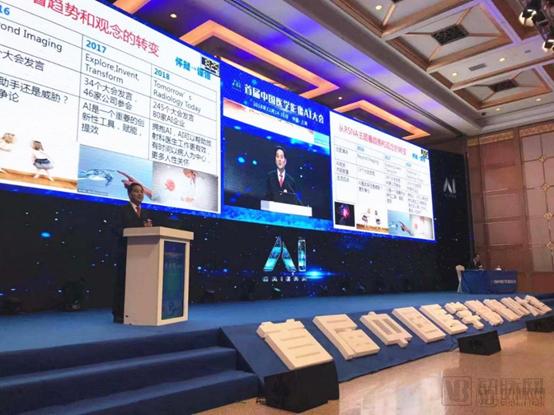
Liu Shiyuan: Chinese Medical ImagingAIChairman of the Industry-Academia-Research-Application Innovation Alliance, Director of the Department of Radiology and Nuclear Medicine at Shanghai Changzheng Hospital, President-Elect of the Chinese Society of Radiology under the Chinese Medical Association, and Vice President of the Chinese Association of Radiologists under the Chinese Medical Doctor Association
My presentation is titled “Current Status and Prospects of AI Research and Development in Medical Imaging.” The annual themes of the Radiological Society of North America (RSNA) conference have drawn significant attention, and the evolution of these themes reflects a global shift in perspectives on AI.
2016In the first half of that year, I first discussed the challenges that AlphaGo’s victory over Lee Sedol posed to medical imaging. At the time, some people failed to understand the relevance of AI to medicine. The theme of the 2016 RSNA Annual Meeting was “Beyond Imaging,” after which attendees began to recognize the connection between AI and medicine. In 2017, the theme became “Explore, Invent, and Transform,” and in 2018, it was “Tomorrow’s Radiology Today.”
Nowadays, people generally view AI as a human assistant that will transform our work processes and reshape the landscape of medical imaging. Therefore, we should embrace and engage with this technology, looking forward to the future with optimism. I believe that the theme of the RSNA Annual Meeting reflects this shift in our perception of AI.
It is well known that the development of AI as a national strategy is firmly established. There are more than 1,500 companies in China engaged in AI, with many specializing in AI-based medical imaging. However, what are the actual clinical needs for AI in medicine? This year, the China Alliance of Industry, Academia, Research and Application for Medical Imaging AI (CAIERA), in collaboration with the Chinese Society of Radiology of the Chinese Medical Association and the Artificial Intelligence Alliance of the China Association of Medical Equipment, jointly conducted a survey.
In this survey, we collected 5,142 questionnaires from physicians, over 50 from enterprises, and more than 120 from research institutes. Sichuan Province and Anhui Province ranked first in terms of participation and completion rates, respectively. Yunnan Province led in physician registrations; despite its relatively small size, it ranked second in the number of completed questionnaires.
Among the hospitals participating in the survey, secondary hospitals accounted for 48.41% and tertiary hospitals for 47.81%, representing a nearly even split. Tertiary hospitals demonstrated better questionnaire completion rates. Regarding whether these hospitals had previously collaborated with relevant enterprises or research institutes, the results showed that 84% had no prior collaborations, indicating substantial room for growth and making it a sector worthy of dedicated effort.
Among the AI areas of interest to surveyed physicians, abdominal imaging ranked highest at 56%, followed by cardiothoracic (45%), musculoskeletal (36%), neurological (35%), head and neck (29%), breast (14%), and pediatric (12%) imaging.
AIWhat issues do physicians perceive during the application process? First, there is a lack of industry standards. Second, the allocation of legal liability between AI systems and clinicians remains unclear. Third, physicians lack adequate knowledge of AI. Fourth, the trustworthiness of AI products has not yet reached an acceptable level.
This research report spans over 50 pages and has not yet been officially released. I have provided only a brief overview of two pages to offer a preliminary glimpse into the findings. Detailed results will be published at an appropriate time, with the hope of providing valuable insights for strategic planning in the field of medical imaging AI.
There is substantial demand for medical imaging services in China, yet service capacity fails to keep pace. The emergence of numerous AI companies in this field is a boon for radiologists. Significant corporate investment in this sector will inevitably create more opportunities to address our pain points. Our analysis of the strategic focus of AI companies in China’s healthcare sector reveals that their efforts are concentrated on the head, chest, pelvis, and extremity joints. The greatest investment is directed toward pulmonary nodules and other lung-related diseases, followed by intracranial hemorrhage. In the pelvic region, the primary focus is on the prostate and rectum, while musculoskeletal applications mainly center on fractures and bone age assessment.
As you can see, there are numerous medical imaging AI companies in China, whereas they are relatively few in the United States. However, it is important to note that these U.S. companies have all obtained FDA clearance, while none of the many Chinese companies have yet achieved this certification. Although the sector in China appears prosperous, it has not yet translated into practical clinical implementation.
In China, the product portfolios of AI companies are most heavily concentrated in pulmonary diseases such as lung nodules. Nearly every AI company offers solutions in this area, as it is widely perceived to have a low barrier to entry—akin to finding white spots on a black background—and thus relatively easy to tackle. Other areas, including fundus imaging, dermatology, skeletal analysis, and cerebral hemorrhage detection, present slightly greater challenges; however, they generally involve lower-dimensional image data that is easier to recognize, making them common entry points for market participants. Currently, algorithms are still unable to adequately address higher-complexity, multi-dimensional problems, which will require collaborative efforts to overcome in the future.
Therefore, the AI technology closest to clinical application or practical implementation is pulmonary nodule detection, followed by diabetic retinopathy screening; other areas include bone analysis, with subsequent applications being progressively further removed from clinical practice.
Currently, AI products cover various stages, including imaging, screening, follow-up, diagnosis, treatment, and efficacy assessment.
In the imaging phase, current fully iterative image reconstruction requires half an hour or longer per patient, which is clinically unacceptable. Deep learning methods hold promise for achieving results comparable to fully iterative reconstruction while significantly reducing processing time, thereby addressing the bottleneck in high-quality image generation and potentially revolutionizing image reconstruction quality.
In the lesion detection phase, human-machine collaboration will inevitably enhance the sensitivity of lesion detection. It is now widely recognized that single-disease models do not align with clinical scenarios; instead, multi-task learning is required. Multi-disease learning better fits clinical practice, prompting numerous companies to deploy multi-task learning solutions for detecting pulmonary nodules, masses, pneumonia, and other conditions. Additionally, fracture detection models hold significant promise. Rib fractures in the chest are a common source of missed diagnoses in emergency settings, and deep learning-based rib fracture models have demonstrated strong potential for future applications. For occult fractures, confirmation can be achieved by adjusting the patient’s positioning during imaging.
For CT-based pulmonary nodule diagnostic models, AI products can currently handle the entire workflow—from nodule detection, ranking, and quantification to follow-up monitoring—while also extracting structured information or generating reports, and even providing recommendations for risk stratification.
Various explorations are also underway in the diagnostic phase. Machine learning holds promise when supported by a large volume of surgically confirmed cases. Currently, products from some companies have demonstrated excellent sensitivity and specificity (reaching 95% and 70%, respectively) on closed-loop data, approaching the performance level of attending physicians. If the issue of generalizability can be resolved, the prospects are promising.
In the prediction phase, AI can be applied to tumor prognosis, treatment efficacy assessment, and surgical resectability evaluation. For instance, determining which pure ground-glass nodules (pGGNs) require surgical intervention and which do not is a challenging task. Given the limited number of experts capable of making such definitive judgments, how should general practitioners and surgeons make these decisions? If an AI model assists in risk stratification of these nodules, it can help address this clinical dilemma and reduce misdiagnosis.
In the treatment phase, deep learning-based image reconstruction can help physicians reconstruct more intuitive visualizations of lesion location, morphology, and related information. It enables functional assessment of residual normal organ tissue at resection sites, supports preoperative training for junior physicians, and facilitates navigation and path planning for preoperative surgical simulations. These represent highly promising future applications of AI.
In the field of radiation therapy, it is certainly possible to empower radiation oncologists at various stages, such as through deep learning-based recommendations and automatic target volume delineation. Furthermore, evaluation can be conducted by leveraging deep learning to obtain more granular information, thereby providing an assessment of diagnostic efficacy.
Especially in targeted therapy, determining which patients are suitable and which are not is critical. We traditionally need pathological results to decide which targeted drug a patient should receive. The relationship between microscopic and macroscopic features can be elucidated through deep learning methods, potentially enabling the identification of patients who would or would not benefit from targeted therapy even without a biopsy. This represents a highly promising field.
In the future, AI products may develop models based on comprehensive data across the entire healthcare process, thereby providing patients with more precise and personalized diagnosis and treatment plans. Radiologists are facing a significant opportunity, making the future promising. As Bill Gates once said, “We always overestimate the change that will occur in the next two years and underestimate the change that will occur in the next ten.” AI will bring about transformations in the content, efficiency, workflows, and methods of our work in radiology.
Why Has China Been Slow to Grant Approvals for Medical Imaging AI? First, AI differs from traditional medical products. How should AI be defined, classified, and tested? For instance, hardware manufacturers need only submit product specifications, and approval is granted once compliance is verified through testing. In contrast, the sensitivity of an AI model can be adjusted across a range of 50% to 99%, with corresponding variations in the false-positive rate from low to high. Striking the right balance and making appropriate judgments in this regard require relevant experts and regulatory authorities to engage in new learning, selection, and determination processes.
Furthermore, do we possess AI products that are comprehensive in the truest sense? How can they be integrated into clinical workflows? And once regulatory approval is obtained, who will be the paying customers? These are all critical considerations. We often state that current single-disease models do not align with real-world clinical scenarios; covering only a few conditions is insufficient, as coverage must extend to all disease types. Moreover, products based solely on image recognition are inadequate; what is needed are solutions that support the entire clinical workflow.
The pulmonary nodule model is quite reliable, offering us four key insights. First, open, comprehensive, and high-quality databases are crucial; the abundance of globally open pulmonary nodule databases provides ample learning opportunities. Second, top-level design from the outset and high-quality annotation are currently of great importance. Third, it is essential to identify clear clinical needs and usage scenarios, determining exactly what problem each product aims to solve, which requires close collaboration with physicians. Fourth, extensive training and iteration are critical to ensuring suitability for clinical workflows.
However, the data currently serving as the core of AI products has many shortcomings. Issues regarding data volume, quality, annotation, and sharing are all worthy of discussion and represent key challenges that need to be addressed.
I would like to share a perspective with various companies and scientists: At the current stage, the core of AI based on deep learning is high-quality data, which is provided by physicians; in the future, the core will lie with algorithm scientists. Only breakthroughs in core algorithms and technologies can bring about a true industry revolution.
I have noticed that an affiliated hospital of Zhejiang University has released a pricing proposal for AI-enabled multidisciplinary consultations. This is a commendable pilot and demonstration. How can AI be effectively implemented? Should charges be levied directly on patients, bundled with hardware and software sales, incorporated into consultation fees, structured around human-AI interaction, or priced as a multidisciplinary service? Regardless of the approach, identifying a viable payment model is essential for the future of AI enterprises and will drive prosperity across the entire industry.
In the clinical application phase, there are currently many challenges that we must help enterprises address. These issues may stem from products or processes, or perhaps from insufficient training for clinicians. However, technological advancements will bring about a transformation of the entire framework. Much like in the mid-game of Go, where one must strategically plan for the endgame, we should adopt a higher-level perspective to consider how to reshape our knowledge structures and methodologies within the current landscape.
I believe that artificial intelligence will undoubtedly drive significant technological innovation and transform our industry, leading to an increasingly promising future.