

2019 U.S. Fitness Expert Trends Forecast and Global Gym Market Differences
Editor’s Note: This article is republished from GymSquare (ID: GymSquare), authored by GymSquare’s core editorial team, Jinglian. VCBeat has republished it with authorization.
Forecasting fitness trends for 2019 is a standard year-end practice for many fitness education and commercial organizations. Examples include the “Top 20 Global Fitness Trends for 2019” released by the American College of Sports Medicine (ACSM), the “White Paper on China’s Fitness Industry” published by Meituan-Dianping, and our own ClassPass U.S. Fitness Report.
These trends indeed present numerous contradictions in the market. For instance, experts advise us to “rest more” but “sit less.” Advocates of meditation recommend “using mobile phones less,” yet meditation entrepreneurs still hope that more people will download their “meditation apps.”
Due to limitations in sample size and localization, these fitness trends may not necessarily succeed in China. For instance, although the American College of Sports Medicine (ACSM) predicted that wearable devices would be the top fitness trend in 2019, it is evident that wearables are no longer on an upward trajectory within China’s domestic fitness sector.
In contrast to forecasts based on macro-level data, U.S. magazine Outside interviewed leading experts and scholars in the national sports and wellness industry to predict key fitness trends for 2019.
These trends still lack a complete scientific research basis, and are even just one-sided opinions, but they do offer many valuable perspectives.

Image source: OutSide
After the Low-Carb vs. Low-Fat Debate, “Eat Less, Move More” Balanced Diet Is Set to Make a Comeback
“Low-fat diets,” long upheld as a weight-loss creed, have in recent years been increasingly supplanted by low-carbohydrate approaches such as the ketogenic diet. Consequently, “low-carb” and “low-fat” have emerged as two fundamentally distinct weight-loss paradigms engaged in ongoing debate.
It is difficult to convincingly prove that one weight-loss mechanism is superior to another.
Therefore, U.S. experts believe that calorie-based dietary balance will be widely re-adopted, and “eat less, move more” is the weight-loss rule that most people should follow. More importantly, individuals need to find a sustainable point within either “eating less” or “moving more” and turn it into a habit; this is the most critical factor for those seeking to lose weight.
Of course, “eating less” should mean choosing healthier meals, while “moving more” should involve spending more time at the gym. Rather than debating whether a low-carb or low-fat diet is more scientifically sound, it is better to start with simply eating less and moving more.
—Dr. Marion Nestle, Professor of Nutrition at New York University
Author of "Appalling Truth: How Food Companies Distort the Science of What We Eat"
Rehabilitative and Corrective Training Is Set to Enter the Mainstream
In 2019, the authors hoped and expected to see “corrective exercise” gain greater popularity, particularly among endurance athletes.
For various athletic and therapeutic practices, corrective exercise is a comprehensive term for activities performed by athletes outside the scope of structured training to eliminate functional limitations, such as restricted range of motion. These include foam rolling, stretching, mobility drills, and strengthening exercises for neglected body parts, such as the feet.
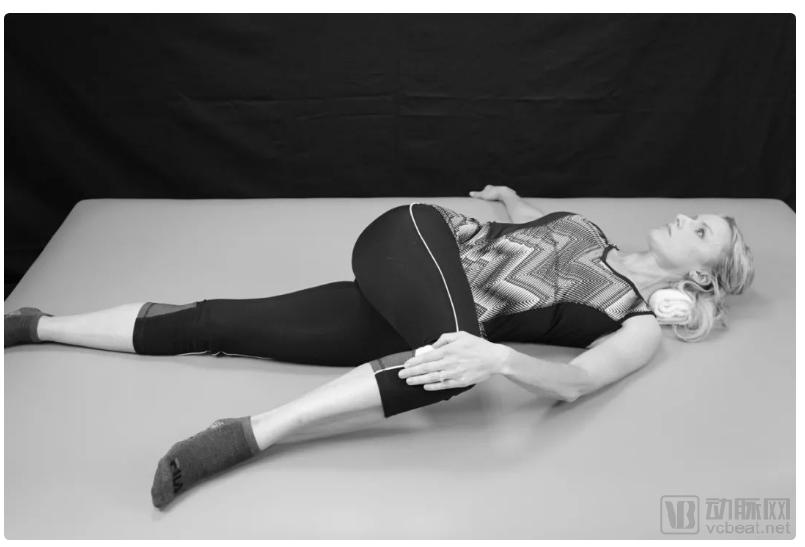
For the general public, such needs are equally common. Whether it is “uneven shoulders” or “anterior pelvic tilt,” these conditions require the attention of professional physical therapists.
This trend is predicted to continue as an increasing number of physical therapists develop corrective exercise programs for both injured and non-injured athletes based on functional movement assessments.
Certainly, this is a service currently utilized by only a small fraction of athletes, but the trend is expected to continue growing, as routine corrective exercises offer significant benefits for both performance and health.
—Matt Fitzgerald, Coach and Nutritionist
Co-author of 80/20 Running
“Kombucha” Craze May Be About to Begin
As a functional beverage, kombucha (also known as "Kongbu tea") is rich in probiotics (acetic acid bacteria and lactic acid bacteria) and vitamin B, which are beneficial to the digestive and immune systems.
Plant-based dietary trends are set to regain popularity, as incorporating more plant-derived foods into one’s diet has been proven to be an effective strategy for promoting health and facilitating weight loss.
The kombucha trend is just gaining momentum; while its taste may not appeal to everyone, it has indeed become highly popular among senior white-collar professionals.
——Marni Sumbal
Author of Fundamentals of Sports Nutrition
Skepticism toward “supplements” will increase
By 2019, people were becoming increasingly skeptical about taking vitamins and nutritional supplements, as research was gradually undermining their perceived efficacy.
——Gretchen Rubin
Author of *The Happiness Project*
"Rehabilitation Market" Is About to Explode
The market will see an increased supply of rehabilitation products, ranging from rehabilitation programs within gyms to independent rehabilitation institutions.
People are showing greater interest in “actual rest.” Several sleep apps in the United States appear to have attracted considerable user attention; they not only track sleep duration but also monitor REM (rapid eye movement) cycles, and generate charts to assess users’ sleep habits.
Of course, all of this will depend on the already growing “rehabilitation market.”
——Rich Velazquez Mile High Run ClubCOO
“Comprehensive Health” Is True Health
We will ultimately come to understand that health should be holistic. Assessing an individual's health should encompass physical well-being, as well as health and happiness in all areas of life, such as social relationships, work, productivity, and joy.
Recognizing the synergistic effects of exercise with other health-promoting practices will encourage individuals to strike a greater balance between time spent in the gym and time dedicated to pursuing broader perspectives.
——Michael Stanwyck
Co-Founder of the Full Life Challenge
“Virtual Gamified Fitness” Will Replace “Digital Fitness”
Unlike video-based fitness apps, virtual fitness will integrate users’ physical activities into games through a video game format.
Just as Amazon transformed physical books into e-books, treadmills, stationary bikes, and other traditional outdoor activities will integrate exercise into virtual scenarios.
For instance, large-scale multiplayer online fitness games like Zwift are set to reach a new peak. This home-based approach to exercise blurs the line between gaming and training.
The type of gym “iron-pumping” workout that demands perseverance will have the opportunity to evolve into a high-tech private fitness center, rather than remaining a “painful iron dungeon.”
—Nick Heil, Contributing Editor-at-Large and Author of Dark Summit
The Impact of Age on Fitness Levels Is Not as Significant as Imagined
The Impact of Age on Athletic Performance Is Considered to Be Directly and Positively Correlated. However, Recent Studies Indicate That Age-Related Physical Decline Only Begins After the Age of 40. This Means That, at Least Before Turning 40, Improving Athletic Performance Through Fitness Training Does Not Necessarily Result in Lower Performance Compared to Younger Individuals.
40 years old, an age figure significantly higher than that in previous scientific studies,
Some research also suggests that if you maintain a healthy lifestyle, the decline in health with age should not be too steep. A 90-year-old runner can perform at approximately 50% of their peak capacity, which is quite remarkable.
This study, conducted by Yale University, aggregated the probability of physical decline in individuals aged 40 and older. Surprisingly, our athletic performance declines at a mere fractional rate each year, proving less detrimental than commonly perceived.
A chart available on Yale University’s official website can be used to assess your running speed over the next 10, 20, and 40 years. If you are under 40 years of age, use 40 as your age for this assessment, as researchers estimate that this is when the decline in physical fitness levels typically becomes measurable.
The results of this study indicate that you should not give up on your health simply because you are aging. Whether you are 30, 50, or 70 years old, we still possess everything necessary to engage in and utilize our physical capabilities.
Scientific research appears to indicate that age is truly just a number, failing to fully define our physical capabilities.
In a study published in Cell Metabolism, 60 participants (mostly aged 65 to 80) were instructed to undergo 12 weeks of high-intensity interval training (HIIT).
As a result, all subjects experienced improvements in body weight, insulin sensitivity, and aerobic capacity, as expected. Mitochondrial function, which plays a critical role in cellular physiology, was also improved.
Since mitochondria are responsible for producing cellular energy and proteins, enhancing mitochondrial function plays a significant role in improving overall health and supporting aging muscle tissue.
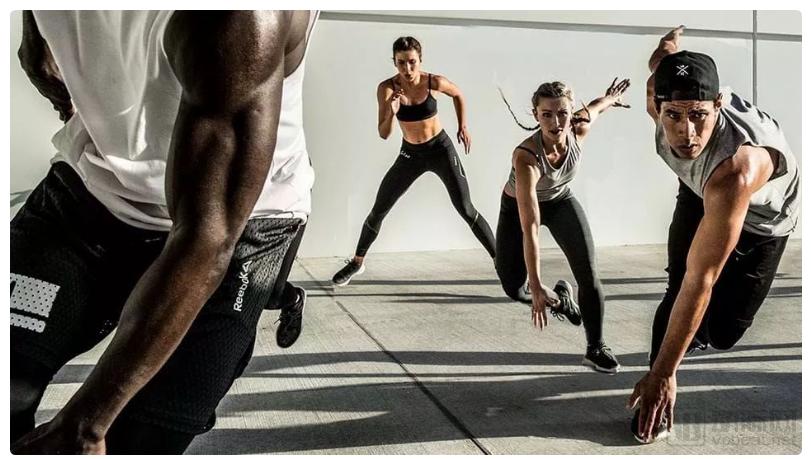
HIIT Training
According to the authors of the study, “Our data indicate that exercise training in older adults can induce a marked increase in mitochondrial proteins. HIIT appears to be an effective recommendation for improving cardiometabolic health in the elderly.”
Therefore, aging does not necessarily mean a slowdown in mitochondrial biogenesis. However, as age increases and the body undergoes greater degenerative changes, restoring health indeed becomes more difficult.
After the age of 40, we lose muscle mass at a slow and steady rate each year; furthermore, the older we get, the more prone we become to weight gain, which is where caution is warranted.
Once you lose muscle mass and replace it with fat, it becomes increasingly difficult to regain. This is why combining resistance and strength training is crucial as you age.
Some “Major Differences” Among Gyms Worldwide
Due to varying levels of fitness awareness and internet development, the global fitness club industry exhibits a landscape of “great divergence.”
According to research by Club Industry, fitness clubs worldwide exhibit many distinct characteristics in terms of equipment intelligence, online class booking, payment methods, online marketing, and social media promotion.
The report analyzes the characteristics of gyms in regions and countries such as the United States, Latin America, Europe, and Russia, and also highlights the distinct features of luxury clubs and boutique fitness studios.
Latin American Gyms: Mobile Payments Are the Top Choice
Globally, Latin American clubs are more likely than those in other regions to adopt mobile digital tools for gym management (with a 30% adoption rate). They also place greater emphasis on using social media (80%), online advertising (61%), and digital payment gateways (18%).
European Fitness Clubs: Heavily Reliant on Online Payment and Class-Booking Tools

European clubs rely heavily on online class booking (41% adoption rate). Furthermore, it is one of the regions with the highest likelihood of mobile payment usage (44%), app-based introductions (40%), and online membership purchases (36%).
US Club, Overall Technological Level Lags Behind
U.S. club operators appear to have limited enthusiasm for technology, a stance that lags behind other major global fitness markets. Nevertheless, mobile apps are primarily used for payment collection (44%), followed by the delivery of online coaching services (18%) and video-based training content (16%).
Russian clubs place great emphasis on social media and online advertising
Russian clubs are adept at leveraging social media for marketing (88%), including internet banner ads (78%) and mobile apps (58%), while also offering online registration and class booking (56%).
Luxury Clubs: Enhancing Personalization Through Technology
Globally, luxury health clubs are most enthusiastic about leveraging technology to deliver personalized services. They are also the most avid adopters of mobile apps (61%) and online member portals (43%).
For instance, Equinox, the luxury fitness club brand we are all familiar with, has developed its own app and multiple vertical websites.
Boutique Studio Excels in Social Media Operations
Boutique studios, such as the aforementioned F45 and Orangetheory Fitness, are heavy users of social media (84%) and major adopters of online membership services (66%) and internet advertising (64%).
The above outlines the current state of the global fitness industry. Notably, the more mature a fitness market is, the less urgent its demand for intelligent technologies and online tools becomes.
In fitness markets with a level of maturity similar to China’s, the increased use of assistive tools serves a single core purpose: to drive more novice users into gyms.Click here to read the original article.