

SoYoung Makes First Overseas Investment, Partners with Japan-Based Medical Aesthetics Service Provider YCISM
VCBeat (WeChat ID: vcbeat) has learned that on Christmas Eve, December 24, 2018, at the 4th So-Young Asia-Pacific Medical Aesthetics Industry Summit, So-Young, the world’s leading internet-based medical aesthetics platform, signed a strategic cooperation agreement with YCISM, a one-stop service provider for medical aesthetics in Japan. Under this agreement, YCISM will operate the So-Young Japan Pavilion. Reportedly, this marks So-Young’s first investment in its overseas business.
Attendees at the signing ceremony included SoYoung CEO Jin Xing, Yicai CEO Wang Qianqing, and representatives from Japanese medical aesthetic institutions and physicians, such as Tomofumi Abega, Director and Managing Executive Officer of Ginza Miyuki Cosmetic Surgery, and Yoshiaki Furuyama, Head of Business Strategy Planning at Jiyugaoka Clinic of Plastic Surgery.
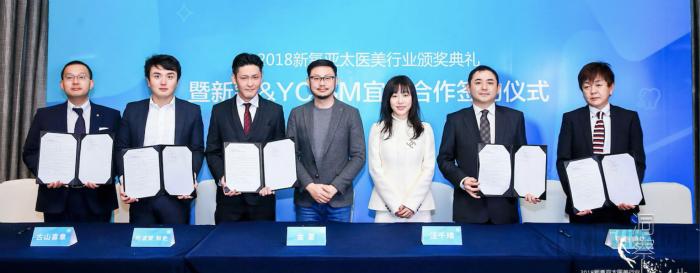
Signing Ceremony for the Strategic Partnership Between So-Young and Yicai
Founded in 2013, So-Young is committed to providing safe, professional, and compassionate services to consumers of medical aesthetics. Through five years of dedicated efforts, it has become a leading global internet platform for medical aesthetics. This strategic partnership with Yicai marks So-Young’s expansion upstream into the supply chain.
Yicai’s core founding team brings seven years of experience in providing translation services for Japan’s medical aesthetics industry. Beyond translation, Yicai offers a comprehensive suite of services, including consultation, appointment scheduling, airport transfers, chaperoning, and post-procedure care. Currently, Yicai has established in-depth partnerships with over 200 Japanese medical aesthetics institutions. Its affiliated physicians boast an average of more than 15 years of clinical experience, including micro-intervention specialists favored by Japanese celebrities and anti-aging hospitals designated by the Japanese government. With user satisfaction rates approaching 100%, Yicai stands as the largest, most professional, and best-process-controlled provider of medical aesthetics services in Japan.
Regarding this collaboration, Jin Xing, CEO of So-Young, stated: “The meticulous craftsmanship, natural aesthetic preferences, and restrained commercialization characteristic of Japan’s ‘artisan spirit’ in medical aesthetics have long held significant appeal for Chinese consumers. Over the past few years, we have been actively seeking high-quality providers of medical aesthetic services in Japan, until we discovered Yicai. Yicai’s unique positioning and extensive experience have enabled it to secure access to Japan’s top-tier medical aesthetic resources. Moving forward, we aim to partner with Yicai to open the door to Japanese medical aesthetic services for Chinese consumers, while also introducing advanced concepts and expertise into the domestic market.”
Yicai CEO Wang Qianqing stated, “We are not a medical institution; we do not have doctors or proprietary technology. Our sole asset is our service. Yicai focuses on helping customers find suitable physicians at a low cost while providing personalized services. We are delighted to have gained recognition from both consumers and So-Young. In the vertical field of medical aesthetics, So-Young is the most professional platform with the largest user base globally. Through our collaboration with So-Young, we can accelerate connectivity between Yicai and Chinese users seeking medical aesthetic treatments in Japan. Given the vast potential of the overseas market, So-Young needs high-quality service providers, and Yicai will become part of So-Young’s overseas operations.”
Yoshiaki Furuyama, a long-standing friend of both collaborating parties, was invited by So-Young three years ago to participate in medical aesthetics exchange activities in China. Speaking at the signing ceremony he was invited to attend this time, he said, “Three years ago, So-Young was still relatively small, and I was the only Japanese participant in its events. Three years later, So-Young has become a leading global aesthetic surgery app. Today, many Japanese friends are here to share insights on Japan’s medical aesthetics industry. Three years ago, international patients accounted for only about 5% of our hospital’s clientele; now, that figure has reached approximately 20%, with all these patients coming from other Asian countries.”
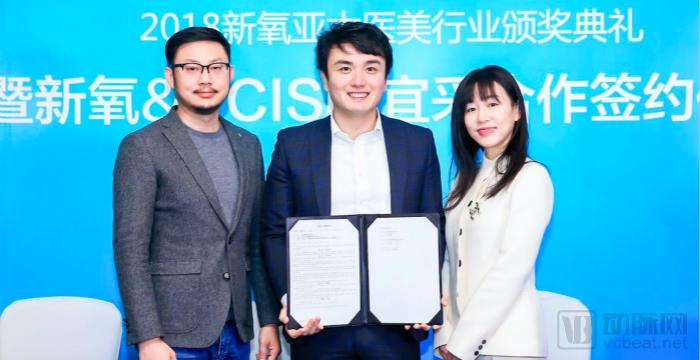
From left to right: Jin Xing, Gu Shanxi Zhang, Wang Qianqing
Chinese consumers of medical aesthetics are looking abroad, while overseas medical aesthetic service providers also value the Chinese market. There are deeper reasons behind SoYoung’s choice of Japan as its first target for overseas investment. The Japanese medical aesthetics market differs significantly from those in China and South Korea.
First, Japanese aesthetic medicine institutions are extremely cautious, particularly regarding overseas medical services. Physicians demand exceptionally high standards of professional medical interpretation, with some renowned plastic surgeons accepting services only from specific medical translators. This phenomenon primarily stems from their profound concern that inadequate communication could lead to medical malpractice incidents.
Second, Japanese hospitals operate under a different business philosophy compared to those in China and South Korea. Top-tier hospitals are never short of patients; rather than blindly pursuing patient volume, they prioritize quality over quantity, aiming to ensure that every patient achieves the desired final outcome.
In the eyes of VCBeat, Japan is a virtually untapped frontier in the medical aesthetics industry, characterized by physicians who are professional, technically skilled, aesthetically discerning, and meticulous in communication. In 2018 alone, the number of medical aesthetics clinics in Japan grew from 1,500 to 2,000, primarily to meet demand from the Chinese market. From an investment perspective, Japanese medical aesthetics services are expected to gain broader consumer recognition for their cost-effectiveness in the future.
“The average spending per capita on medical aesthetics in Japan is over 30,000 RMB, which is not as prohibitively expensive as many people imagine,” said Wang Qianqing. “The primary demographic of Chinese consumers seeking medical aesthetic treatments in Japan consists of women under the age of 30.” A challenge that China’s medical aesthetics market will struggle to resolve in the short term is the scarcity of high-quality physicians. With substantial demand for medical aesthetic services and an imbalance between supply and demand, there has been a growing trend of patients seeking treatment abroad.
Regarding So-Young’s investment strategy, Jin Xing stated that the company does not prioritize pure financial returns as a sole consideration; rather, the core objective is to align with So-Young’s direction for business integration.
Regarding Yicai’s development strategy, Wang Qianqing stated, “My perspective differs from that of most people. When it comes to healthcare, most focus on the 40% of the population who are ill, whereas I see the 60% who are healthy. Yicai aims to serve a larger healthy population, promoting beauty while preventing disease. Therefore, in addition to medical aesthetics, Yicai also offers health check-up and anti-aging services.”
“There are currently 400 million post-90s individuals in China, most of whom are university graduates with a certain level of education and cognitive awareness. In the face of the new generation’s demand for consumption upgrades, only by delivering services to the utmost excellence can we attract more users.”