Colli-Pee Urine Self-Collection Device Receives FDA 510(k) Clearance for At-Home STI Testing

NeuroXess
Invasive Brain-Computer Interface Developer

Jinkui Medical
Developer and Manufacturer of Congenital Heart Disease Treatment Devices

Comprehensive Medical News
1. Accelerated Approval of Innovative Medical Devices in Zhangjiang Science City Surpasses Last Year's Total in Just Half a Year
In recent years, the approval speed for innovative medical devices in Zhangjiang Science City has significantly accelerated. To date, a total of 13 Class III innovative medical devices have been approved for market launch in Shanghai, with 10 originating from Zhangjiang Science City, accounting for more than three-quarters of the total. The number of innovative medical devices approved from Zhangjiang has already surpassed the full-year total of the previous year. Recently approved products include Shenqi Medical’s Qilin-M® Transcatheter Mitral Valve Clip System, Lanmai Medical’s Fishhawk® Disposable Thrombectomy Device, and Xuanyu Medical’s Steerable Pulmonary Embolectomy Stent System, covering high-barrier clinical fields such as structural heart disease, peripheral venous intervention, and interventional treatment for pulmonary embolism. Zhangjiang Pharma Valley continues to liaise with the Yangtze River Delta Branch of the Center for Drug Evaluation and Inspection and the Yangtze River Delta Branch of the Center for Medical Device Technical Evaluation and Inspection under the National Medical Products Administration, promoting early intervention for innovative drugs and devices, implementing tailored strategies for each enterprise, and providing end-to-end guidance. (Sohu News)
2. Over 50 Brain-Computer Interface Companies Make a Concentrated Appearance at the Shanghai International Technology Fair, Demonstrating Strong Intentions to Expand Overseas
Recently, at the current China (Shanghai) International Technology Import and Export Fair, more than 50 brain-computer interface (BCI) companies exhibited together, showcasing diverse applications ranging from non-invasive to invasive technologies, and from medical rehabilitation to consumer entertainment. At the exchange meeting on innovative development in the BCI industry, many companies concurrently highlighted their overseas expansion strategies. Galaxy Brain Science achieves personalized brain parcellation based on functional magnetic resonance imaging (fMRI), refining the traditional dozen or so brain regions into 213 distinct areas to enable precise treatment for diseases such as Parkinson's. NeuroXess presented new clinical progress: in the clinical trial of its wireless, fully implanted BCI system conducted at the First Affiliated Hospital of Nanchang University, the system demonstrated stable performance four months post-surgery, allowing the subject to control a pneumatic glove with single-finger precision via thought. NeuroXess’s "Super Factory" has already begun construction in the Ganjiang New Area, where it will undertake the mass production of "fully implanted, fully wireless, and fully functional" BCI systems. (Wenhui Daily)
3. Beijing-Tianjin-Hebei "3+N" Alliance Expands Volume-Based Procurement to Include Additional Diagnostic Reagent Products
Recently, the Tianjin Medical Procurement Center issued two announcements on the supplementary products for the volume-based linked procurement of the Beijing-Tianjin-Hebei "3+N" Alliance, adding corresponding products from three companies as selected winners. Three products from Maccura Biotechnology Co., Ltd. and 15 products from Zhejiang Quark Biotechnology met the requirements of the volume-based linked procurement plan for biochemical reagents used in renal function and cardiac enzyme testing. Four products from Shenzhen Snibe Diagnostics (New Industries Biomedical Engineering Co., Ltd.) met the requirements of the volume-based linked procurement plan for biochemical reagents used in liver function testing. In addition, the Shenzhen Public Resources Trading Center released an announcement on the volume-based linked procurement of three categories of medical consumables in Guangdong Province, including anesthesia circuits, disposable invasive blood pressure sensors, and medical polymer splints, with a procurement cycle of two years. (China Pharmaceutical News)
4. Jinkui Medical's Biodegradable Cardiac Occluder Approved for Market Launch
Recently, the self-expanding, single-rivet, bioresorbable atrial septal defect (ASD) occluder, independently developed by Shanghai Jinkui Medical Devices Co., Ltd., has received market approval from the National Medical Products Administration (NMPA). This product is a bioresorbable cardiac ASD occluder with self-expanding and shape-recovery capabilities, designed for transcatheter minimally invasive interventional closure of atrial septal defects. It consists of a mesh body, connector, barrier membrane, and sutures, integrating bioresorbable material technology with self-expanding shape-recovery technology. Its core technological system was previously awarded the Second Prize of the National Science and Technology Progress Award. The occluder can completely degrade within a reasonable timeframe after the patient’s defect is repaired, with non-toxic and harmless degradation products, thereby fundamentally addressing the issue of long-term retention of metallic foreign bodies. It is particularly suitable for pediatric patients in stages of growth and development. Its mechanical properties related to self-expansion and shape recovery can effectively reduce mechanical traction and damage to cardiac septal tissues during surgery, lowering the incidence of postoperative arrhythmias. (Shangguan News)
5. Henan Establishes a Cross-Provincial Mutual Recognition Mechanism for Examination and Test Results with Nine Provinces
Recently, the Health Commission of Henan Province announced that the province has been continuously promoting the mutual recognition of medical examination and test results among healthcare institutions. To date, it has established cross-provincial mutual recognition mechanisms with nine other provinces, including Shandong, Shaanxi, and Shanxi. As of now, the cumulative number of mutually recognized examination and test results across relevant healthcare institutions in Henan has reached 217 million, reducing medical expenses by RMB 4.699 billion, with an average reduction of RMB 489.39 per person. The establishment of the cross-provincial mutual recognition mechanism has effectively avoided redundant examinations for patients, alleviated the financial burden of seeking medical care, improved the efficiency of medical resource utilization, and holds positive significance for promoting coordinated regional medical development. (Health Commission of Henan Province)
6. Colli-Pee Urine Self-Collection Device Receives FDA Approval
Recently, the Colli-Pee urine collection kit from Genotek, a subsidiary of OraSure Technologies, received FDA 510(k) clearance for use with the Roche Cobas automated molecular diagnostic system to detect sexually transmitted infections (STIs) using self-collected home samples. The collection kit employs patented chemical technology to stabilize DNA and RNA in urine at room temperature, allowing both men and women to self-collect first-morning voids for testing against four STI pathogens, including Chlamydia trachomatis. This clearance establishes a complete workflow from home sample collection to laboratory testing, addressing challenges related to the preservation and transport of self-collected specimens. Furthermore, the new product is directly compatible with the Roche Cobas system, eliminating the need for laboratories to make additional purchases. Home-based STI screening addresses patient privacy concerns and accelerates the decentralization of sample collection. This clearance demonstrates the feasibility of the "home collection + centralized testing" model, paving the way for the approval of more home-testing products in the future. (IVD Professional)
7. What is the Public Service Platform for Medical Devices?
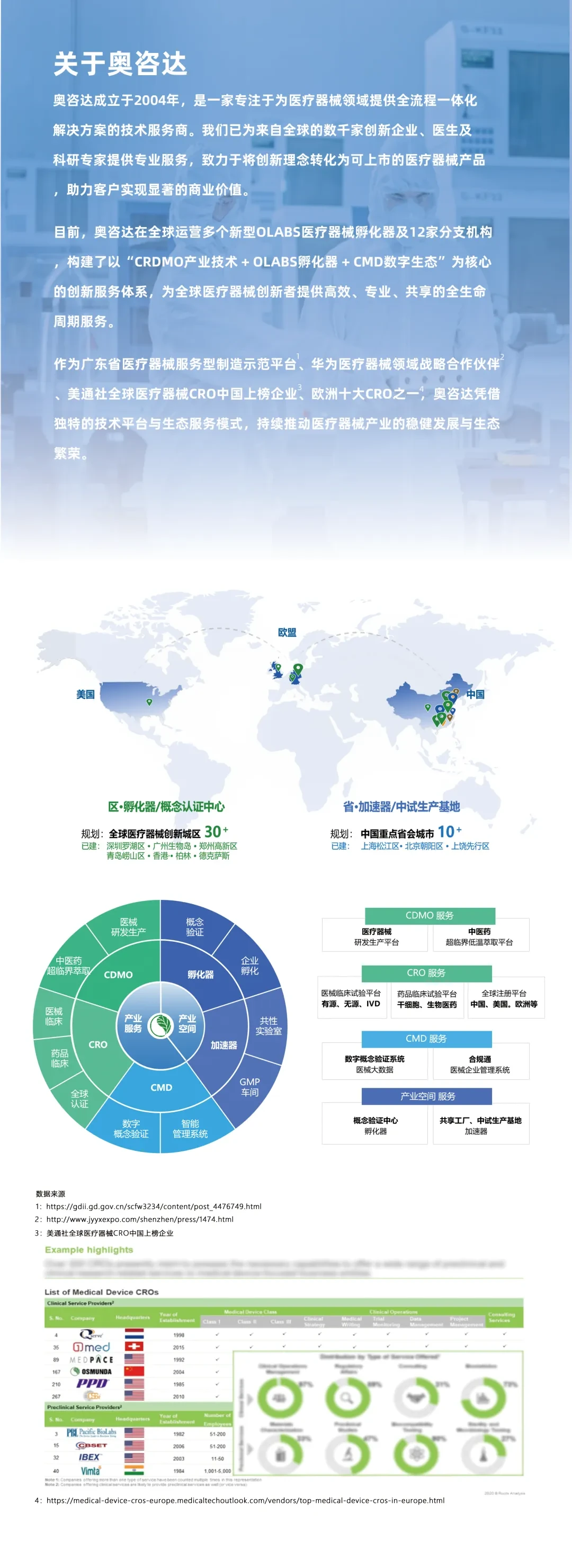
The Medical Device Public Service Platform is a key initiative jointly developed by the OSIDA Group in collaboration with local governments, industrial parks, medical institutions, and research universities. It is dedicated to the incubation, translation, and investment of cutting-edge and innovative global medical device technologies. By establishing research and technology transfer mechanisms aligned with international standards and implementing an open, shared operational model, the platform attracts high-caliber global scientific experts, physicians, and entrepreneurs. It provides comprehensive, end-to-end industrial technical services integrating R&D translation, incubation, and investment, fostering significant medical device innovations with substantial application value, thereby providing robust support for the development of the medical device industry and scientific and technological innovation. (Compiled by OSIDA)
8. Aikailing Shu Completes Tens of Millions in Angel Financing
Recently, Aikailingshu (Huzhou) Medical Technology Co., Ltd. completed an angel round of financing amounting to tens of millions of yuan, led by Shicui Capital. The funds raised will be primarily used for the construction of production facilities and the formal clinical registration of Class III medical device products. Yingyue Chuangban served as the financial advisor for this round. Aikailingshu is an innovative enterprise focused on the medical device sector. This round of financing will accelerate the research, development, and registration processes of its core products, further enhancing the company's strategic layout in the medical device industry. (Tianyancha)