

Reference Drug Procurement Platform 'CanbiGou' Launches to Support Generic Drug Development
On December 21, 2018, the press conference for the launch of the Reference Drug Procurement Platform was held in Beijing. Mr. He Xiaobing, President of Mingyan Pharmaceutical, and Ms. Yu Rui, Chairwoman and General Manager of Sinopharm Group Keyuan Xinhai Pharmaceutical Co., Ltd., attended and presided over the meeting. Themed “Honoring the 40th Anniversary of Reform and Opening-Up,” the conference brought together numerous renowned domestic pharmaceutical enterprises to review the transformative changes in China’s pharmaceutical sector over the past four decades of reform and opening-up, and to outlook the future development trends of the industry.
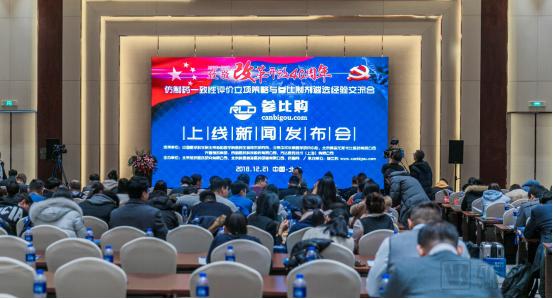
To address the challenges pharmaceutical companies face in researching and purchasing reference listed drugs (RLDs), Mingyan Pharmaceutical, in collaboration with Shanghai Pharmaceuticals Group and Yaozhi.com, has established the RLD Procurement Platform. Primarily serving China’s generic drug manufacturers, the platform provides services including RLD inquiry, procurement, and technical consultation, thereby reducing the time costs associated with RLD research and the financial costs of RLD acquisition.
Prior to 2016, generic drugs in China were required to “mimic marketed products,” meaning that a drug was considered qualified as long as its quality and efficacy fell within 80–125% of those of the marketed reference product. However, if multiple manufacturers produced generics of the same drug, the first generic might achieve only 80% of the original’s efficacy. Subsequent manufacturers, basing their products on this first generic rather than the originator, could see efficacy drop further—to around 64%. By extension, the more manufacturers involved in such sequential imitation, the poorer the resulting drug quality might become. In contrast, China’s current consistency evaluation policy explicitly requires companies to “mimic the originator drug,” thereby ensuring that the efficacy of generic drugs remains within the 80–125% range relative to the original innovator product.
Currently, in China’s pharmaceutical market, Western medicines account for approximately 65% of the total, with generic drugs comprising about 75% of these Western medicines. It is fair to say that China is a genuine powerhouse in generic drug production. The comprehensive and thorough implementation of the national policy on “Consistency Evaluation of Quality and Efficacy for Generic Drugs” represents the first step in China’s transition from a major generic drug producer to a leading power in this field. For generic drug development, the most fundamental step is to identify the reference listed drug (RLD) and procure it in full compliance with legal and regulatory requirements. Selecting an incorrect RLD, or purchasing products without adequate quality assurance for use as the RLD, can adversely affect the marketing authorization application for the product and may very likely render the research efforts void.
This press conference brought together more than 100 pharmaceutical manufacturers and research institutions from the Beijing-Tianjin-Hebei region to jointly discuss strategies for ensuring that enterprises pass the consistency evaluation with guaranteed quality and quantity, as well as the future layout and direction of China’s generic drug industry. The meeting concluded that Chinese generic drug manufacturers should extensively learn from advanced international concepts in generic drugs and drug R&D and production technologies, improve the professional competence and compensation levels of practitioners, and fundamentally enhance the quality of generic drugs in China.
Following the press conference, an “Experience Sharing Session on Generic Drug Consistency Evaluation” was held. Five renowned industry scholars and experts shared their successful experiences in generic drug development with attending pharmaceutical company representatives, highlighting common pitfalls in R&D practices. This session will practically help pharmaceutical companies overcome technical barriers, improve R&D efficiency, and successfully pass the consistency evaluation.
The event was highly acclaimed by attendees, who expressed hope for more such industry exchange opportunities in the future, enabling companies to share resources, learn from each other, and grow together. After the conference, we interviewed Mr. He Xiaobing, President of Mingyan Pharmaceutical. He pointed out, “Although China’s generic drug industry started late, it has developed rapidly, with some companies already gaining widespread international recognition. However, the entire generic drug sector in China currently faces a significant disparity in technical capabilities among enterprises—some are excellent, while others lag far behind. The R&D strength of the industry is distributed in a pyramid shape: a small number of strong companies control a large portfolio of products, especially those with substantial market potential. In contrast, there is an excess of companies with inferior technical capabilities, which can only produce products with limited market potential. This has led to overcapacity for certain drugs that are no longer considered first-line treatments in clinical practice, while few companies attempt to develop generics of highly effective products with fewer adverse reactions and better patient compliance, due to the high difficulty involved in their R&D.”
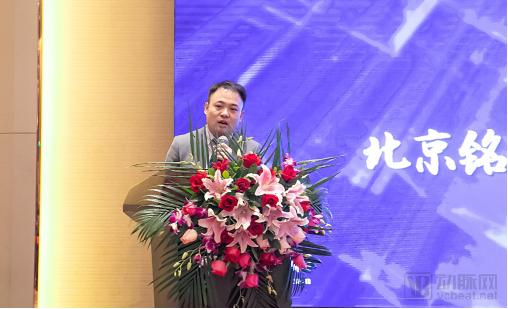
Mr. He Xiaobing, President of Mingyan Pharmaceutical
President He Xiaobing shared with us his original intention behind establishing the Reference Listed Drug (RLD) Procurement Platform. He stated, “In our day-to-day operations, we have observed that many enterprises encounter various difficulties when selecting and purchasing RLDs, with the most common issue being the accidental purchase of incorrect RLDs. Since sourcing certain RLDs can indeed be challenging, some industry players may engage in excessive price gouging. Meanwhile, pharmaceutical manufacturers often operate with fixed R&D budgets. Consequently, insufficient procurement of RLDs can lead to inadequate research and development, ultimately having a direct negative impact on regulatory submissions and market launch. I personally find this situation highly regrettable. On one hand, developing a single drug variant already entails substantial costs for pharmaceutical companies; if the final submission fails, over ten million yuan in R&D funding would be wasted. On the other hand, as we are also engaged in R&D ourselves, we recognize that some drug candidates are truly beneficial to the nation and its people. It represents a significant loss to society when such promising products are rejected due to insufficient study. Our primary goal in building this platform is to facilitate RLD research for pharmaceutical manufacturers, helping them avoid unnecessary detours. Secondly, we aim to establish industry standards by keeping profit margins within an appropriate range, thereby alleviating the financial burden on pharmaceutical companies associated with RLD procurement.”
Finally, President He Xiaobing also shared his vision for the CanbiGou platform and the entire generic drug industry. He stated, “I hope that our CanbiGou platform will serve not only as a tool for industry peers in their daily work but also as a link within China’s generic drug industry. Since generic drug development involves many specialized divisions of labor, we aim to integrate advantageous resources across these fields through our platform. By uniting our efforts, supporting one another, and pursuing common development, we can contribute to the rapid and healthy growth of China’s generic drug industry. Lastly, we hope that our CanbiGou platform will become a bridge connecting Chinese generic drug manufacturers with advanced foreign pharmaceutical technologies and R&D concepts, leveraging overseas scientific expertise, advanced equipment, and top-tier talent to lay the foundation for the internationalization of China’s generic drug industry.”