

Jianjian Home Doctor Receives Endorsement from Health Authorities, Aims to Serve 100,000 Grassroots Family Physicians in Three Years
With the rapid development of internet technology and continuous policy guidance from the state, the “Internet + Healthcare” model is advancing in depth. In the future, the healthcare industry will closely integrate with high-tech solutions such as big data and artificial intelligence, truly realizing patient-centered smart healthcare.
To promote the application of “Internet Plus Artificial Intelligence” in primary healthcare across various provinces, a series of thematic forums on “Internet Plus Primary Healthcare,” guided by the departments of the National Health Commission, were recently held in Chongqing, Wuhan, and other cities. Invited corporate participants included renowned domestic and international pharmaceutical companies such as Pfizer, Sanofi, and Yangtze River Pharmaceutical Group, as well as leading Chinese technology firms including Kingsoft Cloud, iFlytek, and Ping An Health Insurance.
“Jianjian Family Doctor,” a provider of family doctor service platforms, was also invited to participate in multiple forums, where it engaged in government-enterprise dialogues and discussions with health authorities on topics such as “the application of ‘Internet+’ in primary basic healthcare scenarios” and “building a new-type primary healthcare service system.”
Among numerous enterprises with deep industry backgrounds, Jianjian Family Doctor, which has been in the healthcare sector for only three years, is considered a “newcomer.” Nevertheless, it has stood out due to the success of the “Xiantao Model,” in which it was involved throughout its development, as well as its pragmatic solutions for informatization construction in primary healthcare. This has garnered attention and recognition from leaders at the National Health Commission, as well as provincial and municipal health commissions. What are the underlying reasons behind this achievement?
“Jianjian Family Doctor” is independently developed and operated by Beijing Guoan Guangchuan. As a subsidiary of CITIC Guoan dedicated to smart healthcare, Guoan Guangchuan has focused on the development of primary healthcare since its establishment, committing to driving medical transformation through technology, in alignment with the CITIC Group’s “Internet Plus” strategy.
Jin Lei, General Manager of Guoan Guangchuan, boasts twenty years of experience in software and internet entrepreneurship. In 2008, he joined the Alibaba ecosystem as one of its first third-party partners and was consecutively named a “Gold Taobao Partner” for multiple years. He was recognized as one of China’s Top 10 E-commerce Service Providers in 2011 and as one of China’s Top 10 Data Marketing Service Providers in 2012.
“I witnessed Alibaba’s golden decade in its entirety and was fully involved in the planning and construction of the Taobao Open Platform. Thanks to a fortuitous opportunity more than three years ago, I had the privilege of joining the Internet Plus Healthcare sector. The current rise of the Internet Plus Healthcare industry reminds me of the e-commerce boom from ten years ago; we are on the eve of another major transformation,” said Jin Lei.
Since 2016, Jin Lei has led his team in formally entering the healthcare sector. Driven by a commitment to optimizing user experience, the team spent nearly six months studying national policies and conducting extensive research on the needs of grassroots providers and regulatory authorities. Throughout this process, the team continuously recruited top talent from the fields of Internet of Things (IoT), big data, and healthcare. With development efficiency far surpassing that of industry peers, they successfully launched “Jianjian,” a family doctor service platform featuring functionalities such as contract signing, service fulfillment, follow-up care, health examinations, and performance evaluation.
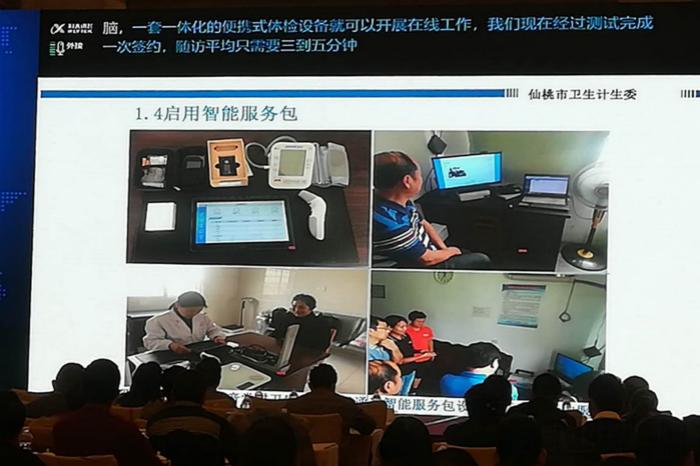
Internet Technology-Assisted Primary Healthcare
“At the time, we were extremely confident in our product. Progress was smooth across all stages, from prototype design and functional testing to real-world implementation. However, not long after project deployment, problems emerged. Many primary healthcare centers reported that while our software was user-friendly, frontline physicians were reluctant to use it because data entry was too cumbersome. This situation left us quite disheartened for a while, as informatization in the traditional healthcare sector—particularly at the primary care level—was severely underdeveloped and relied on extremely limited methods. But isn’t that exactly why my team exists—to solve such problems?”
Consequently, with the synergy of the group’s related resources, Guoan Guangchuan rapidly developed the “Jianjian Family Doctor” follow-up kit to address practical pain points such as the difficulty, low efficiency, and high cost of primary care data collection. Primary care physicians need only carry the follow-up kit, utilizing a PAD, an ID card reader, and Bluetooth-enabled detection devices, to directly upload residents’ monitoring data to the backend system while completing follow-up visits.
Subsequently, the Jianjian Family Doctor team of Guoan Guangchuan developed digital diagnostic equipment, such as public health examination vehicles and all-in-one health kiosks, in response to grassroots public health needs. These innovations further assisted primary healthcare institutions and elderly care service centers in accurately collecting resident health data, achieving effective integration of daily monitoring, follow-up visits, and public health examination data.
“Initially, the detection scope of our devices focused primarily on basic metrics such as blood pressure, blood glucose, blood oxygen saturation, heart rate, electrocardiogram (ECG), and uric acid. Later, the director of a community health center approached us, noting that their facility still relied on large-scale equipment purchased several years ago, including ultrasound machines and blood biochemistry analyzers. These devices lacked Bluetooth connectivity and could not communicate with software platforms. However, procuring new digitalized equipment was prohibitively expensive, making them reluctant to invest. In response, our team developed a protocol converter capable of resolving communication issues for most traditional diagnostic devices. At this stage, we had essentially perfected the layer of precise data acquisition at the grassroots level. Yet, a new challenge emerged: once the data was collected, how could it be leveraged to serve users?”
To help grassroots family doctors truly deliver on signed service agreements and enhance public satisfaction with national basic public health services, Guoan Guangchuan Jianjian Family Doctor has leveraged the advantages of large-screen television to innovatively develop a cross-screen, multi-terminal (TV + mobile phone + tablet + computer + all-in-one machine) interconnected model. This approach provides users with comprehensive access to electronic health records, enabling residents to sign up for family doctor services, view health records and contract fulfillment information, and receive precise health management and education—all from the comfort of their homes.
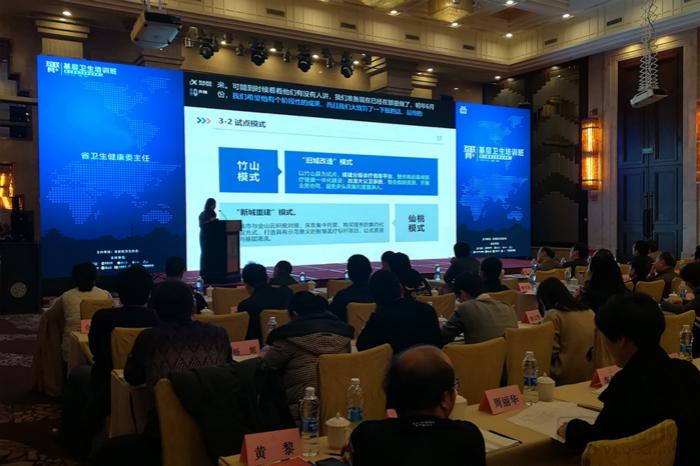
The Xiantao Model Has Gained Widespread Recognition
“With the support of the Xiantao Municipal Health Commission, our model has been successfully implemented and is currently in operation, earning widespread recognition from the Chairman of the Xiantao Municipal Committee of the Chinese People's Political Consultative Conference, competent authorities, grassroots physicians, and the general public. As an advanced exemplar of primary healthcare informatization construction in Hubei Province, the ‘Xiantao Model’ has received significant acclaim from both the National Health Commission and the Provincial Health Commission, which have called for province-wide adoption and learning.”
After three years of dedicated exploration and accumulation on the family doctor service platform, Jin Lei’s perspective is pragmatic and profound: “No matter how sophisticated an internet application may be, if it lacks precise grassroots data, it remains rootless and adrift. To realize ‘Internet + Primary Healthcare,’ the primary task is the collection of foundational data and achieving interconnectivity across the entire network.”
According to reports, Guoan Guangchuan’s Jianjian Family Doctor platform has extensively rolled out regional family doctor platforms in provinces and municipalities including Hubei, Hunan, Sichuan, Anhui, Yunnan, and Chongqing, covering tens of millions of residents. Over the next three years, Jianjian Family Doctor plans to enable at least 100,000 family doctors across China to provide comprehensive, full-cycle basic medical and health services to their contracted residents.