

Blue Ocean Opportunity: Building a Replicable Chain Model for Pediatric Dental Clinics
Pediatric dentistry has emerged as a increasingly popular niche within the dental industry in recent years. Although several chain brands have appeared on the market, a truly national chain has yet to be established.
From the perspective of patient demand, data from the Fourth National Oral Health Epidemiological Survey shows that the prevalence of dental caries in permanent teeth among 12-year-old children was 34.5%, an increase of 7.8 percentage points compared to ten years ago. The prevalence of dental caries in primary teeth among 5-year-old children was 71.9%, an increase of 5.8 percentage points compared to ten years ago. Prevalence rates are higher in rural areas than in urban areas. The incidence of dental caries in children has shown an upward trend. In the category of oral care products specifically designed for children, there is still a gap in well-established and widely recognized brands, with most professional-grade products relying on imports.
While parental attention and investment in children’s health and education are increasing, with a significant proportion of parents actively shifting their perceptions and demonstrating markedly improved awareness of oral health, numerous misconceptions persist regarding the cultivation of children’s oral hygiene habits. Therefore, ensuring that children develop sound oral hygiene practices—with genuine implementation across every family, involving both parents and children—remains a formidable challenge.
From the perspective of institutional supply, driven by policy and capital, there is a growing number of pediatric dental clinics. Many leading enterprises have secured substantial financing and continue to expand. However, there remains significant room for improvement in areas such as establishing a mature and profitable single-store model within chain operations and advancing health management practices. To address these issues, VCBeat (WeChat ID: vcbeat) interviewed Xie Fei, founder of Ruilei Dental, a representative brand in the pediatric dentistry sector. He shared insights on operational strategies in this field and provided interpretations of hot topics in the pediatric dental market. In the following section, you will learn about:
1. How to implement the concept of "prevention is better than cure";
2. Two Key Challenges to Profitability for Chain Stores;
3. Which processes and stages need to be reengineered to achieve standardization and systematization of the chain?
4. The Future Frontiers of Pediatric Dentistry: Comfort Care, Insurance Integration, and Health Management.
How to Promote the Concept That Prevention Is Greater Than Cure?
Unlike the highly competitive adult dental market, where leading brands have already established themselves, the pediatric dental market remains a blue ocean with its competitive landscape yet to fully take shape. The surge in popularity of pediatric dental clinics is primarily driven by the high growth of the overall children’s consumer market, which has attracted significant capital attention. Additionally, from a supply-side perspective, the market is far from saturated in meeting genuine demand.
With years of operational management experience in the dental industry and multinational corporations, I have accumulated systematic expertise in corporate management, enabling accurate observation and assessment of the dental healthcare services sector. During this time, Xie Fei also connected with many like-minded professionals in the dental community, which ultimately led to the decision to embark on an entrepreneurial venture. “On one hand, I hope to bring to fruition the insights and ideas I have developed over the years through entrepreneurship. On the other hand, the primary motivation for entering the pediatric dentistry segment stems from the supply-side shortcomings in the market. There are indeed few clinics in China that specialize exclusively in pediatric dental care and deliver high-quality services.”
Reporters learned that the Rayle Dental team currently comprises over 50 members. “All Rayle team members share a common goal: to ensure children are free from dental health issues such as dental caries. The founding team features highly complementary division of labor and expertise, including professionals skilled in clinical care, management, and operations. These assets are invaluable to an entrepreneurial team.”
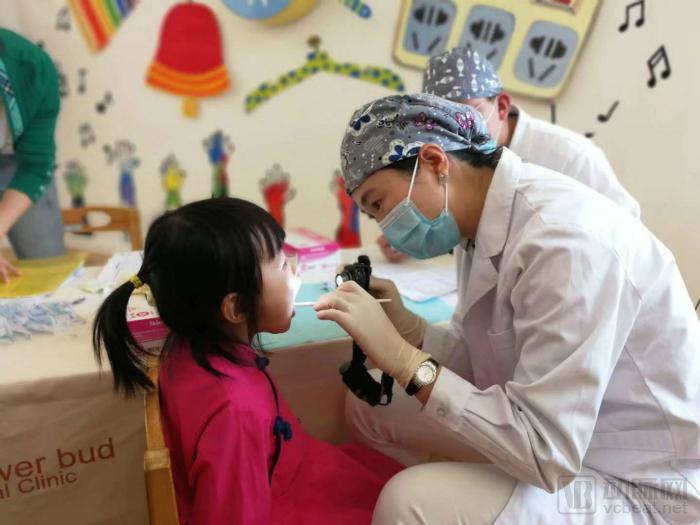
Ruilai promotes the philosophy that “prevention is better than cure.”
In terms of service philosophy, Ruilei adheres to the principle that “prevention is better than cure.” Clinical diagnosis and treatment constitute only a part of Ruilei’s services; the core of its offering lies in comprehensive oral health management for clients. Xie Fei further explained, “It is not just for children or family members; even after orthodontic or dental implant treatments, different oral care regimens are required. We encourage clients to enroll in our health management programs. Our goal is to help clients recognize the importance of oral health management. Ruilei Dental has long been committed to managing and guiding clients toward achieving healthier oral conditions.”
It has been reported that the pediatric dental health management system is a highly personalized framework. It requires a comprehensive assessment of multiple factors, including each child’s individual oral environment, dietary habits, lifestyle, oral hygiene practices, and familial oral care routines. Given the varying caries risk profiles among children, targeted therapeutic and preventive measures are implemented accordingly.
“The essence of the healthcare services industry remains healthcare itself. As long as Ruilei Dental maintains robust medical expertise, delivers high-quality service, ensures a comfortable experience for pediatric patients, and achieves satisfactory treatment outcomes that meet parents’ expectations, this will serve as Ruilei’s strongest brand endorsement. Admittedly, customer acquisition in healthcare services relies heavily on the gradual accumulation of positive word-of-mouth. Barring any significant shifts, the overall profit margins in the dental industry are expected to remain relatively stable.” Xie Fei further pointed out, “The difficulty in achieving explosive growth in the dental industry is largely tied to public health perceptions, which tend to evolve gradually. Truly transformative growth would indeed require revolutionary breakthroughs in technology.”
Profit margins in any industry tend to remain within a stable range, governed by market dynamics and influenced by each institution’s management and operational capabilities.
How to Build Standardization and Systematization for Chain Operations?
Currently, it has been reported that Ruilei Dental operates five clinics in Beijing, offering a comprehensive range of services including pediatric dental treatment and restoration, early orthodontic intervention, occlusal guidance, as well as adult restorative dentistry, root canal therapy, periodontal treatment, prosthodontics, tooth extraction, and dental implants.

Dental clinics are all located in well-equipped communities and business districts.
In terms of clinic revenue, pediatric services account for one-third in mature locations, while the remaining two-thirds come from comprehensive family health management. The average daily outpatient volume per clinic is around 20 patients, with annual revenue reaching approximately RMB 1.5 million per dental chair. Each clinic serves a user base of roughly 2,000–3,000 individuals. Most dental clinics are located in well-equipped residential communities and commercial districts.
Rui Lei remains a regional brand, with its online marketing strategy centered on localization. Its primary online channels include community groups, maternal and infant platforms, and general lifestyle platforms. Given the brand’s strong emphasis on reputation, it also places significant focus on platforms such as Meituan-Dianping.
Regarding the ongoing chain expansion plan, Xie Fei candidly stated that achieving overall profitability for the chain requires addressing two key issues: “First, whether the single-store model, or business model, is sound and truly replicable; second, whether each store consistently executes in alignment with the company’s strategy and business model.”
For chain dental clinics, standardization and systematization form the foundation. “Standardization means that the single-store model and every process, department, and position must have quantifiable and replicable responsibilities, authorities, benefits, and evaluation criteria. Systematization mainly refers to the operational division of labor and intersections among each department, position, and branch clinic, ensuring that professionals focus on their areas of expertise while being effectively connected through processes, thereby forming a network through both vertical and horizontal integration.”
“In addition, talent is a critical factor in our operational management system. ‘We have devoted significant efforts to the selection, utilization, development, and retention of key personnel,’ said Xie Fei. ‘We effectively integrate medical care with service excellence. Whether for physicians or customer service staff, I require every employee to prioritize the customer perspective, genuinely delivering services from the standpoint of both parents and children. Medical care should not merely meet customers’ basic needs; rather, it should help each client enjoy a warmer, more compassionate life.’”
Ruilei’s service process is designed to deliver services that meet customer needs, with specific requirements for every detail of service delivery, such as personal appearance and grooming, communication scripts, and technical procedures. “Regardless of prior experience, all new employees are required to undergo training based on Ruilei’s service protocols. Many new hires have noted that Ruilei’s customer service standards are higher than those at their previous clinics, but we remain committed to maintaining these rigorous practices.”
Private dental clinics generally face a shortage of dentists, and competition for talent in the oral healthcare industry is intense. Dentists who excel in both medical expertise and service awareness are particularly scarce. To address this staffing challenge, Ruilei Dental has established a comprehensive talent development system for dentists. Young dentists seek technical improvement through training and mentorship provided by senior practitioners, while senior dentists pursue career advancement and further refinement of their skills through team management training programs and instruction from experts at Peking University School of Stomatology.
“Ruilei boasts a highly distinguished faculty, including renowned experts such as Professor Zheng Shuguo, Director of the Department of Preventive Dentistry at Peking University School of Stomatology and a leading specialist in pediatric dentistry; Professor Yu Xiaoqian from the Department of Periodontology at Peking University School of Stomatology; and Mr. Xu Hong, a well-known management consulting expert in the industry.”
Rui Lei Dental offers physicians a competitive compensation and benefits package within the industry, implements differentiated performance appraisal schemes tailored to various specialties and roles, and has established a tiered system for talent development and career advancement.
What Are the Boundaries of Pediatric Dentistry?
In the field of pediatric dentistry, parental health awareness is crucial. Parental understanding of preventive pediatric dental care varies across different regional markets, influenced by factors such as economic development, purchasing power, education level, health beliefs, and consumption patterns. Despite these variations in awareness, most parents are willing to invest in their children’s health.
Xie Fei expressed both her concerns and confidence: “The main challenge in promoting the concept of oral disease prevention lies in parents’ misconceptions. Many believe that since primary teeth will eventually be replaced, it does not matter if they become decayed, as long as permanent teeth are well protected. In reality, primary teeth serve for 6 to 10 years, and untreated dental caries in primary teeth can adversely affect the development of permanent tooth germs. Moreover, dental problems in children can impact their nutritional intake, speech articulation, psychological well-being, and self-confidence. Therefore, continuing to educate parents remains the mission of every member of Ruilei.”
In China, health concepts, dental consumption habits, and awareness of preventive care still need improvement. Ruilei Dental is dedicated to strengthening education on oral prevention and healthcare awareness—a challenging and long-term endeavor. “At its core, a dental clinic is a medical institution. Our mission is to alleviate children’s pain and help them establish good oral hygiene habits. We also aim to educate children about what dental visits entail, why they are necessary, and how to properly care for their teeth. A child’s clinical experience ultimately depends on the dentist’s expertise and experience. Patient feedback on Ruilei’s dentists highlights their ‘professionalism and efficiency,’ with tailored approaches for each child. In terms of health assessment and management systems, our products are among the top-tier offerings both domestically and internationally, many of which are patented. Our health management system has been refined under the guidance of Professor Zheng Shuguo.”
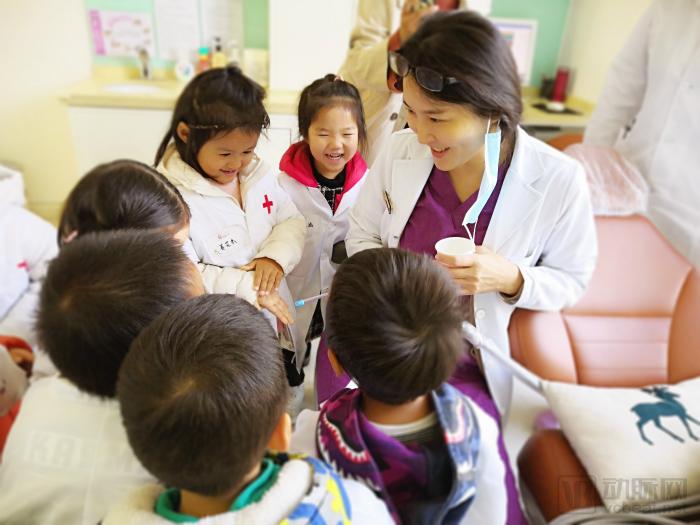
Rui Lei Dental emphasizes strengthening public education on oral disease prevention and dental care awareness.
VCBeat has also learned that comfort-oriented treatment is one of the trends in pediatric dentistry, with various comfort- and gamification-based approaches available on the market. For instance, Mydentist, a UK-based pediatric dental brand with over 650 clinics previously covered by VCBeat, launched a free app game called Plaque Attack, using engaging interactive content to provide dental hygiene education for children and their parents.
“In my view, approaches like gamification serve to alleviate children’s anxiety. Every Ruilei clinic features a children’s activity area, primarily designed to help kids adapt to unfamiliar environments or ease their restlessness during wait times. However, as a healthcare institution, we also aim to instill a certain sense of behavioral discipline in children, making them more cooperative during medical treatment. From an operational perspective, we take into account revenue per square meter and costs; I prefer to allocate resources toward recruiting skilled physicians and adopting new technologies.”
The integration of commercial insurance and private healthcare addresses the pediatric dental insurance market in China, which remains largely untapped. In the United States, dental care is one of the most significant unmet health needs among children, particularly among low-income populations and those in rural areas.
According to a 2017 survey conducted by the Children's Dental Health Project in collaboration with the Benevis Foundation, 13% of parents in the United States reported that their children needed dental care, yet these children were not receiving the corresponding services. Due to a lack of preventive care, many patients seek dental treatment only in emergency situations, imposing unnecessary costs on the U.S. healthcare system exceeding
This situation also exists in China. Xie Fei believes, “Dental insurance will drive the market for pediatric preventive oral care, as disease prevention itself offers significant positive benefits to health insurance. If effective health management can substantially reduce the incidence of pediatric oral diseases, insurance companies will certainly take notice. Current collaborations primarily focus on covering treatment costs; in the future, we also hope to partner with insurance companies to jointly develop products in the field of pediatric dental insurance, thereby promoting the concept of oral health management to a broader consumer base.”
Looking back on 2018, Ruilei Dental added three new clinics in the Beijing market. “In 2019, we will continue to focus on deepening our presence in the Beijing region, where we plan to open eight new clinics and one dental hospital, including a flagship store. We will adopt a ‘flagship store + satellite clinic’ model, while also gradually expanding into key cities such as Shanghai and Hangzhou.”
In the blue-ocean market of pediatric dentistry, it is foreseeable that the expansion and preparatory efforts will continue into next year.