

DermaSensor Raises $5.8 Million for Handheld Skin Cancer Detection Device
On December 27, 2018, VCBeat (WeChat ID: vcbeat) learned from foreign media reports that, according to a report filed with the U.S. Securities and Exchange Commission this month, DermaSensor had raised $5.8 million from 23 investors since November.
Headquartered in Florida, USA, DermaSensor is a mobile medical device startup founded in 2009, dedicated to helping physicians and patients improve skin cancer screening in clinical practice. Notably, DermaSensor’s handheld device is neither a camera nor a dermatoscope; it employs a light-emitting tip to assess potentially cancerous lesions on the patient’s skin surface. According to DermaSensor, the device utilizes a precision optical system capable of detecting cellular abnormalities as small as 2 mm, offering high accuracy and serving as an excellent adjunctive diagnostic tool.
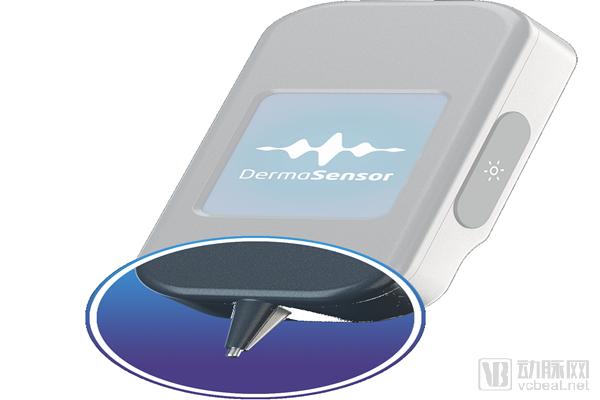
Image source: DermaSensor official website
Delivers immediate “high-risk” or “low-risk” results via DermaSensor’s proprietary algorithm; processes the detection of each skin lesion in approximately 20 seconds. The handheld device is fully wireless, ergonomically designed for easy grip and convenient use, and remains continuously online, ready for use whenever needed.
It is worth noting that DermaSensor incorporates secure wireless connectivity in its design, enabling the handheld device to connect with its companion software and other applications. Much like a smart fitness tracker, which offers not only basic step counting but also supplementary features such as sleep monitoring and social integration, DermaSensor’s handheld device can simultaneously monitor skin lesions while users engage with other software. This ensures seamless integration into leisure, work, and health management.
According to DermaSensor, the handheld device utilizes an imaging process based on Elastic Scattering Spectroscopy (ESS), which measures how photons scatter from various cellular structures. The company states that cancerous lesions scatter light differently than benign lesions due to their distinct cellular and subcellular structures. ESS has been validated in more than 50 clinical research publications, demonstrating its ability to effectively differentiate malignant tissue from benign tissue, including skin. In multiple studies, ESS has been shown to be comparable to histopathological assessment in the analysis of cellular microarchitecture.
It enables rapid assessment of subsurface skin information, empowering physicians with greater confidence and superior performance in clinical decision-making; its non-invasive nature alleviates patient anxiety and reassures them of receiving high-quality care; it enhances early detection of skin cancer, reducing unnecessary biopsies and referrals; patients will view DermaSenso as a valuable adjunct to the dermatological care provided by their physicians.
DermaSensor’s product is a clinical study device that is currently not FDA-approved.
About Assistive Devices
Auxiliary tools, also known as clinical decision support tools, are not intended to replace clinicians’ decision-making. DermaSensor will provide clinicians with additional information about lesions for consideration in their clinical decision-making. However, it is not a diagnostic tool and therefore will not provide information on the specific type of potential skin cancer (such as melanoma), nor will it make any decisions on behalf of clinicians.
About the FDA
The FDA, short for the Food and Drug Administration, is authorized by the U.S. Congress (i.e., the federal government) and falls under the jurisdiction of the U.S. Department of Health and Human Services. It is a governmental regulatory agency dedicated to protecting, promoting, and advancing public health, with its headquarters located in Rockville, Maryland.