

West China Hospital Launches Pilot Internet Hospital Comprising Five Core Components for End-to-End Regulatory Oversight
In recent years, against the backdrop of the state’s vigorous promotion of “Internet Plus” and the advancement and implementation of healthcare reforms, policy directions in the field of “Internet Plus Healthcare” have become increasingly clear.
In July 2015, the State Council issued the Guiding Opinions of the State Council on Actively Promoting the “Internet Plus” Action, which stated that China should “develop internet-based medical and health services, actively leverage mobile internet to provide convenient services such as online appointment scheduling, waiting reminders, price calculation and payment, access to diagnostic and treatment reports, and pharmaceutical delivery; and actively explore applications of internet-enabled extended medical orders, electronic prescriptions, and other online medical and health services.”
The “Outline of the ‘Healthy China 2030’ Plan,” released in October 2016, elevated guidelines for the health and medical industry to a national strategic level for the first time, clearly articulating the government’s stance on “Internet + Healthcare.”
……
In September this year, the National Health Commission and the National Administration of Traditional Chinese Medicine jointly issued the “Notice on Issuing Three Documents, Including the Administrative Measures for Internet Diagnosis and Treatment (Trial).” This represents the most comprehensive and detailed policy enacted by the state regarding internet healthcare, further specifying requirements for internet hospital accreditation, practice regulations, supervision and administration, and basic standards for internet hospitals. In accordance with the spirit of the document, internet hospitals may be established through cooperation between physical medical institutions and third-party entities.
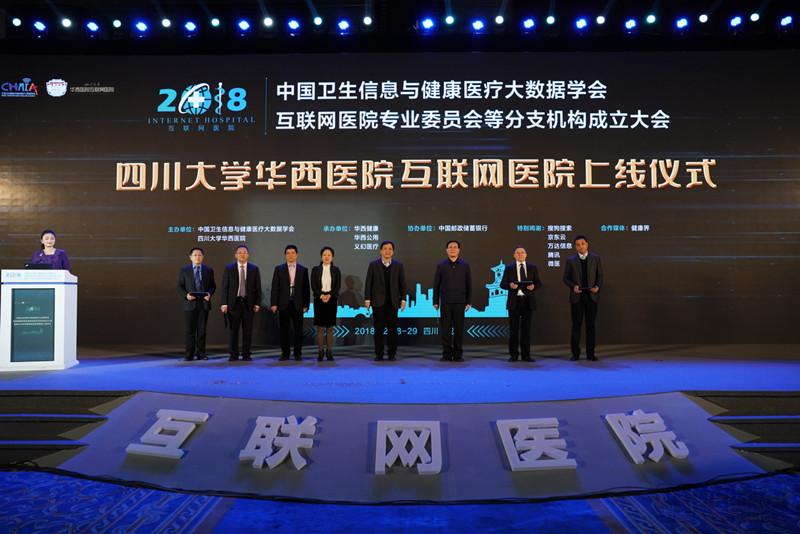
In response to national policies and to further explore innovation in the “Internet healthcare” sector, West China Hospital of Sichuan University launched its trial operation on December 29, 2018, becoming the first hospital in China to implement an Internet hospital following the promulgation of new regulations.
Unlike the “ethereal” online hospitals imagined by patients, the West China Hospital Internet Hospital is an internet-based medical service platform built upon a tangible, physical tertiary Grade A medical institution—West China Hospital of Sichuan University. Patients and their families can access professional services from West China Hospital’s medical team from home through its online diagnosis and treatment platform, namely the “West China Hospital of Sichuan University” WeChat official account.
Currently, the West China Hospital Internet Hospital of Sichuan University has launched services including online outpatient consultations, virtual clinics, online consultations with expert teams, e-prescriptions, and medication delivery.
Online and virtual outpatient services primarily cater to follow-up visits for common and chronic diseases, freeing patients and physicians from the constraints of location and time by providing a direct channel for online communication. After patients submit requests on the platform, both parties can communicate about medical conditions and review medical records through text, images, voice messages, and real-time video calls, enabling online disease consultation and diagnosis. A significant distinction from traditional online or virtual outpatient services is that, following an online diagnosis, physicians can issue hospital admission certificates, order diagnostic tests and laboratory exams, or prescribe medications based on the patient’s actual condition. Patients can simultaneously complete online procedures such as admission registration and waiting-list enrollment, payment for medical orders and prescriptions, scheduling of diagnostic examinations, and requests for medication delivery.
Meanwhile, authoritative expert teams specializing in specific disciplines, diseases, or operating under a Multidisciplinary Team (MDT) model establish online collaborative teams of physicians and nurses. For instance, after discharge, patients can continue to be followed up by the same medical and nursing team that attended to them during hospitalization, based on their disease type. This approach provides chronic disease follow-up and consultation services, optimizes medical resources, and better delivers diagnostic, therapeutic, and disease management services to target patients.
How are physicians’ credentials verified? Is drug quality assured? Can medications be delivered safely...
In accordance with the new regulations, all physicians (or teams) providing consultations at West China Hospital’s Internet Hospital are licensed practitioners of Sichuan University West China Hospital, holding qualifications for offline outpatient services at the hospital. Currently, more than 800 licensed physicians from West China Hospital, each with over three years of independent clinical experience, are providing online consultation services to patients. Identity verification for both physicians and patients is completed through technical measures such as CA certification or facial recognition.
Medical service resources within the region, such as examinations and tests, will also be registered and applied on the platform as offline implementation services after passing quality homogenization certification;
All dedicated prescription-review pharmacists are employed by the Department of Pharmacy at West China Hospital and must be approved by the Medical Affairs Department and the Department of Pharmacy; medication packaging (dispensing/distribution) is outsourced to qualified pharmaceutical companies or pharmacies.
Medication delivery following internet-based medical consultations is handled by logistics companies with professional pharmaceutical distribution qualifications, in compliance with national quality standards for drug transportation, providing patients with door-to-door medication delivery services.
All diagnostic and therapeutic service activities within the patient care process will be fully documented and traceable. The system will interface with the Internet Medical Service Supervision Platform established by the Sichuan Provincial Health Commission, uploading relevant materials and raw data as required, and subjecting all diagnostic and therapeutic activities to its quality control management.
Physical hospitals have boundaries, while online hospitals do not.
Following its trial operation, the West China Hospital Internet Hospital of Sichuan University will establish a broad platform for more registered primary healthcare institutions and medical personnel, transcending geographical boundaries. For instance, if a patient in Guang’an City selects the online specialist consultation service offered by West China Hospital through its internet hospital platform, and the West China Hospital specialist electronically issues a CT scan referral, the request is simultaneously submitted to the Guang’an People’s Hospital, which is registered on the West China Hospital Internet Hospital platform. After completing the online appointment scheduling and payment, the patient can proceed directly to the Guang’an People’s Hospital for the CT examination.
From a technical perspective, this model can also directly enhance the standardization of care provided by primary healthcare professionals. By leveraging big data analytics and artificial intelligence, it offers clinical decision support for primary care physicians registered with the West China Network Hospital. Functioning like a “road navigation” system, it guides physicians during diagnosis by prompting standardized practices and providing diagnostic and treatment recommendations that balance standardization with personalization.
Throughout the entire patient journey, the Internet Diagnosis and Treatment Service Center of West China Network Hospital will provide patients and physicians with assistance in addressing operational inquiries and facilitating communication during online diagnosis and treatment services. By leveraging service hotlines and intelligent Q&A systems, the center aims to break down barriers between online and offline care channels, delivering comprehensive, high-quality, integrated medical services across the full spectrum of care.
Leveraging mobile internet technology and information technology tools to enhance the efficiency of building a tiered diagnosis and treatment system and vertical medical consortiums.
To further advance the innovative development of “Internet + Healthcare,” West China Hospital, Sichuan University has actively responded to national policies by boldly exploring innovations. The hospital has established an Internet Hospital Management Committee, an Internet Hospital Medical Quality Management Department, an Internet Hospital Pharmacy Management Department, and dedicated Internet Diagnosis and Treatment Departments. It has clarified the access procedures for internet-based diagnosis and treatment activities, and developed a comprehensive management system for internet medical services, along with related administrative regulations, personnel job responsibilities, and service workflows.
Leveraging the hospital’s high-quality medical resources and its WeChat-based smart hospital platform, we explore innovative internet hospital services to pioneer a distinctive model of tiered diagnosis and treatment. By using key initiatives to drive broader development, we build a comprehensive ecosystem. This effort establishes a convenient online healthcare system through an internet hospital network that integrates appointment scheduling, payment, and follow-up consultations.
Meanwhile, led by West China Hospital of Sichuan University, specialized branches such as the Internet Hospital Professional Committee have been established under the Chinese Society for Health Informatics and Medical Big Data. These initiatives are poised to drive the innovative development and service application of “Internet + Healthcare” in China, formulate a standardized regulatory framework for the internet healthcare industry, promote exchanges and cooperation among government, enterprises, industry, academia, and research institutions in the field of “Internet + Healthcare,” jointly explore new models for internet hospital construction, facilitate the deep integration of “Internet+” with healthcare services, and make new contributions to the development of Healthy China.
As Li Weimin, President of West China Hospital of Sichuan University, stated in an interview with reporters, the integration of “Internet Plus” into healthcare has effectively advanced the conceptual and operational upgrades at West China Hospital of Sichuan University. It has facilitated the integration of regional medical resources on a broader scale, improved the efficiency of resource allocation, and expanded healthcare service capacity, thereby providing more and better services to society and patients, and making greater contributions to enhancing the equity and accessibility of medical services.