

Applied DNA Sciences Announces Completion of $2.75 Million Public Offering of Common Stock and Warrants
On December 21, 2018, Applied DNA Sciences, a leader in DNA manufacturing, announced a public offering of 550,000 shares of common stock and warrants, with Maxim Group serving as the sole book-running manager. The common stock was offered to the public at a par value of $0.001 per share, and the warrants at a par value of $0.50 each.
VCBeat (WeChat ID: vcbeat) learned from foreign media that Applied DNA Sciences concluded this offering on December 26. The total gross proceeds from the offering amounted to approximately $2.75 million, before deducting discounts and commissions. Applied DNA Sciences plans to use the proceeds for operations, research and development, and business expansion. In connection with the offering, Maxim was granted a 45-day over-allotment option and exercised it to purchase an additional 825,000 shares of common stock and warrants.
Applied DNA Sciences is a U.S.-based molecular technology provider that leverages polymerase chain reaction (PCR) to mass-produce specific DNA sequences, utilizing this biotechnology to deliver unique intellectual property protection for its clients. Whether for corporations, governments, or individual consumers, Applied DNA Sciences safeguards intellectual property through its proprietary biotechnologies, shielding products and assets from counterfeiting and imitation.
Combating counterfeits and knockoffs has long been a persistent challenge for businesses worldwide. As counterfeiters employ increasingly sophisticated replication techniques, the legitimate rights and interests of intellectual property holders are severely undermined. The emergence of Applied DNA Sciences has brought new hope to intellectual property protection. Because deciphering and replicating DNA sequences is extremely difficult, using DNA-based product markers creates substantial barriers to counterfeiting. The company employs plant-derived “green” DNA sequences for product genotyping and embeds SigNature DNA molecular tags onto product surfaces. Each specially formulated molecular tag adheres firmly, ensuring that products can be authenticated throughout the entire supply chain. Currently, Applied DNA Sciences offers 11 authentication technologies.
Applied DNA Sciences’ primary process for DNA-marking textiles is as follows: The company first extracts a set of genetic codes from plants, liquefies them, and then either integrates them into the fabric during production or applies them to the fabric after manufacturing is complete. Any textile marked with this DNA technology can be directly identified at any stage of the supply chain using a handheld scanner, thereby ensuring product authenticity.
Certainly, Applied DNA Sciences applies DNA marking to far more than just textiles; it can be used across eighteen product categories, including pharmaceuticals, fertilizers, microchips, and military equipment. Leveraging its unique biological marking technology, Applied DNA Sciences has established long-term partnerships with the U.S. Defense Logistics Agency (DLA), the Missile Defense Agency (MDA), and the Office of the Secretary of Defense (OSD), providing robust crime-tracking services and forensic chains of evidence through DNA marking.
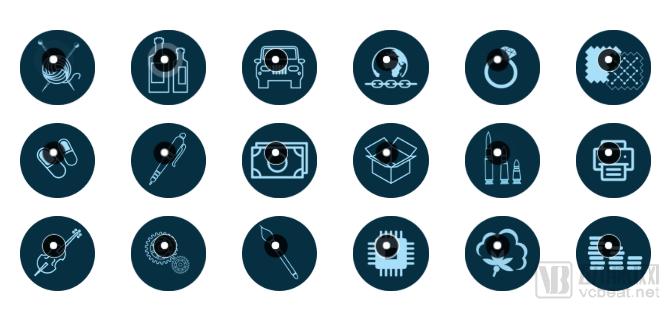
18 Categories of Markable Products (Image from the Official Website)
James A. Hayward, CEO of Applied DNA Sciences, stated, “The pharmaceutical industry also faces challenges such as counterfeit and diluted medications, which pose risks to the health of consumers worldwide. By leveraging SigNature DNA Markers for authentication, Applied DNA Sciences helps safeguard pharmaceutical companies’ intellectual property rights and ensures patient safety.”
Applied DNA Sciences was founded in 1983 and has completed six rounds of financing to date, with the most recent round raising $1.8 million in June 2017. Additionally, in August 2015, the company acquired Vandalia Research, an institution specializing in large-scale production of DNA sequences.
About Maxim Group
Maxim Group, established in 2002 as a subsidiary of Investec Ernst & Company, is headquartered in New York. It is a broker-dealer registered with the U.S. Securities and Exchange Commission (SEC) and the Municipal Securities Rulemaking Board (MSRB), primarily providing investment banking, securities, and wealth management services. Additionally, Maxim Group founded the Maxim Foundation to provide financial support to patients suffering from cancer, leukemia, and other diseases.