

Guangdong's First National Electronic Health Card Launched in Shenzhen
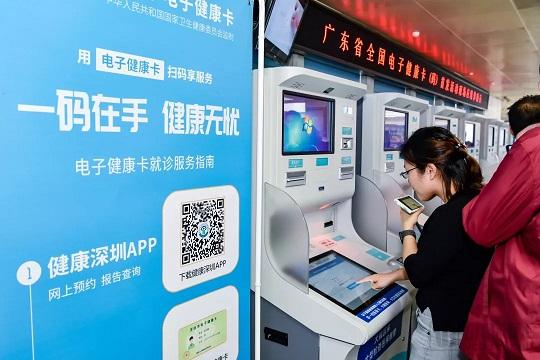
Recently, VCBeat learned from the official WeChat account of the Chinese Journal of Health Information Management that with the launch of Guangdong Province’s first national electronic health card at Peking University Shenzhen Hospital, the inconvenience of carrying physical cards has become a thing of the past. The electronic health card will serve as citizens’ “health ID,” enabling them to access hospitals across the city, the province, and indeed throughout China using their electronic health card (QR code).

What Is an Electronic Health Card?
The advent of the Electronic Health Card primarily addresses the significant challenge of “one card per hospital, with no interoperability.” According to reports, the Electronic Health Card is a medical and health service card uniformly planned and designed by the National Health Commission. It links citizens’ personal information, national ID cards, social security cards, and other data, functioning essentially as a “health ID” with identity verification capabilities. Presented in the form of a QR code, each individual has a unique code that enables use across different institutions, regions, and systems. In other words, this is not a physical card but a QR code stored on a mobile phone or affixed to a medical record booklet. Citizens no longer need to worry about carrying an extra card or forgetting it; by simply presenting their exclusive QR code for scanning, they can verify their identity and access end-to-end health services at medical institutions across the city, province, or even nationwide.
How Can Shenzhen Residents Obtain an Electronic Health Card?
It is reported that residents can currently apply through online channels such as the “Healthy Shenzhen” app and the WeChat official account of the “Shenzhen Municipal Health and Family Planning Commission.” After downloading the “Healthy Shenzhen” app, residents need only enter their name and ID number for real-name authentication, then follow the on-screen instructions to input their mobile phone number and verification code. Upon approval, they will receive a personal exclusive QR code, which serves as their electronic health card. Residents may also follow the WeChat official account of the “Shenzhen Municipal Health and Family Planning Commission,” select “Electronic Health Card” from the “Convenient Services” menu, and complete real-name authentication to obtain their electronic health card.
Citizens who have difficulty conveniently using smartphones or the internet can visit designated locations in hospitals or communities, such as Patient Service Centers or self-service kiosks, to obtain a printed exclusive QR code by presenting their Resident Identity Card. They can affix this QR code to a readily scannable location, such as on their Social Security Card, thereby enabling “scan-to-consult” services during medical visits.
It is reported that residents can currently apply through online channels such as the “Healthy Shenzhen” app and the “Shenzhen Municipal Health and Family Planning Commission” WeChat official account. After downloading the “Healthy Shenzhen” app, residents need only enter their name and ID number for real-name authentication, then follow the on-screen instructions to input their mobile phone number and verification code. Upon approval of the application, they can obtain their personal exclusive QR code, which serves as the electronic health card. Residents may also follow the “Shenzhen Municipal Health and Family Planning Commission” WeChat official account, select “Electronic Health Card” from the “Convenient Services” menu, and complete real-name authentication to receive the electronic health card.
Citizens who cannot conveniently use smartphones or the internet may visit designated locations in hospitals or communities, such as patient service centers or self-service kiosks, to obtain a paper-based exclusive QR code by presenting their resident identity card. They can affix this code to a readily scannable location, such as on their social security card, thereby enabling “scan-to-consult” services during medical visits.
What Functions Can the Electronic Health Card Provide?
Leveraging platforms such as the “Healthy Shenzhen” app and the Shenzhen Health Network, the Electronic Health Card serves as a key to unlocking a wide range of health-related functionalities. Citizens can not only authorize physicians at pilot hospitals to access their health records but also look forward to enjoying more convenient medical services in the future. These include appointment reminders, chronic disease management, linking social security cards for online payments, inquiry of consumption bills, prepaid hospitalization deposits, physical examination appointments, smart cloud pharmacies, online consultations or diagnoses, health education, and health assessments.
It is reported that the Electronic Health Card, as an open platform, welcomes access by third-party payment channels to serve citizens at any time. In the future, the Electronic Health Card will function like a wallet, allowing citizens to top up online via bank cards or third-party payment methods, as well as offline with cash or bank cards. This means that in the future, citizens can directly make payments within any third-party payment app that has integrated with the Electronic Health Card platform.
Currently, Peking University Shenzhen Hospital, Shenzhen People’s Hospital, Shenzhen Second People’s Hospital, Shenzhen Traditional Chinese Medicine Hospital, The Eighth Affiliated Hospital of Sun Yat-sen University, Shenzhen Bao’an District People’s Hospital, and Bao’an District Central Hospital, as the first batch of pilot units for the Electronic Health Card in Shenzhen, have taken the lead in implementing its application.
Next, Shenzhen will comprehensively promote the issuance and application of electronic health cards, gradually integrating medical visit cards and health and family planning service-related cards into the electronic health card system to truly achieve “one-card access.” It is planned that by 2020, electronic health cards will cover 90% of hospitals.
Lin Denan, Director of the Shenzhen Medical Information Center, pointed out, “The design and construction of Shenzhen’s Electronic Health Card feature distinct characteristics such as an open platform, rapid card issuance, broad population coverage, and diverse application scenarios. It not only delivers a comfortable and convenient medical experience but also provides residents with a one-stop health management platform.”