

VoxelCloud Secures Nearly $100M Funding with Full-Spectrum AI Diagnostic Platform and Real-World Deployment

VoxelCloud
Developer of Intelligent Imaging Systems
The response from investment institutions makes it clear that the sharp increase in financing difficulties in the second half of 2018 has become an undisputed fact. However, the emerging technology sector has never lacked investors. Both Huiyi Huiying and Infervision announced new rounds of funding amid the downturn, while VoxelCloud secured the largest single amount of $50 million, bringing its total fundraising close to $100 million.
Rewards are always closely tied to efforts. In 2018, VoxelCloud successively developed the Progressive Dense V-Net and surrogate supervised learning algorithms, addressing challenges in organ localization, navigation, and segmentation in 3D medical imaging, as well as the utilization of weakly labeled data. It also launched “VoxelCloud Skin Insight,” which employs a multi-task model to analyze more than 200 types of skin diseases.
Recently, at the “2018 Future Healthcare 100” forum hosted by VCBeat, our reporter had the privilege of interviewing Ding Xiaowei, CEO of VoxelCloud, to explore the logic behind its substantial financing round.
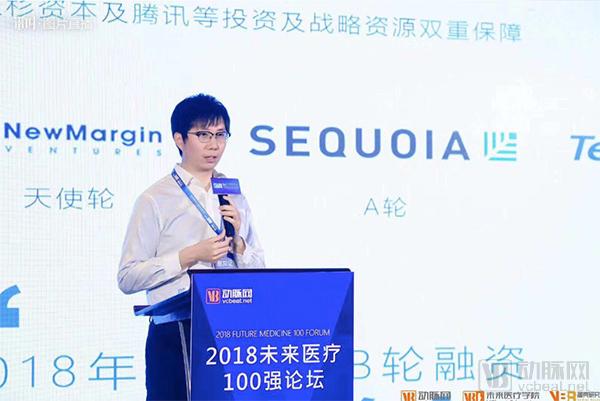
Ding Xiaowei, Founder and CEO of VoxelCloud
“Can core competitiveness be built within a limited timeframe?” This is the top concern for investors. Zhai Jia, Managing Director at Sequoia Capital, stated that after the hype phase of industry concepts has passed and amid the capital winter, technological and product barriers have become the primary focus for investors.
Objective factors for assessing technological barriers include achievements and team capabilities. Existing achievements reflect a company’s current level of technological R&D, while team capability indicates its development potential. In the face of commercialization uncertainties, opting for companies with mature technologies is a prudent risk-mitigation strategy, whereas a high-quality entrepreneurial team serves as the cornerstone for long-term stability and success. In both respects, VoxelCloud has undoubtedly delivered impressive results.
On one hand, the addition of Academician Demetri Terzopoulos and Professor Eric Topol, founder of the Cleveland Clinic Lerner College of Medicine, has injected significant talent into VoxelCloud. On the other hand, the simultaneous development of multiple product lines has continuously improved the sensitivity and specificity of VoxelCloud’s products in coronary arteries, fundus, and dermatology. Taking fundus examination as an example, the comprehensive solution for all retinal diseases has achieved a sensitivity of 97% in detecting diabetic retinopathy, with a specificity exceeding 90%.
Nowadays, VoxelCloud is attempting to monetize its products through multiple channels, all of which are contributing positively to the valuation of VoxelCloud.
The mechanisms of action for medical AI products are relatively complex. Generally, while enterprises design their products for physicians and hospitals serve as the actual payers, the service orientation remains “patient-centered.” This misalignment among payment, service provision, and service reception leads to conflicts of interest. From the current landscape, most companies’ designs revolve entirely around physicians, stemming from the fact that physicians hold significant sway in deciding whether to adopt AI products during the current implementation phase.
Nowadays, as most leading companies have surpassed their Series B financing rounds, the product development strategy focused solely on catering to physicians’ preferences may need to shift, given that these enterprises are generally facing pressure to monetize. In this context, Ding Xiaowei believes: “Stakeholders have different demands. Hospitals are concerned with the rational allocation of resources across the entire institution, while within departments, physicians focus more on product performance. Among physicians, there are significant differences in the needs for AI products between senior and junior doctors. Senior physicians hope that AI can address efficiency issues, whereas junior physicians expect the product to provide alerts that enhance diagnostic confidence and prevent missed diagnoses. Regional differences will also be reflected in product variations; for example, in the United States, the adoption of new technologies should ideally help control healthcare insurance costs.”
Therefore, when designing and refining its products, VoxelCloud often adopts a combined bottom-up and top-down approach, gathering input from multiple stakeholders, synthesizing these perspectives to identify the largest common ground among target users, and estimating the potential efficiency gains. In response to regional and national differences, separate product lines are developed accordingly.
To date, most AI imaging products have focused on single major tasks, such as pulmonary nodule detection and fracture identification. As niche tools, these AI solutions are adequate for their intended purposes; however, in most clinical scenarios, the value of analyzing a single disease entity is quite limited.
Therefore, VoxelCloud has focused its research core on the exploration of all-disease products. Ding Xiaowei stated, “The so-called ‘all-disease’ approach does not mean that we can analyze all diseases in all organs of the human body. Rather, under a given imaging protocol, such as thin-section non-contrast chest CT, the all-disease approach, as opposed to single-task models, can not only analyze one type of lesion but also provide analysis for all visible abnormalities in the current scan. Clinicians often order imaging examinations for patients based on their chief complaints and other test results, with the aim of identifying what unknown abnormalities or diseases are present. Similarly, healthy individuals undergoing physical examinations seek to discover potential risks in their bodies that are unknown and asymptomatic. Neither of these groups undergoes examinations under the premise of a pre-existing disease hypothesis. Taking the fundus as an example, ophthalmologists or endocrinologists can derive substantial information from a single fundus photograph, such as signs of age-related macular degeneration, suspected glaucoma, or diabetic retinopathy. However, when patients present with symptoms like vision loss, clinicians suspect fundus lesions after differential diagnosis and require fundus examination to determine the specific pathology. In such cases, the natural choice for AI-assisted products is one capable of detecting all abnormalities visible in fundus photography, rather than a product that only flags diabetic retinopathy. Furthermore, patients may suffer from multiple conditions, and the detection of a single disease could distort the clinician’s assessment.”
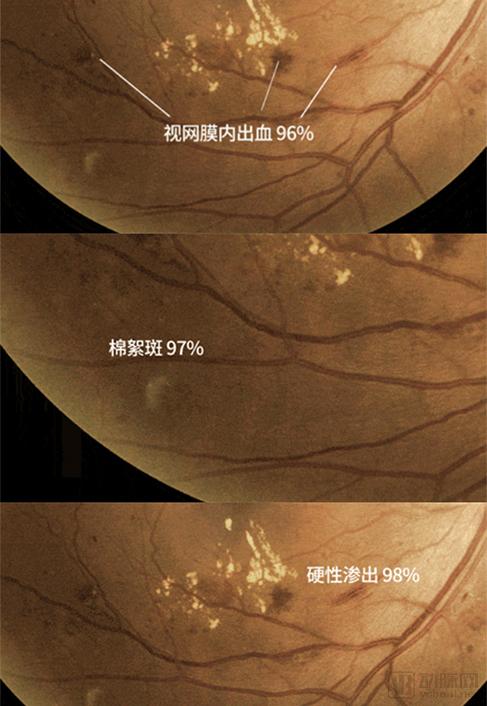
VoxelCloud's Comprehensive Solution for All Retinal Diseases
In the future, VoxelCloud will enable AI products to conduct comprehensive analyses of patient imaging in alignment with physicians’ needs, thereby unlocking the true value of medical imaging.