

Forging the Year's Strongest Regional Medical Informatics Project: How the Greater Bay Area-Linked 'Healthy Zhongshan' Platform Was Built
The construction of regional health information platforms has always been one of the key priorities in China’s healthcare informatization initiatives. Recently, in Zhongshan City, Guangdong Province—the hometown of Dr. Sun Yat-sen—a platform named “Healthy Zhongshan” has emerged as an industry benchmark.
As of December 2018, the “Healthy Zhongshan” platform had onboarded 30 hospitals, 26 community health service centers, 277 primary healthcare stations, 8,115 physicians, and 483 family doctor teams. In terms of data, a total of 400 million medical data records were uploaded to the platform, including 2.5 million electronic medical records and 42.5 million health records.
To gain a deeper understanding of “Healthy Zhongshan,” the star regional health informatics project, VCBeat made a special trip to Zhongshan City to explore its project details...
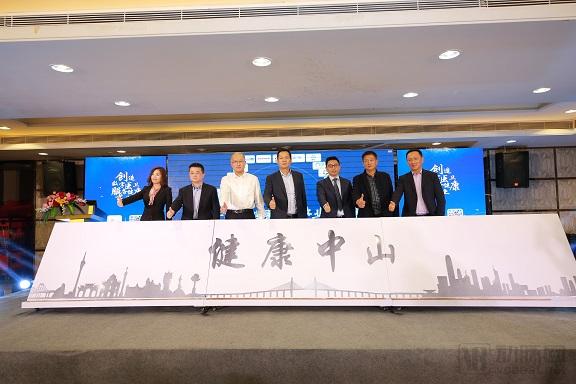
“Healthy Zhongshan” Project Background
The Zhongshan Municipal Committee of the Communist Party of China and the Zhongshan Municipal People’s Government have consistently prioritized healthcare as a top priority, striving to build a National Hygienic City and a “Healthy Zhongshan.”
In 2015, Zhongshan City joined the WHO Healthy Cities Collaborating Centre network, became a pilot city for national and provincial comprehensive reform of public hospitals, and was recognized as an Advanced City in Voluntary Unpaid Blood Donation nationwide for eight consecutive years. By 2017, the life expectancy of residents in the city had reached 79.77 years, the infant mortality rate was 2 per 1,000 live births, and the health status of residents remained at a high level.
Currently, the city has a total of 894 medical and health institutions, including four Grade III Class A hospitals. Meanwhile, Zhongshan People's Hospital is the only prefecture-level city hospital in China approved to simultaneously perform heart, liver, kidney, and lung transplants.
Informatization is not only an integral component of the healthcare sector but also a key driver and effective instrument for promoting its high-quality development. Since the launch of the Regional Health Information Platform in Zhongshan City, the city has continuously drawn on successful experiences and advanced practices from other cities across China, adopting a Public-Private Partnership (PPP) model that combines enterprise investment with government procurement of services. After three years of effort, the Zhongshan Regional Health Information Platform has been initially established.
On one hand, the basic realization of interoperability in health information not only facilitates citywide physicians’ understanding of patients’ conditions, thereby improving the precision of diagnosis and treatment, but also enables the public to monitor their own health indicators, promoting self-management of health. On the other hand, channels such as the “Healthy Zhongshan APP” and “Resident Health Connect” provide online medical services designed for public convenience and benefit, including time-slot appointment scheduling, intelligent triage and guidance, inquiry into laboratory and examination results, and one-click payment for consultation and testing fees. These measures not only simplify access to medical care for the public but also reduce time spent on registration, queuing, payment, and retrieving test results, thereby enhancing the public’s sense of gain.
Three Major Development Directions: Convenience for the Public, Convenience for Medical Professionals, and Convenience for Government Administration
In 2015, B-Soft Co., Ltd. was commissioned by the Zhongshan Municipal Health and Family Planning Bureau to undertake the “Zhongshan Regional Health Information Platform Construction and Operation Project.” The project was implemented in two phases: Phase I involved the construction of the Zhongshan Regional Health Information Platform, and Phase II focused on the “Healthy Zhongshan” Operational Service Platform. After three years of development, Phase I was successfully completed by December 2018 and entered the operational stage.
The Healthy Zhongshan Project focuses on three key areas of development: first, enabling local residents to conveniently access medical care and proactively obtain health information; second, allowing healthcare professionals to access comprehensive resident health records to provide more effective diagnosis and treatment services; and third, empowering healthcare administrators to dynamically monitor citywide medical service resources for real-time, scientific management, thereby enhancing the quality of diagnosis and treatment across medical institutions. These three aspects are collectively referred to as “convenience for residents,” “convenience for medical practitioners,” and “convenience for administration.”
As of the end of December 2018, the Zhongshan Health Regional Platform had established a three-tier private information network for health and family planning spanning the municipal, town (subdistrict), and village (community) levels, connecting all public health institutions, municipal hospitals, town and district health centers, and community health service centers (stations) across the city.
Currently, 30 hospitals and 26 community health service centers in Zhongshan City have been integrated into the system, encompassing nearly 2.5 million resident health records and over 1.5 million individuals enrolled in family doctor contract services.
Based on the interconnectivity of Zhongshan City’s medical and health information systems and in response to the health service needs of its residents, the Zhongshan Regional Health Information Platform has designed new public health application systems, including disease prevention and control, chronic disease management, comprehensive supervision and law enforcement for health and family planning, blood management, 120 emergency command and dispatch, and maternal and child healthcare.
In particular, the integration of grassroots information management systems centered on resident health records (including grassroots public health services, grassroots Hospital Information Systems [HIS], and village-level health workstations) with hospital informatization centered on electronic medical records has promoted the integrated management of townships and villages.
Following the launch of the Zhongshan Regional Health Information Platform, the Zhongshan Resident Health Information Service Platform was simultaneously put into operation. Through the resident-facing interface of the “Healthy Zhongshan” APP, residents of Zhongshan can register at a single hospital for citywide access, enabling functionalities such as online appointment scheduling, unified online payment, query of laboratory and examination results, and health consultations.
To empower primary healthcare institutions in Zhongshan City, the platform has also established a regional laboratory testing platform and a regional imaging platform, enabling convenient and beneficial services such as remote test sample submission, image sharing, and teleconsultation.
Given the immense potential value of continuously improved resident health records for the future health industry, ensuring their security is of paramount importance. In response, B-Soft has implemented an effective information security management system for the Health Zhongshan Regional Platform.
Two Major Challenges: Imbalanced Informatization and Lack of Standards
It is understood that the "Healthy Zhongshan" project faces two main difficulties and challenges: first, there is an imbalance in regional informatization in Zhongshan City, with inconsistent information systems across various hospitals; second, there is a lack of unified standards, as Zhongshan City has more than 10 different informatization standards, resulting in the formation of various information silos.
Regarding the imbalance in informatization, community health service centers and health stations in Zhongshan City had neither independent information systems nor unified health records prior to 2015.
Municipal-level hospitals exhibit inconsistent levels of data structuring and lack unified information systems, resulting in minimal operational synergy among them. Although the public health network covers the entire city with basic vertical integration, horizontal data sharing remains poor.
Furthermore, resident health records suffer from a lack of patient engagement, resulting in many dormant files. Due to the difficulty in obtaining objective indicators of medical and public health outcomes, year-end performance evaluations for community health service centers and healthcare institutions in Zhongshan City are extremely challenging.
In fact, Zhongshan City was not late in developing its health information infrastructure. As early as 2000, hospitals across the city had already begun implementing medical information systems. Based on these efforts, Zhongshan People’s Hospital was once recognized by the Ministry of Health as a demonstration unit for health informatization.
However, as time has passed and residents’ health needs have continued to grow, the problem of medical information silos across the city has become increasingly apparent. Residents have voiced strong complaints about the redundant issuance of hospital cards and duplicate examinations at different hospitals.
In 2004, Zhongshan City proposed the “Healthy Zhongshan” initiative for holistic health system development. After more than a decade of planning, the project was finally funded by the municipal government in 2015, with B-Soft Co., Ltd. awarded the bid, and officially launched in October of that year.
To establish standards, Version 1.0 of Zhongshan City’s medical and public health data specifications was rapidly released. In November 2015, the electronic health record (EHR) browser for the regional health information platform went live across the entire region. In December, the online appointment registration platform was simultaneously launched. That same month, the first four Grade A tertiary hospitals in Zhongshan City connected to the “Healthy Zhongshan” Regional Health Information Platform, achieving interoperability and sharing of health information.
In 2016, the Healthy Zhongshan Project entered a key phase of development. In January, the Healthy Convenience and Benefit-for-the-People Project was included among Zhongshan City’s Top Ten Livelihood Projects. In August, “Healthy Zhongshan APP 2.0” was officially launched, enabling online payment at the point of care. In September, Zhongshan City’s “Resident Health Pass” went live. By December, all public hospitals, community health service centers, and community health service stations in Zhongshan City had been integrated into the platform, achieving interconnectivity and data sharing of clinical information across all public medical institutions in the city.
In 2017, the comprehensive acceptance of Phase I of the Healthy Zhongshan project was completed. In July, Zhongshan City further integrated the citywide two-way referral platform into the Regional Health Information Platform; in August, the chronic disease management system and the full-year population information system were migrated to the platform; in November, Phase II of the project also passed comprehensive acceptance, with the number of app users exceeding 100,000.
In 2018, Health Zhongshan successively completed the internal acceptance of Phase III and Phase IV of the project, and passed the Level 3 Classified Protection Assessment for Cybersecurity. By the end of the year, the overall construction of the Zhongshan Regional Health Information Platform was basically completed.
Healthy Zhongshan Featured Services
In terms of public benefit services, “Healthy Zhongshan” offers services such as commercial insurance claims processing, vaccination, maternal and child health handbooks, health information, and a health products marketplace. Regarding family doctor services, “Healthy Zhongshan” has promoted online contracting with family doctors and will next proceed to deliver on these contractual services.
Within the closed-loop health service system, “Healthy Zhongshan” prioritizes convenient medical care. Currently, the app has surpassed 200,000 registered users, with a weekly active user base of 17,700, and has issued 560,000 health cards.
In terms of mobile payments, 23 hospitals in Zhongshan City have implemented mobile payment services, with over 3.61 million transactions and a total transaction volume reaching RMB 600 million.
Online family doctor services are also a distinctive feature of “Healthy Zhongshan.” Currently, the platform hosts 10 community health service centers and more than 200 family doctor teams offering online family doctor contract signing, with the cumulative number of online contracts exceeding 15,000.
Within the closed-loop system of resident medical services, “Healthy Zhongshan” has bridged the healthcare gap between primary care institutions and tertiary Grade A hospitals. By enabling identity verification and chronic disease management, it facilitates the decentralization of high-quality medical resources. Furthermore, through a two-way referral system and online remote consultations provided by tertiary Grade A hospitals, it promotes the development of “Internet + Healthcare,” fostering information sharing and interaction among medical institutions.
Currently, two-way referrals between 30 public hospitals and 26 community health service centers have reached 3,000 patient visits, with over 2,000 healthcare providers participating in family doctor contract services. In terms of public health, 5.83 million data entries have been uploaded, including health records, follow-up visits for the elderly, hypertension follow-ups, and diabetes follow-ups, saving patients an average of 20 to 30 minutes in waiting time.
In terms of comprehensive administrative management, Zhongshan City has also established a closed-loop service system. This management loop primarily encompasses comprehensive health administration, comprehensive family planning administration, and comprehensive operational management. Medical and health data across the city are centrally managed within this closed-loop service framework, allowing for real-time configuration of various performance indicators.
The Six Major Operating Models of Healthy Zhongshan
The operational framework of the Healthy Zhongshan project primarily consists of six categories:
First, there are traditional online and offline promotional efforts. Online promotion is primarily conducted through various WeChat official accounts and major media outlets, while offline promotion involves outreach in communities and hospitals. Currently, the app has accumulated over 240,000 registered users, with 22,000 individuals having completed online signing agreements, and 220,000 new appointment registrations.
Second, cloud outpatient operations. This primarily involves establishing an online hospital to provide residents with diversified value-added services, such as online follow-up consultations and medication delivery.
3. Operation of Family Doctor Services. This includes services such as family doctor assistants, value-added service packages, and remote consultations, providing citizens with more convenient healthcare services.
Fourth, payment service operations. In addition to mainstream payment channels (partnerships with Alipay and WeChat Pay), Zhongshan City has deployed self-service kiosks with QR code scanning for payments across all medical institutions in the city, and enabled online point-of-care payments via mobile apps, thereby ensuring convenient access to medical services for residents.
5. Operation of commercial insurance claims services. Externally, it establishes connections between commercial insurance institutions and medical facilities, enabling residents to file claims online with a single click as well as through offline channels.
Sixth, explore a joint consultation mechanism involving the two sides of the strait and three regions within the Guangdong-Hong Kong-Macao Greater Bay Area. Explore data linkage services in the Guangdong-Hong Kong-Macao Greater Bay Area to facilitate data exchange and coordination.
Significance of Platform Development and Next-Phase Plans
Following the establishment of the Healthy Zhongshan Platform, its impact and significance are mainly reflected in the following four aspects:
1. For residents, it is a public welfare initiative in Zhongshan City that provides convenient access to medical care and enhances the quality of healthcare services.
The Healthy Zhongshan APP enables users to complete family doctor contract signings, consult with internet hospitals, and manage preventive vaccinations, among other services. The project migrates clinical workflows to the internet, establishing an online-offline integrated healthcare service model that covers pre-consultation, during-consultation, and post-consultation phases via a mobile app. Furthermore, it promotes the rational utilization of medical resources through tiered diagnosis and treatment, ensuring that patients with various conditions receive timely and appropriate care. By leveraging remote consultations, it facilitates the decentralization of high-quality medical resources, allowing patients to access expert medical services right at their doorstep.
2. For health administrators, leveraging the platform can enhance management efficiency and effectively implement the Healthy China policy.
To dynamically monitor health service resources and utilization information, enabling scientific management and decision-making, thereby effectively controlling unreasonable growth in medical expenses, reducing medical errors, and improving the quality of medical care and services; public health professionals can comprehensively grasp population health information to effectively carry out disease prevention, control, and health promotion.
3. For medical services, internet-based technologies can expand the scope of diagnosis and treatment by healthcare professionals and facilitate diversified healthcare delivery. Essential information can be accessed promptly at any time and from any location to support high-quality medical care. After successfully signing up with a family doctor, the physician can provide unified health management and seamless, real-time communication for all family members, including health assessments, interventions, monitoring, and follow-up visits.
4. For regional development, this initiative will enhance the interaction and sharing of medical resources within the Guangdong-Hong Kong-Macao Greater Bay Area (GBA), thereby promoting the growth of the broader health industry. By leveraging internet technologies to establish a Medical Consortium platform, we will facilitate internet-based medical services such as multidisciplinary remote consultations across the GBA, achieving seamless, zero-distance interaction of medical resources. The introduction of "Internet + Health" will drive innovation and progress in the broader health industry, building a professional and trustworthy platform that provides health industry institutions with a unified, direct-to-customer interface, while offering Zhongshan residents one-stop healthcare services.
Next, Zhongshan City plans to support the Guangdong Provincial Health Commission’s “Five Ones” Campaign. First, it will establish an electronic health code for residents to achieve “one-code access” to medical and health services. Second, it will build a two-tier health information platform to enable “network-wide connectivity” among healthcare institutions. Third, it will optimize and reengineer service processes to facilitate “one-click diagnosis and treatment.” Fourth, it will advance the construction of telemedicine platforms to provide “one-stop remote consultations.” Fifth, it will develop internet-based medical services to deliver integrated online and offline care, namely through internet hospitals.
As can be seen, bolstered by existing achievements and long-term planning, “Healthy Zhongshan” has become one of the best regional healthcare informatization projects in China in 2018. More significantly, while the Hong Kong-Zhuhai-Macao Bridge has established physical connectivity among the three regions, the “Healthy Zhongshan” project is poised to take a historic and pivotal step toward achieving medical information interoperability.