

Yitu Healthcare Files for IPO: Advancing AI Capabilities in the Medical Field
Where Will the Next Breakthrough in Artificial Intelligence Occur? The Fragmented State of Healthcare Urgently Needs Standardization, Propelling a Wave of Emerging Tech Companies to Prominence.
Among them, Yitu emerged as a dark horse, securing the top spot in AI healthcare financing this year with $300 million. 2018 was a milestone year for Yitu Medical, as it became the first unicorn enterprise in China’s medical big data and artificial intelligence sector.
Since its establishment in 2012 to its current independence, Yitu Healthcare has adopted a full-stack development approach. It not only applies medical artificial intelligence technology to the diagnosis of various diseases but also constructs knowledge graphs using highly localized datasets. Furthermore, it leverages algorithms and big data to analyze clinical cases and medical literature, thereby maximizing their value.
At the end of 2018, VCBeat had the honor of inviting Dr. Fang Cong, Vice President of Yitu Healthcare, to deliver a keynote speech titled “The Future of AI Lies in Healthcare” at the forum. His insights are summarized below by VCBeat.
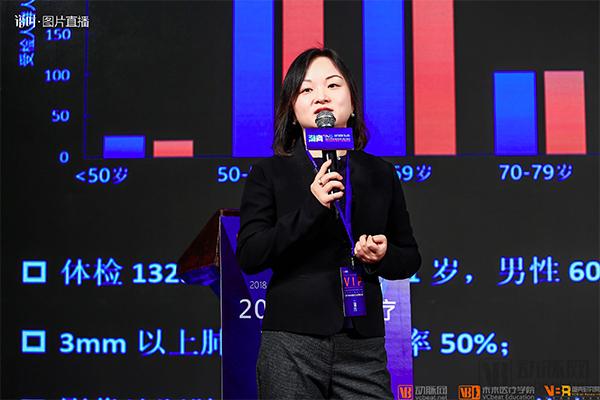
Dr. Fang Cong, Vice President of Yitu Healthcare, Delivers Keynote Speech on “The Future of AI Is Healthcare”
# Why Must the Advancement of AI Capabilities Occur in the Healthcare Sector? Dr. Fang Cong Believes: The Richness and Complexity of Clinical Healthcare Scenarios Provide a Pathway for the Advancement of AI Capabilities. What Is This Pathway? We Can Divide It into Three Stages.
When AI research first began, companies focused on single-task-oriented medical solutions. There were over 100 AI healthcare startups in China, with 90% of them concentrating on pulmonary nodule detection. This is because publicly available datasets for pulmonary nodules allowed companies to use this as an entry point and gradually expand into other disease areas.
In practice, the patient’s clinical pathway includes: 1. Routine examinations (preliminarily determining the next steps based on chief complaints and other factors); 2. Imaging diagnosis; 3. Multidisciplinary Team (MDT) consultation (designing treatment plans for patients). In comparison, while imaging AI currently plays a moderate role in this overall process, there remains significant room for expansion.
Single-task AI products, such as those for pulmonary nodule detection, can identify lung nodules, while AI systems for fundus maculopathy can detect macular degeneration. However, single-task AI is incapable of handling complex conditions such as pleural effusion, patchy lung opacities, or cystic lesions. Is there a demand for single-disease solutions within hospital departments? The answer is yes. But is this demand substantial enough to sustain the full operation of an entire department? Far from it.
Yitu Healthcare has taken a leading position in this area, moving beyond the paradigm of single-task, disease-specific analysis. Currently, Yitu’s care.ai™ Intelligent 4D Chest CT Imaging System can identify most pulmonary lesions from a set of images, providing physicians with intelligent treatment recommendations, similar case referrals, and automated comparison with historical imaging.
The second phase of medical AI involves multidisciplinary integrated diagnosis and treatment, i.e., anatomy-centric medical solutions. Following clinical reasoning, a single lung CT scan can often reveal pulmonary nodules, patchy opacities, and pleural effusion, enabling physicians to formulate a comprehensive thoracic diagnosis. Furthermore, by integrating genetic testing results with the patient’s past medical history, chief complaints, and history of present illness, clinicians can develop a comprehensive management plan for lung cancer. This represents a relatively advanced stage in current human medicine, but it does not signify the ultimate limit of future healthcare.
Patient-centric medical solutions represent the ultimate goal of future healthcare and constitute the third growth trajectory for AI in the medical sector. Being patient-centric means that from birth, all physiological data of every individual is digitized. This scenario is not far from reality; in practice, certain Nordic countries, such as Iceland, have relatively small, closed-loop populations, making it comparatively easier to implement lifelong digital health records for their citizens. Consequently, for every patient—or indeed, every citizen—the central information system maintains a comprehensive, end-to-end medical record spanning from birth to death.
What are the two core elements for advancing along this pathway? Dr. Fang Cong believes that the issue can be addressed from two directions: first,
human technological capabilities; second, the ability to leverage this powerful technology to unlock clinical application scenarios.
In layman's terms, this means establishing task-centric intelligent departments, disease- or anatomy-centric intelligent diagnosis and treatment, and patient-centric smart hospitals.
In response, Yitu Healthcare has chosen three technological directions:
1. Image-based visual recognition, including radiology data, ultrasound data, and pathology data.
2. Natural Language Processing Technology: A vast amount of medical data exists in the form of unstructured clinical notes. The significance of healthcare data informatization lies in connecting these massive datasets, uncovering underlying correlations, and fostering emergent, unexpected innovations.
3. Voice Platform: Physicians typically rely on two sensory modalities—vision and hearing—to acquire information. While visual technology has gradually matured, auditory technology continues to undergo active development. This is because acoustic information is inherently more ambiguous, polysemous, and susceptible to the speaker’s subjective intent than visual data. To accurately interpret the meaning of acoustic signals, it is necessary not only to analyze the utterance itself but also to understand the context in which the speaker is situated. In the envisioned future hospital ward, acoustic information could even replace manual input capabilities, enabling voice-driven text organization and application across broader domains.
Yitu Healthcare’s R&D team is composed of graduates from top-tier universities such as MIT, Tsinghua University, and Peking University, with prior experience at leading internet companies including Google and BAT (Baidu, Alibaba, and Tencent). This underscores Yitu Healthcare’s strong entrepreneurial and R&D DNA, which has enabled the company to win numerous world-class awards.
Today, Yitu Healthcare has recruited a team of over 400 senior physicians, with full-time department directors from top-tier Grade A tertiary hospitals providing guidance. These experts collaborate with internet industry professionals to advise on Yitu Healthcare’s products and services.
In terms of data annotation, Yitu Healthcare has invested substantial capital and resources to ensure the accuracy and usability of standardized data, creating an insurmountable barrier built on extensive time and labor inputs.
Against this backdrop, Yitu Healthcare has gradually evolved into the only company in China capable of covering the entire spectrum of medical data and providing full-stack clinical medical products.
Within less than two years, Yitu Healthcare’s products have been integrated into clinical workflows, with deployments in over 200 Grade-A tertiary hospitals across China. Among the top 100 hospitals in the country, more than 50 have adopted Yitu’s solutions. Taking the care.ai™ Intelligent Diagnostic System for Child Growth and Development as an example, this product provides a comprehensive assessment of children’s growth and development by integrating physiological and biochemical indicators, and generates customizable growth reports, thereby offering significant convenience for clinical diagnosis, teaching, and scientific research. Among the top 10 children’s hospitals nationwide, eight have already implemented this product in clinical practice, achieving an adoption rate of 80% among leading institutions.
In the process of debugging product performance and refining user experience, Yitu Healthcare does not limit its evaluation to sensitivity and specificity alone. This is because sensitivity and specificity are heavily dependent on the dataset used as input for the algorithm. For third parties outside of enterprises and hospitals, we cannot determine whether the reported sensitivity and specificity of their AI products are derived from a curated dataset or from data reflecting real-world clinical practice.
Therefore, the key performance indicator (KPI) used by Yitu Healthcare to evaluate its teams or products is termed the "clinical report adoption rate." Currently, the clinical report adoption rate for some of Yitu’s mature products has exceeded 92%, meaning that out of every 100 AI-generated diagnostic reports, 92 are approved by physicians without issues and issued directly to patients. In other words, Yitu Healthcare’s AI products have achieved a very high level of recognition in clinical practice.
As one of China’s four major AI unicorns, Yitu has grown far beyond the scale of a pure-play artificial intelligence startup. Recently, Yitu’s business footprint has expanded globally, with its presence extending to cities across the United States, Europe, Southeast Asia, and Africa. In terms of partnerships, Yitu has joined forces with strategic partners Huawei and Microsoft to accelerate global business expansion, with faster deployment currently underway.