

Can Community Clinics Succeed in China? Insights from the U.S. Model
Editor’s Note: This article is republished from Quan Zhentong, authored by Xue Chong. VCBeat has been authorized to repost it.
2013 was a year marked by the rampant occurrence of medical disturbances in China. It was during this year that I went to Johns Hopkins University School of Medicine in the United States for advanced studies. Prior to this, I had been working as a surgical specialist at a university-affiliated hospital, with little understanding of primary care. My observations and experiences in the United States prompted me to deeply reflect on the differences between the Chinese and American healthcare service models, and I personally came to realize that the most significant difference lies in community-based care, commonly known as family physician services.
Everyone present today is a key manager in community healthcare or a direct provider of community medical services. By comparison, I am somewhat of an outsider, and I am deeply honored to have the opportunity to share some of my humble perspectives.
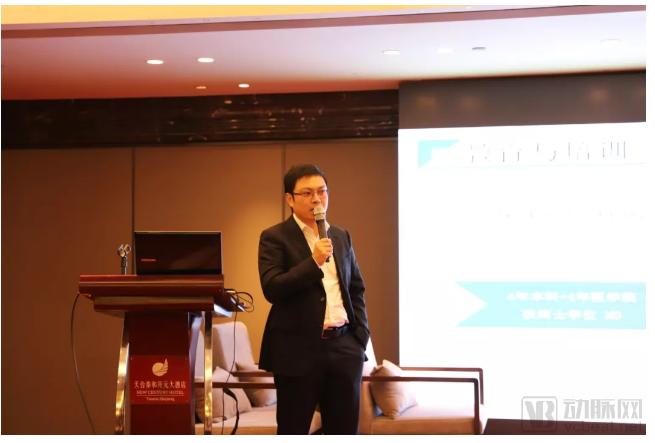
Dr. Chong Xue, Founder of Wennuan Technology
Medical education in the United States is an elite system. There is no undergraduate program for clinical medicine; all medical schools are graduate institutions, and only individuals who have obtained a bachelor’s degree are eligible to apply. There are no restrictions on the undergraduate major for medical school applicants; even students with a bachelor’s degree in the arts may apply.
Johns Hopkins School of Medicine, where I am based, is ranked No. 1 in the United States, while Johns Hopkins University is ranked 14th globally. Each year, undergraduate graduates from Johns Hopkins University who continue their studies at the School of Medicine are essentially those whose comprehensive academic performance ranks among the top ten university-wide.
The education of community family physicians also follows this elite training pathway. The only difference from the training of specialist physicians lies in the duration and rotational specialties of standardized residency training.
Training a qualified family physician requires four years of undergraduate study, four years of medical school, and three years of standardized residency training. Currently, China’s medical education system still encompasses multiple models, including an eight-year program similar to that in the United States, a five-year program akin to those in Europe or Japan, and even a seven-year program.
In addition, a large number of community physicians are former “barefoot doctors” trained during periods when the national education system was relatively underdeveloped, or individuals who received only secondary vocational education in the 1980s and 1990s. By the end of 2017, the number of registered physicians in China reached 3.39 million, with less than 40% holding a bachelor’s degree or higher; among them, there were over 900,000 village doctors.
In terms of physician numbers alone, China’s ratio of physicians per 10,000 population exceeds the international average and is on par with that of the United States; however, when comparing educational attainment levels, it lags far behind.
Among the general practitioners (GPs) required for community healthcare, China has approximately 200,000 GPs who have completed five years of undergraduate education plus three years of standardized residency training. Based on the U.S. standard of three GPs per 10,000 people, there remains a shortfall of more than 200,000 GPs. How to fill this gap is a significant challenge.
Both formal medical training and strengthened continuing education for currently practicing physicians with lower academic qualifications are solutions to this problem. However, given China’s large existing physician workforce, continuing education is clearly a more feasible approach. If we were to adopt the U.S. model of medical education, it would likely take even longer to address the shortage of general practitioners. In comparison, the “5+3” medical education model currently being implemented in China is better suited to the country’s specific circumstances.
There are also significant differences in the standardized training content for family physicians between China and the United States. In the U.S., family physicians are required to complete 1–2 half-day clinic internships per week during their three-year standardized residency training. In contrast, while Chinese family physicians are assigned to community hospitals for internships during their three-year standardized training, there is no mandatory requirement for weekly 1–2 half-day clinic rotations. This training model may result in general practitioners lacking the competence to independently establish and operate private clinics after completing their standardized training.
Currently, Chinese health authorities are also vigorously promoting the signing of contracts between community physicians and families, whereas this task is primarily undertaken by insurance companies in the United States, where commercial insurers play a leading role in medical insurance.
The U.S. government also provides health insurance coverage for specific populations, primarily targeting low-income individuals, children from low-income families, adults aged 65 and older, individuals under 65 with long-term disabilities or permanent kidney failure, and veterans. The remaining 40% of health insurance coverage is provided through commercial insurance.
Therefore, in the United States, employers with more than six employees are required to provide commercial health insurance for their employees.
Insurance companies will recommend family doctors to customers who purchase their insurance products. Customers may also consult their preferred physicians to verify whether their purchased insurance coverage is applicable. If the family doctor is included in the insurer’s provider network, all medical expenses incurred by the customer with that doctor will be settled directly between the insurance company and the physician. The remaining balance, which is the patient’s out-of-pocket responsibility, will be billed to the customer approximately one month later for payment.
Therefore, the healthcare payment model in the United States operates on a post-service basis, with no payment required during the consultation process. In contrast, clinics in China require immediate payment at the time of service; even when using medical insurance for settlement, patients must first present their insurance cards at the counter for processing. This settlement and payment model contributes to significant busyness and congestion across healthcare institutions at all levels.
The services provided by family physicians in the United States can be summarized into four key areas: management of health records, health assessment, diagnosis and treatment of minor illnesses, and triage and referral for severe conditions.
Management of health records is not merely about documentation; the more significant value lies in the fact that long-term personal health data can serve as a critical reference for disease prevention, monitoring, and early warning. Only with comprehensive health records can continuous health management be effectively implemented.
Furthermore, if an issue arises that cannot be resolved and requires referral to a specialist, the patient’s health record may be transferred directly from the family physician to the specialist; however, explicit authorization and consent from the patient must be obtained.
The second major service component is the Annual Health Evaluation, commonly referred to in China as a “health check-up.” This terminology likely stems from the proliferation of numerous health screening centers across the country, which indeed serve as the primary providers of this service. In contrast, in the United States, this task is primarily carried out by family physicians or general practitioners working in hospitals.
Clinics can conduct consultations and physical examinations on-site, as well as perform blood draws, with the collected samples sent to independent medical laboratories for testing. Electrocardiogram (ECG) machines are also standard equipment for completing ECG examinations. For other diagnostic tests, such as ultrasound, X-ray, or CT scans, family physicians can refer patients to hospitals or help schedule appointments at independent imaging centers. Disease screening protocols generally follow the recommendations of the United States Preventive Services Task Force (USPSTF).
Management of Minor Illnesses. Minor illnesses include common conditions such as upper respiratory tract infections, urinary tract infections, and otitis media, as well as pharmacological management of chronic diseases previously diagnosed by specialists, such as hypertension and diabetes. There is little difference between community clinic physicians in China and the United States in providing these medical services; the major distinction lies in the strict control over intravenous infusion and antibiotic use in the United States.
Triage and Referral for Critical Care. In clinics across the United States, nurses often keep a triage manual on their desks. When patients call to schedule appointments, nurses can assess the urgency and severity of their conditions based on the described symptoms and by asking standardized questions. They then provide recommendations such as whether an ambulance should be called immediately to transport the patient to the emergency department, whether the patient can be monitored at home, or within what timeframe the patient should visit the clinic.
When family physicians encounter specialized issues requiring referral, they are often able to provide strong recommendations. This is partly because they worked alongside specialists at major hospitals during their standardized residency training, and also because they have accumulated substantial experience and established networks with specialists through frequent patient referrals over the course of their long-term practice.
In terms of service models, the most significant difference is the appointment-based system. In the United States, even haircuts require appointments, and the same applies to doctor visits. Appointments with family physicians are primarily made by phone, although home visits can also be scheduled.
The average outpatient consultation fee for family physicians in the United States is $129 per visit, with an additional $50 charge for home visits within the covered service area. Furthermore, proactive telephone follow-ups are frequent, particularly after medical examination reports are released, to advise patients to seek further medical care. This practice reflects physicians' sense of responsibility toward their patients; it is also supported by the substantial remuneration they receive, as the high consultation fees ensure that their professional labor is well compensated.
In 2015, the doctor appointment platform Zocdoc raised $130 million in funding, achieving a valuation of $1.8 billion and becoming the third-largest startup in New York, USA.
At that time, I looked up the registered physicians, most of whom were family doctors, with none being specialists from Johns Hopkins Hospital. This also reflects the reluctance of U.S. specialists to accept appointments from patients who have not been screened by family doctors.
At that time, a fellow trainee from Sir Run Run Shaw Hospital noticed slight enlargement of the submandibular lymph nodes upon self-palpation and directly called the Department of Otolaryngology at Johns Hopkins Hospital to schedule an appointment. However, the receptionist immediately declined her request, requiring her to first undergo evaluation by a primary care physician before making a specialist appointment. Ultimately, the receptionist recommended a primary care physician at Johns Hopkins Hospital for her.
In addition, since 2013, the successive launch of online consultation apps has been accompanied by significant financing rounds for companies such as Teladoc, the first to list on NASDAQ, as well as HealthTap and MDlive.
A large number of such projects have emerged in China. The earliest to appear was Chunyu Doctor (Spring Rain Doctor). Later, early-stage PC-based internet healthcare platforms such as Haodf, Guahao.com, and DXY all launched online consultation apps. At their peak, there were more than 3,000 homogeneous products in the Chinese market.
Among online consultation apps, the key difference lies in physician registration: the U.S. model is dominated by registered general practitioners (family physicians), whereas China has registered a large number of specialists. Directly connecting specialists with patients mirrors the outpatient services of large hospitals, readily leading to significant doctor–patient mismatches and severe waste of medical resources.
In addition, community family doctors are well-positioned to serve patients, with major pharmacy chains such as CVS and Walgreens providing the necessary infrastructure. These pharmacies typically operate 24 hours a day. After receiving a prescription from their physician, patients can use the CVS mobile app to photograph or scan the prescription code, then choose either to pick up the medication at the nearest pharmacy location or have it delivered by mail.
CVS pharmacies sell all over-the-counter and prescription drugs marketed in the United States. This model significantly reduces the profit margins that clinics can derive from pharmaceuticals, shifting their primary revenue source to consultation fees, while also ensuring that patients have access to high-quality medications even when receiving care at clinics. In contrast, it is often difficult to purchase certain high-quality medicines at our community clinics or nearby pharmacies, as we lack equivalent large-scale pharmaceutical retail chains like CVS or sufficiently robust pharmaceutical supply platforms.