

Jiayou Health Files IPO Prospectus Highlighting Self-Sustaining 'Real Estate + Healthcare' Model Across 20 Provinces
National policies encourage private capital to invest in healthcare, vigorously promote new medical models, and especially advocate for a shift from “disease treatment” to “health intervention” centered around family doctor services.
Leveraging the community as an entry point to harness its residents and their lifestyle needs as core resources is a key focus for real estate developers. However, the optimal format for delivering medical services within communities remains a proposition under long-term exploration.
At the 2018 Top 100 Future Healthcare Health Management Forum, Zhang Peng, Founder and Executive Director of Jiayou Health, shared his analysis of the real estate–healthcare model.
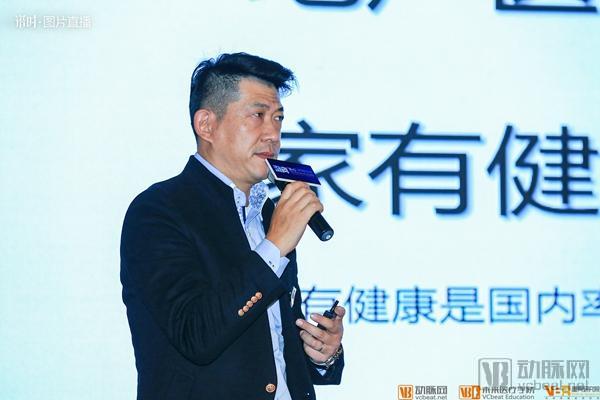
Zhang Peng, Founder and Executive Director of Jia You Health
Education, healthcare, and housing are referred to as the three “major burdens” facing the Chinese people. According to data from Beike Research Institute, the national sales area of commercial residential properties in 2018 totaled 1.46 billion square meters, remaining essentially flat year on year. Twenty years after the comprehensive commoditization of housing, sales of commercial residential properties reached a massive peak, with the gross merchandise value (GMV) of new homes reaching RMB 12 trillion in 2018, a 10% year-on-year increase, while the growth rate fell to its lowest level in two decades. Moreover, since the fourth quarter, the national sales area of commercial residential properties has declined month by month on a year-on-year basis, clearly revealing sluggish sales momentum. In addition, the secondary housing market has also shown a downward trend.
The trends in real estate development are undergoing significant changes. First, there is a shift from product competition to service competition. Second, there is a transition from property development to community operations. Third, there is an expansion from single-property business to integrated innovative community platform services.
These ongoing changes are driven by three factors: first, the inevitable shift in the real estate industry from new development to existing property management; second, the redirection of social capital guided by emerging industries such as healthcare and medical services; and third, the trends associated with urbanization development and renewal.
In Zhang Peng’s view, the “real estate + healthcare” concepts emerging in today’s market mostly involve two independent entities. Real estate developers often lack an understanding of the complex healthcare environment, leading to arrangements where healthcare leverages real estate or vice versa, with integration occurring only at isolated points rather than achieving long-term mutual benefit.
Real estate healthcare requires real estate to integrate into healthcare, and healthcare to integrate even more deeply into real estate; only by merging the two can long-term mutual profitability be achieved. This is akin to the relationship between property developers and property management services: high-quality property management facilitates property sales, and similarly, providing owners with high-quality medical services can also boost property sales.
2018 was a year of significant trend shifts. In the first half, fervent investment and financing activities dominated the primary market, with frequent news of funding rounds, particularly large-scale deals. However, in the second half, the market cooled at a pace that surpassed all expectations. Although current market data appear relatively stable, difficulties in securing corporate financing have become widespread rather than isolated. The “winter” is no longer just a metaphor; it has truly arrived.
As capital market support wanes, the key for enterprises to safely weather the winter lies in enhancing their self-sustaining “blood-making” capabilities. In the chain clinic market, players such as Johnson & Johnson (Note: Context suggests this may refer to a specific local brand named "Johnson" rather than J&J, but literal translation is kept as per common practice unless specified otherwise; however, given the context of Chinese startups, it likely refers to a brand like "Qiangsen"), Linjia Haoyi, Dr. Lv, and Penguin Almond have been favorites of investors. Additionally, internet healthcare companies such as Dingxiang Yuan and WeDoctor have begun launching general practice clinics offline. Given that chain clinics require heavy asset investment, how has Jiayou Jiankang, a chain clinic established just two years ago, rapidly achieved self-sufficiency?
In Zhang Peng’s view, the answer lies in Jiayou Health’s real estate–healthcare model.
Founded in 2016, Jiayou Health has established 20 medical and healthcare chain clinics across 20 provinces and municipalities nationwide within two years. Currently, most of its outpatient clinics that have been in operation for over a year are essentially self-sustaining. Due to its rapid achievement of profitability, Jiayou Health has not yet entered the capital market. “Fundraising is not the goal; profitability is the foundation,” said Zhang Peng. “Jiayou Health achieved self-sufficiency in less than two years since its establishment, which demonstrates a robust business model leveraging real estate partnerships.”
“Real Estate Healthcare” is the core concept championed by Jia You Jian Kang, which empowers real estate through family physicians and intelligent diagnosis and treatment, creating a model that integrates healthcare with real estate. The “clinic” serves as the urbanized, regionalized network layout strategy devised by Jia You Jian Kang. This model centers on outpatient services, leveraging the internet to radiate outward and inward through diverse products, achieving multi-radius coverage and forming clusters. It prioritizes management and health services, supplemented by the diagnosis and treatment of common, frequent, general, and chronic diseases.
Partnering with real estate developers not only eliminates concerns about customer traffic but also saves the time cost associated with building user trust, enabling rapid connection through health services. Zhang Peng stated, “Community medical services differ from tertiary hospitals; they rely on residents’ trust in service providers and brands. Through its real estate-medical collaboration model, Jiayou Jiankang significantly shortens the time required to build this trust.”
The traditional mindset among Chinese people is to seek care at Grade 3A hospitals for both major and minor ailments. This entrenched healthcare-seeking behavior is difficult to change, leading to prominent issues of overmedicalization. The competitive advantage of traditional hospitals lies in their specialist resources and authority. Therefore, private clinics are not aiming to compete with hospitals for patients but rather to address the shortcomings of hospitals by optimizing pre-consultation and post-consultation services. This is precisely the target market pursued by the emerging clinics focused on preventive medicine and rehabilitation.
Although Jiayou Health is a comprehensive community medical institution, it does not base its operations on disease treatment. Its overall business model derives 50% of its revenue from preventive care, 35% from the integration of medical and elderly care services, and 15% from the traditional healthcare system.
By partnering with real estate developers, the operations team can secure lower rental and renovation costs, thereby reducing the operating expenses of community clinics. Each community hospital will be staffed with 10–13 physicians across various specialties. Each family doctor can serve approximately 100 households (around 300 individuals) per year, and each clinic needs to serve only 70 households annually to achieve profitability. Currently, Jia You Jian Kang serves over 35,000 property owners, achieving self-sufficiency through basic consultation fees and annual family doctor service packages.
As a community healthcare provider, the required capabilities are not as specialized as those of large medical institutions; instead, they focus on lifestyle-based approaches. Therefore, the core service philosophy and primary revenue model of “Jia You Jian Kang” (Home Health) are entirely derived from disease prevention and management.
Jiayou Health’s specialty services focus on family physician services and child health management. The family physician service delivers preventive care and health management to community residents through proactive home visits by its in-house medical team. Additionally, the Child Health Management Center, established in collaboration with the Early Childhood Development Center of the Capital Institute of Pediatrics, addresses gaps in basic pediatric healthcare that are often beyond the reach of tertiary hospitals. Its specialized offerings include monitoring of children’s growth and development, guidance and intervention for children with developmental deviations, nutritional assessment and testing, breastfeeding consultation and guidance, and counseling and guidance on complementary feeding.
Based on its high-quality child health management services, the Child Health Management Center of Zhongshan Youjia Jiankang has also become a scientific parenting base in Zhongshan City.
Zhang Peng stated, “The responsibility of the family doctor services provided by Jia You Health is to prevent residents’ health from declining into a sub-health state, to prevent sub-health from progressing to disease, to prevent disease from developing into serious illness, and to prevent serious illness from resulting in death.”
Furthermore, the scale of communities served by health management services ranges from several thousand to tens of thousands of new residents. Clinical care primarily focuses on common diseases. Additionally, Zhang Peng highlighted that community healthcare should provide the critical “golden window” for emergency resuscitation to patients experiencing acute episodes. For instance, when an elderly individual suffers a sudden myocardial infarction, family members lacking medical knowledge are often unsure how to respond; in such cases, community healthcare institutions should deliver appropriate emergency interventions.
Jiayou Health provides community homeowners with smart hardware such as SOS bracelets and necklaces. In emergencies, users can use these devices to summon the nearest Jiayou Health first responder, who will provide on-site emergency care within five minutes, establishing a primary safeguard for the health of community residents.
In addition to regular family doctor services, Jia You Jian Kang has also made significant efforts in leveraging smart devices. The integration of AI systems has reduced service costs while improving operational efficiency.
Jiayoukang’s portfolio of smart products includes wearable devices such as fitness trackers, home health robots, and unmanned micro-clinics.
Different products can cover different service radii. First, wearable devices and smart home devices (such as robots) can monitor personal daily health conditions in real time, thereby serving as "gatekeepers" of residents' health; second, extending to the community level, self-owned clinics combined with unmanned micro-clinics meet the needs of the entire community.
Among these, unmanned micro-clinics can be regarded as a type of large-scale equipment. In addition to being deployed in communities, they can extend into commercial districts, providing basic medical services such as online consultations and physical examinations. Beyond community settings, in addition to delivering remote medical services through “Cloud Clinics,” mobile clinic vehicles will also visit patients’ homes to update their health records.
The expansion path of clinic chains is based on standardized information technology products. To this end, Jiayou Health has independently developed a Hospital Information System (HIS) and established a big data health platform.
Clinics provide diagnostic and examination services. Beyond generating revenue from disease treatment, they should consciously evolve into user-centric data hubs, empowering upstream hospitals and commercial insurers through data utilization, thereby extending the service chain. By leveraging wearable devices, home robots, and intelligent mobile clinic vehicles, each patient can establish their own electronic health record (EHR), encompassing data across seven dimensions: basic demographic data, medical data, genomic data, physical activity data, nutritional data, psychological data, and lifestyle habit data.
Currently, with hospitals operating at excessive capacity, the shortcomings of China’s healthcare system have become increasingly apparent. Shifting diagnostic and treatment processes upstream has made preventive medicine a priority encouraged by many government public health service programs. Meanwhile, residents’ electronic health
The establishment and interconnectivity of medical records are also imperative.
Health management should focus on the grassroots level to build a health management service system, with the key lying in the new positioning of grassroots institutions. According to the relevant provisions of the Draft Law on Basic Medical Care and Health Promotion, the three major functions of grassroots medical institutions in the future are: basic medical care, public health, and health management.
“Through a model integrating real estate with healthcare, specialized preventive medicine, and family doctor services, Zhang Peng stated: ‘The vision of Jiayou Health is to simplify access to high-quality medical services and enable community residents to benefit from tangible family doctor services.’”