

Langtong Medical Files for IPO: Building the 'Navigation System' for Healthcare Starting from Primary Care with CDSS
In recent years, with the continuous strengthening of policies such as China’s tiered diagnosis and treatment system, the graded evaluation of electronic medical records (EMR), and the enhancement of information technology infrastructure in healthcare institutions centered on EMRs, the market for Clinical Decision Support Systems (CDSS) has continued to heat up.
As of September 2018, among the one million medical institutions in China, approximately 946,000 were primary care facilities. Issues such as uneven distribution of medical resources, varying levels of physician competence, and persistently high rates of missed and misdiagnoses have driven the Clinical Decision Support System (CDSS) market to shift its focus from HIMSS-rated hospitals toward primary care settings.
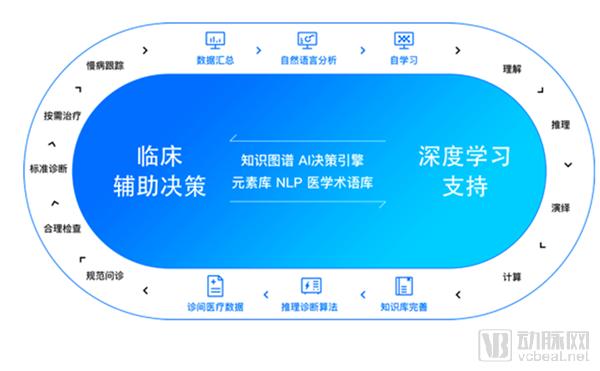
Langtong Medical began its transformation in 2014, entering the field of assisted healthcare through CDSS text analysis. Its launched assisted diagnosis and treatment system (Diagbot) builds models by learning from and analyzing authoritative medical literature, clinical guidelines, and electronic medical records (EMRs). This system enables patients to perform intelligent self-diagnosis, guiding them through preliminary symptom assessment via the EMR system. Additionally, it provides clinical decision support for general practitioners, offering auxiliary decision-making assistance throughout the diagnostic and treatment process, including disease evaluation and treatment recommendations.
Leveraging its unique strengths, favorable policies, and strong investor interest, Langtong Medical secured RMB 8 million in angel funding in 2016, followed by RMB 15 million in Pre-A round financing led by Cybernaut in 2017. Currently, Langtong Medical’s clinical decision support system includes 350,000 medical terms and 600,000 logical associations within its knowledge graph ontology. Its natural language processing recognition rate stands at 93%, with inference capabilities covering 780 diseases, essentially meeting the needs of primary care general practice.
Unlike other companies that, during the same period, preferred to enter the market through HIMSS ratings for large tertiary hospitals, Langtong Medical targeted the primary healthcare sector from the outset. On the eve of the introduction of the tiered diagnosis and treatment policy, Xu Zhe, founder of Langtong Medical, leveraged nearly a decade of experience and intuition gained in Zhejiang’s New Rural Cooperative Medical Scheme (a government-organized rural medical insurance program) to become among the first to detect early signs of market shifts.
“The problems of difficult and expensive access to medical care were too prominent. Although we knew that policy interventions were inevitable, we were not yet familiar with the concept of tiered diagnosis and treatment at the time; we only had a vague sense that it resembled the family doctor model abroad. However, the family doctor model could not take root in China’s context, as the competency of primary care professionals was highly uneven, making them unable to fulfill the role of health gatekeepers,” Xu Zhe told VCBeat. He explained that their original intention was to empower primary care physicians. Currently, through their DiagBot product, they aim to serve physicians and provide patients with standardized diagnosis and treatment services.
For primary healthcare institutions, it takes approximately 5 to 10 years to train a general practitioner. Currently, among the 2 million licensed physicians in China’s primary care sector, only half hold a bachelor’s degree or higher, with most concentrated in community health service centers. The talent gap is even more severe in township health centers and village clinics. Limitations in physicians’ own knowledge and awareness have led to missed diagnoses and misdiagnoses in primary care, becoming a major obstacle to the implementation of the tiered diagnosis and treatment system.
Langtong Medical’s product portfolio is primarily divided into four segments:
Intelligent Self-Diagnosis/Triage System: Under the guidance of the system, patients can conduct preliminary symptom assessment and complete pre-consultation inquiries and registration triage, thereby bridging the gap between experiencing physical discomfort and seeking hospital care.
Intelligent Pre-Consultation System: Assists patients in documenting their medical history and generates electronic medical records prior to the consultation, enabling physicians to rapidly and comprehensively assess the patient’s condition, thereby preventing oversights and enhancing efficiency.
Intelligent Clinical Decision Support System: Designed to assist physicians in diagnostic and therapeutic workflows, this system provides clinical decision support by automatically recommending pending auxiliary tests, suspected diagnoses, and treatment plans.
Intelligent Laboratory Test Interpretation: Leveraging AI technology to automatically generate patient laboratory test reports, providing evidence for clinicians’ decision-making.
(Image provided by the interviewee)
Although the number of Clinical Decision Support System (CDSS) companies has grown significantly since 2014, driven by supportive policies and favorable capital conditions, the development pace of the CDSS sector remains relatively slow compared to hot fields such as medical imaging. While this market is highly lucrative, its core barrier to entry lies in access to patient case data. Leveraging its long-term accumulation in the field of Zhejiang’s New Rural Cooperative Medical Scheme, Langtong Medical has established a partnership with Sir Run Run Shaw Hospital, which has provided it with nearly ten years of de-identified medical record data. After partial organization, approximately 1.8 million valid, high-quality medical records have been obtained, with ongoing efforts to further organize additional data. Langtong Medical has also signed cooperation agreements with entities such as the Health and Family Planning Bureau of Jianggan District in Hangzhou, the Second Affiliated Hospital of Wenzhou Medical University, and the Health and Family Planning Commission of Yingtan City. These partner organizations provide de-identified medical record data to support the training and optimization of Langtong’s inference models.
“The challenge with clinical decision support systems lies in their alignment with physicians’ clinical diagnostic logic; AI only holds value if clinicians are willing to adopt it,” said Xu Zhe. He noted that two key hurdles must be overcome to gain physician acceptance and encourage the use of such systems: human-computer interaction and improved diagnostic efficiency.
Xu Zhe used the analogy of a “navigation system” to describe Langtong Medical’s mission. In the pre-“navigation” era, physicians often relied on experience to treat patients. However, their vision is to enable doctors to clearly see the “road conditions” during the treatment process and provide them with AI-based clinical decision support recommendations.
VCBeat learned that in May last year, Langtong Medical signed a strategic cooperation agreement with Clarity Informatics, a leading UK-based healthcare IT company, to introduce its NICE-certified medical knowledge base. This initiative aims to benchmark, analyze, and improve healthcare quality while enhancing patient safety. The medical knowledge base encompasses over 1,000 clinical demonstrations and patient scenarios.