

More Than Half of Over 30 Medical O2O Platforms Have Collapsed—Is the Sector Now a Capital Game? Where Is It Headed?
Pharmaceutical O2O once stood at the “wind tunnel,” possessing the standard criteria for becoming a star project: operating in a sufficiently large track, pharmaceutical retail is a trillion-yuan market; featuring certain innovations, with dividends brought by “Internet + Healthcare”; having successful precedents, with food delivery and catering services paving the way; and offering room for growth, expanding from drug delivery to broader health products and services.
However, the development of the pharmaceutical O2O sector has not been smooth sailing. In 2013, more than 30 platforms were focusing on pharmaceutical O2O services, but a large number of them disappeared around 2016. Today, major platforms such as AliHealth, Ele.me, Meituan-Dianping, and JD Daojia are once again placing high hopes on and vigorously promoting their pharmaceutical O2O businesses, which have become even more buoyant due to mergers and acquisitions within the pharmacy industry.
From the entrepreneurial boom to decline, and from decline to resurgence, the development history of pharmaceutical O2O platforms serves as an exemplary case in the “Internet + Healthcare” sector. It illustrates the costs of trial and error while offering insights into the reallocation of resources.
The structure of this article is as follows:
Vanishing Platforms: Over Half of O2O Platforms Have Failed;
The Triumph of Capital: Active Platforms Backed by Capital;
Standard configuration for pharmacies: a new retail model combining in-store and home-delivery services;
In the near future, the dividends from prescription outflow will be unleashed.
VCBeat (WeChat: vcbeat) found that there are about 30 companies labeled as “pharmaceutical O2O”, more than half of which have already ceased operations or transformed.
Most of these companies that ceased operations or pivoted were established in 2013 and “died” around 2016.
Overview of Pharmaceutical O2O Platforms
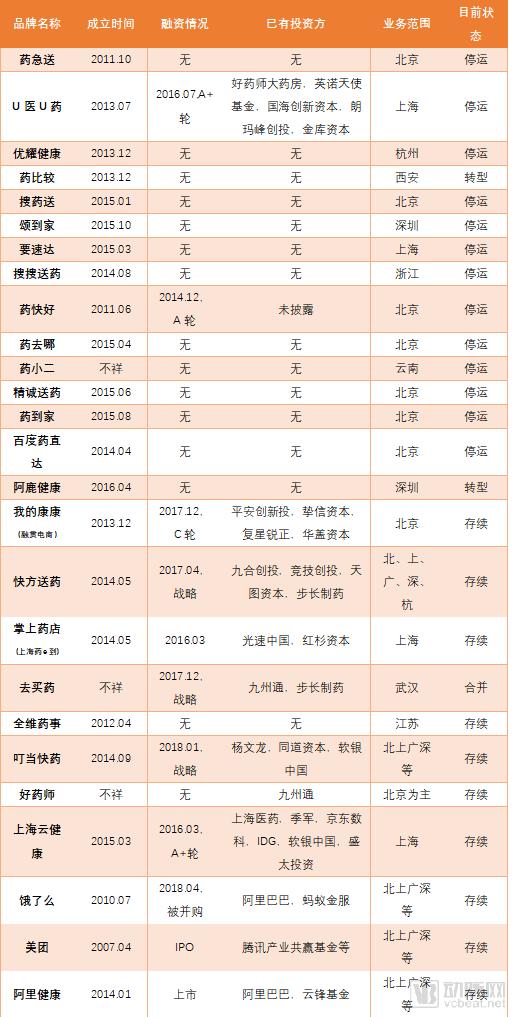
Platforms facing demise share several common characteristics: they are obscure entities that rarely attract widespread industry attention from inception to closure; they operate as small-scale startups, lacking technical experts or executives from established or publicly listed companies, as well as talent or operational support from BAT (Baidu, Alibaba, and Tencent); and they suffer from resource scarcity, having never secured capital or resources from institutional investors or large corporations.
As such, these “dead” O2O platforms, from the moment of their inception, charged headlong toward an inevitable fate, ultimately becoming nothing more than a single record lying dormant in a database. Entrepreneurship is a journey destined to be solitary; at times, it is a one-way trip with no return.
Key Takeaways from the Demise of Platforms: Several lessons can be drawn. First, a promising idea may fail to evolve into a viable project, particularly if it lacks originality (as seen in pharmaceutical O2O models). Second, financing is critical; while startups can afford to experiment and learn from failures, this requires sufficient capital support. Third, operations are vital—internally to stabilize team morale, and externally to generate market visibility.
The inception of pharmaceutical O2O startups stems from two key factors: first, the success of the food and beverage and food delivery sectors has highlighted opportunities within the specialized pharmaceutical vertical; second, the proven viability of the online pharmacy model has provided a positive outlook on the potential success of O2O services in this niche market.
The pharmaceutical O2O model has its own unique characteristics, a consensus that had already formed within the industry when such platforms first emerged: First, purchasing medication is a low-frequency need; many people do not buy medicines even once a year. This demand is even less frequent among smartphone users, who are predominantly young and middle-aged adults. Second, ensuring timely delivery requires a highly developed logistics system, with substantial infrastructure demands—including delivery capacity and personnel—that were not available at the time.
For low-frequency demand, the strategy is to expand product categories, extending from over-the-counter (OTC) pharmaceuticals to family planning products, medical devices, and health products. The resulting increase in SKUs intensifies inventory management and operational control challenges, making it difficult for small teams to maintain comprehensive oversight.
Yaogeli was a star project that collapsed in the pharmaceutical O2O sector, and its development trajectory serves as a microcosm of numerous pharmaceutical O2O platforms.
Established in October 2014, it is positioned as a mobile platform for online pharmaceutical purchases and mobile health services, featuring its “one-hour delivery of quality medications” service. It operates under Beijing Simiao Interconnected Pharmaceutical Technology Co., Ltd.
In terms of its founding team, Yaogeli’s founders also came from the internet industry; its founder, Ren Bin, was previously responsible for product and technology-related work at Sogou Number Address. Since its inception, Yaogeli secured millions of RMB in angel-round funding from Ceyuan Ventures, and completed a Series A financing round worth tens of millions of RMB in June 2015, with joint investment from Tongdu Capital, Ping An Innovation Investment, and Ceyuan Ventures.
The Yaogeli model involves building its own delivery team and partnering with pharmacies to supply medications. Data from its Series A financing round indicated coverage of 24 districts in Beijing, a fleet of 40 proprietary delivery personnel, and approximately 1,600 daily orders.
Yaogeli collapsed at the Series B stage. Due to internal friction, the Series B financing round failed to close, and its medication delivery service was suspended. At that time, it had 1 million registered users and 400,000 transacting users, achieving respectable results in its vertical niche market.
If the company continues along its current path and successfully completes its Series B financing, it will still face numerous challenges ahead: the limited standardization and high management complexity of its non-direct-operated model, the need for sustained capital investment, and an indefinitely prolonged path to profitability. These obstacles remain significant hurdles for this startup venture.
Currently, active pharmaceutical O2O platforms can be broadly categorized into two types. The first is the self-operated model, which involves building its own stores, technology, operations, and delivery systems; leading players in this category include Dingdang Kuaiyao and Kuaifang Songyao. The second is the platform model, which serves as a traffic gateway to attract consumer-end users and then assigns orders to partner pharmacies based on geographic location. Examples include Meituan Dianping, Ali Health, Ele.me, and JD Daojia, most of which utilize shared delivery personnel.
The self-operated model ensures absolute control over the entire process, offering superior performance in service hours, delivery timeliness, and service experience; however, its service coverage expands relatively slowly due to constraints on store expansion costs and speed. The platform model emphasizes traffic entry points and the concept of one-stop services, providing users with a faster and more convenient experience while ensuring basic service quality.
It is difficult to assess the relative merits of these two models, especially now that platform delivery capabilities have become standardized. Service quality is no longer a primary competitive factor; instead, the value of brand recognition is coming to the fore. In other words, as food delivery becomes assembly-line-like and industrialized, the cost savings achieved through shared delivery personnel deserve greater attention.
This is somewhat analogous to the difference between the JD.com model and the Alibaba model. In the early stages of delivery logistics, self-operated companies could adjust capacity, warehousing, and other resources based on their proprietary data to improve delivery speed and customer experience, which also served as a means of brand building. However, once a standardized logistics system—such as Cainiao—was established, the distinction between self-operated and third-party models became less pronounced. This is especially true when the platform offers more diversified options, richer traffic sources, and broader service scenarios, thereby solidifying its position as a primary traffic gateway.
Whether in food and beverage, food delivery, or pharmaceutical O2O (Online-to-Offline) services, significant upfront capital burn is inevitable. Without technological or resource advantages, it is difficult to convert this burned capital into tangible returns. Users of O2O platforms exhibit little loyalty; subsidies and discounts readily prompt them to switch from one platform to another. Moreover, standalone pharmaceutical O2O services struggle to build user stickiness, as the pathway from traffic acquisition to user retention remains blocked. For these reasons, O2O models are better suited for large-scale, comprehensive platforms with abundant resources.
Current Financing Status of Active Pharmaceutical O2O Platforms
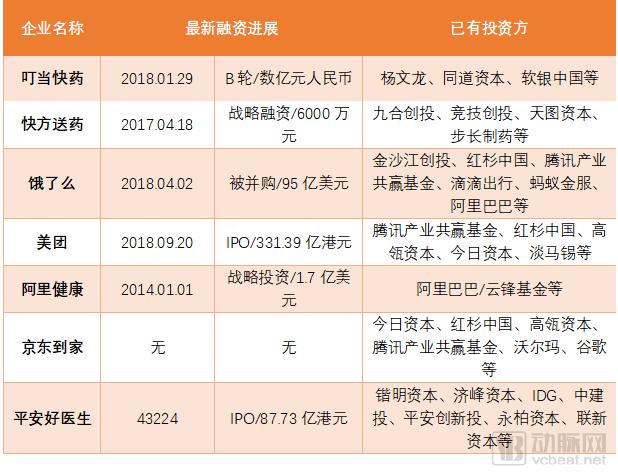
Whether self-operated or platform-based, O2O models rely heavily on capital support as a key driver of growth. Dingdang Kuaiyao was incubated by Yang Wenlong, Chairman of Renhe Pharmaceutical, and secured three rounds of funding from investors including Tongdao Capital and SoftBank China, raising a total of over RMB 600 million. Kuaifang Songyao completed four financing rounds, with participation from Jiuhuan Ventures, Jingji Venture Capital, Tiantu Capital, Buchang Pharmaceutical, and others, raising a total of more than RMB 300 million.
Platforms such as Meituan-Dianping, Ele.me, Ali Health, JD Daojia, and Ping An Good Doctor are either “unicorns” themselves or specialized pharmaceutical subsidiaries of major tech giants, and thus naturally enjoy abundant resources.
Moreover, user expectations for O2O pharmaceutical delivery platforms have declined. In the early stages, users of medical O2O services may have had excessively high demands, while platforms were eager to emphasize speed in their marketing—such as “delivery within 28 minutes.” The interplay between these factors has kept delivery costs persistently high and significantly increased technical challenges.
To date, food delivery and catering services have successfully shaped consumer perceptions of O2O platforms. Users no longer demand excessively fast delivery times, allowing for greater flexibility in optimizing delivery costs within reasonable ranges. This has directly improved capital operational efficiency; in other words, the heavy spending has been worthwhile. In fact, platforms engaged in O2O operations can achieve profitability, as they primarily incur marketing and advertising expenses while earning revenue shares from transactions.
Let’s break down the numbers: Based on aggregated data from several platforms, the average order value for pharmaceutical O2O transactions is approximately RMB 45. The gross margin for over-the-counter (OTC) pharmaceutical products—where consumers primarily choose heavily advertised brands—is around 35%, yielding an average gross profit of RMB 15 per order. After deducting a delivery fee of RMB 4, pharmacies retain a gross profit of roughly RMB 10 per order. For the platform, commissions may be waived in the early stage but will later be charged according to established rules.
Pharmaceutical O2O has become a standard feature in the retail pharmacy sector. Whether it is national chain pharmacies such as Guoda Drugstore, Yixintang, Laobaixing, Yifeng, and Dashenlin, or leading regional chains, all are actively deploying pharmaceutical O2O services. Pharmaceutical O2O has evolved from a differentiated competitive model into a basic service capability universally adopted across the industry.
Data from Alibaba Health supports this point: during the 2018 Double 11 shopping festival, pharmaceutical O2O services were rolled out across the board, with over 5,000 pharmacies in 82 cities nationwide participating on the day itself. Following Ele.me’s integration into the Alibaba ecosystem, Alibaba Health will engage in deep synergy with Ele.me. In addition, Cainiao’s Dianwoda also serves as a key supporter of Alibaba’s pharmaceutical O2O strategy.
Of course, the pharmaceutical O2O sector is also witnessing new developments, transitioning from a “home delivery-only” model to a synergistic “home delivery + in-store pickup” model. This approach often involves establishing offline “smart pharmacy” showcase stores, offering a diverse range of services such as home medication delivery, decoction and delivery of traditional Chinese medicine (TCM), and customized herbal tonic formulations, thereby providing more varied service formats and richer content.
Overview of Current O2O Platform Business Operations
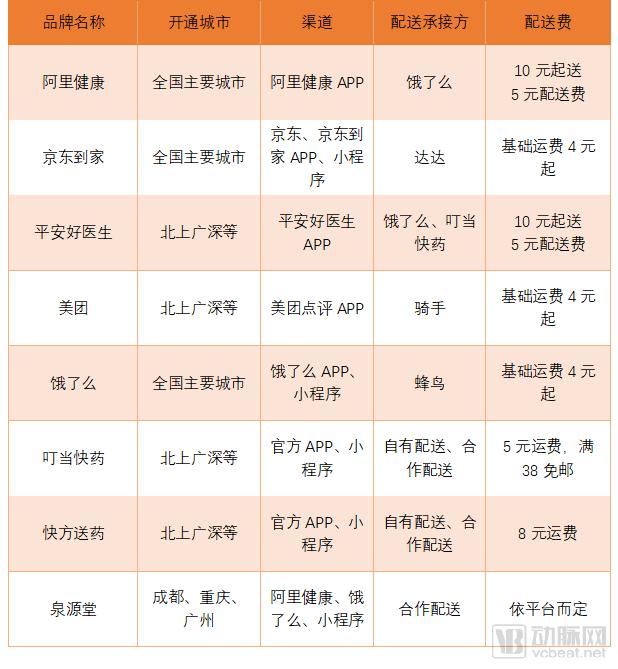
Fundamentally, the innovation of pharmaceutical O2O is essentially an innovation in pharmaceutical retail. The pharmaceutical retail sector is proactively embracing the Internet to match supply and demand information for users and enable efficient drug distribution.
Pharmaceutical O2O will drive simultaneous changes in both drug supply and demand, mirroring the transformation seen in the food delivery and catering sectors. A new service model has reshaped consumer habits, with younger users now accustomed to obtaining information and products via smartphones. In response, merchants have adapted their supply strategies by updating product categories based on online user preferences. The same principle applies to pharmaceutical retail: continuous consumption data enables platforms to optimize inventory management and allocate delivery capacity efficiently.
For O2O platforms, current services provided to pharmacies include advertising, commissions, operational support, and delivery. Future opportunities lie in further empowering pharmacies, such as integrating diagnostic and treatment capabilities, offering online pharmaceutical care services, and providing pharmaceutical supply chain solutions. The rationale behind the latter is that platforms accumulate data from O2O orders, which can be leveraged to collaborate with pharmaceutical manufacturers and optimize pharmacy supply chains.
Pharmaceutical O2O is a branch of pharmaceutical e-commerce. Like B2C online pharmacies, it is equally constrained by restrictions on the online sale of prescription drugs—a regulatory red line that cannot be crossed. It also faces challenges regarding prescription sources, as O2O platforms struggle to obtain prescriptions circulated from hospitals. Furthermore, there are payment issues: neither the pooled medical insurance accounts nor individual accounts are currently open to pharmaceutical e-commerce enterprises.
Constraints on Pharmaceutical E-commerce
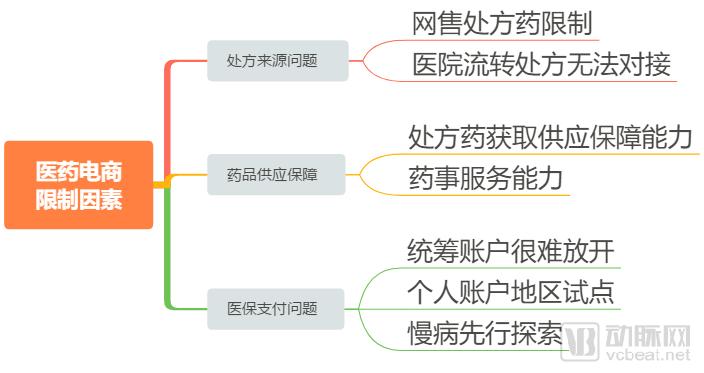
This is, in effect, the growth ceiling facing the retail pharmacy industry. Currently, pharmacies primarily serve as outlets for over-the-counter (OTC) drugs, health supplements, Class I and II medical devices, and family planning products, with prescription medications accounting for a relatively small share. The drug supply system of retail pharmacies differs from that of hospital-based systems; their capacity to ensure prescription drug supply and provide pharmaceutical care services remains inadequate, indicating that they are not yet fully prepared to accommodate the outflow of prescriptions from hospitals.
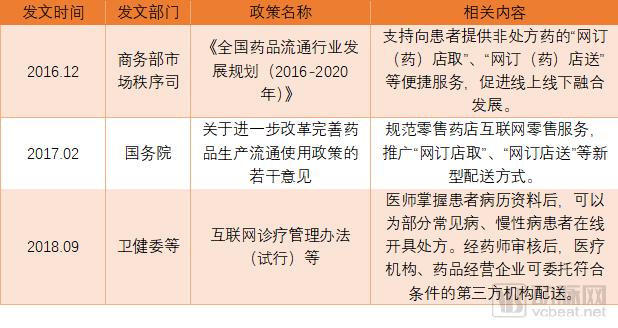
However, the separation of medical services and pharmaceutical sales represents the direction of healthcare reform. This implies that the core scenario for future drug retail will shift to out-of-hospital settings, with pharmacies and e-commerce platforms both poised to capture incremental growth from prescription outflow. Regarding implementation, policy guidelines have charted the course: standardize online retail services offered by retail pharmacies and promote new delivery models such as “online ordering with in-store pickup” and “online ordering with home delivery.”
In September 2018, a new turning point emerged with the issuance of three regulatory measures: the Administrative Measures for Internet-Based Diagnosis and Treatment, the Administrative Measures for Internet Hospitals, and the Administrative Measures for Remote Diagnosis and Treatment. These measures not only established regulatory standards for emerging business models such as internet hospitals but also ushered in a new dawn for “Internet Plus” pharmaceutical services. The guidelines stipulate that physicians may issue online prescriptions for certain common and chronic diseases after reviewing patients’ medical records. Upon verification by pharmacists, medical institutions and pharmaceutical distributors may entrust qualified third-party agencies to handle delivery. This development is undoubtedly a significant boon to the O2O (Online-to-Offline) pharmaceutical model, as it provides a complete pathway from prescription issuance to drug delivery.
“Internet + Healthcare” Related Policies
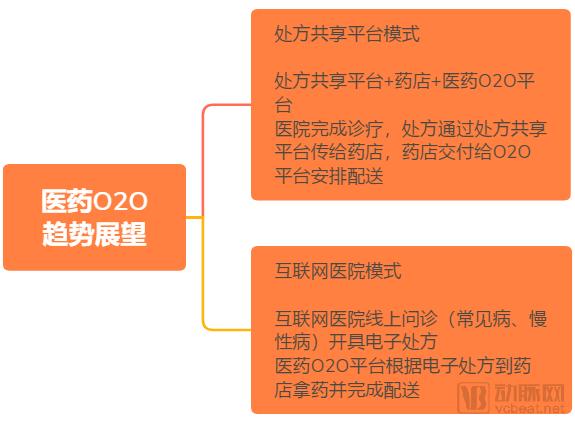
In the context of "Internet + Healthcare," a complete model for external prescription dispensing should consist of: a prescription sharing platform + retail pharmacies + pharmaceutical O2O platforms. The prescription sharing platform is responsible for interfacing with hospitals to obtain prescription information; after receiving the prescription data, retail pharmacies conduct verification and then hand it over to the O2O platform to arrange delivery.
Certainly, the starting point of diagnosis and treatment activities can also be online: patients complete consultations and obtain prescriptions (for chronic and common diseases) through internet hospitals; the prescriptions are then transmitted to O2O platforms, which either fulfill orders through their own operations or partner with pharmacies to dispense medications and deliver them directly to patients’ homes.
Pharmaceutical O2O services should be grounded in offline pharmacies, which not only facilitates regulatory oversight but also allows for the continuation of existing pharmacy standards and service systems, thereby ensuring medication safety.
Potential Future Forms of Pharmaceutical O2O Services
Strictly speaking, pharmaceutical O2O should be regarded as new “infrastructure” or auxiliary tools and services for the pharmaceutical retail industry. Whether it is “in-store” or “home-delivery” services, the foundation should always be offline pharmacies. Traditional retail pharmacies operate within a 300–500 meter radius, constituting a purely offline business; those with prime locations and high foot traffic can achieve robust growth. In contrast, O2O expands the coverage of individual pharmacies to a 3–5 kilometer radius. The most immediate impact is that fewer physical stores will be needed, leading to a significant reduction in the number of pharmacies within a given area, and many underperforming pharmacies will inevitably be eliminated.
The impact of O2O on traditional pharmacies is also reflected in the decline of foot traffic. Previously, purchasing medication required a physical store visit, where staff could provide guided shopping, make recommendations, and complete customer profiles, thereby enabling secondary development opportunities such as membership management and promotional discounts. However, under the O2O model, medications can be purchased without visiting the store, eliminating the opportunity for in-person recommendations and reducing chances for secondary engagement. This has placed consumers entirely outside the pharmacy’s sphere of influence, turning many marketing activities that were once executable offline into uncertainties in the online realm.
The correct direction for future development should be the mutual traffic diversion between online and offline channels. Beyond “online ordering with in-store pickup” and “online ordering with store delivery,” we should explore more forms of new pharmaceutical retail based on geographic location and big data from pharmaceutical consumption. It is foreseeable that pharmaceutical O2O will take its final bow, while new pharmaceutical retail will take center stage. Internet Plus Healthcare will accelerate the transformation and consolidation of the pharmaceutical retail industry.