

Zhiyun Health Secures $100M Series C Funding, Expands Chronic Disease Management Ecosystem Across 1,000 Hospitals
At the beginning of 2019, VCBeat learned that Zhiyun Health, a digital health company specializing in chronic disease management, had completed its C1 and C2 financing rounds, with a total amount reaching $100 million. According to Kuang Ming, CEO of Zhiyun Health, the C1 round was completed in 2017, and shortly thereafter, the C2 round was closed. The C2 round was led by CICC Capital, with participation from Ping An Insurance, Tasly, and Samsung Ventures, while Probe Capital served as the exclusive financial advisor.
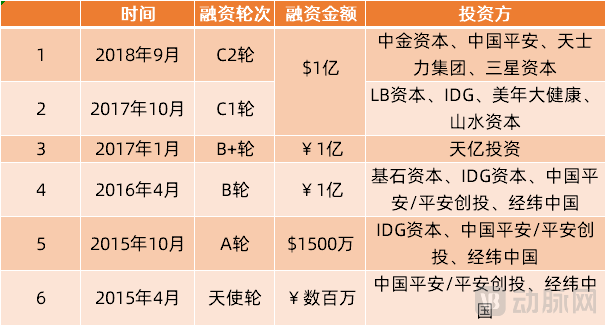
iCloudHealth / Zhangshang Tangyi Historical Financing
From Palm Sugar Doctor in 2015 to Zhiyun Health in 2019, Kuang Ming’s entrepreneurial journey has entered its fifth year. By the end of 2018, Zhiyun Health’s SaaS system had been deployed in nearly 1,000 hospitals, processing approximately one billion data records annually, and serving over 20 million users in 2018.
As a leading enterprise in the field of chronic disease management, how did Zhiyun Health stand out from the “Hundred Glucose Wars” around its 15th anniversary and set its sights on the broader chronic disease sector? VCBeat conducted an exclusive interview with Kuang Ming and provided a detailed analysis of Zhiyun Health’s development journey.
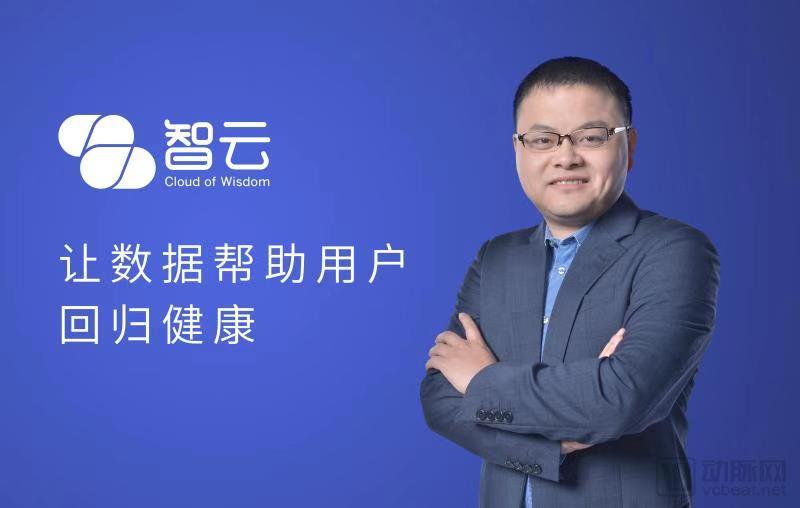
Kuang Ming, CEO of Zhiyun Health
The main points of this article include:
1. Before and after the “Hundred Glucose Wars,” platform companies all began their cash-burning “campaigns,” but Palm Sugar Doctor promptly “woke up.”
2. From To-C to To-B: The Underlying Logic of Zhiyun Health;
3. Data-driven chronic disease management model: Integrating “treatment” and “therapy” to build a chronic disease management ecosystem, and establishing industrial advantages based on real-world needs;
4. Purely consumer-facing chronic disease management and pure e-commerce logic: the business models for certain chronic conditions are being proven unsustainable;
5. There are five categories of payers for chronic disease services, with patients ultimately bearing the cost.
“The Frenzy of To-C”
In 2015, the boundaries of digital health entrepreneurship continued to expand. A large influx of external participants brought new technologies, concepts, and capital, with significant amounts of hot money pouring into digital health innovation projects. Terms such as “Blood Glucose Monitoring Wars,” “B2B Trading Platforms,” and “Big Data” emerged in the digital health sector. According to statistics, a total of 764 digital health financing deals were completed in 2015, amounting to RMB 33.45 billion.
Mobile healthcare is showing a trend toward specialized segmentation, with the mobile chronic disease management market experiencing rapid growth; among these segments, diabetes care is expanding the most quickly. In 2015, companies targeting the diabetes sector emerged in large numbers, leveraging mobile applications as their primary tool. Users could easily find hundreds of diabetes-related apps on their smartphones, leading to an intense competition known as the “Hundred Sugars War” in the diabetes field.
That was the most frenzied period for mobile health. Platform-based companies primarily operating on a to-C model focused mainly on business metrics such as registered users, daily active users (DAU), and monthly active users (MAU), launching online subsidy campaigns to attract new users. In Kuang Ming’s words, it was the “crazy” moment for to-C.
At that time, Zhiyun Health was known as "Zhangshang Tangyi" (Pocket Diabetes Doctor), a chronic disease management application based on diabetes data, with the ultimate goal of improving the efficiency and effectiveness of diagnosis and treatment for consumer-end users. Patients could record their health data and receive health guidance through Zhangshang Tangyi, gradually improving their health status. Meanwhile, hospital teams registered on the platform were able to provide more efficient and precise condition guidance and treatment plans by leveraging visualized big healthcare data.
In the mobile app sector, securing financing based on user numbers is a very common practice. Around 2015, a large number of mobile applications emerged, and the healthcare field was no exception. For entrepreneurs at that time, there was only one goal: to make their operational data look impressive. A rise in user base meant they could successfully secure funding for the next round.
Kuang Ming told reporters that during the “Hundred Glucose Wars” period, Zhangshang Tangyi also heavily advertised on public channels such as Weibo, putting significant effort into user acquisition and retention.
“The market was quite frenzied at that time, with everyone focused on ‘user acquisition’ and ‘engagement.’ For a while, we felt compelled to expand in the same way—offering online subsidies, recruiting users, and running advertising campaigns. As a result, we wasted millions. If we’re talking about burning cash, that period truly saw significant financial losses.”
Kuang Ming recalled, “Although we achieved substantial user registration numbers and ranked highly in the market around 2015 thanks to heavy advertising investment, subsequent data proved that this approach was misguided.”
At a time when IDG Capital was considering investing in Zhangshang Tangyi, Kuang Ming and his team were enlightened during the due diligence process to shift their focus from user acquisition and retention metrics to the core indicator of conversion rate.
Kuang Ming looked back at his data and began to ponder what the conversion rate for Zhangshang Tangyi (Pocket Diabetes Doctor) would actually look like. “Is this a genuine need, or is it a pseudo-demand artificially created by our heavy spending? I believe we recognized this issue relatively early on, so we decided to halt operations.”
“We do allocate a certain proportion of our budget to advertising now, but not as aggressively as we did in 2015. Back then, the approach was essentially about burning cash. I now have a deeper understanding of cash burn; data generated solely through heavy spending holds no real value.”
Having experienced the fierce competition among hundreds of blood glucose monitoring companies, Kuang Ming realized that leveraging the internet for healthcare is not merely about developing an app. Identifying target users, acquiring and retaining new users, and boosting user engagement all require technological solutions and internet-based operational strategies, rather than simply burning cash on advertising.
Pivoting After Trial and Error: Returning to Real Needs
It has proven that the logic of internet entrepreneurship lies in this: as long as you survive, you win. After a period of frenzied activity in the consumer-facing (C-end) market, Tangyi Medical began exploring new business models, which, in Kuang Ming’s words, marked a “return to the right path.”
At the beginning of 2016, Zhangshang Tangyi secured RMB 100 million in Series B financing, with participation from prominent investment firms including CDH Investments, IDG Capital, Ping An Insurance Group/Ping An Ventures, and Matrix Partners China.
“By the end of 2016, most players in the diabetes sector had not yet awakened; they were still doing the same things—acquiring users and driving engagement among consumers.” Ultimately, this led to the current landscape that evolved after the “Hundred Glucose Meters War.”
Homogeneous apps such as Tang Yisheng, Tang Dafu, Tang Xiaohu, Yi Tang, and Tang Xun flocked into the arena one after another, all securing substantial financing between 2014 and 2015. However, today, fewer than five of these apps remain under maintenance and operation. Most projects have undergone pivots, and the market has entered the second half, where “survival of the fittest” prevails. The majority of these enterprises saw their business models disproven in 2016 and 2017, ultimately ending in failure.
The problem with solely focusing on attracting consumer traffic is that, although data is generated, it consists only of superficial metrics. The resulting data is unsustainable and of limited value. Kuang Ming then crunched the numbers: even if we focus exclusively on a single condition like diabetes, which has a large patient population, the affected individuals still account for no more than 10% of China’s population. “In other words, even if our advertising campaigns achieve a 10% conversion rate, that represents our maximum reach; the remaining 90% are not our target audience.”
Moreover, in 2016, during their outreach efforts, the hospital’s ground promotion team identified significant pain points in the diagnosis, treatment, and management of diabetic patients. The challenge they sought to address was the provision of out-of-hospital therapeutic services and professional medical advice—an area where hospitals typically lack expertise—thus necessitating enterprises to supply practical tools to support hospitals.
Kuang Ming realized that the previous approach of simply developing an app and providing a device failed to address the core needs, as there were too many missing links between “treatment” and “therapy,” spanning from in-hospital care to out-of-hospital management.
Kuang Ming said, “The shift we eventually made was to stop pursuing rapid user acquisition and instead focus on genuine needs—identifying those who truly have problems and require services, and addressing their issues.”
Data as the Foundation: “Treatment” + “Therapy” to Build a Chronic Disease Management Ecosystem
From a macro perspective, medical resources in China have long been unevenly distributed. It is already quite difficult for patients to secure appointments and receive treatment in hospitals, while accessing professional out-of-hospital management is nearly impossible. At the time, there was no viable business model on the market to cover hospitals’ out-of-hospital patient management needs, even though hospitals themselves recognized the importance of managing patients beyond the hospital setting. Kuang Ming identified from this gap the mismatched allocation of medical resources, which gives rise to varying healthcare needs across different scenarios and demands for medical professionalism.
Whether for patients with diabetes or other chronic conditions, the most critical needs during treatment are professional medical advice and the implementation of such advice and treatment regimens outside the hospital setting. As hospitals remain the most authoritative institutions in providing professional guidance and therapeutic care, Kuang Ming has returned to the path of collaborating with healthcare institutions.
Beyond genuine therapeutic needs, hospital settings remain relatively traditional. Many diseases already have established SOPs—i.e., clear diagnostic and treatment pathways. However, communication and instructional workflows among doctors, nurses, and patients across various departments are still highly rudimentary, relying heavily on paper-based processes rather than being fully digitized. This results in low operational efficiency, with consultation data not yet integrated into Hospital Information Systems (HIS), let alone enabling data synchronization and follow-up tracking for critically ill patients after discharge.
In general, the scenario in traditional hospitals can be summarized in one sentence: the level of informatization is too low.
In December 2017, Zhangshang Tangyi reached a milestone in its development. On November 8, at the 2017 Tencent Global Partner Conference, Kuang Ming officially announced that Zhangshang Tangyi had been upgraded to Zhiyun Group, integrating its underlying businesses and formally expanding its coverage to the entire field of chronic disease management. Zhangshang Tangyi’s “ambition” extends far beyond diabetes as a single disease entity, targeting the broader chronic disease market.
After pivoting to the B2B market, Zhiyun Health built a hospital SaaS open platform—Zhiyun Yihui. Leveraging a modular and customizable architecture, it caters to the diverse needs of different medical institutions. The system allows for customized permission modules tailored to each hospital’s workflows, installation of bespoke functionalities, and compatibility with glucometers from various specified brands. It achieves multi-mode data interconnectivity management and shared definitions, ranging from single departments to entire hospitals, from individual facilities to tiered diagnosis and treatment alliances (medical consortia), and from standalone systems to integration with hospital HIS. This systematically enhances overall diagnostic, therapeutic, and managerial efficiency.
In a previous interview with VCBeat, Kuang Ming emphasized that the brand upgrade has removed the ceiling on the company’s growth potential. “Previously, we may have had many excellent opportunities, but being named ‘Tangyi’ (Sugar Doctor) meant we could only engage in diabetes-related activities. Now that the ceiling has been lifted, we will gain access to more opportunities, and collaboration with hospitals will also become easier.”
Building a Closed-Loop System for Chronic Disease Management to Deepen the Corporate Moat
At the 2018 Top 100 Future Healthcare Companies Forum, Li Datao, founder of VCBeat, and Wang Xiaocen, partner at CEC Health Fund, proposed the three-stage core growth elements for digital healthcare enterprises, which include three key terms: “business digitization,” “network collaboration,” and “ecosystem.”
During the startup phase, a company’s core competitiveness lies in its technological advantages and first-mover advantage. In the growth phase, the moat that needs to be established encompasses technological advantages, first-mover advantage, and resource advantages. Upon reaching maturity, the key factors for development become technological advantages and resource advantages within the market, as well as the ability to build a closed-loop business model.
This is precisely the logic behind Kuang Ming’s emphasis on data foundation and the “treatment” + “therapy” model for building a chronic disease management ecosystem in the later stages of Zhiyun Health’s development. Only by strengthening every link from diagnosis and treatment to ongoing management can the company establish a sufficiently deep competitive moat.
In his view, amid the construction of various business models, one core element remains indispensable: data serves as the central thread running through all operations.
Centered on the data thread, iHealth Cloud’s business model comprises two core elements:
First, a close collaborative relationship with hospitals. Kuang Ming emphasizes that treatment services must deliver genuine value and efficacy; serious medical care is inherently inseparable from hospitals. Therefore, hospitals serve not only as key scenarios for Zhiyun Health’s operations but also as a critical source of data. Within the “treatment” and “therapy” business lines, one represents hospital- and application-side operations, while the other covers pharmaceuticals, medical devices, and consumables. This business structure encompasses the Zhangshang Tangyi (Palm Sugar Doctor) APP, the Zhiyun Yihui SaaS open platform, and a pharmaceutical trading platform that facilitates the sale of drugs and medical consumables.
Second is patient data. He emphasized, “Whether it involves physicians’ treatment or the sales of pharmaceuticals, consumables, or medical devices, patient data itself is critically important. This data encompasses health information akin to electronic health records, as well as data on behavioral preferences and purchasing patterns.” How to leverage this data and employ AI-driven approaches to reduce labor requirements while enhancing accuracy are areas that Zhiyun Health is currently continuing to explore.
Following the completion of this Series C2 funding round, Kuang Ming has two primary objectives. First, to strengthen its core competitiveness and continue expanding market reach by integrating its products into more hospitals. Second, to sustain investment in leveraging the vast amount of data collected through its SaaS business for machine learning applications, having already established an initial “AI-assisted diagnostic system.”
“Following medical consultations and the need for professional guidance, patients will inevitably have corresponding needs for medications, consumables, and health products. This chain of demands is precisely what enables the construction of a complete closed-loop system for chronic disease management,” said Kuang Ming.
Some Chronic Disease Business Models Are Being Gradually Disproven in the Face of Demand
In November 2018, Zhiyun Health was shortlisted for Deloitte’s “2018 China High Technology High Growth 50,” ranking 14th. This award recognizes high-growth companies selected from across the industry. According to Kuang Ming, Zhiyun Health’s revenue increased by more than 50-fold within three years, reaching nearly RMB 1 billion by the end of 2018.
In terms of revenue composition, medical services account for 35%, sales of pharmaceuticals, medical devices, and consumables account for 47%, and data services account for approximately 15%.
Although there have been many gains today, when Kuang Ming looks back, he can still recall the difficulties encountered during the capital winter of 2016. As the dividends from online traffic dwindled, the once-booming internet business model faced challenges, leading to a “winter in the venture capital and startup community.” Data show that while the number of investment deals decreased slightly, the total investment amount increased, indicating that capital has become more rational in evaluating projects. The era of casting a wide net and haggling over valuations has passed.
During that period, Kuang Ming met with over 100 investors in his efforts to secure financing. At the time, capital markets were bearish on internet healthcare, including the diabetes sector, resulting in a lukewarm response from investors toward projects in these areas. “As a leading company, we still attracted investor interest and had productive discussions. However, despite positive conversations, they ultimately chose not to invest, often offering polite remarks like ‘You’re doing well’ before going silent. This was fundamentally an issue with the sector itself.”
The winter of 2018 bore some resemblance to that of 2016, except that in 2018, macroeconomic fundamentals exerted a greater influence, leading to fundraising difficulties and prolonged capital decision-making cycles. During this downturn, Zhiyun Health managed to secure financing successfully. Kuang Ming does not believe that the current business model for chronic disease management has been fully validated; rather, after enduring the harsh winters of 2016 and 2018, the falsification of certain business models has become clearly evident.
Among the business models that have been disproven, pure consumer-facing (ToC) chronic disease management ranks first. The initial logic of internet startups was to build a large-scale platform, prioritizing scale with the belief that more users were always better. Capturing traffic entry points became the most popular business model at the time. However, due to a lack of data support and an incomplete closed-loop backend treatment service, these platforms merely provided recommendations to patients, resulting in low core medical value. Furthermore, the challenge of retaining consumer-side users has gradually become apparent, leading to continuously rising operational costs for enterprises.
Second, there is the single-model e-commerce platform for chronic disease medications, which simply lists pharmaceuticals for patient purchase. This e-commerce logic is not very viable in the chronic disease sector, as patients’ use of medications and medical devices is largely guided by physicians’ recommendations; therefore, the core focus must return to the hospital setting.
In the exploration of business models, identifying payers is a core element; most chronic disease management projects have failed due to the challenge of securing payment sources. Direct-to-consumer (ToC) mobile applications face weak patient willingness to pay, while bearing high customer acquisition and market education costs. This was the primary reason for the failure of most companies during the “Blood Glucose Monitoring App War.”
After years of observation and practice in the field of chronic disease management, Kuang Ming believes that there are five types of payers for chronic disease services: first, out-of-pocket payments by patients; second, national medical insurance; third, commercial insurance; fourth, B-side entities such as hospitals and enterprises; and fifth, differentiated payment models.
According to Kuang Ming, current chronic disease services are paid for directly or indirectly by patients through the sale of pharmaceuticals and medical devices, or via hospital SaaS offerings. Meanwhile, other payers, such as pharmaceutical companies and insurance enterprises, are also leveraging the value of data to generate revenue.
Although it started from mobile internet, Kuang Ming prefers to define Zhiyun Health as a digital health enterprise, or more precisely, an enterprise that upgrades medical services with digital technology. The Internet, smart hardware, and hospital terminals are all ways for it to reach users.
On the last working day of 2018, Kuang Ming summarized the year’s events in a WeChat Moments post, describing 2018 as “a year of both gains and pains.” The gains stemmed from Zhiyun Health’s impressive operational metrics, a new round of financing, and its achievement of profitability. The pains were largely business-related; rather than calling it pain, Kuang Ming preferred to describe it as “pain mixed with pleasure,” reflecting the joy of seeing his business expand into broader markets, intertwined with the challenges posed by hospitals’ personalized product requirements.
Since its transformation, Zhiyun Health has achieved phased successes. However, a fundamental asymmetry persists between its B-side services and the actual needs of hospitals. Kuang Ming and his team have therefore upheld an even greater reverence for life, envisioning that every system they build and every line of code they write ultimately impacts patients. “Technology can transform many models, but healthcare is not an industry for making quick money; we must always remain vigilant about risks,” Kuang told reporters.
It is often said that entrepreneurship is a perilous journey with slim odds of survival, where winners are forcefully propelled to the next stage, beginning a new cycle. In Kuang Ming’s view, “Although we tasted profitability in 2018, there are still many formidable challenges to overcome in transitioning from intermittent profits to sustained profitability.”
After the dust settled on the Series C2 financing round, Kuang Ming admitted that he had remained in a state of high tension. This pressure stemmed from the higher demands placed on the company itself as it rapidly expanded in scale. “Many partners are pushing you forward. With more hospitals coming on board, we must take our operations to the next level, from product development to management.”