

ZeChuangTianCheng IPO Prospectus: Enhancing Physician Engagement with Healthcare Big Data Through Clinical Research
Big data projects in China are developing rapidly, but there are still some substantive issues to be addressed for better application of health and medical big data. Ms. Lu Xiuling, Vice President at ZeChuang TianCheng, a well-known domestic medical big data company, has her own profound insights on this matter.
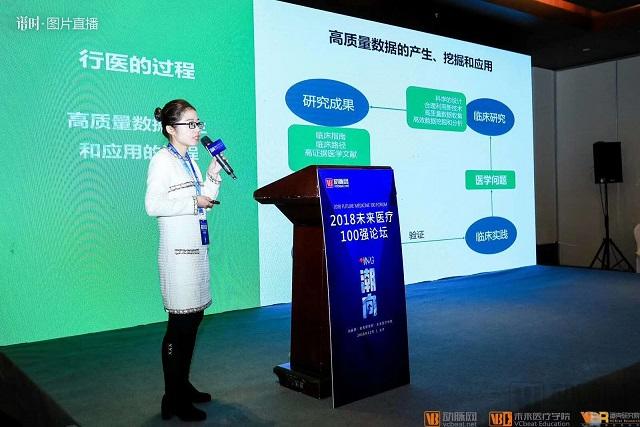
Lu Xiuling, VP of Zechuang Tiancheng
In Lu Xiuling’s view, there are five major challenges in the application of big data in health and healthcare:
First, there are often challenges in effective data exchange between different medical institutions. Second, it is necessary to establish a medical terminology system that better aligns with clinical practice in China. Third, implementing privacy protection measures and enacting relevant policies and regulations are of paramount importance. Fourth, data quality must be improved at the source, using relatively accurate variables to address scientific questions. Fifth, we must explore how to leverage medical questions to drive data utilization, thereby generating scientific value.
From a data perspective, the practice of medicine is essentially a process of data generation, collection, application, and improvement. Physicians apply their clinical knowledge and experience to clinical practice, identifying deficiencies in medical care during patient diagnosis and treatment. To address these issues, they leverage new tools and technologies to collect targeted variable data or mine and analyze existing databases. The insights derived from this data update physicians’ diagnostic and therapeutic knowledge, which is then validated and refined through further clinical practice. Healthcare is, in essence, a data-driven science. Physicians serve as the “proposers” of problems, the “users” of tools, and the “validators” of final outcomes.
In essence, this process is one of clinical research. How can physicians better leverage big data to generate higher-quality data at the source? A robust solution lies in clinical research, guided by its underlying thinking and methodology.
Enhancing physicians' clinical research mindset and skills, facilitating the effective integration of medical processes with information tools, and transforming clinical data into research data, primarily encompassing three key areas of work:
1. Discovery and Formulation of Hypotheses.
2. Collection and quality control of high-quality research data.
3. Strong support from methodological talent or tools.
Zechuang Tiancheng’s product portfolio—comprising education and training, collaborative communities, and a big data platform for scientific research—corresponds respectively to the three aspects mentioned above. Specifically:
1. Education and training to facilitate a shift in physicians' mindsets, helping them cultivate the awareness to formulate clinical questions and utilize tools.
2. Collaborative community, providing multidisciplinary talent support.
3. Scientific Research Big Data Platform, providing tools and standards for standardized data collection and management.
I. Education and Training
Zechuang Tiancheng offers free training tutorials through the “MedCoffee” platform. These include online-to-offline knowledge methodologies, as well as training on new tools and platforms, aimed at enhancing physicians’ research competencies. The training team primarily comprises experts from renowned domestic and international universities and research institutions, including Peking University Health Science Center, Harvard University, Johns Hopkins University, and the University of Pittsburgh. Over 60% of the team members hold doctoral degrees, and 80% have backgrounds in epidemiology, statistics, or bioinformatics.
The continuous content delivery on the MedCafe platform has also attracted more epidemiologists and statisticians to join proactively. Among MedCafe’s 100,000 users, 60% to 70% are clinicians or master’s and doctoral students in clinical disciplines. Nearly 20% of users are methodological professionals specializing in epidemiology, statistics, and related fields. These two groups are indispensable to clinical research and constitute the core user base of the MedCafe platform.
MedSci Club’s training program is primarily designed around the value flow of data generation, encompassing the entire process from formulating research questions to designing variable collection through scientific methods, standardizing data acquisition and management, and conducting statistical analysis to produce final research outcomes.
II. Talent Support
The application of big data in healthcare requires interdisciplinary integration and a specialized workforce, including clinicians with strong research acumen, epidemiologists, statisticians, computer science and database specialists, and information technology professionals. Currently, MedCoffee has established ten online collaborative communities to facilitate timely and comprehensive exchange among multidisciplinary experts.
In addition, MedCoffee has launched a new model called the “Clinical Research-Oriented Department.” This initiative establishes dedicated clinical research units for physicians on the platform who have specific needs or possess the capability and scientific research literacy. It primarily provides support in two areas: first, assisting departments in training full-time data managers to enhance the volume and quality of data collection; second, offering a data management platform and standardized data collection templates to facilitate the transformation of clinical data into high-quality research data.
Beyond physicians, the core user base of MedCoffee comprises epidemiologists, statisticians, and bioinformatics specialists. MedCoffee leverages a guild model to bring these experts together, establishing clinical research support teams through a tiered mentorship system where senior experts train junior members, with progressive screening and advancement. Guild members are distributed across multiple cities throughout China, enabling on-site hospital training and participation in scientific research collaborations at any time and from any location.
III. High-Quality Data
Data quality is paramount; only standardized and normalized data can be efficiently analyzed and utilized. Physicians collect and manage data using standardized data collection templates through the scientific research big data platform. High-quality, disease-specific scientific research data are rapidly accumulating on this platform.
Taking the field of respiratory medicine as an example, more than 30 national-level research projects are currently being conducted on the platform. These projects have achieved standardization across studies, laying a solid foundation for subsequent cross-data analysis. It is projected that by 2020, the data will be consolidated into a specialized respiratory disease database comprising 500,000 patients with respiratory conditions.
Taking the China Soong Ching Ling Foundation’s Special Program for Clinical Research on Chronic Obstructive Pulmonary Disease (COPD) as an example, this initiative comprises a registry study with multi-year continuous follow-up and a comparative effectiveness study. Currently, the program covers 270 hospitals across China.
The COPD-specific workflow involves clinical experts identifying the most critical clinical questions in COPD and defining the variables to be collected. All participating institutions submit researcher information via MedCafe, while also designating a dedicated data manager. MedCafe provides targeted training for both researchers and data managers to clarify the study protocol and the variables to be collected. Subsequently, data are submitted through a scientific research big data platform using standardized Case Report Forms (CRFs). This approach facilitates the construction of a large-scale research data pool for COPD.
Meanwhile, epidemiologists, statisticians, and database technicians from MedCafe participated throughout the entire process, collaborating closely with physicians to assist in data mining and statistical analysis. The resulting scientific findings were interpreted on the MedCafe platform and disseminated to a broader audience of physicians through online and offline training programs, thereby facilitating validation in clinical practice.
Our model has been fully validated in this project, achieving the following outcomes: enhancing the research capabilities of over 1,000 clinicians; identifying numerous key clinical questions related to chronic obstructive pulmonary disease (COPD); conducting multiple real-world study projects; standardizing data collection; unifying data standards across projects; and establishing and refining a data-sharing model based on a collaborative research network.
Overall, the MedCoffee model aims to enhance physicians’ research literacy through education and training. By fostering collaboration and communication between clinicians and methodological experts, it leverages a big-data research platform to accumulate high-quality data and develop robust research projects. Once research outcomes are generated, they are disseminated through MedCoffee for validation in clinical practice.
MedTrend has completed its transformation in personnel, tools, and teams. As a collaborating department director put it, “With MedTrend, we can transition from an irregular militia to a regular army!”
In the foreseeable future, the interaction between physicians and big data will involve doctors leveraging the analytical power of big data platforms to collect necessary information, support clinical decision-making, and refine the medical practice processes previously described. ZeChuang TianCheng also aims to help physicians improve clinical practice and promote human health by applying the mindset of clinical research.