

Sinovation Medical's First NMPA-Innovative-Review-Approved Neurosurgical Robot Files IPO Prospectus

Sinovation
Neurosurgical Surgical Robot Developer
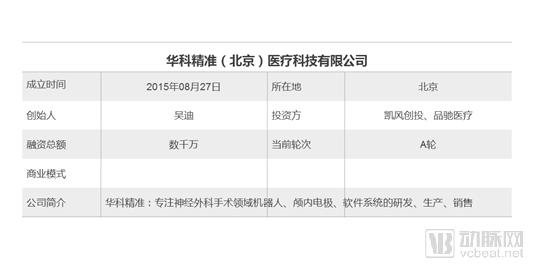
VCBeat has learned that on December 25, 2018, the neurosurgical surgical robot developed by Sinovation officially received production approval from the National Medical Products Administration (NMPA). This is the first neurosurgical surgical robot to pass the national innovative review, and it is suitable for both children and adults.
Sinovation specializes in the research and development, manufacturing, and sales of products for neurosurgical procedures, including surgical robots, navigation systems, and medical electrodes. In 2017, Sinovation’s surgical robot received special approval through the China Food and Drug Administration’s (CFDA) Innovative Medical Device Review Channel. In 2018, it was selected for the “Zhongguancun Demonstration Zone High-End Industry Incubation Program.” VCBeat interviewed Wu Di, founder of Sinovation, to gain an in-depth understanding of the company’s entrepreneurial journey.
“In the field of neurosurgery, millions of patients in China with hemorrhagic stroke, brain tumors, epilepsy, and Parkinson’s disease require surgical intervention. The high-end segment of the neurosurgical market is projected to reach tens of billions of yuan within three years, driven by innovations such as neurosurgical robots, neuronavigation systems, and advanced therapeutic devices. However, the majority of domestic surgical equipment, such as neuronavigation systems, remains imported and comes with a hefty price tag,” said Wu Di.
Reporters learned that traditional intracranial electroencephalogram (iEEG) monitoring to localize the epileptogenic zone in patients with epilepsy requires craniotomy or burr-hole electrode placement, which are highly invasive and carry significant risks. Although existing stereoelectroencephalography (SEEG) techniques offer minimal invasiveness and high safety, they require high-precision surgical navigation systems, with imported equipment costing nearly RMB 10 million per set.
“Receiving the Class III medical device certification for our surgical robot on Christmas Day made all the hardships worthwhile.” This sentiment likely reflects the true feelings of the Sinovation team. In 2017, Sinovation secured tens of millions of RMB in Series A financing from Pinchi Medical and Kaifeng Venture Capital to support the research, development, and clinical trials of its surgical robot and neurosurgical ablation projects. As one of Sinovation’s core products, what distinguishes its first neurosurgical surgical robot, which was approved through the National Innovative Medical Device Special Review Program?
Reporters learned that Sinovation’s neurosurgical robot was jointly developed in collaboration with more than ten hospitals, including Tsinghua University, Beijing Tiantan Hospital, Xuanwu Hospital, Peking University First Hospital, Tsinghua University Yuquan Hospital, Shenzhen University General Hospital, Huashan Hospital Affiliated to Fudan University, Children’s Hospital of Fudan University, Capital Institute of Pediatrics, Peking Union Medical College Hospital, The Third Affiliated Hospital of Southern Medical University, Fujian Medical University Union Hospital, The Second Hospital of Hebei Medical University, and The First Affiliated Hospital of Zhengzhou University. The system has been extensively adopted, completing surgical research and clinical trials involving over 3,000 channels within a single year. Meanwhile, Sinovation’s surgical robot demonstrates particular advantages in the field of pediatric neurosurgery.
Sinovation’s neurosurgical robot features four core technologies:
1. Angio Render technology (3D visualization technology for intracranial vessels) & multimodal 3D image reconstruction technology: Based on multimodal MRI/CTA/DSA imaging, this approach advances 3D segmentation techniques for intracranial vascular imagery, presenting intracranial vascular structures in 3D format to assist physicians in planning puncture paths and avoiding critical blood vessels. Notably, this technological achievement was published as a cover article in an SCI-indexed journal;
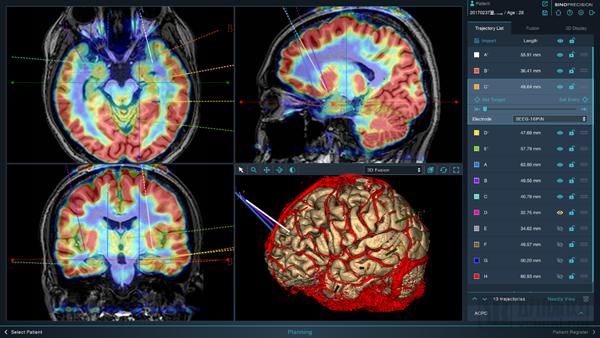
Angio Render Technology
2. Computer vision-based facial registration technology, utilizing an optimized LOOWA algorithm, achieves an overall system accuracy of 0.6 mm. In simple terms, it rapidly and automatically locates the patient’s face through visual positioning, and then precisely aligns the facial landmarks with those from preoperative imaging data such as CTA and MRI.
3. Establishment of an intelligent environmental obstacle model and obstacle avoidance algorithm: Utilizing computer vision to acquire and construct models of the patient’s actual head and fixation frame, along with other environmental obstacles, and employing automatic optimization algorithms to determine the optimal obstacle-avoidance path, thereby enabling the robot to move safely and efficiently to the designated planned position;
4. High-precision force sensing system ensures safety: By leveraging high-precision force sensors and a proprietary gravity compensation algorithm, the system monitors the forces exerted on the robotic arm in real time. In the event of an abnormal force exceeding 1 N, the robot immediately cuts power with a response time of less than 30 ms, providing effective closed-loop safety protection.
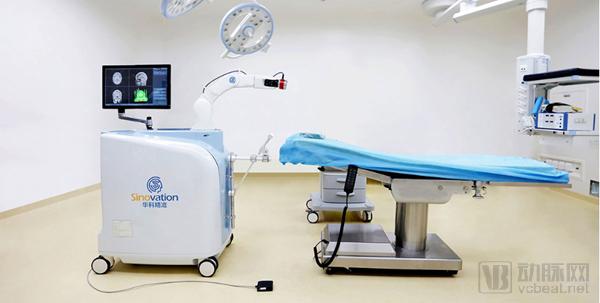
Sinovation Neurosurgical Surgical Robot
In fact, Sinovation’s achievements extend far beyond surgical robots. In 2011, Sinovation successfully developed a multimodal imaging-based neurosurgical planning system. Leveraging its proprietary multimodal image fusion technology, the system enables comprehensive, precise, rapid, and convenient formulation and simulated execution of surgical plans.
In 2010, Sinovation, in collaboration with Tsinghua University, the Chinese Academy of Medical Sciences, Beijing Tiantan Hospital, and the Tianjin Medical University General Hospital Research Institute, successfully developed a neurosurgical navigation system and initiated clinical research. This system provides localization assistance for procedures such as brain tissue biopsy, tumor resection, catheter insertion, and deep brain stimulation (DBS) implantation, offering surgeons high-freedom 2D and 3D imaging displays. It is reported that the project received support from the Ministry of Science and Technology’s National Key R&D Program in 2018 and was expected to be launched for commercial sales in 2019.
In 2006, the team obtained the medical device registration certificate for intracranial cortical electrodes, and within the following two years, secured the medical device registration certificate for intracranial deep brain electrodes.
“Our intracranial electrodes hold over 90% of the market share in the medical electrode sector,” said Wu Di proudly. “In the future, Sinovation will continue to advance its R&D efforts, with new medical device products expected to be launched annually.”
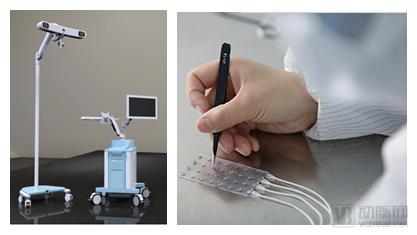
Surgical Navigation and Intracranial Electrodes
“Tsinghua University is a rigorous academic institution with a strong focus on technology and R&D, which aligns well with our approach,” said Wu Di. “We aim to develop products that truly meet the practical clinical needs of physicians in China.”
Guided by this philosophy, the company began assembling its team in 2003 to dedicate itself to the research and development of products in the field of neurosurgery. The company’s team possesses extensive experience in technology, regulatory affairs, production operations, quality control, and marketing and sales. Key team members include:
Wang Ke graduated with a degree in Clinical Medicine from Peking University Health Science Center. He previously worked at GlaxoSmithKline and Baxter Healthcare, bringing extensive experience in the pharmaceutical market.
Wu Di graduated from the Clinical Medicine program at Xi’an Jiaotong University School of Medicine. He previously worked at Xuanwu Hospital of Capital Medical University and Baxter Healthcare in the United States, accumulating extensive experience in medical device registration regulations, operations, and quality management.
Liu Wenbo, who holds a Ph.D. in Biomedical Engineering from Tsinghua University, previously worked at Tsinghua Tongfang and has nearly a decade of experience in surgical navigation, surgical robot architecture, and planning.
Wang Lanfen graduated from China Agricultural University with a major in Fluid Machinery. She previously worked at Tsinghua Tongfang and iSoftStone, bringing over ten years of experience in R&D management.
The company is currently undergoing a new round of financing.