

Meituan-Dianping Releases '2018 Annual Report on Oral Healthcare Consumer Behavior': Insights from Over 2.2 Million Transactions
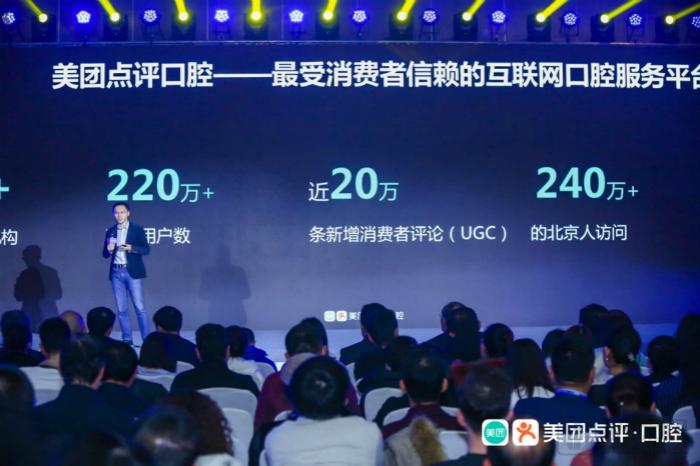
Dong Lin, General Manager of the Healthcare Division at Meituan Dianping, Interprets Changes in the Dental Industry
In the era of mobile internet, brand promotion and marketing have exhibited trends toward digitalization and socialization. As a highly market-oriented sector, the dental industry is gradually shifting from capital-driven and market-driven models to technology-driven and talent-driven models. A key component of the intelligent transformation of the dental industry lies in standardizing and making transparent information regarding institutions, dentists, and product services. This approach helps online consumers identify suitable offline providers, shortens consumer decision-making cycles, and enables the development of new operational strategies and branding models to enhance operational efficiency and brand building.
On January 8, 2019, Meituan Dianping’s Healthcare Division held the inaugural Private Dental Industry Summit in Beijing. At the same time, Meituan Dianping, in collaboration with VCBeat’s VBInsight, released the “2018 Meituan-Dianping Dental User Market Behavior Analysis Report”, the report is divided into five parts: Insights into the Current State of the Industry, Consumer Profiles for Internet-Based Dental Healthcare Services, Characteristics of Online Dental Healthcare Consumption, Perspectives on Dental Clinic Operations and Their Unlimited Potential, and Development Trends and Operational Marketing Recommendations for the Next Five Years. Through comprehensive and systematic research, it provides insights into the current state of the dental services industry, analyzes the profiles of online dental users in the internet environment, studies the consumption characteristics of online dental users based on big data, summarizes the current operational status and opportunities faced by dental healthcare institutions, and offers judgments and recommendations for future development.
Meituan Dianping’s dental care segment, which encompasses a vast sample of dental merchants and behavioral data from dental consumers, is currently China’s leading third-party data platform for the dental industry. Meituan Dianping’s Medical and Health Division is also committed to helping more traditional merchants accelerate their digital transformation, thereby facilitating industrial upgrading through improved operational efficiency and brand building.
Next, we will provide a brief interpretation of the full white paper and share Mr. Dong Lin, General Manager of Meituan Dianping’s Healthcare Division, insights on new models in oral healthcare services.
The white paper presents conclusions across five key areas as follows:
1. Industry Status Insight: Treatment Penetration Rate is the Attribution for Industry Development;
2. Consumer Profile of Internet-Based Dental Healthcare Services: Consumers Prioritize “Attitude” and “Experience”
3. Characteristics of Online Dental Healthcare Consumption: “Teeth Cleaning + Fillings + Whitening” Account for 86.2% of Online Traffic;
4. Operational Philosophy and Unlimited Potential of Dental Clinics: Online channels primarily focus on customer acquisition initiatives;
Industry Insight: Treatment Penetration Rate as the Driver of Industry Growth
With the overall rise in consumption levels among urban residents, the trend of consumption upgrading in the medical services industry is particularly evident, and users’ awareness of oral health care is rapidly awakening.
Hospital data indicate a rapid increase in the number of dental patient visits. According to the China Health and Family Planning Statistical Yearbook, the number of outpatient and emergency visits in hospital stomatology departments rose from 70,508,174 in 2008 to 131,548,837 in 2016, representing a compound annual growth rate (CAGR) of 8.1%. Compared with other specialties characterized by relatively high marketization rates, such as dermatology, ophthalmology, and otorhinolaryngology, stomatology has demonstrated more rapid development in terms of both patient visit volume and CAGR.
According to incomplete industrial and commercial registration data, the number of private dental clinics in China increased from 47,033 in 2017 to 54,479 in 2018, representing a net addition of 7,746 clinics. (This figure only includes entities formally registered with industrial and commercial authorities; the actual number of private dental clinics in the market exceeds 80,000.) In recent years, the dental services industry has seen continuous financing activity, gradually entering a mature stage of development. The sector is now in the mid-to-late phase of its rapid growth period, and mergers and acquisitions within the industry are expected to accelerate further.
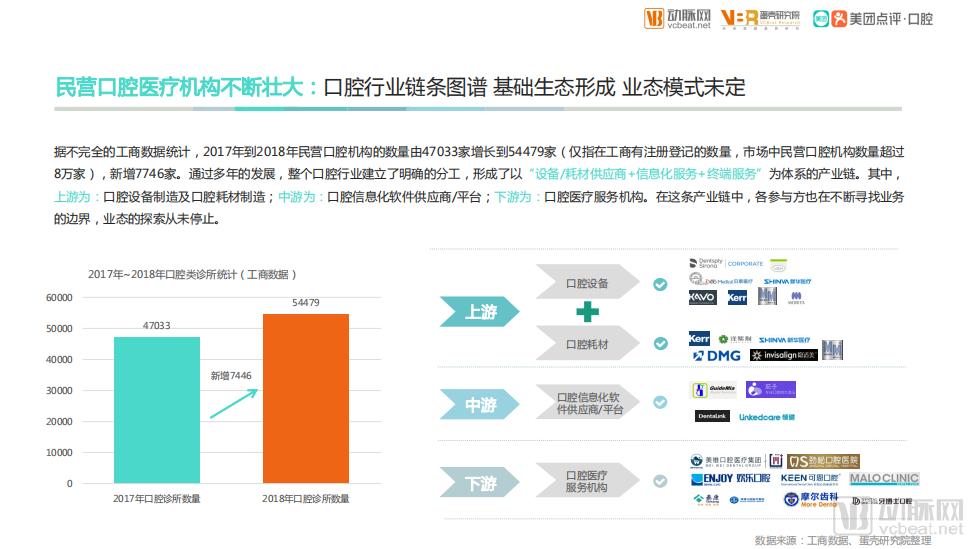
According to the dental visit data from the "2018 China Health and Family Planning Statistical Yearbook" and market estimates, the scale of China's oral health services industry in 2018 was approximately RMB 103.5–121.5 billion. The size of the oral health services industry is primarily influenced by four core factors: the national population base, prevalence rate, treatment penetration rate, and per-visit dental expenditure. All four factors are currently showing an upward trend.
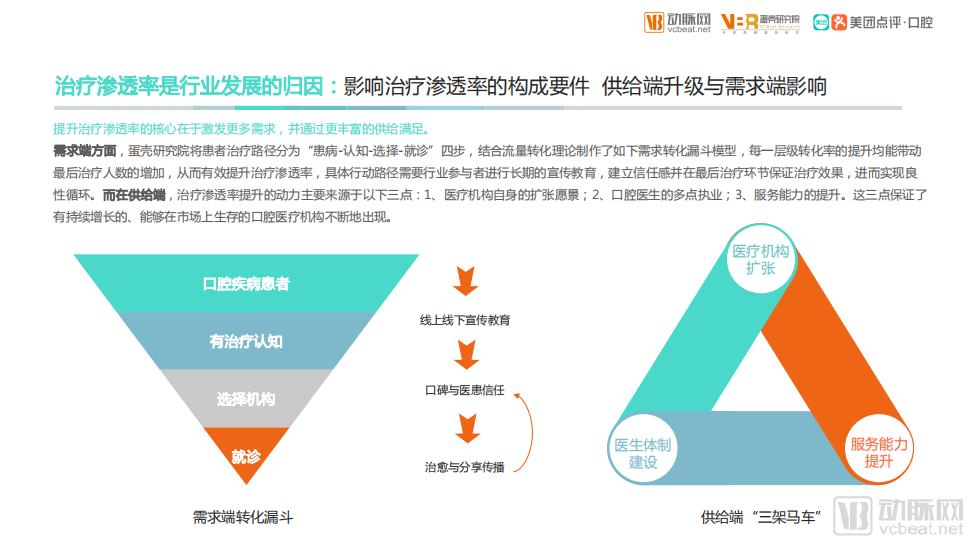
Among these factors, treatment penetration rate serves as the key attribution for industry development. The core to increasing treatment penetration lies in stimulating greater demand and meeting it through more diverse supply. On the supply side, the driving forces behind the rise in treatment penetration primarily stem from three aspects: 1) the expansion ambitions of medical institutions themselves; 2) multi-site practice by dentists; and 3) enhanced service capabilities. These three factors ensure the continuous emergence of dental medical institutions that are capable of sustained growth and market viability.
Consumer Profile for Online Dental Healthcare Services: Consumers Prioritize “Attitude” and “Experience”
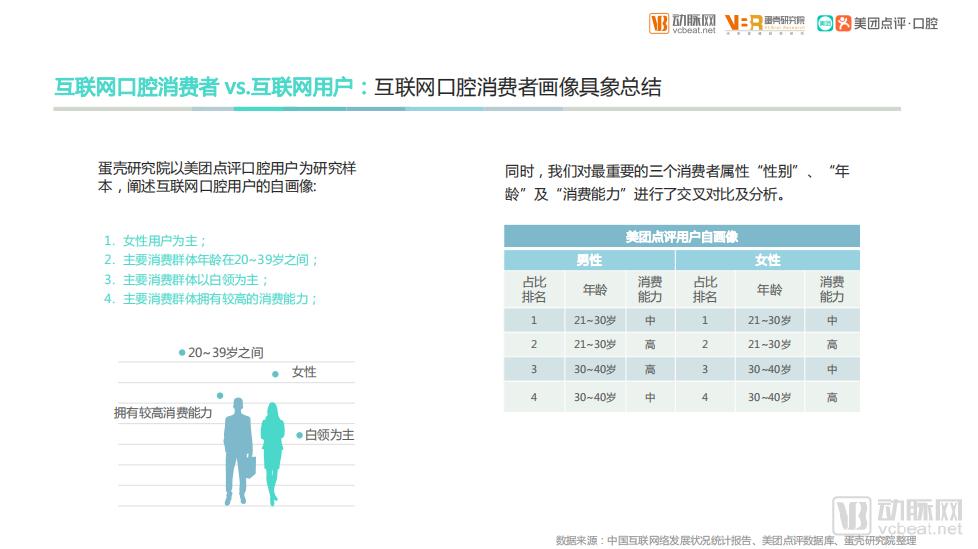
User Profile of Online Dental Consumers: Predominantly Female; Core Consumer Group Aged 20–39; Primarily White-Collar Workers; High Spending Power.
In the Experience Economy, What Do Consumers of Online Dental Care Services Care About? Consumers are most concerned about merchants’ service attitude and show the highest tolerance for variations in merchant proximity. From the perspective of review ratings, “attitude” remains the decisive factor in merchant evaluations across different rating tiers. Mentions of “attitude” account for as high as 50% of one-star reviews, while 42.3% of five-star reviews also reference “attitude,” underscoring that consumers prioritize “attitude” above all else.
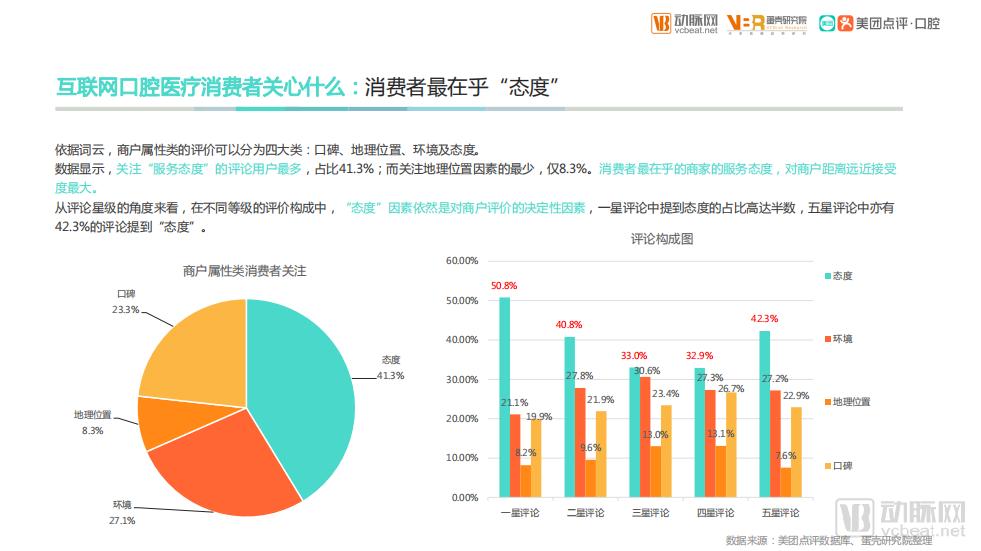
In the consumer internal evaluation model, various factors influence the quality of consumer experience. Among one-star reviews, 45.8% of the influencing factors are attributed to merchant attribute evaluations, while 54.2% stem from product positioning attribute evaluations. In contrast, for five-star reviews, 60.7% originate from merchant attribute evaluations, and 39.3% from product positioning attribute evaluations.
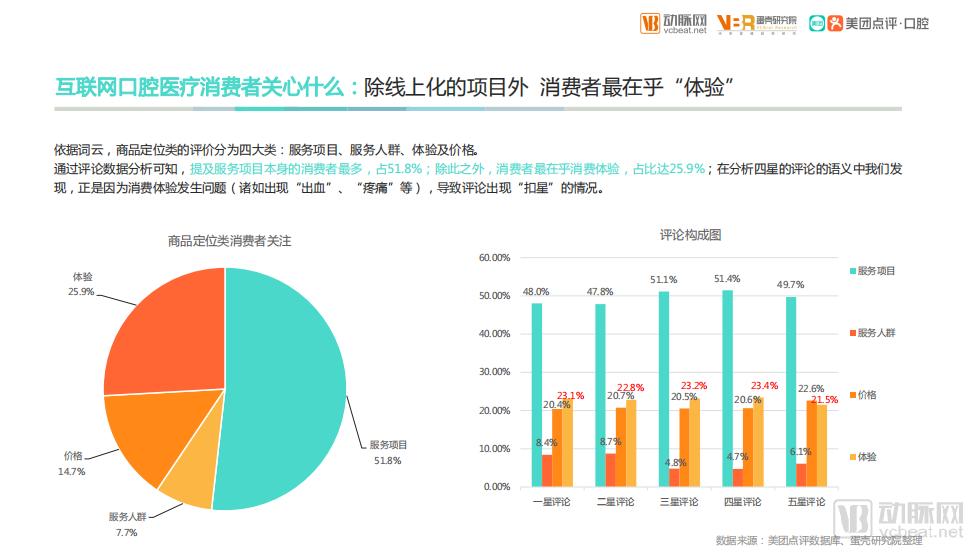
A key conclusion of the Consumer Internal Evaluation Model is that low-star-rated merchants should prioritize improving “service items” within product positioning attributes, while high-star-rated merchants need to further enhance “attitude” within merchant attributes.
Characteristics of Online Dental Care Consumption: “Teeth Cleaning + Fillings + Whitening” Account for 86.2% of Online Traffic
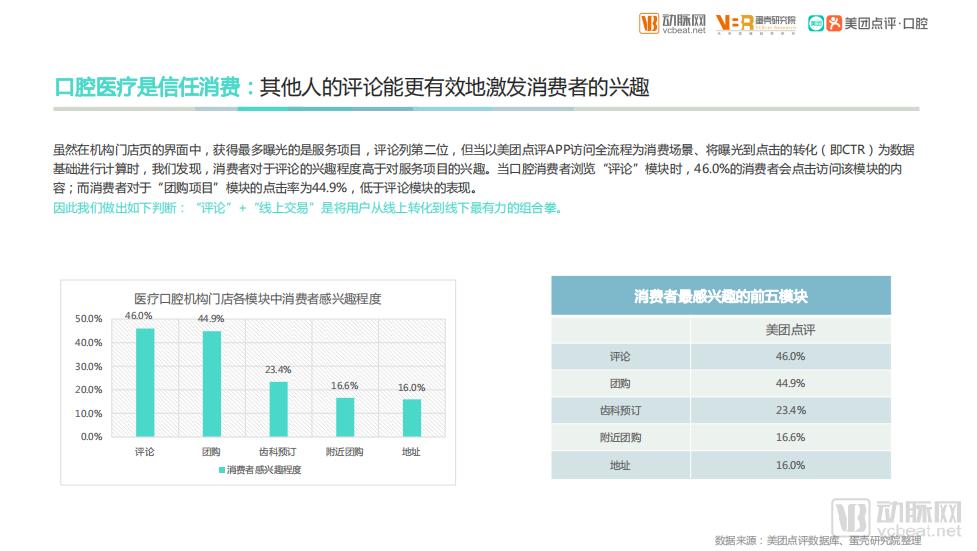
The top five modules that consumers are most interested in are reviews, group buying, dental appointment booking, nearby group deals, and location. “Reviews” + “online transactions” form the most powerful combination for converting users from online to offline.
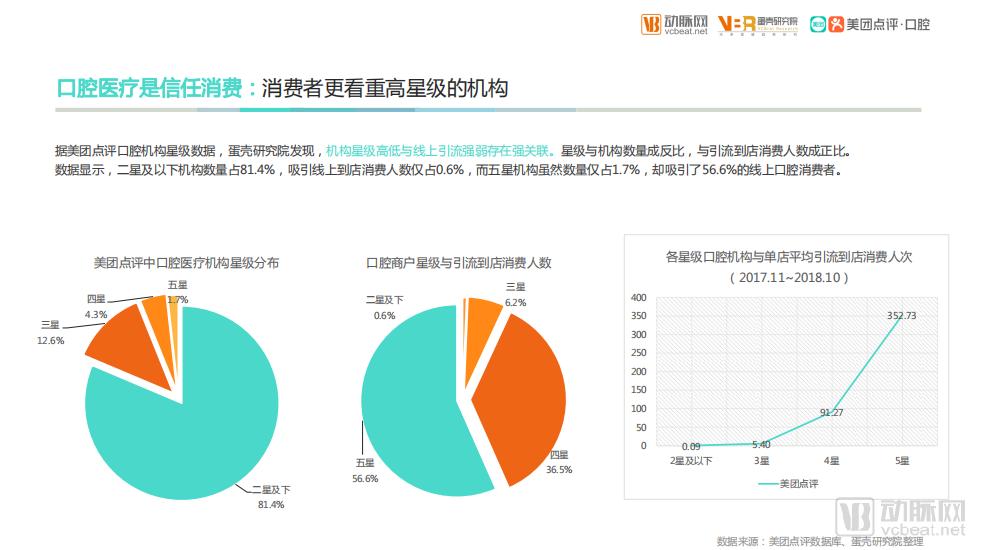
Furthermore, there is a strong correlation between an institution’s star rating and the effectiveness of its online customer acquisition. The number of institutions is inversely proportional to their star ratings, while the number of customers driven to offline consumption through online channels is directly proportional to these ratings. Data shows that institutions with two stars or below account for 81.4% of the total but attract only 0.6% of online-to-offline consumers. In contrast, although five-star institutions constitute merely 1.7% of the total, they capture 56.6% of online dental consumers, indicating that patients place greater emphasis on higher-rated providers. Among institutions with the same star rating, the volume of reviews directly influences online dental consumers’ choice of provider.
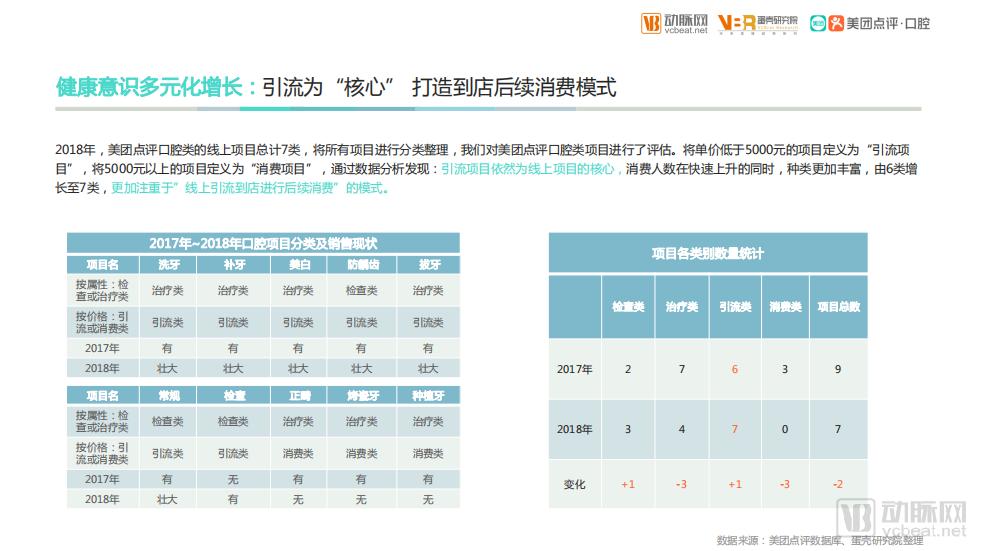
In 2018, Meituan Dianping’s online dental offerings comprised a total of seven categories. These items were classified and organized to evaluate Meituan Dianping’s dental projects. Projects with a unit price below RMB 5,000 were defined as “customer-acquisition offerings,” while those priced above RMB 5,000 were defined as “consumption offerings.” Data analysis revealed that customer-acquisition offerings remained the core of the online portfolio. While the number of consumers rose rapidly, the variety of offerings also expanded, growing from six to seven categories. This trend reflects an increased emphasis on the model of “online customer acquisition driving in-store follow-up consumption.”
Tooth extraction ranked first in terms of the growth rate of patient visits driven to clinics. While tooth extraction addresses a certain degree of inelastic demand, the total market demand for this service remains limited. Therefore, whether to prioritize tooth extraction as a key patient-acquisition strategy in the future warrants continued observation.
The second fastest-growing driver of in-store patient visits is caries prevention. Caries prevention addresses a certain level of inelastic demand. Given the rising prevalence of dental caries and low treatment rates highlighted in the Fourth National Oral Health Epidemiological Survey, there remains significant market potential. In the future, caries prevention could become a key initiative for patient acquisition and a major growth engine in oral healthcare.
Consumers’ pursuit of “beauty” is gaining momentum, with the “troika” of “dental cleaning + fillings + whitening” driving approximately 86.2% of online traffic to the dental industry on Meituan-Dianping. Among these, “dental cleaning” reigns supreme, accounting for 64.8% of the total traffic generated by all services. Consumer interests are demand-driven; therefore, leveraging traffic data to adjust business strategies not only meets consumer needs but also serves as a primary engine for industry development.
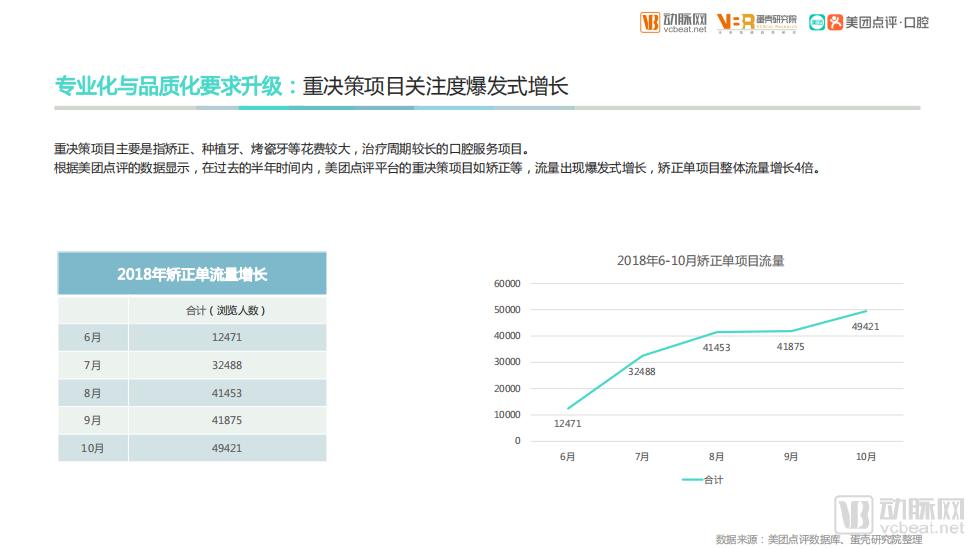
High-involvement dental procedures primarily refer to high-cost, long-treatment-cycle services such as orthodontics, dental implants, and porcelain crowns. According to data from Meituan Dianping, traffic for high-involvement items like orthodontics on its platform saw explosive growth over the past six months, with overall traffic for orthodontic services quadrupling.
Operational Perspectives and Unlimited Potential for Dental Clinics: Online Channels Primarily Focus on Patient Acquisition Services
Current dental clinics are at a critical stage of integrating industry resources and capturing target markets through chain-based, standardized, and differentiated business models.
Meanwhile, a comparison of the market landscapes in the Chinese and U.S. dental industries reveals substantial room for growth in China. Opportunities exist on both the consumer and provider sides. Data released by the ADA (American Dental Association) shows that the U.S. dental services industry is valued at $124.4 billion, with per capita dental expenditure amounting to $384.
Compared with the estimated market size of China’s dental services industry, it is approximately one-seventh that of the United States. Per capita dental expenditure in China amounts to only 3.0% of that in the U.S. Benchmarking against the U.S. industry scale and dental spending levels, we believe that China’s dental services industry holds immense potential, given its large population base and steadily growing economy.
On the consumer side of dental care institutions, 82.4% of dental clinics target middle-income consumers as their primary customer base; core customers are mainly aged between 21 and 50 years, accounting for over 80.0%; more than 50.0% of dental institutions have an average transaction value ranging from 500 to 1,000 yuan; most dental institutions believe that service quality and physician-related factors are the aspects consumers care about most.
For the practitioner-facing operations of dental medical institutions, 60.8% of these institutions have a proportion of multi-site practicing physicians exceeding 10.0%, primarily driven by multi-site practice within chain institution groups. The operational model for physicians’ multi-site practice is becoming increasingly mature. This model is facilitating a gradual transition of physicians toward full-time roles outside the public system; after accumulating a sufficient patient base through initial multi-site practice, physicians are highly likely to leave the public healthcare system. Meanwhile, dental chain institutions provide robust platforms for physician training and career advancement, thereby enhancing their attractiveness to medical professionals.
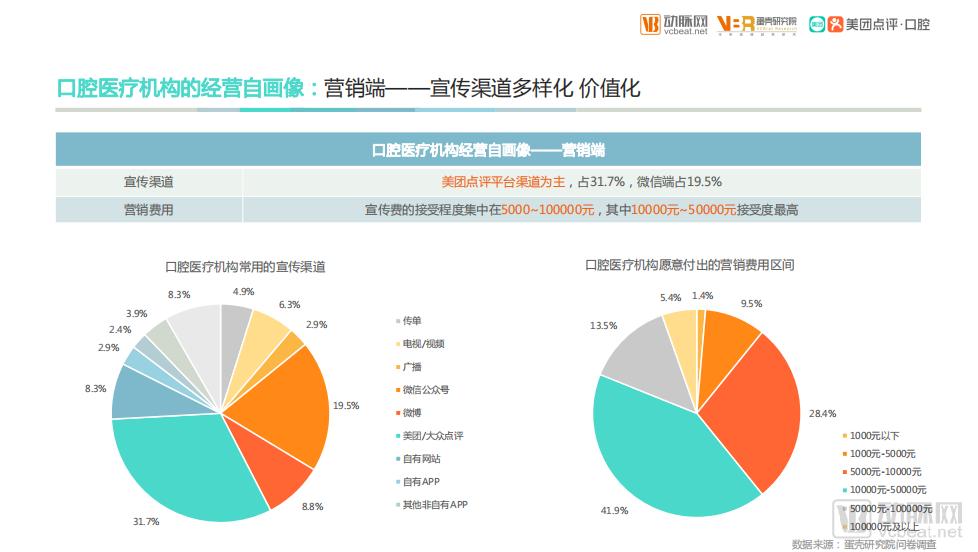
In the marketing segment of dental medical institutions, Meituan-Dianping is the primary promotional channel, accounting for 31.7%, followed by WeChat at 19.5%. Acceptance of promotional expenditures is concentrated in the range of RMB 5,000 to RMB 100,000, with the highest acceptance observed between RMB 10,000 and RMB 50,000. Meituan-Dianping serves as the main channel for online operations, with 71.6% of dental institutions conducting their online business through Meituan/Dianping. Meanwhile, 55.4% of merchants are reluctant to digitize their operations due to concerns over high costs and limited returns.
Currently, 64.9% of dental institutions consider teeth cleaning to be the most suitable service for patient acquisition. Nearly 80.0% of these institutions believe that the optimal price point for such acquisition-oriented services ranges between RMB 100 and RMB 500. Consequently, the majority of dental healthcare providers view online channels primarily as a means for patient acquisition, noting that these channels are not yet capable of generating direct or substantial operating profits.
Development Trends and Operational Marketing Recommendations for the Next Five Years: Enhancing Online Penetration and Building Reputation-Driven Growth
The next five years will undoubtedly be extraordinary for the dental industry. Strong policy support, shifts in business models, changes in consumer habits, and rapid advancements in innovative technologies will all exert a significant impact on the sector. In facing the future, dental healthcare institutions should focus their efforts on optimizing business models, studying consumer behavior, and applying digital technologies. Regarding operational and marketing strategies, it is recommended to concentrate on the following areas:
Online Service Capabilities. With the widespread adoption of “Internet Plus,” internet platforms have evolved beyond mere information carriers. By integrating their own resources and leveraging information as an entry point, these platforms have developed various online service modules. These modules not only provide greater convenience for consumers but also offer dental healthcare institutions online services such as triage, appointment scheduling, and consultations.
Reduce Costs, Expand Channels. Overall, the advantages brought by internet platforms are concentrated in cost control and channel expansion. The application of online multi-functional modules reduces operating costs while improving operational efficiency; platform resource integration provides greater exposure channels and supply chain support.
Consumer Awareness and Education. Against the backdrop of accelerated consumption, both products and business strategies evolve with emerging trends, making internet platforms the optimal vehicles for disseminating awareness and education. By leveraging online channels to engage consumers, companies can adapt their operational models while effectively capturing consumer demand.
Homogenized institutions compete by winning through reputation. How to stand out among numerous dental clinics? Reputation is one of the best paths. Whether for doctors or dental institutions, an efficient model for building reputation is needed, and the review mechanism of internet platforms is currently one of the most widespread, highest-efficiency, and most accurate ways to build reputation.
As a trusted internet-based dental service platform, Meituan Dianping’s Healthcare Division leads the industry in both the number of partnered dental institutions and transacting users. It has established collaborations with 7,300 dental medical institutions, serving over 2.2 million ordering customers throughout 2018.Analysis of Meituan-Dianping’s dental consumer navigation paths and preference data reveals that dental healthcare consumption is a typical “trust-based consumption,” with most consumers assessing the credibility of dental institutions based on their trust in user reviews.
Dong Lin, General Manager of the Healthcare Division at Meituan Dianping, stated, “The oral care sector is a key strategic focus for the Healthcare Division in 2019. The mutual trust chain among ‘consumers–Meituan Dianping–medical institutions’ forms the foundation of our in-depth services to the oral care industry. Moving forward, we will continue to enhance our demand-side service capabilities by offering diverse and personalized products tailored to different consumer segments. Simultaneously, we will intensify efforts to advance the digitalization capabilities of oral care providers on the supply side, thereby achieving a win-win outcome for all three parties.”
In the future, Meituan Dianping’s Healthcare Division will continuously develop online tools from both the supply side and the trust-building side to help merchants improve operational efficiency, primarily focusing on three major directions:
First, we will continue to develop service items into standardized SKUs, aiming to standardize all procedures in the dental industry. At a minimum, this will ensure that patients and doctors share a consistent understanding of each standardized procedure, thereby facilitating word-of-mouth promotion.
Second, the structuring and upgrading of UGC reviews may diversify formats—such as diaries, image-text posts, and even videos—with the aim of shortening consumers’ decision-making time.
Third, doctor services should be commoditized by modularizing the time of physicians and specialists to the greatest extent possible, with highly refined online integration. In the future, we aim to build a platform based on mutual trust among consumers, Meituan-Dianping, and healthcare institutions, advancing in tandem to better serve consumers and ultimately achieve a win-win outcome for the entire industry.
Full Version of 《2018 Meituan-Dianping Dental User Market Behavior Analysis Report》, please click here.