

Wanhu Liangfang: A Chinese PBM Model Managing Medication for Hundreds of Thousands of Chronic Disease Patients with Centralized Pharmacies Launched in Wuhu, Taiyuan, and Nanjing
“Implementing the PBM (Pharmacy Benefit Management) model in China cannot succeed if one focuses solely on the pain points of the local context, such as policy, payment mechanisms, and stakeholder interest structures. Instead, it is essential to identify opportunities arising from the differences in healthcare security systems, seeking differentiated advantages by addressing the overall landscape and industrial regulatory strategies.”
The PBM (Pharmacy Benefit Management) model crossed the Pacific from the United States to China a decade ago. Over these ten years, it has experienced periods of stagnation as well as resurgence. Many have pinned their hopes on this external example, aiming to address challenges in controlling health insurance costs and ensuring drug supply security, while others argue that China lacks the necessary environment for PBMs to thrive.
As the “pioneer” who introduced the PBM model to China, Professor Fang Zhiwu—first-term member of the State Council’s Expert Advisory Committee on Healthcare Reform, Distinguished Professor at the School of Management, Xi’an Jiaotong University, and Chairman of Beijing Wanhu Liangfang—offers profound insights into the PBM model and its practice in China.
Recently, VCBeat (WeChat ID: vcbeat) interviewed Professor Fang Zhiwu, who provided an interpretation of the PBM model from the perspectives of top-level design in healthcare reform, tiered diagnosis and treatment policies, and the supply guarantee of essential medicines at the primary care level.
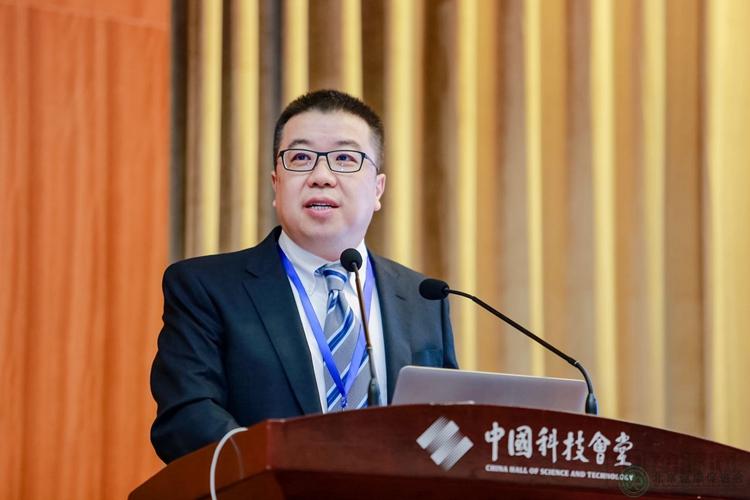
Professor Fang Zhiwu
Professor Fang Zhiwu holds an MBA from the University of Washington’s Foster School of Business and a degree from the Medical College of Xi’an Jiaotong University. In 2008, he was appointed Vice President of Express Scripts (ESI), where he oversaw international business development and spearheaded the promotion of the Pharmacy Benefit Management (PBM) model across Europe, Asia, and South America.
Professor Fang Zhiwu introduced that the PBM (Pharmacy Benefit Management) model is a unique healthcare cost-containment and pharmaceutical supply assurance system in the United States. It emerged in the 1960s and 1970s, driven by the need to control healthcare costs amid rising medical expenditures, as well as advancements in computer and internet technologies, which provided technological solutions for cost containment and pharmaceutical supply management.
“I have broadly divided the evolution of Pharmacy Benefit Management (PBM) in the United States into two phases. The first phase focused on cost containment, leveraging computer and internet technologies to audit prescriptions and underwriting and claims information, thereby achieving cost control objectives. The second phase centered on centralized drug supply, characterized by the integration of informatization and industrial automation. This involved organizing and analyzing medication data for patients with chronic diseases and establishing central pharmacies to dispense medications to patients,” said Professor Fang Zhiwu.
A mature PBM (Pharmacy Benefit Management) model hinges on several key elements: comprehensive and continuous patient medication data, with patient medication needs at the core, guiding the establishment of pharmaceutical supply chains, such as automated warehousing and logistics systems, conveyance, and packaging systems. By providing medications to patients through central pharmacies, it is not only possible to predict patient medication usage based on data models but also to improve the efficiency of pharmaceutical distribution and reduce distribution costs.
As of today, PBM players in the U.S. market can be broadly categorized into three types: first, PBMs embedded within insurance companies, such as Optum, the PBM subsidiary of UnitedHealth Group; second, PBMs operated by chain pharmacies, such as Caremark, owned by CVS Health; and third, independent PBMs, such as Medimpact. Meanwhile, nearly all PBM companies are involved in pharmaceutical supply operations.
Taking ESI as an example, the company was founded in 1986 and provides services to various stakeholders, including government agencies, enterprises, insurance companies, physicians, and patients. It is involved in a comprehensive pharmaceutical service system, with its core businesses encompassing pharmacy benefit management (PBM), high-tech information technology services, pharmaceutical distribution management, healthcare service management, and disease management. ESI has become the third-largest pharmaceutical retail organization in the United States, after CVS and Walgreens. It delivers medications to its managed members through mail-order and online pharmacies, including specialty drugs and investigational medicines.
Express Scripts possesses a substantial user base and holds prescription review authority, granting it strong upstream bargaining power across the pharmaceutical industry chain. This enables the company to continuously streamline distribution and supply chain segments, thereby offering lower drug prices. Leveraging this strong negotiating power, Express Scripts’ mail-order medications are approximately 20% cheaper than offline purchases, meeting patients’ demand for affordability while effectively controlling medication costs.
In 2017, Express Scripts (ESI) reported revenue of $100.065 billion, with home delivery and specialty claims accounting for $44.33 billion, underscoring the critical role of pharmaceutical supply within the PBM model.
Professor Fang Zhiwu told VCBeat that Express Scripts (ESI) has received numerous awards in the past. During his tenure, it was named one of the ten most successful companies of the first decade of the 21st century by Smart Money, a magazine under The Wall Street Journal, in 2010. Listed alongside Google, Apple, and Goldman Sachs, it was hailed as a model of modern service industries. Additionally, among companies with annual revenues exceeding $10 billion, Express Scripts boasted the highest “output value” per employee. At the end of 2017, it had 26,600 employees, with an average “output value” per capita reaching $3.76 million.
During Professor Fang Zhiwu’s tenure, ESI RxStart began its global expansion. In 2009, Professor Fang spearheaded the introduction of the PBM model to China, as ESI RxStart signed a strategic cooperation agreement with Neusoft Healthcare Holdings (now Guoxin Health), marking the beginning of the PBM story in China.
“PBM stands for Pharmacy Benefit Management. The word ‘Benefit’ originally means ‘to benefit from…’ After extensive deliberation, we ultimately chose the term ‘welfare,’ and the PBM drug benefit management model began to be introduced into China,” said Professor Fang Zhiwu.
“Implementing the Pharmacy Benefit Management (PBM) model in China will yield no results if one focuses solely on the pain points of the local context, such as policy, payment mechanisms, and stakeholder interests. Instead, it is essential to recognize the opportunities arising from differences in healthcare security systems, and to identify differentiated opportunities by approaching the issue from the perspectives of the overall landscape and industrial regulation strategies.” Professor Fang Zhiwu stated that many industry insiders are pessimistic about the practical implementation of the PBM model in China, perceiving various obstacles. In reality, the model should undergo localized innovation rather than being copied verbatim.
Since the concept of Pharmacy Benefit Management (PBM) was introduced to China, dozens of companies have begun to explore this field. However, many remain at the initial stage of prescription information review, failing to truly engage with the core of the PBM model—a centralized pharmaceutical supply system. Only by establishing such a centralized supply framework can the localization of PBM services be effectively achieved.
How to Establish a System with Both Prescription Review and Drug Supply Capabilities? This remains a challenge. Retail pharmacies, distribution enterprises, e-commerce platforms, commercial insurance companies, and healthcare IT firms are all making attempts, but due to various constraints, a complete business closed loop has yet to be established.
The key elements are as follows: sufficient capacity for medical services and drug supply, ensuring patients are willing to seek care and can access medications; technical capability to evaluate prescription appropriateness and provide recommendations; the ability to aggregate dispersed medication demands and negotiate pricing with upstream suppliers; a mature supply chain system that guarantees timely and adequate drug delivery; and payment support backed by strong credibility, encouraging both commercial insurance and public health insurance programs to cover costs.
The key to breaking the deadlock lies in policy, particularly the direction of “healthcare reform.” As a founding member of the State Council’s Expert Advisory Committee on Healthcare Reform, Professor Fang Zhiwu believes that the practice of PBM in China should align with the trajectory of healthcare reform. “The mature commercial insurance system in the United States provides strong support for the development of PBMs, driven by the demand to leverage new technologies and models to deliver better services to members and achieve cost containment. In contrast, China’s commercial health insurance sector is still in its infancy and accounts for a small share of healthcare payments; thus, relying solely on commercial insurance is unlikely to drive significant growth,” he said.
The direction of the top-level design for healthcare reform is tiered diagnosis and treatment, with a focus on strengthening primary care, to achieve “initial consultation at the primary level, two-way referrals, separate management of acute and chronic conditions, and coordination between upper- and lower-level institutions.” This aims to address the “inverted triangle” problem in healthcare by diverting patients—particularly those with common and chronic diseases—to primary care facilities, thereby alleviating overcrowding in large hospitals.
Two key factors determine patient flow to primary care institutions: medical consultation and medication dispensing. To enhance “medical consultation,” it is essential to strengthen the capabilities of primary care physicians by empowering them to apply standardized solutions for patient diagnosis and treatment. Regarding “medication dispensing,” which pertains to pharmaceutical supply assurance, although policies such as the National Essential Medicines List have been implemented, primary care facilities often face stockouts or lack available medications. Establishing centralized pharmacies can effectively address this issue.
Professor Fang Zhiwu resigned from ESI in 2012 to found Wanhu Liangfang, integrating the Pharmacy Benefit Management (PBM) model with China’s hierarchical diagnosis and treatment system under healthcare reform, thereby establishing a Chinese PBM model. Centered on the core mission of “lowering drug prices, safeguarding medical insurance funds, and benefiting public welfare,” Wanhu Liangfang provides solutions aligned with the direction of healthcare reform. By positioning its service delivery within community health service centers, the company delivers high-quality services to its enrolled members.
Specifically, Wanhu Liangfang’s products and services encompass several key areas: first, a family doctor empowerment system developed in collaboration with Professor Gu Yuan, a leading authority in the field of family medicine. This includes establishing a training framework for family doctors, empowering healthcare personnel at community health service centers, and launching an elite general practitioner development program; second, an information technology system featuring the creation of a PBM (Pharmacy Benefit Management) database and comprehensive IT solutions; and third, a centralized drug procurement system that negotiates with pharmaceutical manufacturers to implement “group purchasing,” thereby reducing drug prices.
Professor Fang Zhiwu told VCBeat that the Chinese PBM model of Wanhu Liangfang is patient-centered, primarily serving elderly patients who seek care at community health service centers. Although this demographic represents the mainstream of medical service utilization, few innovative projects have previously been designed to serve their needs.
Furthermore, Wanhu Liangfang’s PBM model transforms “disorder” into “order.” Previously, patients—especially the elderly—were like “headless flies” after falling ill, with no guidance on where or how to seek medical care, resulting in a disordered process for consultation and medication procurement. Under the tiered diagnosis and treatment system combined with the PBM model, patients with chronic diseases receive consistent care at community health service centers, where medications are provided to them through central pharmacies on a fixed-location, scheduled, and quantified basis.
From “Disorder” to “Order”: Not Only Convenient but Also Cost-Effective. Taking pharmaceutical supply as an example, drug prices in China remain high due to the dense network of pharmacies, coupled with substantial costs for rent, labor, and management. In contrast, a centralized pharmacy model—with one facility per city—offers extensive coverage and achieves significant cost savings through refined management. These savings are passed on to the public; under the Wanhu PBM (Pharmacy Benefit Management) model, drug prices are reduced by 10%–20%, with the full amount returned to patients through contractual agreements.
Professor Fang Zhiwu told VCBeat that the Wanhu PBM model has been rolled out in cities such as Wuhu (Anhui Province), Taiyuan (Shanxi Province), and Nanjing (Jiangsu Province). The pilot program in Wuhu was launched earliest, expanding from a single community health service center to the district and municipal levels. It currently provides contracted management for over 100,000 patients with chronic diseases, ensuring the designated, scheduled, and quantified supply of medications.
Wanhu’s PBM model has also gained recognition from local regulatory authorities, including the Health Commission and the Healthcare Security Administration. Furthermore, at the concluding meeting of the research project “Study on the Value of the PBM Business Model to China’s Healthcare Reform and Its Market Environment,” jointly organized by the Institute of Economic System and Management of the National Development and Reform Commission and the China Pharmaceutical Commerce Association in November 2018, Wanhu Liangfang was featured as a case study to elucidate the PBM model.
Researcher Chen Wei, the head of the research group, pointed out in his project report that after more than ten years of exploration, a three-year pilot in Wuhu, and improvements and enhancements in cities such as Taiyuan and Nanjing, PBM has enabled hundreds of thousands of elderly patients with chronic diseases at the primary care level to enjoy tangible benefits. The public’s sense of gain from the reform is significant. The localization of PBM in China has gradually matured and laid the foundation for nationwide promotion. It is recommended to draft industry standards and evaluate supporting policies based on a summary of previous C-PBM practical experiences, and to promote it gradually across China in light of local conditions.
“The Institute of Economic Management under the National Development and Reform Commission can be described as the ‘holy land’ of China’s economy. Many major policies related to reform and opening-up were initially debated and studied here. Being selected as a case study is of great significance to Wanhu,” said Professor Fang Zhiwu.
In terms of corporate development, Wanhu Liangfang secured its Series A financing in 2014, led by Keytone Capital and Kaixuan Ventures. In 2017, it completed a $20 million Series B round led by F-Prime Capital (formerly Fidelity Asia). Its current financing plan is proceeding in an orderly manner. Moving forward, the company will continue to strengthen its technological and service capabilities, replicating its Chinese PBM model across more cities.
PBM has also been a key focus of transactions in the healthcare industry in recent years. Professor Fang Zhiwu told VCBeat that three monthly headline stories in the healthcare sector in 2018 were related to PBM businesses, including: CVS’s $70 billion acquisition of Aetna, Amazon’s announcement of potential entry into the PBM market, and Cigna’s $52 billion acquisition of Express Scripts (ESI).
The healthcare industry is entering an era of “mega-deals,” with cross-sector M&A and integration becoming a prevailing trend. From front-end medical services and payment systems to back-end health insurance and supply chains, industrial chain consolidation is creating greater synergies across the sector. In the Chinese market, localized innovation of the Pharmacy Benefit Management (PBM) model is an inevitable path. Wanhu Liangfang has demonstrated best practices for the Chinese PBM model, with even greater possibilities ahead.