

Bluepha Microbial Cuts PHA Production Cost by Half Through Engineered Strains Ahead of IPO
Ayding Lake, located in the Turpan Basin of Xinjiang, is the lowest point on land in China. In the Uyghur language, Ayding Lake means "Moonlight Lake." From a distance, the lake, surrounded by crystalline white saline-alkali flats, appears as if bathed in moonlight, hence its name.
In August 2010, Professor Chen Guoqiang from the School of Life Sciences at Tsinghua University led his team to identify a bacterial strain here whose biochemical properties met their specific requirements. This scientific discovery effort spanned two years, and the halophilic strain they isolated was genetically engineered five years later to serve as a “super bacterium” for the synthesis of polyhydroxyalkanoates (PHA).
PHA is a high-molecular-weight polymer entirely synthesized by microorganisms. It possesses material properties similar to those of petroleum-based chemical plastics, yet it can spontaneously degrade in soil and water bodies within six months. As such, it is regarded as a "green plastic" alternative for addressing the problem of "white pollution." However, the PHA production process involves substantial energy consumption, resulting in high costs. Its sales price, which is several times higher than that of alternative materials such as polylactic acid (PLA), polyethylene, and polystyrene, has hindered the smooth industrialization of PHA.
The halophilic bacterial strain isolated by Professor Chen Guoqiang’s team from the shores of Ayding Lake thrives in high-salinity environments that are intolerable to most microorganisms. It can withstand continuous intracellular accumulation of polyhydroxyalkanoates (PHA), with peak content reaching up to 80%, making it an ideal strain for large-scale PHA production.
However, enabling halophilic strains to stably produce polyhydroxyalkanoates (PHAs) involves the application of synthetic biology technologies. As an emerging interdisciplinary field, synthetic biology can engineer microbial metabolic pathways to facilitate the biosynthesis of target products and, more importantly, significantly enhance synthesis efficiency.
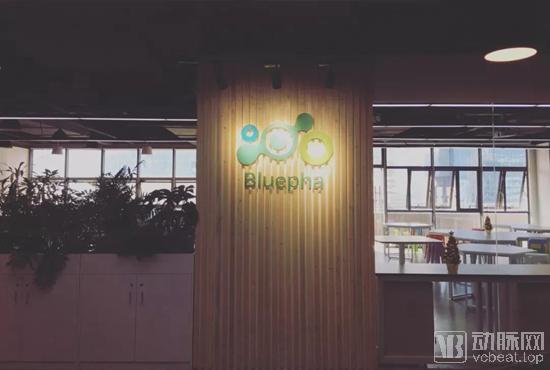
Bluepha Microbiology Office Area
Professor Chen Guoqiang, a leading authority in synthetic biology in China, co-founded Bluepha with his student Dr. Li Teng and Dr. Zhang Haoqian from the School of Life Sciences at Peking University. They engineered halophilic strains to enable mass production of PHA at significantly lower costs than traditional processes, with the potential to reach cost parity with conventional plastics upon achieving scale-up.
Founded in 2015 and headquartered in Changping District, Beijing, Bluepha is a leading synthetic biology company in China. It aims to unlock the potential of microorganisms through engineered biotechnology, has established multiple industrial-scale production pipelines for PHA and high-value plant compounds, and provides scientific education services in the form of experimental programs.
In February 2017, Bluepha secured RMB 5.4 million in angel-round financing, led by FreeS Fund. One year later, Bluepha raised RMB 10 million in Pre-A round financing, led by Lihua Venture Capital and followed by FreeS Fund.
Zhang Haoqian told VCBeat New Medicine that he met his partner, Li Teng, during an undergraduate international top-tier competition in synthetic biology, the iGEM Competition. Their shared interests turned them into close friends who talked about everything, and gradually sparked the idea of starting a business. Li Teng had been a key team member in the aforementioned journey to discover halophilic strains. He believed that engineering halophilic strains using synthetic biology technology was technically feasible, and that the market potential for the product PHA was enormous.
After repeatedly deliberating on the technical proposal with researchers who shared the same academic background, Li Teng and Zhang Haoqian embarked on attempts to engineer the test microbial consortia. “Most members of our team participated in the discovery and isolation of the platform strains, so we have a solid understanding of the biochemical characteristics of these microorganisms.” Shortly after the team was established, Bluepha Microbiology secured RMB 1 million in initial funding from the XIN Center at Tsinghua University.
Bluepha’s initial office was located within the Tsinghua University campus. The team isolated specific genetic elements from various types of microorganisms and, using halophilic strains as a platform, engineered microbial strains capable of high-yield production of PHA materials with tailored properties, thereby successfully completing the preliminary R&D work.
In September 2016, Bluepha emerged from Tsinghua University and began operating as a corporate entity, with its core business focused on the research, development, and production of polyhydroxyalkanoates (PHA) for food and medical packaging. At that time, synthetic microbiology was still a novel concept in China; when explaining its business model to investors, Bluepha could only draw comparisons with foreign pioneers such as Zymergen and Ginkgo Bioworks.
In the United States, Zymergen and Ginkgo Bioworks have achieved significant commercial success, with their revenues primarily derived from technical services and patent licensing. However, the technological industrial ecosystems in China and abroad differ. Bluepha has been pioneering a novel approach from its inception. Due to the lack of a phased technology transaction mechanism in China, Bluepha did not adopt the business model of exporting technical solutions like Zymergen and Ginkgo Bioworks; instead, it directly provides vertical products.
Zhang Haoqian stated that since the company’s independently developed PHA-producing strain achieved monthly ton-scale mass production in late 2018, Bluepha Microbiology has received dozens of tons of PHA orders, with letters of intent exceeding one thousand tons. However, the current production capacity for the PHA project is constrained, and expanding capacity will take time.
Synthetic biology views cells as engineering systems assembled from the bottom up, with genes as components. It deeply optimizes or designs cells de novo based on engineering principles, akin to writing “code” within cells. The “code statements” are standardized DNA fragments, and the source of these DNA materials encompasses all organisms in nature that can be genetically sequenced.
Dr. Zhang Haoqian stated that assembling genes from different organisms and enabling them to perform their intended functions involves various nucleic acid sequence modification and design techniques related to the specific mechanisms of gene regulation (including standardization of mRNA terminal nucleic acid sequences, design of ribosome binding site sequences, etc.). This constitutes the technical core and challenge of synthetic biology, as well as the technological advantage of Bluepha Microbiology.
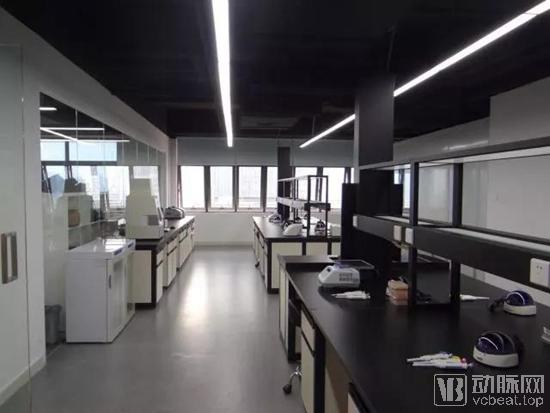
Bluepha Microbiology Laboratory
Meanwhile, Bluepha has built a unique synthetic biology technology platform that integrates a genetic element library, a high-specificity strain library, and Holog, an automated system for data collection, analysis, and R&D, enabling the development of new strains with higher throughput, shorter cycles, and faster response times.
Among these, Bluepha Microbiology’s high-specificity strain library centers on microbial strains capable of high-yield production of platform molecules. The company has developed three microbial strains for acetyl-CoA, malonyl-CoA, and isopentenyl pyrophosphate (IPP), which are respectively used in the synthesis of biodegradable material PHA, natural pharmaceuticals/novel lead compounds, and plant-derived compounds/fragrances/antioxidants/active ingredients of traditional Chinese medicine/food additives. Its final products span biodegradable materials, food, consumer goods, and pharmaceuticals.
As synthetic biology is an emerging industry with a history of only about a decade, the global pool of professionals remains extremely limited, creating a very high technical barrier. Nevertheless, synthetic biology has already demonstrated significant potential in traditional biomanufacturing, translating into substantial cost advantages. Taking Bluepha’s PHA project as an example, the production costs for major international PHA suppliers previously ranged from $3,500 to $4,000 per ton; however, after strain optimization by Bluepha, the production cost of PHA can be reduced by more than 50%.
Dr. Zhang Haoqian pointed out that as the international community continues to raise environmental protection requirements, the demand for biomaterials will keep increasing. For instance, the European Union has explicitly stipulated that the proportion of bio-based products in various packaging materials should rise from 30% to 60% between 2018 and 2025. “The compound annual growth rate (CAGR) of global PHA demand could reach as high as 15%.” However, constrained by persistently high costs, the global supply of PHA is already struggling to meet the ever-growing market demand. In China, traditional enterprises lack the capability to engineer and modify microbial strains, and the reduced PHA synthesis capacity resulting from biological generational evolution has severely restricted PHA production capacity.
Zhang Haoqian stated that as the company’s proprietary platform continues to iterate versions of PHA-producing microbial strains, Bluepha is poised to further reduce production costs to roughly parity with traditional petrochemical plastics. “With the continuous accumulation of capabilities on our technology platform, the iteration cycle for microbial strains has been compressed from one year to six months.”
Active ingredients derived from traditional Chinese medicinal (TCM) plants within the R&D pipeline represent a new growth frontier being explored by Bluepha. Specific plant-based components in traditional Chinese medicine often exhibit well-defined biological activities, such as neuroprotection, alleviation of skin inflammation, antioxidant effects, soothing of sensitive and reddened skin, and treatment of eczema, thereby possessing both consumer product and therapeutic attributes. However, the sourcing of these active TCM plant ingredients frequently faces challenges, including overexploitation of plant resources, insufficient production capacity, significant pollution associated with traditional extraction techniques, and difficulties in waste disposal.
“The unit price of plant-derived active ingredients is typically extremely high, and demand from the consumer sector is driving rapid growth in the global market for related products,” Zhang Haoqian told VCBeat New Medicine. Bluepha Microbiology is attempting to leverage synthetic biology to engineer microbes for the production of specific plant-derived active ingredients, thereby significantly reducing their acquisition costs.
Currently, Bluepha has completed the development of several microbial prototype strains and is expected to achieve hundred-kilogram-scale mass production by mid-2020. As the global supply of bioactive plant-derived ingredients from traditional Chinese medicine remains generally low, Bluepha will become a key supplier in this field once mass production is realized. According to Zhang Haoqian, Bluepha is currently undergoing Series A financing, with the majority of the funds to be allocated to the research and development of new product pipelines and market expansion.
In addition to its vertical products, Bluepha has established an independent sub-brand, “Bluepha Lab,” which integrates gene editing into educational settings. Targeting top-tier high schools in China’s first-tier cities, it provides experimental protocols and expert guidance to help secondary students complete scientific research projects through gene editing and gene design.
Zhang Haoqian told VCBeat New Medicine that the demand for specialized expert resources, driven by high school students’ participation in competitions and academic activities, has enabled Bluepha Lab to commercialize Bluepha Microbiology’s R&D capabilities in the form of science education products. This approach has generated a steady stream of cash flow while simultaneously facilitating the continuous accumulation and expansion of its genetic component library through practical business applications. “In the future, we plan to spin off our education division into a separate subsidiary to tap into the nearly RMB 2 billion life sciences education market.”
“As the costs of gene synthesis and sequencing, the foundational technologies of the past decade, have declined at a rate surpassing Moore’s Law, synthetic biology—particularly its applications in microbiology—will garner increasing attention,” said Zhang Haoqian near the end of the interview. He described this as a highly positive trend, stating, “We predict that synthetic microbes will drive a profound transformation in consumer goods manufacturing.”
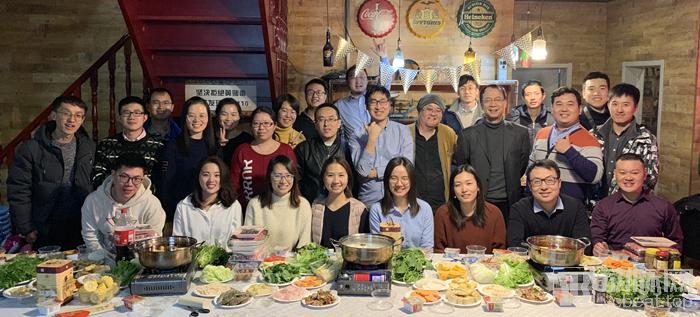
Group Photo of the Bluepha Team