

Post '4+7' Era: Capturing the Blue Ocean of Primary Care Through Chronic Disease Rehabilitation
On January 6, 2019, the “2018 Annual Conference of the Chinese Non-Public Medical Institutions Association and Summit Forum on Brand Building for Socially Run Healthcare in China,” jointly organized by the Chinese Non-Public Medical Institutions Association (hereinafter referred to as the “Association”) and People’s Daily Online · People’s Health, was held in Beijing. Attendees included Yin Dakui, former Vice Minister of the Ministry of Health; Guo Yanhong, Deputy Director of the Bureau of Medical Administration and Hospital Management under the National Health Commission; Wu Jinglei, Director of the Shanghai Municipal Health Commission; leaders from the healthcare reform and medical insurance administration; and counselors from various countries.
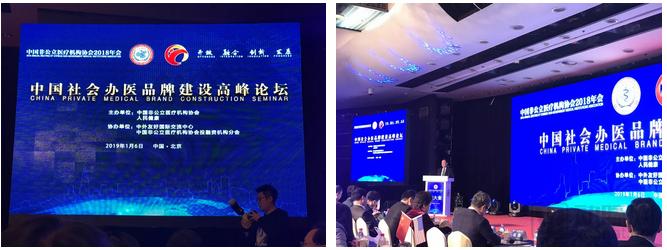
(Main Venue Conference Site)
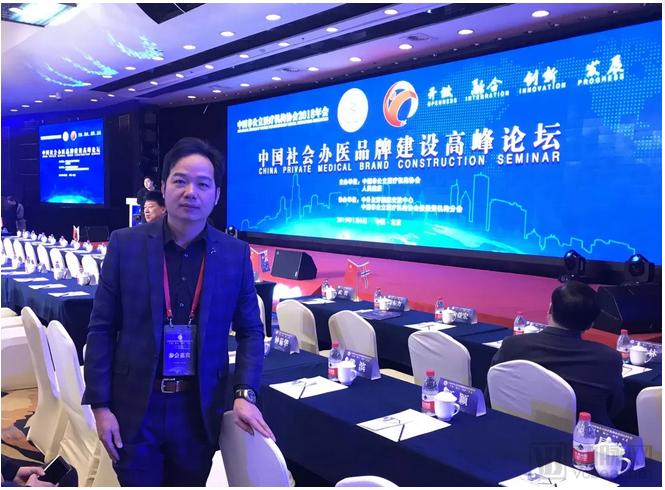
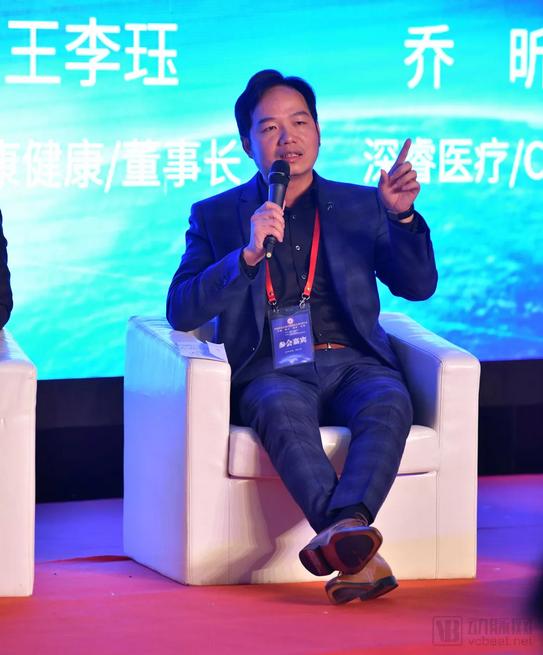
That same afternoon, over 300 representatives, including members of the association’s leadership team, financial sector professionals, and industrial investors, attended the “2019 China Internet and AI Healthcare Investment and Financing Summit.” Centered on the theme “Technology Empowering Healthcare, Data Transforming Pharmaceuticals,” the event invited founders from six third-party healthcare service organizations to elucidate how diverse innovative development models can support the growth of non-public healthcare. As one of the invited guests, Wang Lijue, Chairman of Akang Health Group, participated in the roundtable discussion, focusing his remarks on “The Blue Ocean of Non-Public Healthcare: Seizing Entry Opportunities Through Chronic Disease Rehabilitation.”

(On-site at the forum)
During the roundtable discussion, the moderator posed the following question: The implementation of the national “4+7” volume-based procurement policy has ushered in long-term pressure for most generic drug manufacturers and has imposed a severe crisis on all third-party service providers operating within the public healthcare system, necessitating corporate transformation and development. How does Akang Health interpret this situation, and what measures has it taken in response?
The implementation of the "4+7" policy triggered a nuclear explosion for the industry, with the total market capitalization of the pharmaceutical sector plummeting by RMB 500 billion within just one and a half days. Looking back at China’s pharmaceutical landscape over the past two decades, companies have devoted more effort to hospital tendering and bidding than to drug R&D, rarely giving serious consideration to producing high-quality medicines at lower costs.
Despite a price reduction of up to 96%, there is still room for further adjustment. This price cut signifies that China’s pharmaceutical industry has secured its position in the global pharmaceutical landscape. In the next decade, China may no longer be merely the world’s second-largest consumer of medicines, but rather a major global pharmaceutical power.
From a marketing perspective, the majority of the pharmaceutical industry will shift its battlefield to out-of-hospital settings. Wang Lijue believes that the emerging sector of “primary care + internet healthcare” will become the mainstream channel for patient acquisition. In the past, primary care in China was a completely undervalued market. Despite serving a population of nearly 700 million through 670,000 village health stations and 1.4 million village doctors, this segment accounted for less than 4% of total drug prescriptions. With the integration of primary care and internet healthcare, this market is poised to capture half of the out-of-hospital share. What we hope to see is a model where follow-up visits, medication dispensing, and rehabilitation all take place at the primary care level—this will mark the arrival of the spring season for internet healthcare.
The state has launched pilot programs for centralized drug procurement to lower drug prices, reduce corporate transaction costs, guide hospitals toward standardized medication use, and implement volume-based procurement, with a core focus on controlling medical insurance expenditures. Driven by a series of policy directions—including the national DRG (Diagnosis-Related Groups) model, case-based payment, and clinical pathways—the entry of commercial health insurance as a payer will stimulate the entire healthcare management market.
Taking the United States as an example, China’s population is four times that of the U.S. Yet, when analyzing equivalent healthcare consumption, China’s total healthcare expenditure amounts to only one-sixth of that in the U.S. If rational drug use were fully implemented, the market size should reach 20 times the current level of U.S. healthcare consumption. Therefore, against the backdrop of powerful payers, the price reductions under the “4+7” volume-based procurement program must remain the mainstream trend for sustainable development and hold milestone historical significance in steering the pharmaceutical industry back to its core essence. Consequently, regardless of whether the industry focuses on pharmaceuticals, platforms, or other medical services, we are closer to patients now than at any point in history. We must prioritize establishing a patient-centric system, genuinely implement disease-specific management and rational drug use, and build a closed-loop service covering the entire lifecycle.
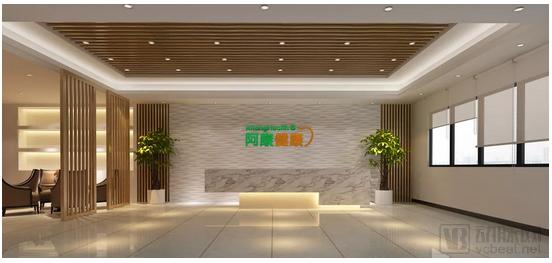
As a representative of innovative enterprises in the pharmaceutical distribution sector present here, Aikang Health has been established and developed in the pharmaceutical industry for nearly 14 years. Keeping pace with the transformative development of China’s pharmaceutical industry, Aikang Health’s business model has evolved from hospital distribution and agency services to in-hospital Contract Sales Organization (CSO) operations, Direct-to-Patient (DTP) pharmacies, prescription outflow, and prescription circulation, consistently pursuing exploration and innovation. Currently, the Group’s core business focus is on integrated DTP product services in the context of prescription outflow, with a dedicated emphasis on developing regional linkages in areas below the county level.
Wang Lijue further pointed out that the "4+7" policy has validated Akang Health’s exploratory direction and further solidified its future strategic orientation. By exploring and developing the market characterized by shortages of medical resources and pharmaceuticals at the primary care level, the Akang Health platform has developed a portfolio of 12,000 prescription drugs, focusing on over 1,300 disease categories related to chronic diseases, critical illnesses, and rare diseases, providing nearly 5,000 medication solutions. On the downstream terminal side, it has connected with approximately 300,000 primary care institutions, non-public medical facilities, and village doctors, with targets to cover 600,000 in 2019 and exceed 1 million in 2020. Through Akang Health’s linkage with end-terminals, the aim is to ensure that, within the environment of prescription circulation, patients will not face interruptions in treatment continuity due to drug unavailability or inconsistencies between dispensed medications and hospital treatment pathways, regardless of their location.
Revisiting and analyzing the current pharmaceutical market environment in China, 80% of medical resources are concentrated in tiered cities, creating an inverted triangular mismatch with the demand for primary healthcare. Across China, there are 2,851 counties and districts, over 45,000 townships, and 670,000 administrative villages. Among them, 1.4 million village doctors serve two-thirds of the national population; however, this population segment accounts for less than 20% of China’s total medical and pharmaceutical resource consumption. Notably, 40% of patients seeking medical consultation and treatment must travel from their counties to tiered cities for care. Looking ahead, Akang Health aims to link with more internet healthcare platforms in its development of primary healthcare. Against the backdrop of scarce medical services and medicines, it seeks to support the construction of the national tiered diagnosis and treatment system. Through its “Medical Care + Pharmaceuticals + Empowerment Services” model, Akang Health strives to improve medication adherence among chronic disease patients in primary healthcare settings, promote rational drug use, and ultimately realize the vision of “major diseases treated within the county, minor diseases treated within the township.”