

Omron's First Wearable Smart Blood Pressure Monitor 'HeartGuide' Receives FDA Approval and Launches in January
According to statistics, one-third of adults in the United States suffer from hypertension, placing them at a higher risk of heart attack and stroke. However, hypertension is often overlooked, and by the time it is detected, it is often too late.
Currently, blood pressure monitors on the market must occlude blood flow to obtain readings, which limits the ability of everyday fitness trackers and smartwatches to monitor this vital metric. Moreover, blood pressure varies across different parts of the body. The upper arm is considered the gold standard because it is at the same level as the heart; however, when measuring blood pressure at other body sites, compensation for these differences is required. This is why wrist blood pressure monitors require users to raise their arms to heart level.
Over the past two years, Omron, a manufacturer of blood pressure monitors, has been developing a wristwatch capable of obtaining oscillometric blood pressure readings from the wrist.
VCBeat (WeChat ID: vcbeat) has learned that HeartGuide, a blood pressure monitor integrated with a smartwatch and showcased by the company at the 2019 CES (originally named Project Zero 2.0), has received FDA Class II clearance, indicating that Omron has obtained medical regulatory approval.
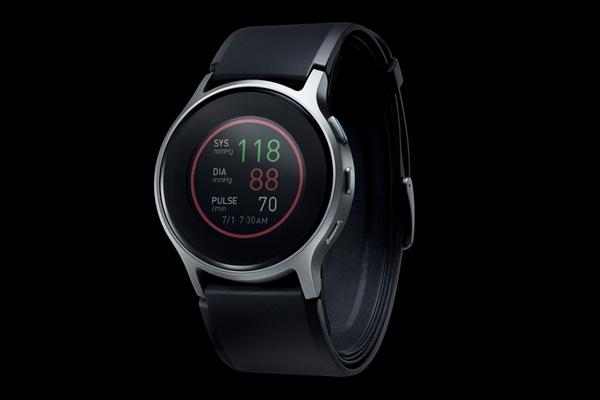
Image source: Omron official website
“This product took longer than we anticipated,” said Omron President Ranndy Kellogg. To align with the physiological mechanics of the human arm, Omron had to account for veins, tendons, bones, and other anatomical structures, as well as the shape and size of the wrist, during the product’s design process.
HeartGuide is highly unique, featuring a miniature blood pressure cuff, pump, and air bladder that can record medical-grade blood pressure readings throughout the day. Worn on the wrist, it resembles a smartwatch while silently monitoring the wearer for signs of hypertension.
“We have miniaturized some of the internal components of the watch to a size smaller than a grain of rice, thereby ensuring the device remains as compact and comfortable as possible,” said Ranndy Kellogg. “The concept behind this product is that it remains operational even when the user is lying in bed, enabling nighttime measurements. Moreover, to mitigate the risk of users’ hands turning purple due to malfunction, Omron has even incorporated backup components to safeguard against product failure.”
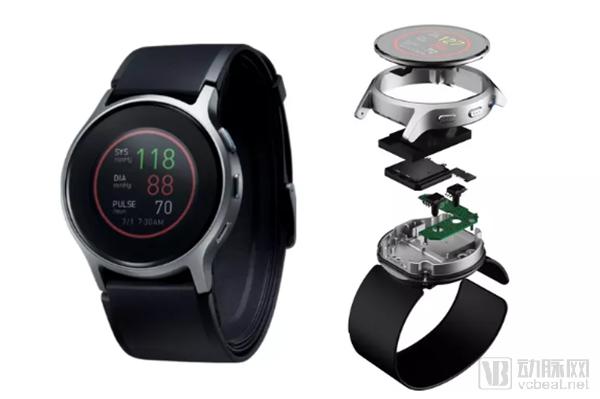
Image source: Omron official website
Because the HeartGuide can be worn on the wrist throughout the day, it offers distinct advantages over the blood pressure monitors used in doctors’ offices that only capture spot readings. After all, randomly obtained blood pressure measurements may sometimes fail to accurately reflect a patient’s overall condition and could even completely overlook certain symptoms.
When users need to read blood pressure data, they should raise their arm to heart level, press the button on the side of the watch, and wait a few seconds while the cuff inflates. Once completed, the reading will appear on the display, and the information will also be sent to HeartAdvisor, the mobile app paired with HeartGuide. Additionally, measurement data from HeartGuide can be exported to Apple Health, and it will integrate with more platforms in the future.
Before presenting the analysis results, the HeartAdvisor app also requires users to answer a few questions, such as whether they have recently consumed coffee or alcohol. The app can also send a copy of the test results to the user’s physician.
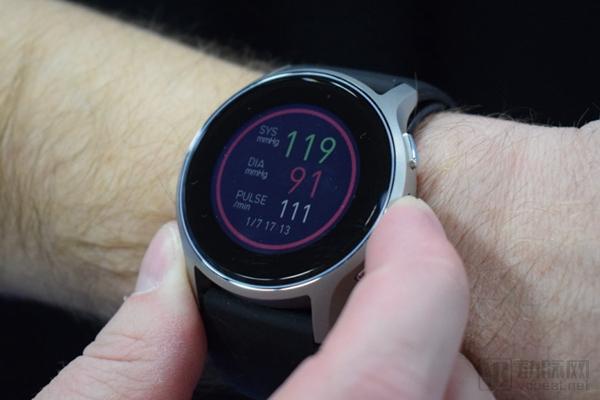
Image source: Omron official website
Although the HeartGuide is compact in size, its integration of numerous technologies represents a feat of engineering. Currently, only Omron has achieved this and secured FDA approval.
For patients with hypertension, HeartGuide can truly transform their lives. It may not be the most stylish accessory worn on the wrist, but it is arguably the most precise and reliable device currently available, surpassing any FDA-approved blood pressure monitor on the market.
In fact, the HeartGuide is also a smartwatch that can track users’ step counts and sleep quality, and display the data. While this may not be the primary reason people purchase the Omron HeartGuide, it could be a life-saving device for those prone to hypertension.
Omron stated that the smartwatch requires charging only once or twice a week, with each charge supporting 30 to 50 inflation-based blood pressure measurements. The HeartGuide is currently available for $499, exceeding Omron’s pricing from the previous year. Unveiled at CES 2019, the current HeartGuide model comes in a medium size, with Omron planning to release additional sizes in the future.