

Insights from a 50,000-Participant Survey: Health Consumption Patterns Across Age Groups
On January 10, the 2019 National Health Development Conference, jointly organized by DXY and Health News, was held in Beijing, where the two parties formally signed a strategic cooperation agreement. Themed “Healthy China, Better Life,” the conference focused on assessing the health status of the Chinese population and analyzing emerging trends. The two organizations jointly released the “2019 National Health Insight Report” (hereinafter referred to as the “Report”). Based on survey data from DXY Doctor and the Mobile Health Research Institute of Health News, the Report analyzes the current state of national health and characteristics of health-related consumption by examining the health attitudes and behaviors of more than 50,000 respondents.
The Report analyzes and explores the public’s multi-level, diversified, and personalized health needs from five perspectives: current national health status, health literacy, demands for healthy lifestyles, demands for medical services, and demands for health consumption.
The Report shows that 96% of the public reported having health-related issues. Regarding psychological concerns such as anxiety and depression, young people experience significantly more distress than middle-aged and elderly individuals, whereas the latter group expresses greater concern about bone and joint health, as well as blood pressure, blood glucose, and blood lipid levels. To avoid health problems, the public is more willing to spend on health, with rapid growth in recent years seen in health-related consumption such as online medical consultations, air purifiers, nutritional supplements, and fitness products.
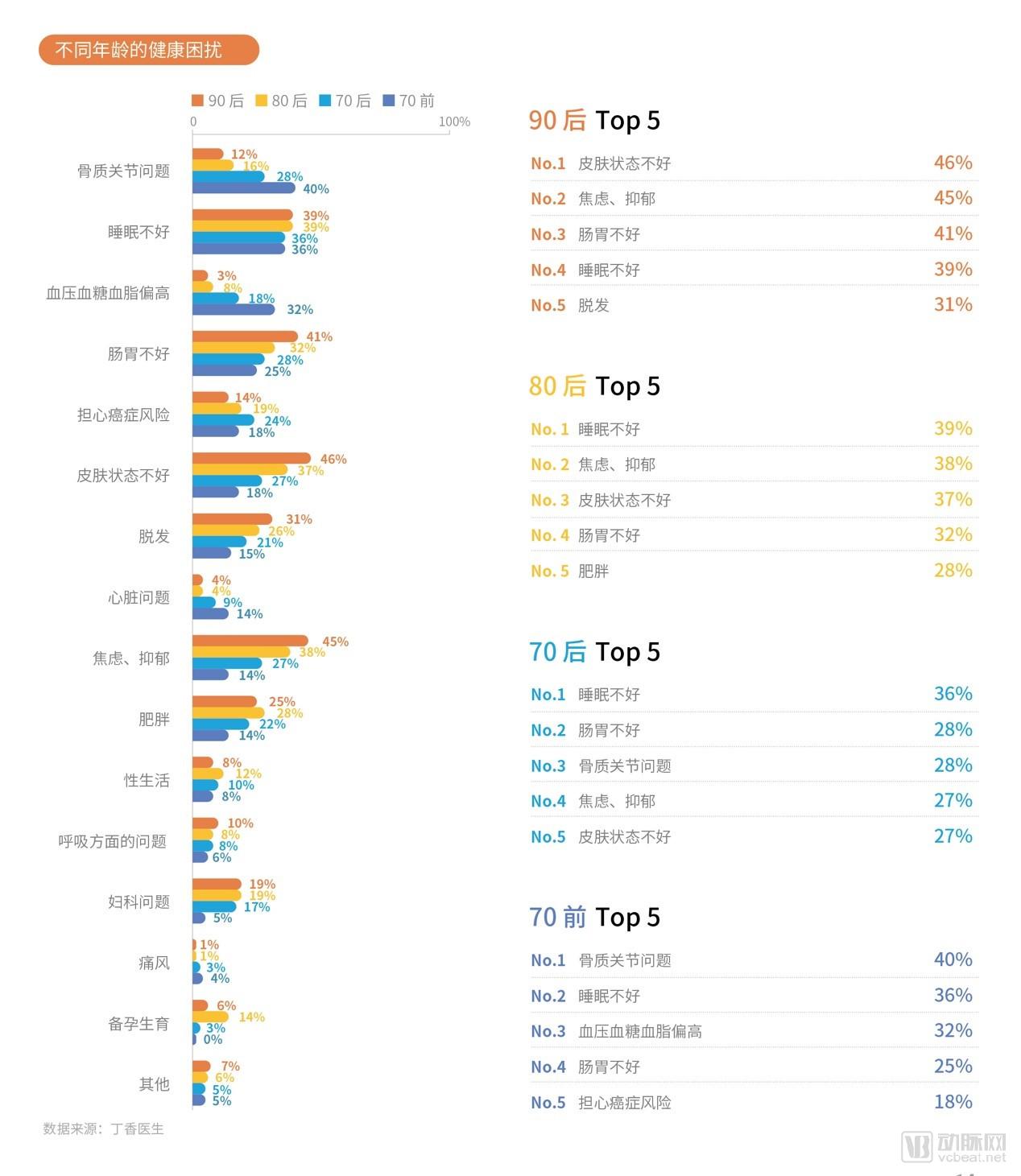
In terms of health-related consumption, online medical consultations enjoy higher awareness among younger demographics. Individuals born in the 1970s and 1980s are the primary purchasers of health insurance, with medical insurance and critical illness insurance being widely accepted. Ninety percent of the public have purchased health products, and recommendations from professional institutions enhance product trustworthiness. Based on these findings, the Report not only outlines the health profiles of four age cohorts—those born before the 1970s, in the 1970s, in the 1980s, and in the 1990s—but also provides insights into the demands for health services and the development trends of the health consumption market.
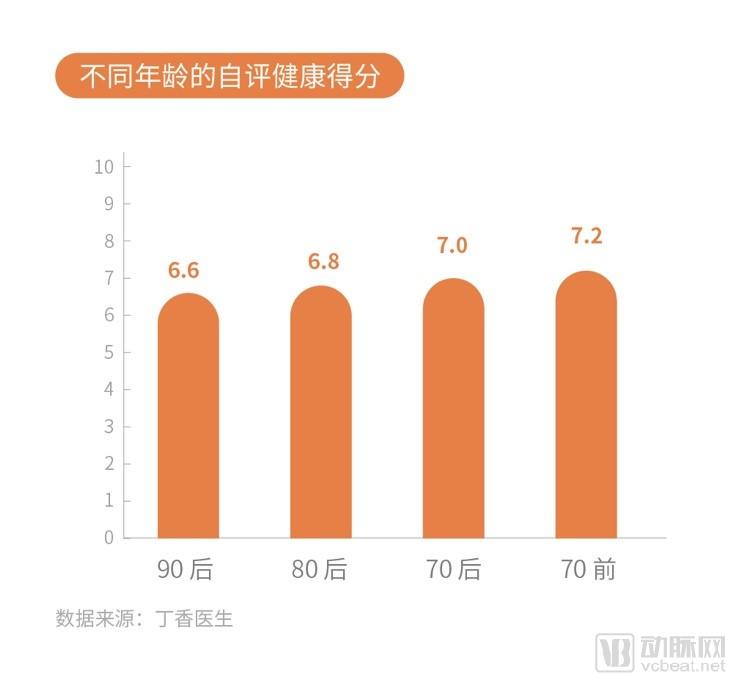
Although the post-90s generation has demonstrated widespread concern for health, their actual health status remains less than satisfactory amid pressures from work and daily life. The Report indicates that this group gave themselves the lowest self-rated health score, at just 6.6 out of 10. Furthermore, among various health metrics—including the prevalence of gastrointestinal issues, sleep satisfaction, and the rate of regular medical check-ups—the post-90s cohort ranked last across all four age groups surveyed. “Health preservation” is no longer a term exclusive to middle-aged and elderly individuals; instead, it has become a popular buzzword among the post-90s demographic.
On the other hand, individuals born in the 1990s are more willing to acquire accurate health knowledge and show a stronger preference for content that debunks health myths. They exhibit relatively higher levels of acceptance of healthy concepts, demand for health information, and expectations for health outcomes. Meanwhile, the Report indicates that the 1990s cohort has significantly greater demand for weight loss and body shaping, as well as beauty and skincare, compared to middle-aged and elderly populations.
If the post-90s generation is still at the stage of focusing on their own health, then the post-80s generation has entered a phase where their health consciousness extends from themselves to their families. This is because most individuals born in the 1980s are now parents.
The report indicates that the post-80s generation has a stronger demand for information on household medications and maternal and child care. Consequently, families with children are more likely to reduce their health product spending budgets for themselves and their parents. Furthermore, compared to other age groups, the post-80s generation has the highest participation rates in purchasing medical insurance and using online consultation services. Among individuals whose annual insurance expenditure exceeds RMB 10,000, the post-80s generation accounts for 23%, while those born before the 1970s, in the 1970s, and in the 1990s account for 8%, 17%, and 19%, respectively. This suggests, to some extent, that the post-80s generation is actively helping family members jointly manage their health.
As is well known, the older middle-aged and elderly individuals get, the more health issues they tend to face. However, according to the Report, regarding diet and sleep—two factors closely related to health—the current satisfaction levels among those born before and after the 1970s exceed expectations. Among different age groups, the proportion of people with poor gastrointestinal health is 25% for those born before the 1970s and 28% for those born after the 1970s, both significantly lower than among younger generations. In terms of sleep disturbances, 84% of those born in the 1990s experience such issues, whereas this figure stands at 76% among the public born before the 1970s.
Compared with younger generations, the public born before 1970 pays more attention to knowledge about chronic diseases such as blood glucose, blood lipids, blood pressure, and cancer. As they age, their rate of undergoing physical examinations gradually increases. The Report shows that 61% of those born before 1970 undergo regular physical examinations, whereas only 30% of those born in the 1990s do so annually.
As health awareness rises and the concept of health expands, the health consumption market is experiencing explosive growth. Personalized health services and high-quality health products have become new hotspots in the health industry.
The Report shows that although public Grade A tertiary hospitals remain the first choice, new service models such as online consultations have gradually gained recognition in recent years, with 53% of the public having used online medical services. Against the backdrop of the continuous development of the internet economy and pharmaceutical e-commerce, the public has moved beyond traditional hospital-based medical scenarios, ushering in an era of upgraded health services.
Specifically, the post-1980s generation has the highest proportion of online consultation usage, with inquiries primarily focused on dermatology, gynecology, and gastroenterology.
Beyond the broader health and wellness industry, other sectors are also beginning to pay attention to and respond to public health needs by incorporating health-related elements into their products, with the market for health-oriented products gaining momentum.
46% of the public purchased health-related home appliances, such as air purifiers and water purifiers, due to health concerns; 45% bought products like nutritional supplements and vitamins; and 42%, 38%, and 32% purchased sports and fitness products, daily health essentials, and health applications, respectively.
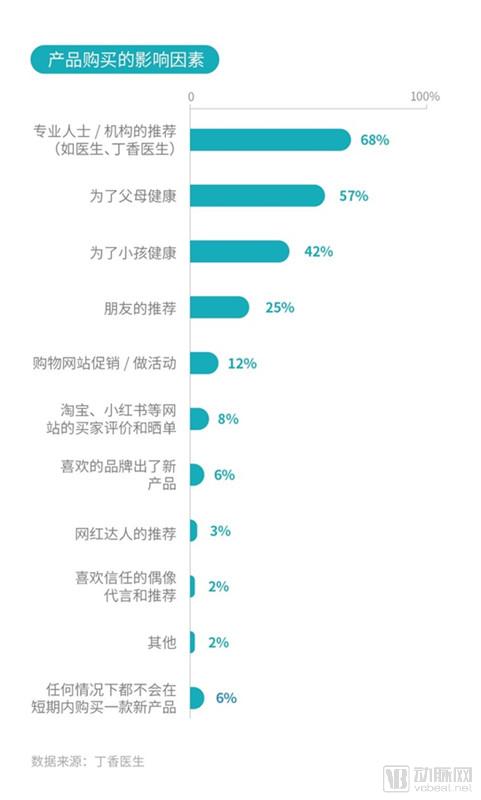
Notably, the public exhibits low price sensitivity toward health products. When making purchases, 76% of consumers prioritize the product’s health benefits, with price being a secondary consideration.
Furthermore, the Report indicates that 68% of the public stated that recommendations from professionals or institutions, such as physicians or DXY Doctor, would increase their likelihood of purchasing a product. This suggests that consumers are increasingly rational when purchasing health products, placing greater emphasis on the product itself rather than price or advertising, with the influence of endorsements from professional institutions becoming increasingly prominent.