

Yanda Hospital IPO Prospectus: A Model of Public-Private Collaboration in China's Non-Public Healthcare Sector with RMB 15 Billion Investment and 10-Fold Growth in Five Years
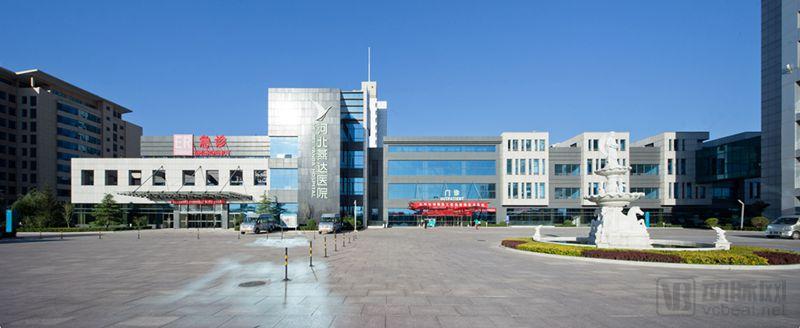
This is a model case of public-private healthcare collaboration spanning five years, during which the private medical institution not only partnered with several public Grade 3A hospitals but also successfully achieved Grade 3A hospital status itself.
Located within the Yanda International Health City, Yanda Hospital is situated 30 kilometers from Tiananmen Square in Beijing and 25 kilometers from Beijing Capital International Airport. Yanda Hospital is a super-large-scale, internationalized, and informatized green ecological base for medical healthcare and elderly care. The Health City covers an area of 800,000 square meters, with a total floor area of approximately 1.8 million square meters and a total investment of around RMB 15 billion. It represents a key component of Yanda Group’s strategy to align with the “Healthy China” initiative and build a comprehensive medical and health-care industry chain.
Yanda International Health City comprises six sectors, with Yanda Hospital being one of them. The hospital opened in late 2010. After four years of operation, Yanda partnered with Beijing Chaoyang Hospital in 2014 to establish a comprehensive framework for joint development and resource sharing. By 2018, over a five-year period, the hospital’s business volume had increased approximately tenfold. In December of last year, it was rated as a Grade III Class A hospital by the Hebei Provincial Health and Family Planning Commission.
How Can Public and Non-Public Hospitals Break Through Various Restrictions in Their Collaboration? How Should the Two Parties Cooperate, and What Are the Outcomes? To address these questions, VCBeat (WeChat ID: vcbeat) interviewed Li Hailing, Vice President of Yanda International Health City and President of Hebei Yanda Hospital, as well as Chen Yong, President of Beijing Chaoyang Hospital.
Li Hailing stated that although Yanda Hospital is currently the only Grade III Class A hospital in Yanjiao, with a total planned construction area of approximately 520,000 square meters, a completed Phase I area of 270,000 square meters, and a licensed bed capacity of 1,000 beds (with an operational capacity of 2,000 beds), it initially faced significant development challenges.
One reason is that Yanjiao was still a suburb or satellite city of Beijing at the time. Before Tongzhou was designated as Beijing’s sub-administrative center and before the coordinated development of the Beijing-Tianjin-Hebei region was elevated to a national strategy, local residents were accustomed to seeking care for minor illnesses at local clinics and traveling to Beijing for major conditions. Consequently, Yanda Hospital’s geographical location—separated from Beijing by only a river—became a significant obstacle to its development during that period.
Second, Yanda Hospital was initially positioned as a for-profit institution focusing on high-end medical services. Although the local area has a permanent resident population of 600,000, high-income individuals do not constitute the majority. Consequently, the hospital’s outpatient and inpatient volumes were limited, resulting in a high bed vacancy rate. Clearly, this service positioning was disconnected from the local realities.
Third, although Yanda Hospital boasts first-class equipment and facilities, it suffers from a shortage of management and technical personnel. This mismatch between its hardware and software capabilities is severe, creating an urgent need to introduce managerial and medical talent, adjust its service positioning, and unlock its service potential.
To break through these barriers, Li Hailing proactively sought change by implementing reforms both within and outside Yanda Hospital, aiming to help the hospital overcome its development challenges.
Li Hailing has a clear understanding of the strengths and weaknesses of Yanda Hospital. She believes that the hospital should first establish itself in its physical region while focusing on strategic regional transformation, turning regional disadvantages into geographical advantages. By anchoring itself to a century-long vision and meticulously enhancing quality, it can transform challenges into opportunities and achieve win-win cooperation.
“Overall, ‘solidify and distill the connotation and quality of the integrated medical, elderly care, and health maintenance model.’” This is the answer provided by Li Hailing. It also reflects that Yanda International Health City established this integrated medical, elderly care, and health maintenance model from its inception.
After several years of development, Yanda Hospital’s health and elderly care model—the Yanda Golden Age Health Care Center—has become one of the first pilot projects for the coordinated development of elderly care services in the Beijing-Tianjin-Hebei region and the largest single-site elderly care institution in the region.
However, establishing high-quality elderly care institutions hinges critically on medical capabilities. In 2011, the Health City, comprising Yanda Hospital and the Nursing Care Center, was completed. As this model was excessively ahead of its time at that stage, despite thorough preparatory planning, Yanda Group faced immense pressure during the initial operational phase due to challenges in recruiting medical talent, enabling physicians’ cross-regional practice, achieving mutual recognition of medical insurance, and navigating the healthcare system.
In February 2014, the coordinated development strategy for the Beijing-Tianjin-Hebei region was elevated to a national strategy. Propelled by favorable policies, Yanda’s health industry development entered a fast track. Yanda Hospital successively signed cooperation agreements with Beijing Chaoyang Hospital, Beijing Tiantan Hospital, the Children’s Hospital Affiliated to the Capital Institute of Pediatrics, and Beijing Traditional Chinese Medicine Hospital, among others. Experts from these institutions regularly conduct consultations at Yanda Hospital and assist in talent development.
In 2017, Yanda implemented three major healthcare reforms in sync with Beijing, establishing a number of departments with distinct competitive advantages through collaborative partnerships. She further noted that Yanda Hospital was included among the first batch of National Stroke Centers and the first batch of National Atrial Fibrillation Centers, enabling it to provide emergency rescue and treatment for patients with complex, critical, and severe conditions.
Building on these efforts and achievements, Yanda Hospital fully launched its initiative to attain accreditation as a Grade A Tertiary General Hospital in May 2016. Over the past two years, constant changes have taken place at Yanda Hospital, both in the eyes of its staff and in the hearts of its patients.
In December 2018, the Hebei Provincial Health and Family Planning Commission officially designated Yanda Hospital as a Grade III, Class A hospital.
The development of a hospital is inseparable from talent and technology. In its early stages, Yanda Hospital faced significant constraints in these areas. To address this, under the guidance of policy directives, Yanda Hospital established a collaboration with its first public tertiary Grade-A hospital.
Beijing Chaoyang Hospital, established in 1958, is a Grade III Class A hospital under the administration of the Beijing Municipal Government. The hospital operates two campuses, one in Shijingshan District and the other in Chaoyang District, which are 30 kilometers apart. The total building area of the two campuses is 210,000 square meters, with 1,900 beds and 4,300 employees.
Chaoyang Hospital has eight key specialties among municipal-level disciplines, along with numerous specialized technical capabilities. It hosts national- and municipal-level research institutions and holds considerable influence both in Beijing and nationwide. In 2014, the hospital’s outpatient and emergency visits exceeded 3.8 million, discharges surpassed 80,000, the average length of stay decreased to 8 days, and inpatient surgeries exceeded 30,000 cases.
Furthermore, Beijing Chaoyang Hospital is located in the central business district (CBD) of Beijing. In terms of the distribution of medical resources in Chaoyang District, the hospital not only boasts comprehensive strength but also enjoys a strategic geographic advantage. Situated along the East Third Ring Road, it remains the only Grade 3A hospital in the area extending outward to Yanjiao.
However, Beijing Chaoyang Hospital also faces development bottlenecks. The hospital’s infrastructure is inadequate, with exceptionally cramped workspaces for staff; many department directors do not even have private offices, forcing physicians to conduct clinical work, receive visitors, and discuss patients’ conditions all within the same room. Therefore, there is an urgent need for Beijing Chaoyang Hospital to expand its operational capacity and fully leverage the potential of its talented workforce.
Li Hailing recalled that the collaboration with Beijing Chaoyang Hospital was an instant match. The partnership involved more than just the simple export of labor services; more importantly, it entailed management intervention. Chaoyang Hospital dispatched medical management teams to integrate into various departments of Yanda Hospital, engaging in discipline development, talent cultivation, and scientific research activities.
In response, Chen Yong, President of Beijing Chaoyang Hospital, stated that Chaoyang and Yanda have complementary advantages. Yanda Hospital boasts comprehensive hardware equipment and superior facilities but lacks management and technical talent. Chaoyang possesses strengths in talent and technology but faces constraints in facilities, equipment, and space.
Against this backdrop, the two hospitals explored their primary models of collaboration. Throughout the partnership, regulatory authorities in both regions facilitated numerous policy breakthroughs to support their cooperation.
In fact, Beijing Chaoyang Hospital and Yanda Hospital began initial discussions in late 2013 and early 2014. In late February 2014, President Xi Jinping proposed the strategy for the coordinated development of the Beijing-Tianjin-Hebei region. In April of the same year, Premier Li Keqiang addressed the strengthening of development in the Bohai Rim and Beijing-Tianjin-Hebei regions in his Government Work Report and personally visited Hebei Yanda Hospital for inspection. On May 9, 2014, witnessed by the People's Governments of Hebei Province and Beijing Municipality, the two hospitals signed the "Agreement on Jointly Building Hebei Yanda Hospital." Director Chen stated that, against this broader backdrop, the two hospitals had aligned themselves with the central government's decision on the coordinated development of the Beijing-Tianjin-Hebei region.
Since collaboration is intended, the model of cooperation must be carefully explored. The partnership between Chaoyang Hospital and Yanda Hospital has become a project of significant concern to both local governments. With full support and coordination from the two governments, Chaoyang and Yanda have overcome policy constraints and established a collaborative model between public and private hospitals. On the basis of unchanged ownership and operational rights, Yanda International Health City Investment Management Co., Ltd. and Beijing Chaoyang Hospital jointly build and manage Yanda Hospital.
The funds required for the capital construction, procurement of medical equipment, and operations of Yanda Hospital shall be fully invested by Yanda International Health City, following assessment and confirmation by both parties, and shall be recorded as hospital operating costs in accordance with relevant financial regulations. Both ownership and operational rights remain unchanged, with Yanda Hospital continuing to manage the operations.
Yanda International Health City Investment Management Co., Ltd. is fully responsible for the hospital’s capital operations, while Beijing Chaoyang Hospital is fully responsible for medical education and discipline development at Yanda Hospital. In layman’s terms, Chaoyang manages clinical operations, and Yanda manages business operations.
Yanda International Health City Investment Management Co., Ltd. pays salaries, as well as various state-mandated insurance premiums and housing provident fund contributions, for the specialty teams dispatched by Chaoyang Hospital to Yanda Hospital. Meanwhile, financial accounting and management are conducted in accordance with national laws and regulations on financial accounting. This constitutes the primary model and core content of the cooperation between the two parties.
In accordance with the policies at that time, the jointly built and managed facility was branded as “Yanda Hospital of the Medical Alliance Affiliated with Beijing Chaoyang Hospital, Capital Medical University.” President Chen stated that, regarding the branding issue, the collaboration between Yanda and Chaoyang involved a series of obstacles related to brand usage, franchising, and other matters; therefore, it was designated as a “medical alliance.” The two parties sign more detailed cooperation agreements every three years, deepening their collaboration incrementally through reforms in response to policy changes.
To facilitate cooperation between Hebei Yanda Hospital, a private institution, and public hospitals in Beijing, the Hebei Provincial Government, upon the hospital’s application, reclassified this for-profit medical institution as a non-profit one. As part of a pilot program, it permitted socially funded non-profit medical institutions to provide reasonable returns to investors and partners from operational surpluses after deducting healthcare delivery costs, setting aside development funds, and allocating other necessary fees as required by state regulations. In other words, through collaborations such as that between Chaoyang District and Yanda Hospital, as well as partnerships with other hospitals, stakeholders can obtain reasonable returns from the surplus.
The Health and Family Planning Commissions of Beijing Municipality and Hebei Province jointly applied to the National Health and Family Planning Commission for the implementation of a filing and mutual recognition system for physician practice registration at hospitals co-established and co-managed by two institutions. In accordance with the principle of territorial jurisdiction, medical regulatory authorities shall oversee operations accordingly: Hebei Yanda Hospital is subject to legal supervision by the relevant departments of Hebei Province, while matters involving medical personnel from Beijing shall be handled through consultation between the health authorities of Beijing and Hebei.
Both parties have identified the foundation for long-term, win-win cooperation, fully integrated their respective strengths to achieve complementarity, and are committed to developing Yanda Hospital into a large-scale, modern, international general hospital with advanced diagnostic and therapeutic capabilities domestically. Yanda’s new positioning is to provide basic medical services primarily to the local population, extend its reach to surrounding areas such as Qinhuangdao, Langfang, and the Three Northern Counties, while also catering to a segment of high-income individuals.
Following the launch of comprehensive co-construction, Beijing Chaoyang Hospital rapidly assisted Yanda Hospital in acquiring the service capabilities of a Grade A tertiary hospital, enabling local residents to access care at Chaoyang Hospital’s standard right on their doorstep.
In accordance with the co-construction agreement, Yanda International Health City Investment Management Co., Ltd. assumes full responsibility for hospital operations, while Beijing Chaoyang Hospital is responsible for clinical services, medical education, scientific research, and discipline development. Under this flexible mechanism, the collaboration between the two hospitals does not preclude Yanda from continuing to cooperate with third parties. For instance, in the specialized fields of neurosurgery and neurology, Yanda has established a more effective partnership with Beijing Tiantan Hospital. Beijing Chaoyang Hospital has also actively facilitated collaborations between these institutions and Yanda, leveraging the collective strengths of multiple hospitals to rapidly enhance Yanda’s service capabilities and standards.
Meanwhile, to expand Yanda Hospital’s local influence, both parties intentionally scheduled various academic conferences at the hospital to enhance awareness of Yanda Hospital among peers across China.
Since 2013, the collaboration between the two hospitals has begun to yield tangible results and holds broad prospects. With this partnership, Yanda Hospital has rapidly improved its medical management and clinical diagnosis and treatment capabilities, significantly strengthened its medical quality and safety management, and achieved remarkable progress in the overall competence of its medical staff.
“As our collaboration with Beijing Chaoyang Hospital has deepened, and through the introduction of President Chen Yong, we have subsequently established partnerships with Beijing Tiantan Hospital, the Capital Institute of Pediatrics, and Beijing Hospital of Traditional Chinese Medicine,” said Li Hailing.
Alongside the collaborative partnership between Yanda Hospital and Beijing Chaoyang Hospital, favorable national policies have gradually emerged. In 2014, President Xi Jinping proposed the coordinated development of the Beijing-Tianjin-Hebei region. Relevant departments actively collaborated to promote innovation in healthcare service models and accelerate the integration of medical services across the Beijing-Tianjin-Hebei region. The gradual implementation and orderly advancement of these policies and strategies have injected new momentum into the development of Yanda Hospital. After establishing a pioneering model of coordinated development with Beijing Chaoyang Hospital, Yanda strives to leverage its own capabilities to build a platform for the interconnection of medical resources.
From November 2014 to November 2015, within a short span of one year, Beijing Tiantan Hospital, the Capital Institute of Pediatrics, and Beijing Hospital of Traditional Chinese Medicine successively joined Yanda Hospital’s collaborative platform and were integrated into its overall disciplinary development, establishing a comprehensive “three-pillar” model of cooperative construction within the hospital.
While engaging in multi-dimensional collaborations with multiple hospitals, Yanda Hospital continues to align with high-quality medical resources in Beijing to meet regional diagnosis and treatment needs. In addition to the aforementioned four hospitals, Yanda Hospital has also established partnerships with Beijing Anzhen Hospital and China-Japan Friendship Hospital.
Not only that, but Yanda Hospital also became the first off-site medical consortium partner of Beijing Chaoyang Hospital, ushering in a new era of comprehensive alliance and co-development between the two institutions. It is precisely thanks to this cross-regional collaboration with Chaoyang Hospital that Yanda Hospital has been able to effectively revitalize its hardware resources at the right time, rapidly enhance the quality of its medical services and soft power, and gradually earn the recognition and trust of the public.
Yanda has established the first medical consortium in the region and taken the lead in participating in national-level projects, enabling high-quality medical resources from Beijing to radiate to surrounding areas and even throughout Hebei Province.
In the development of medical consortiums, Yanda has fully leveraged its role as a regional medical center to drive overall improvements in regional healthcare service standards, taking proactive leadership internally while fostering collaborative capacity-building externally. Based on the coordinated development of the Beijing-Tianjin-Hebei region, the Beijing Municipal Government established an integrated plan for Tongzhou District and the three northern counties of Langfang City, adhering to the requirements of unified planning, policy, and management. The Hebei Provincial Committee of the Communist Party of China and the Provincial People's Government issued several measures to support the Beijing Sub-center (Tongzhou), focusing on advancing coordinated development between the three northern counties and Beijing's Sub-center.
Looking back on the collaboration with Yanda Hospital, Chen Yong admitted that the difficulty in partnering with non-public hospitals lies in the fact that most private medical institutions are for-profit, whereas public hospitals are government-run entities providing public-interest services. If public hospitals were to leverage government resources not for public-interest medical services but to help social capital generate profits, this would contradict the original intent behind the government’s establishment of public hospitals. Furthermore, the current regulatory framework is not yet sufficiently robust to allow unrestricted collaborations between public hospitals and private medical institutions.
Prior to its collaboration with Chaoyang Hospital, Yanda Hospital applied for and completed a transition from a for-profit to a non-profit medical institution. This arrangement enabled Chaoyang Hospital to engage in non-profit medical services alongside a non-profit institution established with social capital. The latter has invested over RMB 15 billion in constructing a health city, thereby providing the public with higher-quality medical care. Dr. Chen, President of Chaoyang Hospital, stated that this development is positive, noting that mutual benefit is essential for long-term sustainability. This principle underpins the five-year partnership between Chaoyang Hospital and Yanda Hospital.
Chen Yong further stated that the collaboration between Chaoyang Hospital, a public institution, and Yanda Group is driven primarily by a shared philosophy, beyond mere hardware compatibility. Historically, private capital involvement in healthcare has been viewed negatively, often associated with irregular clinical practices and high costs. In reality, however, both privately funded entities and public hospitals share the ultimate goal of operating hospitals effectively and delivering higher-quality medical services to patients.
In addition to the consensus reached on conceptual levels, Yanda also hopes that through collaboration, experts and departments from Chaoyang Hospital will come to recognize the Yanda platform. This is because implementation outcomes are unlikely to be satisfactory if driven solely by administrative directives from hospital management. Some physicians dispatched by Chaoyang Hospital to Yanda have already been working at Yanda for two to three years. Yanda further aims for both parties to work together to transform their relationship into a partnership model, rather than merely an employer-employee arrangement.
During the collaboration with Chaoyang Hospital, the personnel initially dispatched to Yanda were predominantly administrative. As the partnership deepened and mutual trust was established, several expert department heads proactively applied for transfers to Yanda Hospital. Yanda Hospital offers a sufficiently flexible platform, enabling research, teaching, the introduction of new technologies, and the deployment of new equipment that are often constrained in public hospitals. In this way, it serves as an effective complement to the public hospital system in terms of operational mechanisms.
In other words, physicians dispatched by Chaoyang Hospital can fully integrate into the Yanda platform. Yanda will also make every effort to support the doctors’ initiatives and plans that align with the hospital’s overall strategic direction, thereby fully mobilizing the enthusiasm of its experts.
Regarding concerns about brain drain at Chaoyang Hospital, Chen Yong stated that such worries are unfounded. Even without partnering with Yanda, Chaoyang Hospital would collaborate with other institutions. The partnership with Yanda does not exacerbate concerns about talent loss. As reforms in personnel allocation systems deepen, the influence of traditional public institution staffing quotas on talent mobility will continue to diminish.
However, public hospitals are currently facing challenges. In the past, when there were no private hospitals, medical professionals could only work in public hospitals, resulting in a monopoly over talent by public hospitals. How to maintain existing advantages, deliver high-quality non-profit healthcare services, and retain talent—these are the challenges that public hospitals will face in the future.
At present, private hospitals appear to be struggling in their development, but their future prospects are bright. Public hospitals currently hold the advantage, but they cannot rest on their laurels. Chen Yong pointed out that any issue should be viewed dialectically.
From the outset of its partnership with Beijing Chaoyang Hospital, Yanda Hospital has operated as an open platform and has continuously maintained collaborations with public hospitals. Its partnerships with Beijing Hospital of Traditional Chinese Medicine and Beijing Tiantan Hospital were both facilitated by Dr. Chen, President of Beijing Chaoyang Hospital. This year, Yanda Hospital also finalized a collaboration with Beijing Tongren Hospital to jointly establish a specialized medical consortium for ophthalmology. Li Hailing stated that “collaboration” has always been one of the key words in Yanda’s development strategy.
Li Hailing concluded that private healthcare institutions must be prepared to endure a period of solitude, as their operational characteristics differ from those of public counterparts; it took Yanda eight years to achieve its current success. As a non-public healthcare institution with a strong sense of social responsibility and robust service capabilities, the Yanda team will continue to forge ahead in exploring innovative models.
Both deans expressed their hope that a cohort of outstanding benchmark institutions will soon emerge among China’s non-public medical facilities, offering referenceable and replicable operational models, advancing the substantive development of healthcare services, tangibly improving patients’ health and quality of life, and making greater contributions to meeting the diverse healthcare needs of the Chinese population.
Furthermore, with economic development, the establishment of an international diagnosis and treatment center has been placed on Yanda Hospital’s agenda. As the depth and breadth of their joint efforts expand, and as policies gradually open up and achieve breakthroughs, both parties also intend to further deepen their cooperation.