

Xi'an's 'Hard Tech + Healthcare' Model: Shaanxi's First Internet Hospital Surpasses 100,000 Beta Users
For the general public, the essence of “hard tech” extends beyond technical definitions; it is closely intertwined with the daily lives of ordinary citizens. In July 2018, the Shaanxi Province’s first internet-based medical consultation system enabling end-to-end patient care processes, “Smart Good Hospital,” jointly developed by the Xi’an Shuowei Medical startup team and the First Affiliated Hospital of Xi’an Jiaotong University (hereinafter referred to as “the First Affiliated Hospital”), was officially launched for internal beta testing and began trial operations at the First Affiliated Hospital.
Currently, the number of beta testers has exceeded 100,000. Responding to the national initiatives of “Internet + Healthcare” and “Hard Tech + Healthcare,” the system aims to leverage technological innovation to facilitate accessible and affordable medical services, truly realize tiered diagnosis and treatment, drive healthcare reform, and deliver universal benefits to the public.
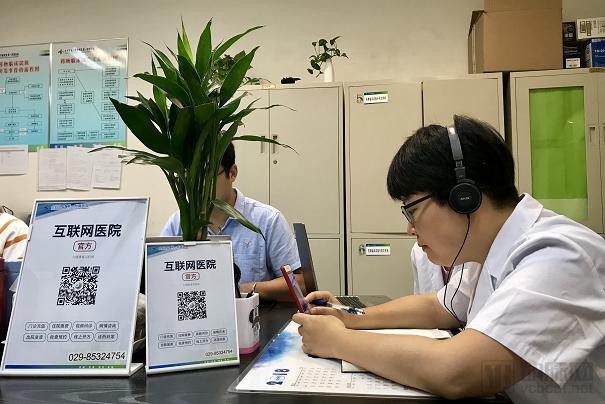
Doctors communicate with patients on the “Smart Good Hospital” platform
Leveraging hard technologies such as big data analytics and artificial intelligence, the “Smart Good Hospital” fully embodies the core characteristics of internet hospitals: simplicity, intelligence, integrity, and efficiency. Chen Huaixi, project lead for the “Smart Good Hospital,” stated that through this platform, patients can access a wide range of medical and extended services via a single smartphone—including appointment scheduling, video consultations, booking for tests and examinations, report retrieval, personal health record access, home delivery of medications, and online follow-ups—thereby achieving a fully internet-based healthcare journey.
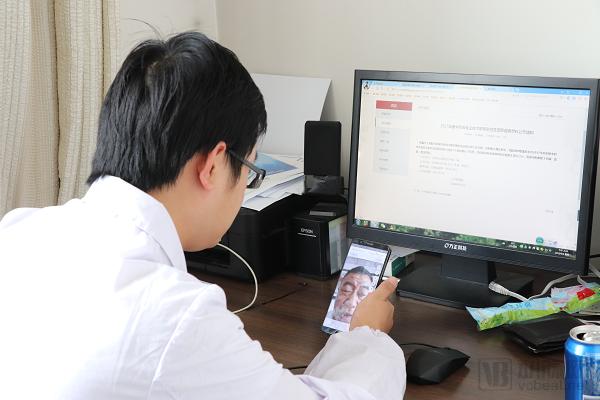
Difficult access to medical care, long appointment wait times, repeated registrations by patients, scarcity of specialist appointments, and doctor-patient conflicts arising from poor communication… Completely overturning the traditional healthcare delivery model, “Smart Good Hospital” minimizes the time costs associated with doctor-patient interactions. For instance, the system offers online video consultations, enabling full-time physicians to provide uninterrupted, year-round online services, delivering professional D2P (Doctor-to-Patient) one-on-one health diagnosis, treatment, and consultation. Through firsthand experience with its software, reporters found that full-time doctors from all departments at the First Affiliated Hospital of Xi’an Jiaotong University have joined the platform for online practice. Patients can book appointments via mobile devices and receive high-quality services equivalent to those provided in offline settings.
It can be said that Smart Good Hospital has established a complete closed-loop online medical service, enabling patients with chronic diseases to complete the entire follow-up process—including appointment scheduling, consultation, and medication pickup—without leaving their homes. Compared with other types of internet hospitals, this system thoroughly integrates all aspects of patient care, such as medical consultations, examinations, hospital admission, and medication dispensing, truly achieving “one-stop” medical services. It is understood that after the online consultation is completed, the system also features a prescription drug delivery mechanism, thereby resolving the “last mile” challenge in mobile healthcare services. According to Chen Huaixi, after physicians issue electronic prescriptions online, patients can choose to pick up their medications at the hospital using the e-prescription, opt for home delivery via SF Express through online payment, or purchase medications at nearby pharmacies by presenting the e-prescription.
Beyond streamlining the basic “consultation–prescription” workflow, the system’s “online examination appointment mechanism” offers a highly efficient and flexible solution for patients requiring diagnostic tests. The standard procedure is as follows: Physician order issuance (the physician issues a test requisition based on the patient’s condition, and the patient completes payment independently) → Online appointment scheduling (the patient selects a preferred examination time) → Examination (the patient visits the facility for testing without waiting, enabling immediate service upon arrival) → Result retrieval (patients can independently check results via the app) → Online follow-up consultation.
“Through this process, the time patients spend traveling to and from the hospital and waiting in queues on-site has been significantly reduced. Multiple examinations can be scheduled and completed in a single appointment, and patients can promptly access their examination progress and results via their mobile phones, facilitating rapid consultations. This thoroughly resolves previous pain points such as repeated examinations, redundant testing, and the lack of sharing of laboratory reports across different departments,” Chen Huaixi told reporters. The online examination appointment mechanism of the “Smart Good Hospital” shifts the previously cumbersome offline queuing and scheduling to an online platform, thereby greatly saving patients’ non-clinical waiting time. Furthermore, the synchronization of report results between healthcare providers and patients has enhanced the overall medical experience for patients.
As of January 2019, during its internal beta testing phase, the system had amassed over 100,000 registered users, provided online consultation services to more than 20,000 patients, handled over 500,000 appointments and inquiries, completed more than 1,500 medication deliveries, and saved patients millions of hours in travel, queuing, and waiting time.
Regarding future product planning, Chen Huaixi revealed that after the “Smart Good Hospital” system is officially launched at the First Affiliated Hospital of Xi’an Jiaotong University, the team will expand its comprehensive suite of services to more hospitals and medical institutions both within and outside Shaanxi Province. This expansion will build upon the existing networked service framework of the medical consortium and its successful application cases, including the development of integrations with the medical insurance system. The aim is to continuously amplify the practical impact of “hard tech + healthcare,” drive transformation in the national healthcare system, and enable the general public to tangibly benefit from innovations in hard technology.