

Akon Health Files IPO Prospectus: Pioneering Centralized Dispensing Pharmacies and Internet Healthcare Platforms to Enable Dual Descent of Quality Medical Resources
The issue of drug accessibility at the primary care level has long been a significant bottleneck constraining the development of primary healthcare institutions. According to a survey by Akang Health, a primary care pharmaceutical service provider, more than 62% of primary healthcare institutions across the entire primary care system—comprising 670,000 village health stations—frequently face difficulties in procuring medications. Additionally, 89% of primary care physicians need to “consult pharmacists,” and while 1.4 million village doctors serve nearly 700 million people, their medication volume accounts for less than 4% of the total.
In light of this, Akang Health has established centralized dispensing pharmacies to provide integrated supply chain services to all primary healthcare institutions within the region, building a disease-centric pharmaceutical supply system. Meanwhile, it extensively collaborates with “Internet+ Healthcare” enterprises to facilitate the decentralization of both diagnosis/treatment and medication services, thereby enhancing the accessibility of high-quality medical resources.
Primary healthcare institutions are geographically dispersed, leading to fragmented medication demands. Therefore, these institutions should not adopt a “comprehensive and all-encompassing” model for drug stocking, as this would result in unnecessary resource waste. The solution lies in establishing centralized dispensing pharmacies: by setting up a central pharmacy within a given region to centrally supply medications to primary healthcare institutions in its jurisdiction. Aikang Health is one of the practitioners of this centralized dispensing pharmacy model.
Aakang Health has been in operation for 14 years, consistently providing disease-specific services ranging from oncology to hepatology. The company has established both B2B and B2C platforms, aggregating 12,000 pharmaceutical products, covering 1,300 disease indications and more than 5,000 medication regimens, while engaging a network of 300,000 village doctors. It aims to leverage the establishment of dispensing pharmacies to better serve village doctors and clinics.
Recently, Akang Health Cloud Pharmacy has launched China’s first innovative offline prescription dispensing center pharmacy, with pilot sites established in Jieyang and Shanwei, Guangdong Province. Akang Health envisions a scenario where more patients can receive follow-up consultations, obtain medications, and undergo rehabilitation at primary care levels, thereby enhancing medication accessibility for local communities. The company also aims to integrate its prescription dispensing pharmacies with regional medical institutions. In the future, patients who seek treatment at large hospitals will be able to collect their prescribed medications from partner pharmacies and drugstores, with Akang Health providing comprehensive pharmaceutical supply chain services.
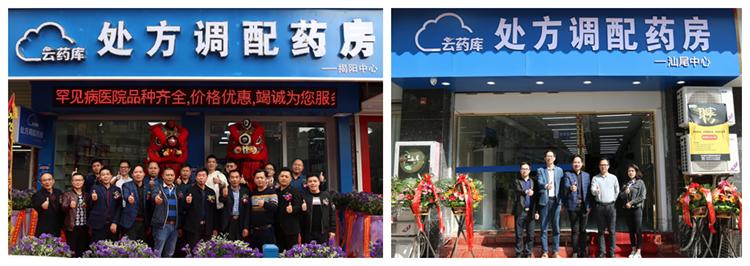
Aikang Health Cloud Pharmacy Prescription Dispensing Pharmacy, Jieyang Center and Shanwei Center
Mr. Wang Lijue, Chairman and President of Akang Health Group, stated that following the opening of the Akang Health Haifeng Prescription Dispensing Center, healthcare institutions across Haifeng County—including three general hospitals, eight private hospitals, 17 township health centers, 89 individual clinics, 484 village health stations, and 285 retail pharmacy outlets—will gradually integrate with the Cloud Pharmacy Warehouse. This integration will enable these facilities to leverage Akang Health Group’s “super tertiary-A” pharmaceutical supply system.
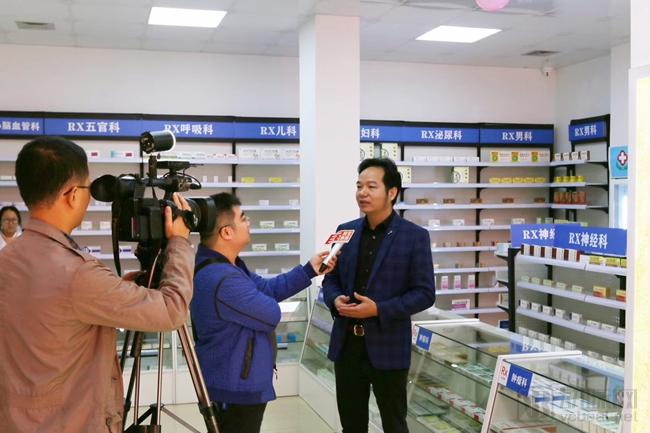
Wang Lijue, Chairman and President of Akang Health Group, Gives an Interview
The Jieyang Cloud Pharmacy Prescription Dispensing Center aims to facilitate follow-up medication access for residents of Jieyang, particularly those who previously had to travel to Guangzhou or Shantou for medical care, thereby sparing patients the hassle of rushing around in search of medications. Once the central dispensing pharmacy model matures, no medical institution will have to abandon treatment plans due to drug shortages, nor will patients need to undertake long-distance travel to major cities simply to obtain their prescribed medications.
Meanwhile, with the advancement of the Cloud Pharmacy Regional Prescription Dispensing Center project, Cloud Pharmacy empowers county-level medical consortia through disease-specific supply chains, establishing a three-tier prescription circulation system across county, township, and village levels. Furthermore, the central dispensing warehouse provides shared inventory of prescription medications for pharmacies and clinics within the region, along with access to online consultation services, thereby granting greater convenience to chronic disease patients at the grassroots level.
The layout of county-level DTP (Direct-to-Patient) distribution hubs can streamline intermediate supply chain links, enabling the coverage of cold-chain, high-value, and new specialty medications for primary healthcare institutions. This ensures that patients can access chronic disease prescription medications consistent with those available in hospitals nationwide at any hospital, clinic, retail pharmacy, or village health station connected to the cloud-based drug inventory system.
Beyond empowering the security of pharmaceutical supply, A-Kang Health has also collaborated extensively with “Internet + Healthcare” enterprises to extend high-quality medical service resources to the grassroots level, thereby achieving the goal of “letting data do more running so that people have to run less.”
Wang Lijue told VCBeat that, while building the cloud pharmacy, Akang Health also integrated with internet healthcare platforms such as Guangdong Provincial Internet Hospital, Ping An Good Doctor, and Kingdee Medical to jointly establish a diagnosis and treatment service platform for grassroots patients. This enables patients to connect with doctors from various regions from the comfort of their homes and access high-quality medical services.
Meanwhile, internet healthcare platforms are directly connected to cloud-based pharmaceutical warehouses. After a prescription is issued, it is immediately routed to local prescription dispensing pharmacies, allowing information to flow more efficiently while reducing the need for patients to travel. This ensures that medications are delivered to patients’ homes in the shortest possible time, facilitating the decentralization of medical resources and building an integrated medical consortium under an efficient, unified prescription circulation system, thereby enabling chronic disease management and rehabilitation at the primary care level.
Polymorphic Integration: Building a “Medical Consortium” within the Prescription Circulation Healthcare System, Grounded in Primary Care, Supported by the Internet, and Linked by the Supply Chain. Prescription dispensing pharmacies are decentralizing operations to the county level, positioning them closer to primary healthcare institutions to enable more efficient prescription circulation and significantly reduce overall delivery times.
Empowering endpoints through an internet-based sharing model, this approach enables patients to access continuous treatment with medications equivalent to those available in major hospitals after discharge. By leveraging nearby pharmacies, outpatient clinics, and village health stations as chronic disease rehabilitation hubs, patients can receive care anytime and anywhere, thereby improving medication adherence and ensuring consistency with clinical prescriptions.
Services for patients with chronic diseases are a key focus of the “Internet + Healthcare” initiative. In the past, patients with chronic, severe, or rare diseases often faced difficulties in obtaining continuous medication after diagnosis and treatment. With 17 specialized departments covering 1,300 disease types and stocking 12,000 prescription drugs, prescription dispensing pharmacies have largely resolved the challenge of accessing medications at the primary care level for patients with chronic conditions.
Meanwhile, A-Kang Health has developed an integrated online-and-offline training system to enhance clinical capabilities, with a focus on chronic disease rehabilitation. It provides continuous, streamlined, and practically effective training in chronic disease rehabilitation for primary healthcare institutions such as village doctors and clinics. Physicians who obtain certification after completing the training will receive long-term educational services to improve their skills in medical practice, management, operations, and patient record establishment.
The key implementation pathway for tiered diagnosis and treatment is "strengthening primary care," which entails enhancing the service capacity of primary healthcare institutions, improving the professional competence of primary healthcare personnel, and bolstering the guarantee of pharmaceutical supply at the primary care level.
Primary healthcare institutions face a dual imbalance in drug supply and demand. On one hand, due to their dispersed locations and low medication volumes, these institutions are often overlooked by pharmaceutical manufacturers and distributors. On the other hand, shortages of essential medicines lead to patient attrition, further weakening their bargaining power in drug procurement.
Strengthening the capacity for grassroots drug supply and assurance is a key measure to “strengthen primary care” and a critical step toward achieving the goals of tiered diagnosis and treatment. As pointed out in the Guiding Opinions on Promoting the Construction of a Tiered Diagnosis and Treatment System, it is essential to reasonably determine the varieties and quantities of medications equipped and used by primary healthcare institutions, enhance the coordination of medication use between secondary-and-above hospitals and primary healthcare institutions, and meet patient needs. For patients with chronic diseases, contracted physicians may issue long-term prescriptions for chronic disease medications, and various models should be explored to satisfy patients’ medication needs.
The National Health Commission issued the “Notice on Further Advancing Key Tasks in the Development of the Tiered Diagnosis and Treatment System,” which further pointed out that multiple measures should be adopted to improve the accessibility of essential medications for chronic diseases at primary healthcare institutions, enhance medication convenience for patients, strengthen pharmaceutical care capabilities at the grassroots level, and ensure rational and safe medication use in primary care settings.
The “Opinions on the Development of ‘Internet + Healthcare’” also point out that medical consortia should actively leverage internet technologies to accelerate the vertical integration of medical resources, enable interoperability and sharing of information, and achieve efficient operational coordination. This will facilitate convenient services such as appointment-based consultations, two-way referrals, and telemedicine, promote the model of “primary-level examinations with senior-level diagnoses,” and advance the establishment of an orderly tiered diagnosis and treatment system.
Acon Health’s pioneering model, which integrates a centralized dispensing pharmacy with an internet-based diagnosis and treatment platform, aligns closely with policy directions. It has established a seamless pathway for primary care diagnosis and medication access, not only strengthening the capacity to ensure pharmaceutical supply at the grassroots level but also leveraging the “Internet+” approach to channel high-quality medical resources down to primary care settings. This model holds significant promise within the vast landscape of grassroots healthcare services.