2018 TR35 China Biotech Innovators Shine with Breakthrough Technologies and Commercial Progress
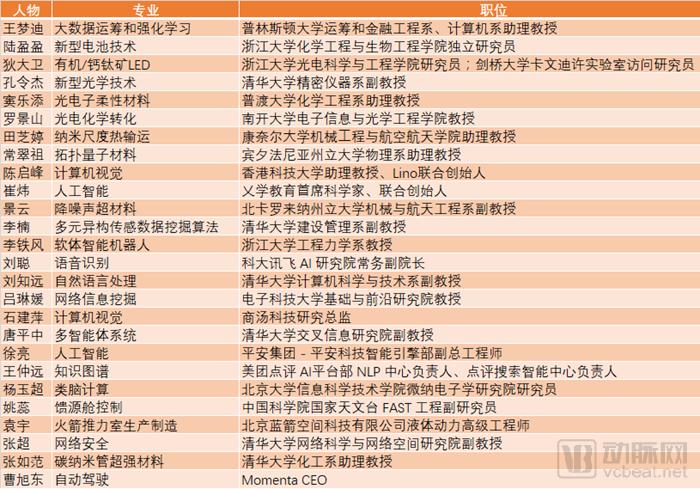
VCBeat has learned that on January 21, 2019, the award ceremony for the second edition of MIT Technology Review China’s “35 Innovators Under 35” (abbreviated as “TR35”) was held at the China World Hotel in Beijing, where the list of 2018 honorees was officially announced.
MIT Technology Review is a magazine founded by the Massachusetts Institute of Technology in 1899, focusing on emerging technologies and innovative businesses, with an emphasis on the commercialization and capitalization of technology. Since 1999, MIT Technology Review has annually selected the world’s top innovators under the age of 35, covering nearly all emerging technological fields, including biomedicine, intelligent computing, new energy, and new materials.
Over the past two decades, Netscape co-founder Marc Andreessen, Yahoo! co-founder Jerry Yang, Google co-founders Larry Page and Sergey Brin, AMD CEO Lisa Su, and Facebook founder Mark Zuckerberg have all appeared on this list. In 2017, DeepTech partnered with MIT Technology Review to officially launch the TR35 in China.
The second TR35 selection process was launched in March 2018. The final list was determined after nine months of rigorous evaluation by a distinguished panel of 50 judges from top academic research institutions, corporate groups, and investment firms in China and around the world, as well as the Chinese and American editorial teams of MIT Technology Review. Applicants must be Chinese citizens (including those from Hong Kong, Macao, and Taiwan, with no restriction on their current location) and under the age of 35 as of October 1, 2018. Eligible fields include, but are not limited to, computer science and hardware, internet and electronic communication technologies, software technology, nanotechnology and advanced materials, biomedicine, aerospace, energy, and transportation.
When evaluating candidates, MIT Technology Review considers seven factors: impact, originality, courage, timeliness, entrepreneurial achievement, communication skills, and contributions to underprivileged regions; however, candidates are not required to excel in all areas. The young technologists selected for the 2018 TR35 list were predominantly interdisciplinary and cross-sector innovators, demonstrating a stronger ambition and sense of mission toward practical implementation. Their achievements spanned diverse fields, including artificial intelligence research and applications, natural language processing (NLP), brain science, new materials, new energy, life sciences, biotechnology, and autonomous driving.
VCBeat’s analysis reveals that nine recipients on this year’s TR35 list hail from the biotechnology sector, spanning subfields such as genomics, cell therapy, oncology, proteomics, and synthetic biology, marking a standout performance.
Gene
Person: Qi Lei
Specialty: Gene Editing and Genetic Engineering
Position: Associate Professor of Bioengineering, Stanford University
As a co-inventor of the Chinese and European Union patents for CRISPR gene-editing technology, Lei Qi has dedicated many years to the development of gene-editing technologies and gene therapy. He was the first to upgrade the “genetic scissors” CRISPR/Cas system into the “Swiss Army knife” of gene editing, CRISPR-dCas, and expanded its applications based on this platform. He subsequently invented CRISPR-based gene switches (CRISPRi/a), enabling precise activation or repression of specific gene expression without introducing mutations; CRISPR imaging, which allows for the precise visualization of genomic sequences in living tissues; and CRISPR-GO, which achieves spatial rearrangement and positioning of the genome in three-dimensional space.
Person: Wang Siyuan
Specialty: 3D Genomics
Position: Assistant Professor, Department of Genetics and Department of Cell Biology, Yale School of Medicine
Wang Siyuan is dedicated to the research and development of bio-omics imaging technologies, having developed multiple imaging and staining techniques, including a DNA imaging method based on composite fluorescence in situ hybridization (FISH). By resolving and localizing distinct genomic loci through sequential imaging, he achieved three-dimensional mapping of chromatin at the single-cell level, thereby overcoming the long-standing technical challenge of directly observing large-scale chromatin coiling structures. Wang’s innovative and breakthrough imaging approach opens new avenues for understanding chromatin folding and compartmentalization, while also providing novel insights into the complex spatial architectures and their dynamic changes during various biological processes and disease progression.
Name: Fu Qiaomei
Specialization: Ancient Human DNA and Genomic Research
Position: Researcher, Institute of Vertebrate Paleontology and Paleoanthropology, Chinese Academy of Sciences
Fu Qiaomei decoded the oldest human genomes in China, revealing the complex genetic history of modern humans in East Asia. She was the first to confirm that gene flow between early modern humans and Neanderthals was not limited to the Middle East; she also provided the first systematic summary of the genetic evolutionary landscape of prehistoric modern humans. During her research, she co-developed an ancient DNA capture technique that successfully extracted nuclear and mitochondrial DNA from the femur of the Tianyuan Man, making him the first early modern human from whom nuclear DNA has been obtained. Furthermore, Fu participated in the development of a new-generation ancient DNA fragment extraction technology, which successfully retrieved ancient DNA from non-permafrost layers dating back 400,000 years, pushing back the timeline for deciphering human DNA by 300,000 years.
Cell
Person: Li Yinqing
Specialty: Single-Cell Multi-Omics
Position: Researcher, School of Pharmaceutical Sciences, Tsinghua University; Co-founder and Scientific Advisor, Chengyuan Biotechnology Co., Ltd.
Li Yinqing pioneered the development of single-nucleus gene expression profiling technology and established single-cell multi-omics techniques for neural research. By innovatively integrating tissue fixation with single-nucleus isolation, he achieved high resolution, coverage, and sensitivity in single-cell analysis. Using this approach, he successfully tracked and characterized the rare process of spinal cord nerve regeneration in healthy adults for the first time. Furthermore, his neural single-cell multi-omics technology revealed that inhibitory neurons in the perithalamic region are key components of the core neural circuits associated with psychiatric disorders such as hereditary attention-deficit/hyperactivity disorder (ADHD). The single-nucleus gene expression profiling technology developed by Li Yinqing holds significant importance for studying spinal cord nerve repair, while his neural single-cell multi-omics technology provides crucial insights for identifying potential drug targets.
Person: Li Dong
Specialty: Optical Super-Resolution Microscopy Technology
Position: Researcher, Institute of Biophysics, Chinese Academy of Sciences
Li Dong has successively developed grazing-incidence structured illumination microscopy (GI-SIM) and nonlinear grazing-incidence structured illumination microscopy (Nonlinear GI-SIM), achieving unprecedented imaging speed and duration for super-resolution live-cell imaging. During his postdoctoral research, he developed high numerical aperture total internal reflection fluorescence structured illumination microscopy (High NA TIRF-SIM), patterned activation nonlinear structured illumination microscopy (PA NL-SIM), and lattice light-sheet 3D nonlinear structured illumination microscopy (Lattice light sheet 3-D nonlinear SIM). These advancements broke through the traditional 100-nanometer resolution limit of structured illumination microscopy, enabling high spatiotemporal resolution imaging of live cells. Li Dong’s research holds significant importance in the field of novel super-resolution microscopic imaging technologies.
Tumor
Person: Chen Sidi
Specialty: Cancer Systems Biology
Position: Assistant Professor, Department of Genetics and Institute for Systems Biology, Yale University
Chen Sidi’s research provides support for future studies on cancer mechanisms, the development of “personalized” cancer drugs, and clinical trials, serving as a crucial foundation for building precision medicine platforms in the future. He focuses on systems biology of cancer and other fundamental medical issues, including changes in genetic expression and epigenetic modifications during carcinogenesis, progression, and immune responses. Through large-scale, high-throughput in vivo screening, Chen and his team have mapped functional genomic landscapes of glioblastoma and hepatocellular carcinoma, elucidating processes such as cancer initiation and progression at the level of gene mutations. Furthermore, he has invented precise tumor models based on CRISPR/Cas gene editing that are more cost-effective and efficient than existing models. These models not only accurately simulate molecular-level mutations but also fully preserve the original tumorigenic process and the immunogenicity of the tumor microenvironment.
Protein
Person: Xu Guoyong
Specialty: Regulation of Protein Translation and Precision Crop Improvement
Position: Professor at the Institute for Advanced Studies, Wuhan University
Xu Guoyong has revealed the critical role of translational regulation in establishing immune responses and effectively leveraged this mechanism to resolve the trade-off between enhanced disease resistance and yield loss in agricultural production. By utilizing a newly discovered translational regulatory element, the upstream open reading frame (uORF), he achieved the simultaneous improvement of plant disease resistance and growth. Currently, research on translational regulation during stress responses remains limited in the field of biology. Xu’s work provides new insights into leveraging both natural and synthetic regulatory elements for precise crop improvement, holding significant implications for enhancing crop disease resistance.
Synthetic Biology
Character: Shao Yangyang
Major: Synthetic Biology
Position: Postdoctoral Fellow, Institute of Plant Physiology and Ecology, Shanghai Institutes for Biological Sciences, Chinese Academy of Sciences
Shao Yangyang participated in the creation of the world’s first eukaryotic cell with a single chromosome, achieving a landmark breakthrough in “synthetic life.” By employing gene editing techniques, she consolidated the 16 natural chromosomes of Saccharomyces cerevisiae into a single chromosome. Further research on this cell has overturned the traditional view that three-dimensional chromosomal structure determines gene expression. This also marks the first time that major fundamental scientific questions regarding the origin and evolution of eukaryotic chromosomes have been explored and elucidated through the “engineering” approach of synthetic biology. Shao Yangyang’s research provides new insights into exploring the relationship between chromosomal structure and function in higher organisms and offers a valuable model for studying telomere-related aging and cancer.
Name: Li Teng
Major: Biomaterials and Synthetic Biology
Position: Founder and CEO of Beijing Bluepha Microbiology Technology Co., Ltd.
Li Teng has optimized living systems using synthetic biology techniques, developing novel microbial products that offer new approaches to addressing white pollution. He isolated a salt- and alkali-tolerant bacterium from Ayding Lake in Xinjiang, which significantly reduced the production costs of polyhydroxyalkanoates (PHA), a type of biodegradable bioplastic. Furthermore, his team developed an entirely new data management system, Holog, enhancing the digitization and automation of R&D processes. By establishing an integrated hardware-software laboratory, he substantially advanced the engineering capabilities of microbial synthesis. Li Teng’s research has shortened the development cycle for engineered strains and improved R&D accuracy, holding significant importance for the microbial industry and synthetic biology sectors.
Promoting the commercialization and capitalization of scientific and technological achievements is a key objective of MIT Technology Review’s TR35 selection. Among the nine biotechnology professionals listed above, Li Yinqing and Li Teng have already achieved the translation of their scientific and technological achievements into practice by founding companies.
According to data from Tianyancha, Li Yinqing, as one of the co-founders, established Hangzhou Chengyuan Biotechnology Co., Ltd. in July 2017. Leveraging a platform based on ultra-high-throughput single-cell transcriptome analysis, the company aims to bring world-leading single-cell analysis technologies to a broad base of basic science and clinical researchers, with the ultimate goal of developing products for diagnosis and companion diagnostics for various diseases. The other two founders of Hangzhou Chengyuan Biotechnology, Chen Xi and Cong Le, are also well-known. The trio simultaneously founded RootPath, a company focused on tumor immunotherapy, which secured $7 million in seed funding led by Sequoia China, with participation from Volcanics Venture, Baidu Venture Capital, and Nest.Bio Ventures.
Dr. Xi Chen, the Chief Executive Officer, is a distinguished biochemistry expert who conducted postdoctoral research at Harvard University’s Wyss Institute after graduating from The University of Texas at Austin. Another co-founder, Le Cong, was one of the earliest members of Professor Feng Zhang’s renowned research group. He played a key role in numerous inventions related to CRISPR/Cas9 technology and has made significant contributions to single-cell technologies. In January 2013, with Feng Zhang as the corresponding author and Le Cong as the first author, a paper was published in Science detailing the application of CRISPR gene-editing technology in plant, animal, and human cells. Le Cong was also honored as one of the “35 Innovators Under 35” by MIT Technology Review in 2017.
Li Teng, also from Tsinghua University, founded Beijing Bluepha Microbiology Technology Co., Ltd. in October 2016. The company applies synthetic biology technologies to the field of industrial biomanufacturing, creating novel biomanufactured products including the biomaterial polyhydroxyalkanoates (PHA), and has achieved small-scale mass production of low-cost PHA. Synthetic Biology is a newly emerged branch of biological science in this century; its research approach runs counter to traditional biology by progressively building components starting from the most basic elements. Currently, Bluepha Microbiology has leveraged three platform molecules—acetyl-CoA, malonyl-CoA, and isopentenyl pyrophosphate (IPP)—and, through the introduction of genetic elements, established a product pipeline at various stages of development, encompassing biodegradable biomaterials (PHA), terpenes, and novel small-molecule drugs derived from human microbiota. Bluepha Microbiology secured RMB 5 million in angel-round financing led by FreeS VC in February 2017, and RMB 10 million in Pre-A round financing led by Lihhe Capital with participation from FreeS VC in May 2018.
Appendix: The Remainder of the 2018 TR35 List