SoYoung Launches 'Beauty Quotient Report', Ushering in the Era of Quantified Aesthetics
VCBeat (WeChat ID: vcbeat) has learned that on January 24, 2019, the professional medical aesthetics app So-Young released its “2019 So-Young Beauty Quotient Report” for the first time, providing a clear definition of the concept of “beauty quotient.” “Beauty quotient” refers to an individual’s ability to perceive, understand, and apply aesthetics.
Historically, an individual’s capabilities have been comprehensively assessed through Intelligence Quotient (IQ) and Emotional Quotient (EQ). In the contemporary era, where aesthetic perception and appreciation are increasingly vital, a new dimension has come to the fore: “Beauty Quotient (BQ).”
To this end, in late December 2018, at the 4th SoYoung Asia-Pacific Aesthetic Medicine Industry Gala, SoYoung introduced the concept of “Beauty Quotient” to the industry for the first time. SoYoung believes that while the pursuit of beauty is human nature, greater emphasis should be placed on adopting the right mindset and methods for enhancing one’s appearance. This also constitutes the original intention behind the release of the “Beauty Quotient Report.”
I. The Formation of "Aesthetic Intelligence"
To understand “Beauty Quotient” (BQ), it is first necessary to identify the factors that shape an individual’s BQ. SoYoung posits that BQ is grounded in one’s aesthetic cognition, which is essentially the ultimate projection of personal experiences and daily life.
The renowned aesthetician Zhu Guangqian once stated that the world each person perceives is one they have created themselves. The German philosopher Theodor Lipps, on the other hand, argued that aesthetic experience arises when individuals project their emotions onto the aesthetic object during appreciation, merging their own feelings with the object. This can be described as an intuitive “inner imitation” of the aesthetic object, characterized by a dynamic interplay of “from self to object” or “from object to self.” This view aligns closely with a fundamental principle in aesthetics known as “aesthetic empathy.” Aesthetic empathy primarily manifests in four forms: apperceptive empathy, experiential empathy, atmospheric empathy, and expressive empathy.
II. “Aesthetic Quotient” in History
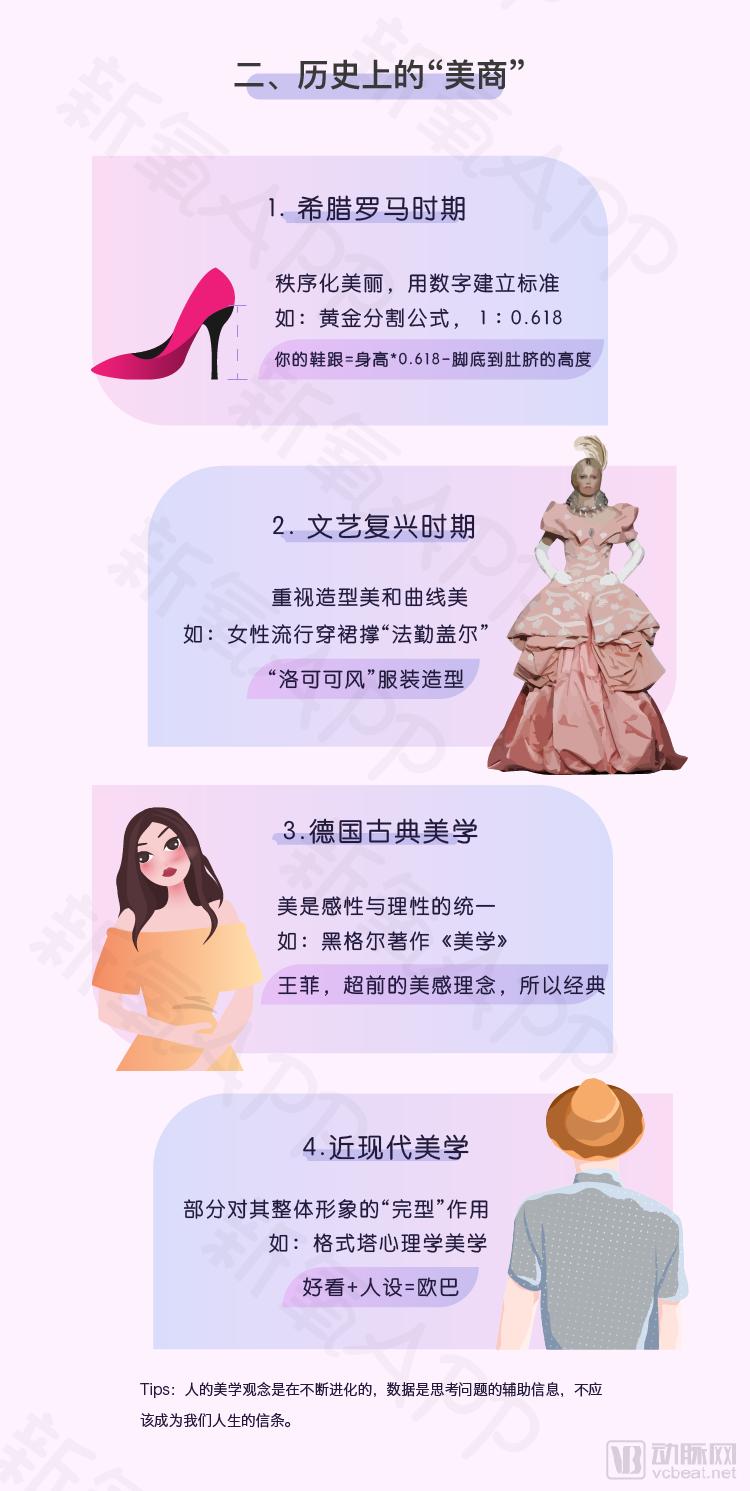
Although “aesthetic quotient” has only gradually gained attention in recent years, its origins can actually be traced back to the early stages of human civilization; for instance, the widely recognized “golden ratio” formula first appeared in ancient Roman times.
With the progression of time, people’s aesthetic concepts continue to evolve, encompassing both sensory external forms and rational, scientific internal logic. For instance, the Rococo-style costumes worn by Scarlett, the female protagonist in Gone with the Wind, accentuate a woman’s slender waist and use exaggerated full skirts along with soft, vibrant colors to highlight feminine beauty; at its core, this reflects the application of geometric curves and angles.
To develop a personal cognitive framework for “aesthetic intelligence,” one must lay the foundation with aesthetic literacy, and the history of aesthetics serves as a vast “repository of materials.”
III. SoYoung Aesthetics System
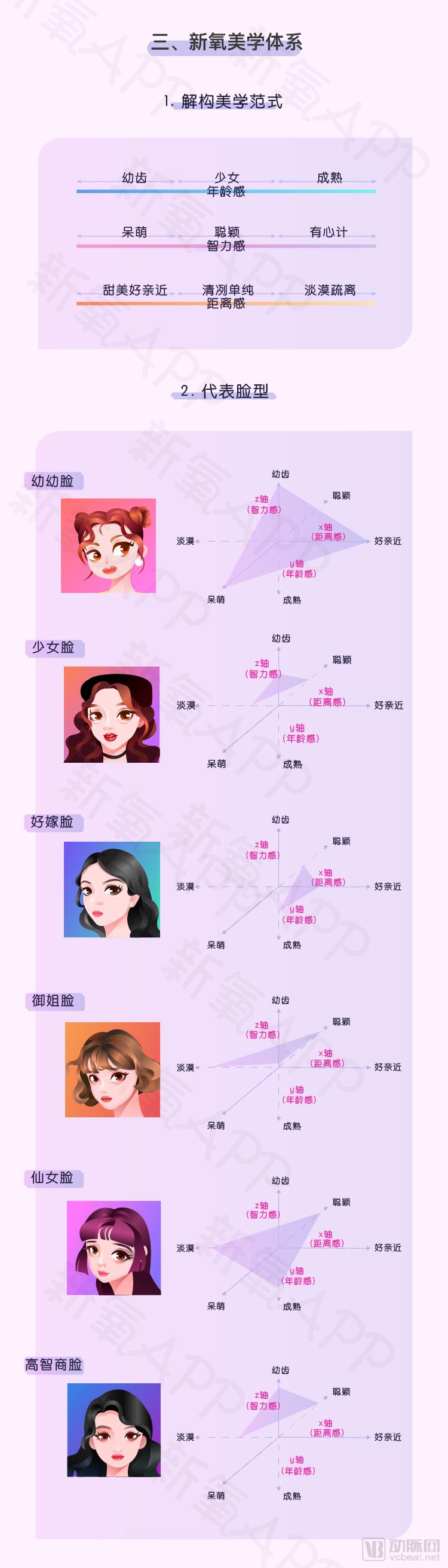
Beauty is not an innate gift, but an acquired skill. To this end, So-Young is launching a comprehensive suite of solutions to ensure that the pursuit of beauty no longer relies on elusive and intangible subjective standards, but rather on a fully quantifiable, data-driven framework. This standardized system not only enables physicians to more accurately address users’ aesthetic preferences but also empowers medical aesthetics consumers to enhance their appearance more intelligently through science.
For instance, last year, So-Young launched an intelligent product called “So-Young Magic Mirror,” which is based on the platform’s big data and AI algorithms. The “So-Young Magic Mirror” analyzes human faces across three dimensions: perceived age, perceived intelligence, and perceived approachability. Underlying this analysis is a network of more than one hundred facial features, whose various combinations are ultimately categorized within the framework of these three analytical dimensions.
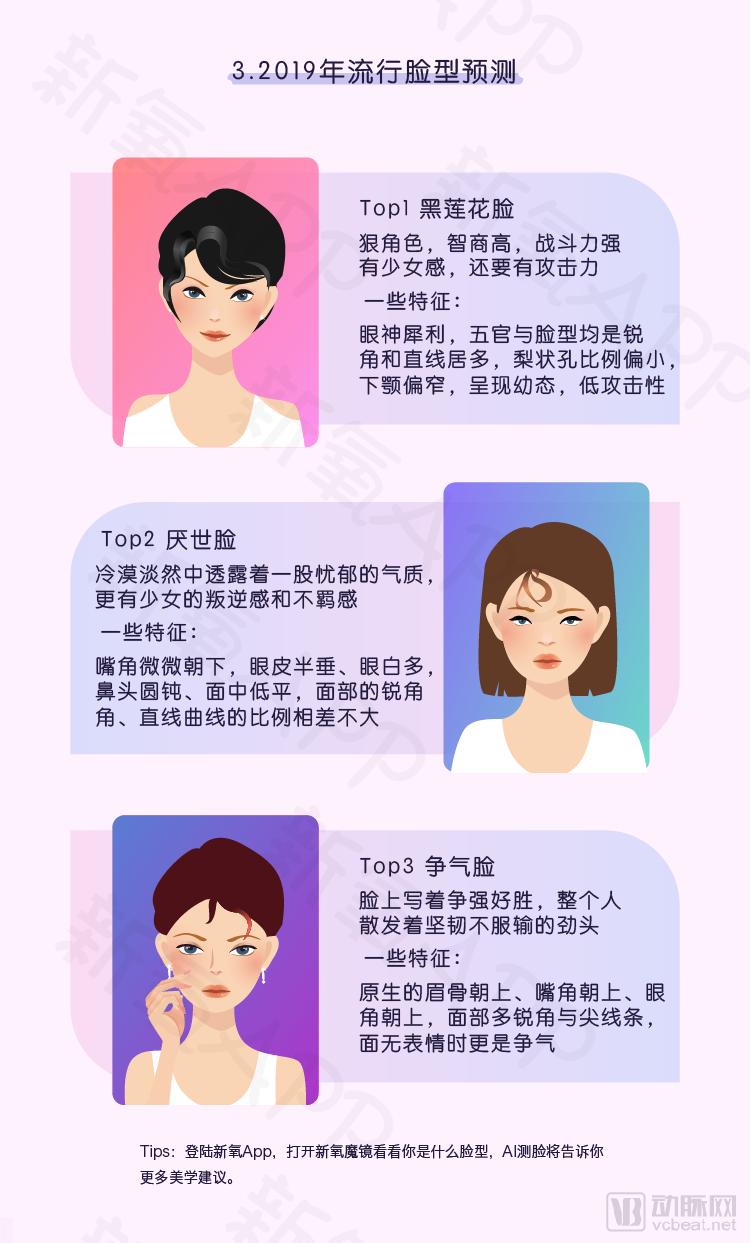
For different individuals, a single subtle feature may define their unique aura. SoYoung refers to these features as “Beauty Codes,” positing that each person’s facial characteristics can be quantified and codified. These Beauty Codes not only determine individual temperaments but also provide precise data-driven guidance for those seeking to alter their appearance. For instance, leveraging its “Beauty Codes” and platform consumption data, SoYoung released its forecast of trending face shapes for 2019 at the end of last year.
We are entering an era of quantifiable aesthetics. One of So-Young’s future operational priorities is to leverage the platform’s AI capabilities to help users enhance their “aesthetic quotient” (AQ), positioning itself as the premier hub for individuals with the highest AQ.
IV. How to Improve “Aesthetic Quotient”
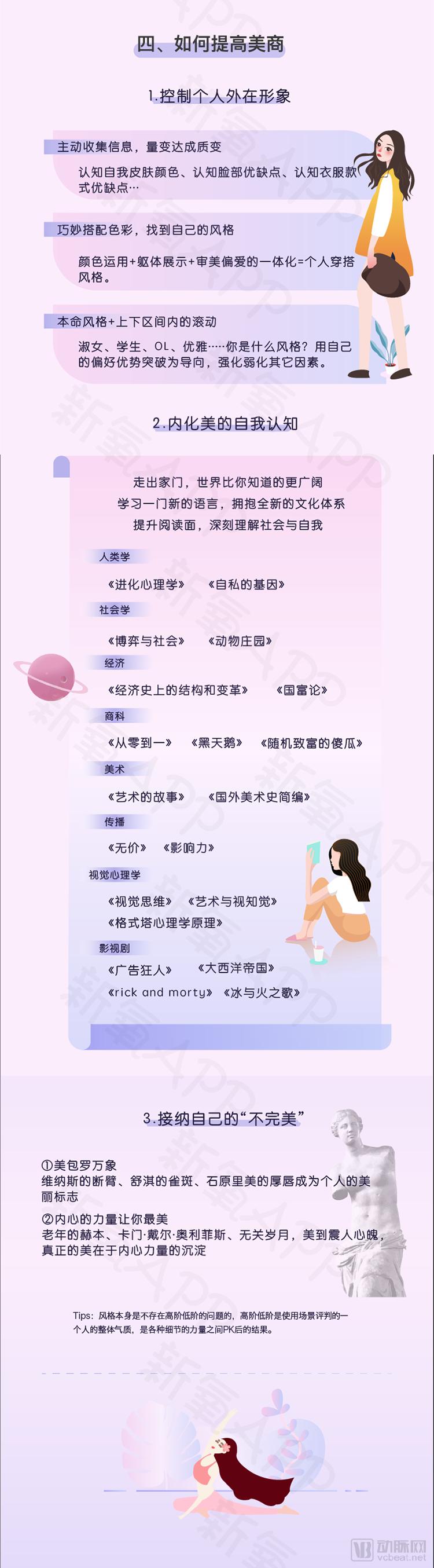
Beyond AI technology, SoYoung’s aesthetic framework also encompasses an analysis of fundamental visual principles, the mechanisms of human brain function, and sociocultural dynamics, comprehensively helping users enhance their “aesthetic quotient.”
For instance, one can enhance their "Beauty Quotient" by managing their external image: cultivate the ability to gather information and develop keen judgment. For example, if silver jewelry complements your skin tone, you likely have a cool undertone; if gold jewelry looks better, you have a warm undertone. Skillfully coordinate colors to discover your personal style by listing your preferred colors (primary colors) and identifying the secondary colors that create the best visual effect when paired with them. Identify your signature style and operate within its appropriate range.
What is your "signature style"? It refers to a style that you can effortlessly embody, regardless of changes in texture or makeup. The "upper and lower bounds" approach involves leveraging your personal preferences and strengths as a driving force for breakthroughs, thereby identifying new combinations within a coordinate system.
On the journey to achieving beauty through science, external appearance is by no means everything. Only by internalizing a self-perception of beauty, broadening one’s reading horizons, and gaining a profound understanding of society and the self can the power of beauty accumulate within. This allows us to recognize that beauty is, in fact, an all-encompassing existence—embodying freedom, openness, and humanity—and ultimately gives rise to each individual’s unique “Beauty Quotient.”