

Sir Run Run Shaw Hospital Invests $6.3M in Comprehensive IT Overhaul Despite Achieving JCI and HIMSS Stage 7 Certifications
In August 2017, Sir Run Run Shaw Hospital, Zhejiang University School of Medicine (hereinafter referred to as Sir Run Run Shaw Hospital) successfully passed the HIMSS EMRAM Stage 7 certification, becoming the first large-scale public general hospital in China to achieve both JCI accreditation and HIMSS Stage 7 certification.
To outsiders, it seemed nearly impossible for Sir Run Run Shaw Hospital, whose informatization had already reached a near-peak level, to achieve further advancements. However, in November 2018, the hospital once again took center stage with a RMB 44 million tender for informatization upgrade and renovation issued by the Zhejiang Provincial Government Procurement Center.
VCBeat learned from the China Government Procurement Network that on November 23, 2018, the Zhejiang Provincial Government Procurement Center released a procurement announcement for the Sir Run Run Shaw Hospital Affiliated to Zhejiang University School of Medicine’s informatization upgrade and expansion services project, with a budget of RMB 43 million. On December 21, the bid was officially awarded, with Zhejiang Heren Technology Co., Ltd. winning the contract at RMB 42.5 million.
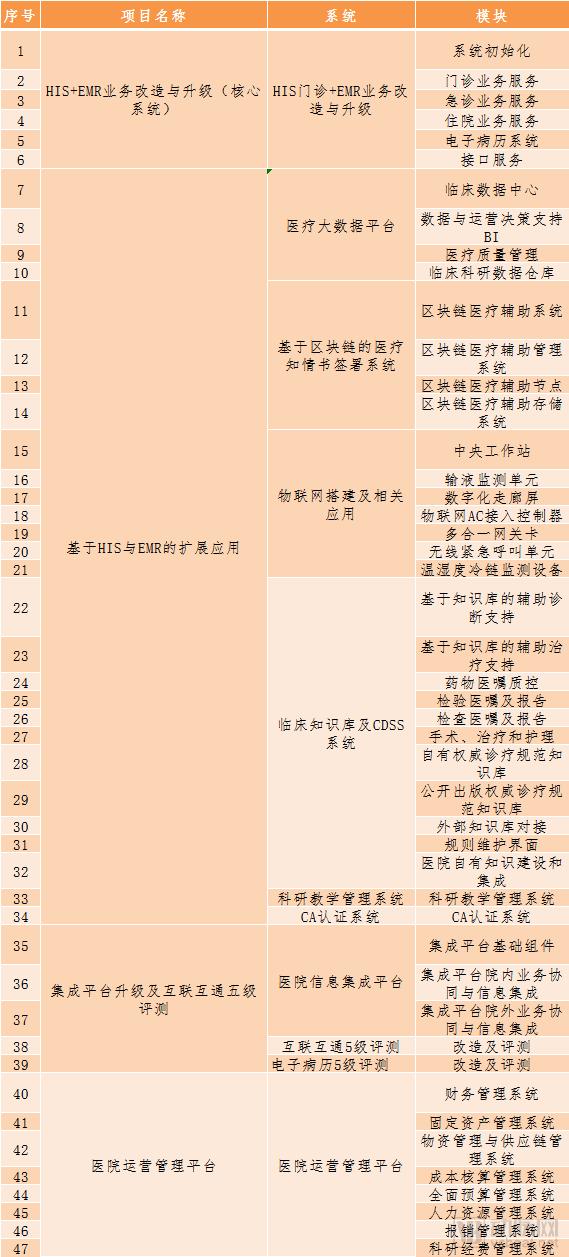
The figure below illustrates the scope of renovation involved in the project. The core component is the construction of a central platform to enable data applications built upon data governance, including clinical services, knowledge bases and Clinical Decision Support Systems (CDSS), scientific research and teaching, business management, patient services, and multi-campus services.
A Frontline Command Center Without the Smoke of Battle
“If you truly want to understand the vision of Sir Run Run Shaw Hospital, there is no one more suitable than Secretary Qiao,” said Zhu Haizhou, Vice President of Heren Health Technology, when VCBeat inquired about the rationale behind this informatization transformation project.
Qiao Kai, Deputy Secretary of the Party Committee and Director of the Hospital IT Center at the Xiasha Campus of Sir Run Run Shaw Hospital, Zhejiang University School of Medicine. He graduated from Zhejiang University with a major in Clinical Engineering. With over 20 years of industry experience in medical IT management, research, and development, he has led the hospital’s informatization initiatives, successfully guiding it through four JCI accreditations as well as HIMSS Stage 6 and Stage 7 evaluations.
At Sir Run Run Shaw Hospital, Secretary Qiao is the undisputed leading figure in medical engineering.
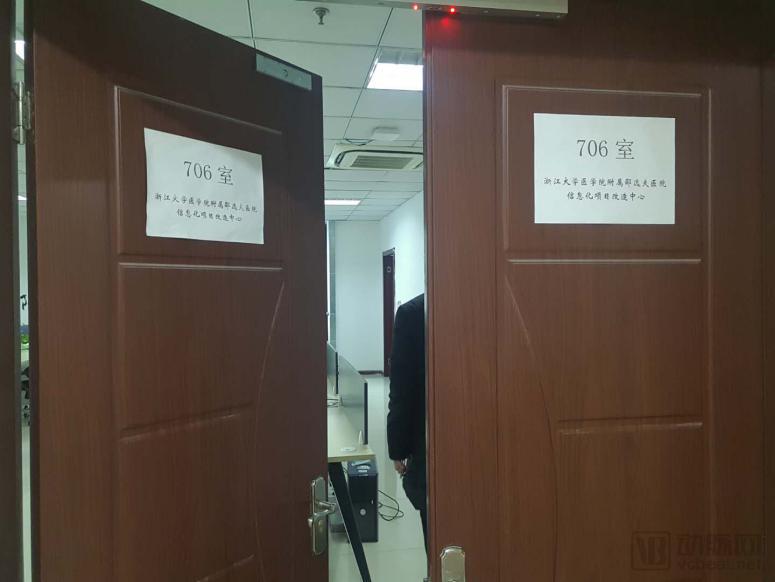
The meeting with Secretary Qiao took place in an office building located just one street away from Sir Run Run Shaw Hospital. This space served as a studio specially rented by Heren Health for the project team. Affixed to the office door were two A4 sheets of paper, printed with the words “Sir Run Run Shaw Hospital, Zhejiang University School of Medicine – Information Technology Transformation Project Center.”
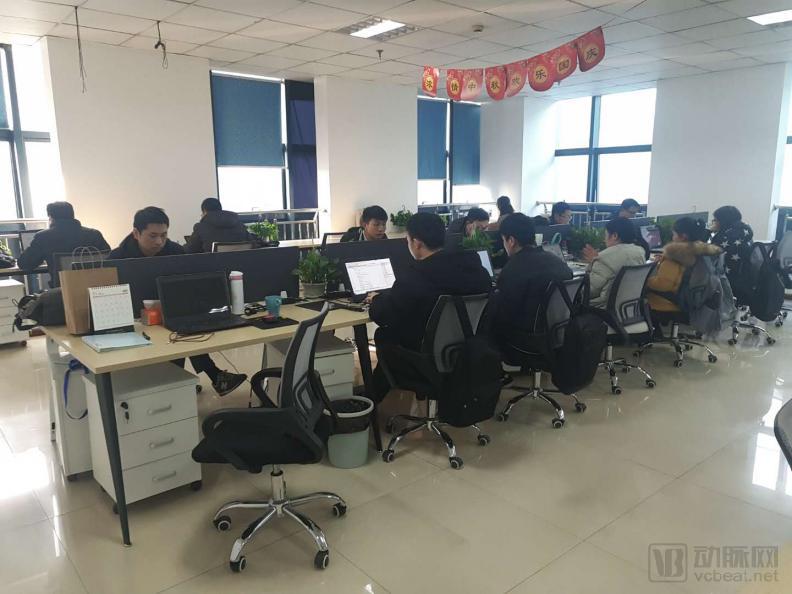
Spanning approximately 200 square meters and located in the heart of Hangzhou, the center incurs an estimated annual facility cost of around RMB 1.2 million, based on VCBeat’s rough calculation at a monthly rate of RMB 100,000. The center’s network is connected via a dedicated line provided by Sir Run Run Shaw Hospital, ensuring timely information exchange with the hospital’s intranet. Additionally, 20 engineers from Heren Technology are stationed here as the project’s vanguard team. For them, this location serves as the frontline of their operational battlefield.
When we first met Secretary Qiao, he was in a hurry, with his phone ringing intermittently. After efficiently coordinating hospital operational matters, he engaged us in a discussion about the project.
“This is likely the largest-scale IT transformation since the establishment of Sir Run Run Shaw Hospital,” stated Secretary Qiao. He noted that, from an information architecture perspective, Sir Run Run Shaw Hospital has already achieved closed-loop management for medications, laboratory tests, diagnostic examinations, breast milk, blood transfusions, and surgical procedures during its HIMSS Stage 7 certification process, and has also implemented a Clinical Decision Support System (CDSS). However, some potential issues still persist in actual clinical practice.
Although hospitals have deployed sufficient information systems, their performance remains constrained by legacy client/server (C/S) system architectures. The root cause lies in the lack of a clearly defined top-level architectural framework for hospital informatization. To meet accreditation requirements and support clinical applications, diverse demands from various hospital departments have been cobbled together, failing to form a cohesive, integrated whole.
He Bihang, Director of the Solution Consulting Department at Heren Technology, added, “Although nominally a renovation project, it is in fact a ‘major overhaul’ of the hospital’s existing core systems.”
The hospital’s legacy system was developed in PowerBuilder and accessed the SQL Server database directly. In contrast, Heren Technology’s new system is built using object-oriented languages such as .NET and Java, employs a three-tier architecture to encapsulate services, and introduces Oracle databases to handle large-scale data interactions.
Furthermore, while undertaking system refactoring, the project will introduce a massive parallel processing architecture to integrate and fuse data from the hospital’s legacy, current, and future business systems. By leveraging post-structured data processing technologies based on natural language processing (NLP), the project will extract key information from unstructured electronic medical record (EMR) data. It will also provide controlled data access interfaces to support various theme-oriented business applications, including operational management decision support, medical quality management, and research data analysis for clinical specialties, thereby maximizing data governance and unlocking the value of clinical data.
It is understood that a significant number of issues raised during internal meetings at Sir Run Run Shaw Hospital were related to health information technology (HIT). Enhancing the efficiency and user experience of HIT systems in clinical departments has become an urgent priority. In response, Secretary Qiao stated, “Although this is a three-year project, given the hospital’s current needs, time is of the essence. Therefore, we aim to achieve comprehensive implementation across all areas this year, with the goal of completing the entire project within two years.”
New Demands Brought by Group-Level Management
In November 2017, Deqing County People’s Hospital was officially unveiled as the “Deqing Campus of Sir Run Run Shaw Hospital.” Following this designation, the Deqing Campus will become the third campus of Sir Run Run Shaw Hospital, Zhejiang University School of Medicine, after its Qingchun Campus and Xiasha Campus. This also marks that the collaboration between Sir Run Run Shaw Hospital and Deqing County People’s Hospital will transition from previous assistance and guidance to a deeply integrated “Medical Consortium” model.
In August 2018, the Shangyu Campus of Sir Run Run Shaw Hospital was established in Shangyu. In addition to forging a close collaborative partnership, both parties plan to initiate the construction of new facilities for the Shangyu Campus of Sir Run Run Shaw Hospital, Zhejiang University School of Medicine, at an appropriate time. This initiative fully embodies the “Shaw Medical Model.”
The continuous expansion of hospital campuses has posed challenges to the group-based management of Sir Run Run Shaw Hospital and the interconnectivity among its various campuses. In the tender documents for this upgrade and renovation project, Sir Run Run Shaw Hospital has explicitly set forth clear requirements regarding group-based management and the medical consortium.
The document states:The project must meet the requirements for centralized, group-based hospital management by establishing a multi-modal hospital group control system with the main campus as the core and the Xiasha Hospital as a branch campus. Furthermore, the system architecture shall support interoperability and information exchange within medical consortia.
To truly achieve information management for hospital groups, Secretary Qiao believes that at least three requirements must be met:“1. The data center should be well-developed using cloud deployment to ensure interconnectivity among hospitals in different geographic locations within the group; 2. The hospital’s HRP (Hospital Resource Planning) system should support multi-campus management; 3. The hospital’s system framework should be upgraded to a B/S (Browser/Server) architecture.”
In the past, although Sir Run Run Shaw Hospital’s information system also adopted a group-based architecture, it was merely patched up on top of the legacy infrastructure, making it difficult to guarantee operational performance. Currently, the hospital aims to establish a robust data center, optimize the system hierarchy, and build a high-quality master database.
During project implementation, communication with clinical departments is also required. To this end, the hospital has established a dedicated Information Committee to coordinate such efforts. Under the committee, various departments form specialized information teams, such as the Nursing Department Information Team and the Pharmacy Department Information Team. These teams comprise physicians, nurses, and hospital IT engineers, among others. The different teams collaborate to facilitate the smooth implementation and deployment of the project.
Furthermore, this information technology upgrade and renovation project does not involve completely tearing down and rebuilding the existing technical infrastructure. Using Secretary Qiao’s metaphor, it is akin to constructing a beautiful new district on the foundation of the old city, with the new district driving the underlying transformation of the old one. “After a car has been driven for a long time, maintenance is inevitable, such as changing the engine oil and tires. In this case, we are simply carrying out more comprehensive and thorough maintenance,” said Secretary Qiao.
Hospitals Pioneering Blockchain Adoption
In addition to upgrading the hospital information system and database, the introduction of new technologies such as blockchain has also become a key focus of the project. According to Secretary Qiao, blockchain technology can be used to replace traditional CA digital certificates.
It is reported that CA digital certificates provide electronic authentication to enable secure communication between parties. On the Internet, intranets, or extranets, digital certificates are used to achieve identity verification and encryption of electronic information. A digital certificate contains the public key and identifying information of the owner; by verifying the authenticity of this identifying information, the identity of the certificate holder is authenticated.
Traditional CA certification has functional limitations for hospitals. The reason is that it is easy to achieve tamper-proofing through CA certification for information written by a single doctor. However, for pre-operative patient informed consent forms, which involve simultaneous authentication by both the doctor and the patient, patients do not have CA certification. Therefore, at this stage, the CA certification system still has defects when used in hospitals.
Sir Run Run Shaw Hospital’s decision to adopt blockchain technology aims to leverage foundational technologies such as data encryption, timestamps, distributed consensus algorithms, and distributed ledgers. Through mutual verification, supervision, and data backup among blockchain network nodes, the hospital seeks to achieve chained storage of informed consent signature data from its Hospital Information System (HIS), electronic medical record system, and patient WeChat service account, along with smart contract implementation and privacy protection. This approach technically ensures that the signed consent forms stored in the chained ledger are tamper-proof and traceable.
Another Inflection Point After 24 Years
Since its establishment, Sir Run Run Shaw Hospital has experienced several key milestones in its informatization development over a span of 24 years.
According to Secretary Qiao, Sir Run Run Shaw Hospital was officially established in 1994, at which time the United States donated five minicomputers to the hospital. At that time, the programming language he used was MUMPS (often referred to as RGP in this context). Building on this foundation, the team successfully developed a set of inpatient information systems.
In 1997, the hospital experienced frequent failures of its minicomputers. After consultation, Party Secretary Qiao learned that the repair costs amounted to as high as $100,000. Following a cost-benefit analysis, the IT team at Sir Run Run Shaw Hospital decided to migrate the minicomputer systems to PCs. In 2000, the hospital launched an outpatient electronic medical record (EMR) system. Subsequently, the hospital’s informatization development gradually entered a fast track:
In 2005, the hospital launched a mobile nursing system, making Sir Run Run Shaw Hospital the first hospital in China to implement such a system.
In 2006, the hospital successfully passed the accreditation by the Joint Commission International (JCI), becoming the first public hospital in mainland China to achieve JCI accreditation.
In 2008, the hospital implemented an inpatient electronic medical record (EMR) system.
In 2012, Sir Run Run Shaw Hospital entered into its initial collaboration with Heren Health Technology. After two years of research and development, the hospital launched an integrated system for its two campuses.
In 2015, the hospital’s Clinical Data Repository (CDR) was officially launched, and by year-end, the hospital successfully achieved HIMSS Stage 6 certification.
In 2017, Sir Run Run Shaw Hospital achieved HIMSS Stage 7 certification. The hospital not only became one of the eight top-tier hospitals in China to attain this level at that time, but also remained the only hospital in Zhejiang Province to have passed the HIMSS Stage 7 certification.
In 2019, Sir Run Run Shaw Hospital decided to comprehensively overhaul its information systems.
……
Secretary Qiao stated, “Don’t be misled by our current achievement of passing the HIMSS EMRAM Stage 7 validation, which may give the impression that we are leading. The field of health informatics is evolving rapidly; if we remain stagnant, others will quickly surpass us.”
Regarding the preliminary framework for the future informatization construction of Sir Run Run Shaw Hospital, Director Qiao believes it should feature a multi-cloud, multi-center, and multi-platform architecture. "Multi-cloud" refers to the coexistence and interaction of private clouds, public clouds, and hybrid clouds; "multi-center" denotes various centers such as the data center, the HRP (Hospital Resource Planning) center, the data center for medical equipment, and the procurement platform center; while "multi-platform" includes platforms such as the data platform and the exchange platform.
Among these, artificial intelligence, big data, the Internet of Things, and mobile health must not remain mere concepts; what Sir Run Run Shaw Hospital aims to do is to implement these concepts and integrate them organically into practice.
Medical IT Enterprise: Technical Assurance for Projects
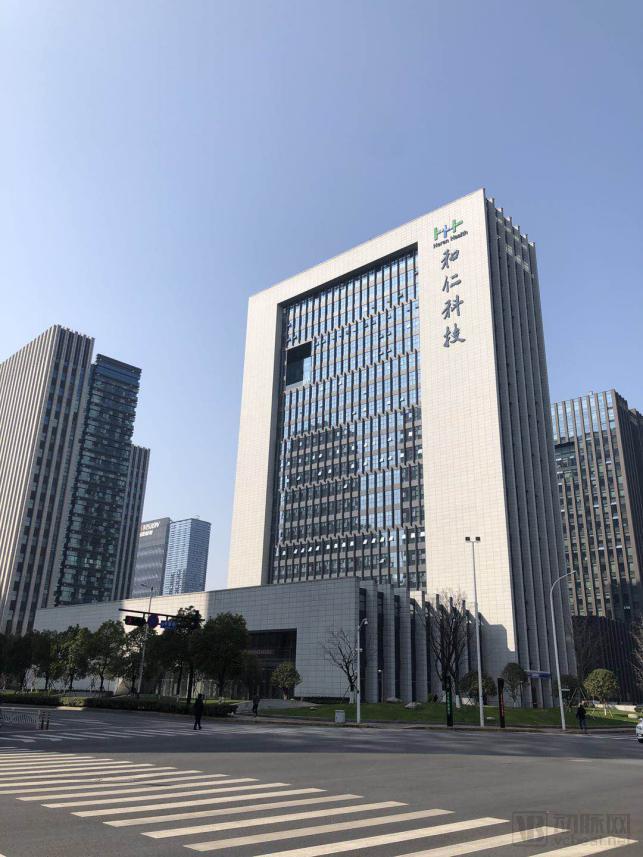
Heren Technology’s headquarters, located at No. 625 Xinlian Road, Xixing Subdistrict, Binjiang District, Hangzhou, occupies an entire building dedicated to office space. The company is situated adjacent to the Qiantang River, with the Olympic Sports Center—the venue for the G20 Summit—located nearby.
According to Zhu Haizhou, the existing businesses of Heren Technology are collectively referred to as:“3+1 Business”These include digital healthcare (HIS, electronic medical records, etc.) and smart hospitals (informatization + IoT), while actively exploring digital health cities (regional smart healthcare + medical consortiums) as well as platform- and data-based operational services.
The New-Generation Hospital Information System is Heren Technology’s most core R&D achievement over the past two years. Targeting large general hospitals, the system has completed pilot implementation with “seed” clients. Based on trial usage, the system has continuously enhanced functionalities across modules such as Day Ward, Emergency Department System, Admission Preparation Center, Clinical Pathways, and HQMS.
The system leverages cutting-edge technologies such as B/S architecture, cloud computing, SOA, REST APIs, and HTML5 to break down the silos of legacy HIS, EMR, and HRP systems. By implementing an integrated core business logic at the underlying layer, it provided a strong guarantee for the company’s successful bid in the Sir Run Run Shaw Hospital’s health IT transformation project.
Furthermore, Heren Technology has closely followed cutting-edge information technologies such as big data, cloud computing, the Internet of Things (IoT), and blockchain, continuously exploring their integration with the company’s existing software products and solutions. As a result, the introduction of blockchain became a reality in the Sir Run Run Shaw Hospital project.
Over the years, Heren Technology’s products, with the PLA General Hospital (301 Hospital) as their core deployment site, have been gradually rolled out to major military hospitals across China and have begun expanding to hospitals directly affiliated with the National Health Commission and university-affiliated hospitals. Prior to winning the bid for this project, Heren Technology had participated in the informatization construction of Sir Run Run Shaw Hospital (Xiasha Campus), laying the foundation for renewed collaboration between the two parties.