

TengAI Doctor Exits the Scene: Can Health Tech Products Survive Without Hospital Integration?
In March 2016, Tengai Doctor entered the healthcare industry alongside nine major physician groups, including the Zhang Qiang Physician Group and the Donglei Brain Hospital Physician Group. For a time, Tengai Doctor became synonymous with efforts to improve doctor-patient relationships. Yet just yesterday, Tengai Doctor announced the end of its brief “career” in an official WeChat post.
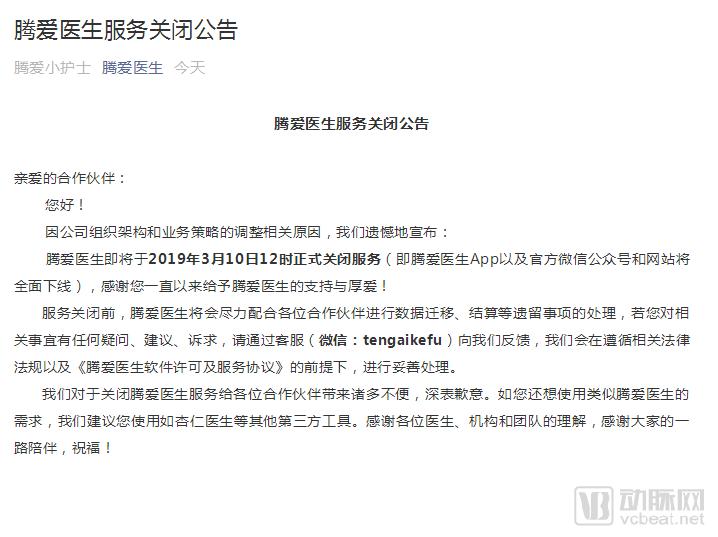
Partners and users of Tengai Doctor have taken to WeChat Moments to voice their tributes, mourning this once-beloved Tencent product.
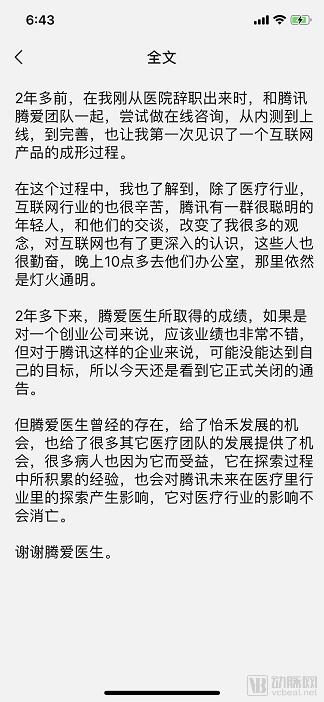
Reposted from the WeChat Moments of Pei Honggang, Founder and General Manager of Yihé Health
What Exactly Led Tencent to Make the Painful Decision to End Its Historical Mission?
“Tencent has always emphasized its focus on connectivity, aiming to connect people with people, people with things, and people with services. We are increasingly realizing that beyond connecting individuals, if a vast number of ‘things’ and ‘services’ cannot undergo comprehensive digital transformation, then the ‘connectivity between people and things, and between people and services’ will struggle to evolve. To deliver better products and services to individual users, we must deeply integrate the internet with various industries, embed digital innovation into the core of manufacturing and production, and extend digitalization to every link of the supply chain. Without the support of industrial internet, consumer internet would be nothing more than a castle in the air.”
This is an excerpt from Ma Huateng’s open letter in October 2018.
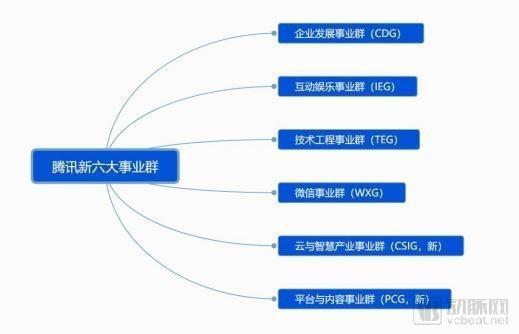
In this open letter, healthcare was integrated into the Cloud and Smart Industries Group (CSIG). This encompasses core product lines such as Tencent Cloud, smart retail, security products, Tencent Maps, and Youtu, along with industry-specific solutions for healthcare, education, transportation, and location-based services (LBS). Overall, the strategy is more business-to-business (B2B) oriented, focusing on industrial applications.
Tengai Doctor’s positioning appears somewhat incongruous with CSIG... Looking back at Tengai Doctor’s brief history of less than three years, its innate DNA determined its ultimate fate.
Let’s rewind to 2016. At that time, Teng Ai Doctor was positioned as a platform to help physicians build their personal brands, functioning essentially as a fully consumer-facing (to-C) product—a characteristic that was particularly evident in its feature set:
1. Tengai Doctor is primarily a mobile app, functioning as the healthcare equivalent of WeChat;
2. Tengai Doctor can provide triage services. Physicians can incorporate their own triage teams into the system; however, this is not a traditional information desk. Instead, it leverages technological solutions to screen physicians for patients and connect them to the appropriate professional platforms.
3. Physician Brand Building. The Tengai Doctor platform can link with departmental official accounts and create patient medical records via Tengai Doctor, achieving seamless integration between WeChat and the app.
In July and October 2016, Teng Ai Doctor successively launched intelligent medical search and historical article search functions. Leveraging semantic analysis and intelligent matching, these features deliver article content aligned with users’ query keywords, thereby helping physicians manage their WeChat official accounts more efficiently. Clearly, the target audience remains physicians and patients.
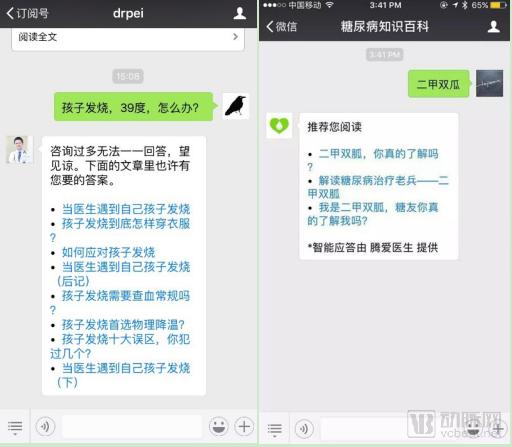
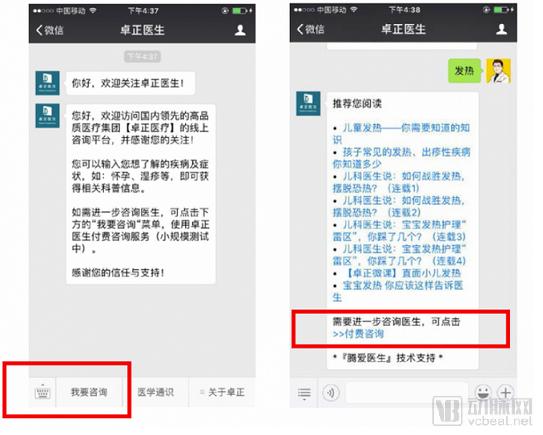
In December 2016, version 1.9.0 of Teng Ai Doctor was launched, initiating pilot paid consultation services via its official WeChat account.
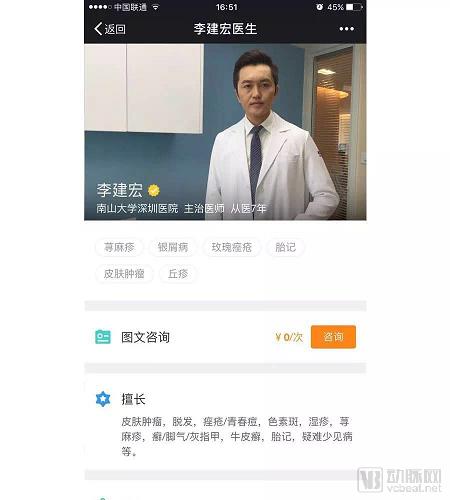
In March 2017, Distinct HealthCare Group officially partnered with Tencent’s Tengai Doctor, marking the first and only time that Tengai Doctor attempted to collaborate with a healthcare service provider.
In April 2017, at the 2017 China “Internet+” Digital Economy Summit hosted by Tencent, Wang Shaojun, Deputy General Manager of TengAi Medical, delivered a speech that once again placed TengAi Doctor in the spotlight. Official figures released at the event showed that TengAi Doctor had engaged with more than 2,000 physician teams and cumulatively served over 3 million patients. However, notably absent from the announcement were any statistics regarding medical institutions.
Visit the official website of Tengai Doctor, and you can still find the official definition in the product introduction:
Tengai Doctor is a product designed for physicians, medical teams, and healthcare institutions, requiring authorized binding with a WeChat Official Account for use. Patients do not need to download a separate app; they can directly access popular science articles and leave messages for consultations via the WeChat Official Account using their own WeChat. Physicians and their teams use the Tengai Doctor App to manage the WeChat Official Account and patients, delivering medical services through the integration of the WeChat Official Account and the Tengai Doctor App.
However, looking back at the past few years of Teng Ai Doctor, it seems that it has never truly established a connection with hospitals. The relationship between physician branding and hospitals may itself be as contradictory as a spear and a shield. The official definition now appears more like an expression of awkwardness and helplessness.
In the announcement, Tencent gracefully passed the torch to Xingren Doctor. Xingren Doctor also cooperated with a tacit statement:Following the shutdown of the TengAi Doctor service, the Xingren Doctor platform will seamlessly continue to provide comprehensive support to physician groups and institutions.. Naturally, this inevitably leads people to discuss the merger between Penguin Doctor and Almond Doctor.
Nevertheless, Teng Ai Doctor remains a significant trial-and-error endeavor by Tencent. The healthcare industry seems to increasingly validate one principle: no matter how wealthy a corporation may be, it is difficult to fundamentally resolve the underlying issues...