

"Pharmaceutical Cosmetics" Vanishes Overnight as China's NMPA Cracks Down on the 60-Billion-Yuan Market
Editor’s Note: This article is republished from Yicai, authored by Lü Jinyu. VCBeat has been authorized to repost it.
The rapidly growing cosmeceutical market has been dealt a sudden setback.
As residents’ income and purchasing power continue to rise, beauty-conscious women are increasingly focusing on upgrading their skincare and cosmetics products. If the products purchased are “cosmeceuticals,” they carry additional psychological reassurance: stringent “pharmaceutical” standards, allergy testing, and therapeutic or reparative efficacy… It is no surprise that China’s cosmeceutical market is experiencing rapid growth.
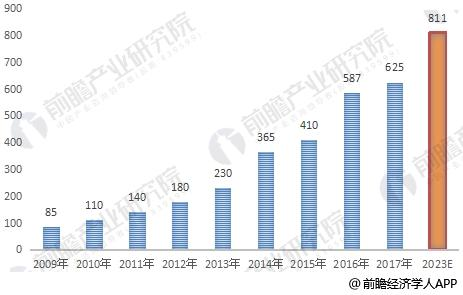
According to data from the Qianzhan Industry Research Institute, China's cosmeceutical market reached RMB 62.5 billion in 2017, with an annual growth rate of approximately 20%. By 2023, sales in China's cosmeceutical market are projected to reach RMB 81.1 billion.
More than 20 years ago, the imported concept of “cosmeceuticals” began to enter the Chinese market, and today the term has been widely accepted by consumers. However, the National Medical Products Administration (NMPA) recently signaled its regulatory stance, clarifying that the use of terms such as “cosmeceuticals,” “medical skincare products,” and “pharmaceutical cosmetics” is illegal.
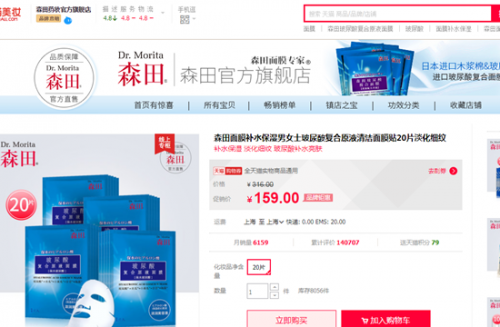
Currently, searching for the keyword “cosmeceuticals” on the two major e-commerce platforms, Taobao and Suning, yields no product results. Reporters noted that even the Dr. Morita Cosmeceuticals flagship store, which originally included the term “cosmeceuticals” in its brand name, has removed the term and rebranded as “Dr. Morita.”
On the official website of the National Medical Products Administration (NMPA), a document titled “Frequently Asked Questions on Cosmetic Supervision and Administration (I)” (hereinafter referred to as the “FAQs”) was recently released. The FAQs point out that not only in China, but also in most countries worldwide, there is no legal concept of “cosmeceuticals.” Avoiding confusion between the concepts of cosmetics and drugs is a common consensus among cosmetic regulatory authorities across countries and regions. In some countries, certain products classified under drugs or quasi-drugs may serve cosmetic purposes; however, such products must comply with the regulatory requirements applicable to drugs or quasi-drugs. There are no so-called “cosmeceuticals” that are regulated solely as cosmetics.
Articles 12 and 14 of China’s current Regulations on the Hygienic Supervision and Administration of Cosmetics stipulate that cosmetic labels, small packages, or instructions shall not indicate indications, claim therapeutic effects, or use medical terminology; furthermore, advertising shall not promote medical functions. For products registered or filed under the name of cosmetics, claiming concepts such as “cosmeceuticals” or “medical skincare products” constitutes an illegal act.
Furthermore, products that include human oligopeptide-1, also known as EGF (epidermal growth factor), in their formulation or claim to contain it, are considered illegal.
The implication is clear: drugs are drugs, and cosmetics are cosmetics. Manufacturers are no longer permitted to blur these distinctions or engage in borderline marketing by using misleading terms such as “cosmeceuticals” or “medical skincare products.”
Currently, the Chinese cosmeceutical market accounts for only a small share of the overall cosmetics industry. In contrast to the average penetration rate of 50%–60% in Europe, the United States, and Japan, sales of cosmeceuticals in China currently represent just 20% of the domestic cosmetics market, indicating substantial growth potential for cosmeceutical brands.
However, a statement issued by the National Medical Products Administration (NMPA) served as a cold splash of water for companies that had pinned their hopes on deregulating “cosmeceuticals.”
A Yicai reporter has compiled the portfolio of dermocosmetic brands under L'Oréal, the world's largest cosmetics and skincare group. Internally referred to as the Active Cosmetics Division, this unit includes Vichy, La Roche-Posay, SkinCeuticals, and CeraVe. In the first half of 2018, the division's revenue reached €231 million (approximately RMB 1.8 billion), an 11% year-on-year increase, with its growth rate second only to that of the Luxury Products division. Meanwhile, Pierre Fabre Group, which owns brands such as Avène, Klorane, René Furterer, and A-Derma, reported on its official website that dermocosmetic sales accounted for 62% of its total turnover, amounting to €1.41 billion (approximately RMB 10.9 billion).
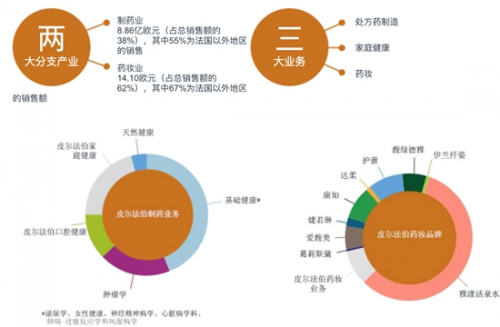
Image source: Official website of Pierre Fabre Group
On one hand, the aforementioned data indicates a robust momentum of growth within the industry; on the other, regulatory oversight has imposed a “tightening stricture” on industry enterprises.
A Yicai reporter visited multiple brick-and-mortar stores, including Watsons and Mannings. Currently, product copy from certain brands on the market still features phrases such as “recommended by dermatology experts,” and even explicitly claims therapeutic effects—such as alleviating skin dryness, repairing the barrier of sensitive skin, and having undergone clinical trials in hospitals.
You Yunting, a senior partner at Shanghai Dabang Law Firm, stated that under the regulations on cosmetic labeling, content explicitly or implicitly claiming medical effects is prohibited from being displayed on cosmetics. It is also non-compliant to use the names of medical celebrities for promotional purposes; however, the generic use of the term “expert” is not currently banned, though it constitutes a borderline practice.
Cosmeceuticals Are Classified as Cosmetics, Not Pharmaceuticals
Reviewing the development of China’s cosmeceutical market, prior to 2002, most cosmeceutical companies consistently adopted operational strategies akin to those used for pharmaceutical health products. Their core business model relied on a combination of print copywriting, feature-style video advertisements, point-of-sale packaging, and in-store promotions.
Taking Vichy, the first dermocosmetic brand to enter the Chinese market, as an example, the brand has introduced the concept of exposome research. As a complement to genomics, exposomics primarily investigates the impact of lifelong environmental exposures on human health. These exposure sources include external factors such as pollution, radiation, and diet, as well as internal factors such as inflammation, infection, and microbiota. On Vichy’s official website, one can still find claims such as “promotes epidermal cell renewal after 22 consecutive days of use,” alongside endorsements described as “highly recommended by experts in multi-disciplinary healthy skincare,” accompanied by images of individuals wearing white medical coats.
CeraVe, which recently entered the Chinese market, has its parent company L'Oréal planning to continue leveraging its North American strategy—securing endorsements from dermatologists.
Chen Min, Vice President of L'Oréal China and General Manager of the Active Health Division, stated in a group media interview that collaboration with physicians is a crucial cornerstone for the brand. L'Oréal will join forces with 1,000 doctors from 100 hospitals across 10 cities to promote "skin health education." Furthermore, L'Oréal plans to collaborate with dermatologists to conduct clinical observations and tests on its products, aiming to uncover unmet consumer needs.
Zheng Jie, Director of the Department of Dermatology at Shanghai Ruijin Hospital, previously stated in an interview with a Yicai reporter that some patients with skin conditions are prescribed auxiliary products by doctors during the post-treatment phase. “For instance, if a patient has eczema, the doctor may prescribe hormone-containing medications, but these should not be used excessively due to potential side effects,” Zheng explained. In such cases, patients are advised to use so-called medical-grade skincare products to complement their treatment. However, despite their marketing, cosmeceuticals currently available on the market are ultimately classified as cosmetics rather than pharmaceuticals.
Signals of tightening policies had long been evident. A senior industry insider in the cosmetics sector told Yicai that Vanicream, a skincare brand under the U.S.-based Mayo Clinic, had planned to officially enter the Chinese market in 2019, with annual sales targets reaching the hundred-million-yuan level. However, in November 2018, the Beijing Municipal Drug Administration returned its application documents for non-special-use cosmetics, informing the company that it must undergo re-approval through the Shanghai Municipal Drug Administration.
“Even the power of attorney documents notarized in the United States must be re-processed, so the entry time will be delayed.”
Liu Wei, President of the Dermatology Hospital of the Air Force General Hospital of the Chinese People’s Liberation Army, has publicly stated that regulatory frameworks worldwide are relatively lagging, leading to confusion in market perception. The European Union, China, and South Korea use different terms—such as “active cosmetics,” “special-use cosmetics,” and “functional cosmetics,” respectively—to describe this category of products, which can be seen as a semantic maneuver necessitated by their position on the fringes of regulatory oversight.
He stated that vague concepts and the absence of standards have left the regulatory status, certification procedures, and enforcement criteria for cosmeceuticals in a legal vacuum, thereby leading to widespread chaos in China’s cosmeceutical market.
Currently, Japan is the only developed country that has legally established a distinct category of “quasi-drugs” separate from general products and pharmaceuticals, thereby granting “cosmeceuticals” legal status and specialized regulatory oversight.
Nevertheless, Yicai reporters also heard numerous skeptical voices during their interviews. Claims associated with “cosmeceuticals,” such as “opening skin channels,” “repairing the skin barrier,” and “combating melanin,” are often accompanied by side effects that can cause certain damage to users’ skin. Industry experts point out that “medicinal” ingredients are inherently a double-edged sword. For example, cosmetics containing retinoic acid can exfoliate the skin, but excessive use may lead to symptoms such as burning sensation and desquamation. Meanwhile, “cosmeceuticals” claiming to treat hyperpigmentation often contain 4-isopropylcatechol, which can irritate and damage the skin, potentially accelerating skin aging instead.
“At present, the National Medical Products Administration has only issued a brief statement, without releasing clear regulatory requirements. This serves as a precautionary measure for enterprises. The year 2019 will usher in a ‘major year’ of regulation for the cosmetics industry. For dermocosmetic brands already listed in the Chinese market, there remain significant market opportunities if they adjust their previous marketing strategies. However, for brands that have not yet entered the Chinese market, this development serves as a thorough wake-up call,” said the above-mentioned senior industry practitioner to a Yicai reporter.