

Navigating the New Policy Landscape: The Future Path of Internet+ Hospitals
On January 20, 2019, the 2019 Internet Hospital Summit Forum and the 2nd Health 160 Doctor Influence Annual Gala were held in Shenzhen. Under the theme “Empowerment · New Journey,” the event brought together industry leaders and internet innovators to discuss the resurgence of “Internet Hospitals” driven by policy dividends and technological iterations, jointly embarking on a new chapter for the industry.
Co-hosted by Health 160, the Shenzhen Medical Association, and the Shenzhen Smart Gate Medical Technology Research Institute, the summit was officially opened by Dong Chao, a renowned host at Shenzhen Satellite TV and the brand ambassador for Health 160.
Liao Xinbo, a national healthcare reform expert and former inspector of the Guangdong Provincial Health and Family Planning Commission, interprets new healthcare reform policies and outlines the direction of medical service patterns in the new era. He vividly uses the fable of "the fox and the grapes" to discuss healthcare reform, noting that internet hospitals embody the concept of internet-based healthcare. He emphasizes strengthening primary care infrastructure and accelerating the implementation of the medical and health service system. He believes that internet technology platforms such as Health 160 can help the public share medical resources, transform healthcare-seeking behaviors, and realize the professional value of physicians.
Liao Xinbo, former inspector of the Guangdong Provincial Health and Family Planning Commission, believes that as policy dividends are unleashed, capital is once again flowing after the winter chill. Fu Zhekuan, Chairman of Qifu Capital and a well-known investor, analyzed the development trends of internet hospitals from a capital perspective. He stated that, riding the wave of reform, the “Internet + Hospital” model will further unlock the potential of high-quality medical resources and holds broad market prospects.
Chen Xiaoming, former President of the First Affiliated Hospital of Wenzhou Medical University, shared with the audience the innovative practices behind the smart hospital process reengineering that achieved “zero wait times for 4 million outpatient visits,” using the First Affiliated Hospital of Wenzhou University as a case study. He noted that even in the era before mobile payments were widespread, the hospital pioneered the adaptation of inpatient billing models to outpatient services, enabling pre-deposit accounts and multi-channel settlement options. By independently developing a multifunctional self-service system, the hospital stayed at the forefront of management innovation and committed to advancing smart informatization. “We seek process reengineering under informatized conditions, not merely the informatization of legacy processes,” he emphasized. His vivid and engaging presentation earned repeated applause from the audience.
How Should “Internet+ Hospitals” Navigate the New Policy Landscape? Luo Ningzheng, Founder and CEO of Health 160, stated that the concept of internet hospitals should not be confined to public hospitals; rather, it should involve greater participation from physicians, clinics, and private hospitals to jointly build a new industry ecosystem. Regarding this ecological shift, he emphasized the need to move beyond mere concepts and look beyond traditional medical care, focusing instead on the digital transformation of the broader health and wellness sector. He indicated that Health 160 will adopt a user-centric approach in the future, empowering hospitals, physicians, and comprehensive health organizations to deliver all-encompassing, professional medical and health services to users.
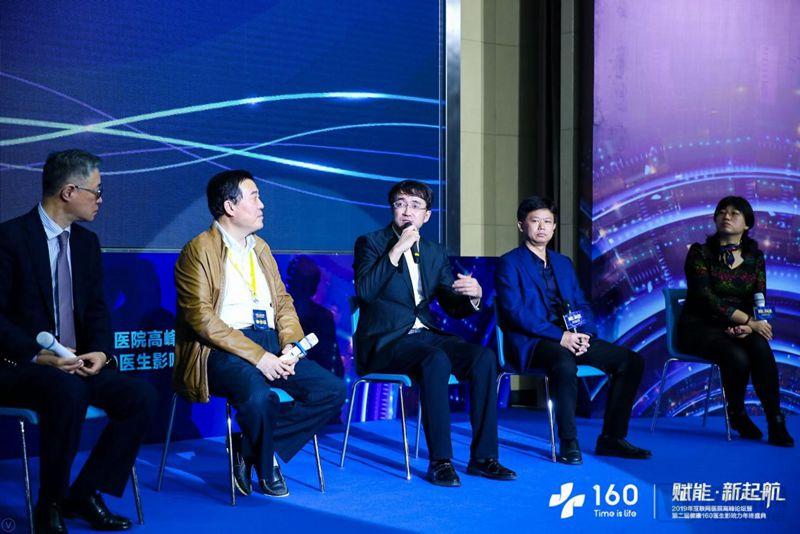
Furthermore, the summit invited physician guests from various regions and hospitals to share their experiences with “Internet healthcare” from their respective perspectives. Regarding popular science communication by physicians, Dr. Cai Feiyue, a general practitioner whose health education articles have garnered over 100,000 views, shared his journey in general practice outreach and discussed how to make reading health-related popular science a public habit. On the topic of building a physician’s personal brand, Dr. Li Jiaxi, recipient of the “2018 Health 160 Popular Science Star” award, shared insights on how “young doctors” can establish their personal brands. During the roundtable discussion, Dr. Lai Guangqiang, Director of Shenzhen General Practice Outpatient Department, together with several chief physicians and disciplinary experts from Peking University Shenzhen Hospital, Shenzhen Children’s Hospital, and Shenzhen People’s Hospital, jointly explored the “Three-Step Approach to Shaping a Physician’s Personal Brand Image,” offering substantial practical insights that proved highly beneficial to attendees.
The summit also invited prominent figures from Hong Kong, Macao, Taiwan, and overseas to share insights on the current state of global internet healthcare. Guests from South Korea and Taiwan discussed prevailing international healthcare trends and expressed their desire for future collaboration with mainland China’s internet healthcare sector, aiming to create synergistic advantages where “1+1>2.”
At the summit, Health 160 released its Physician Internet Influence Rankings, presenting five prestigious awards: “Internet Healthcare Pioneer Physician of the Year,” “Emerging Physician of the Year,” “Science Popularization Physician of the Year,” “Top-Rated Physician of the Year,” and “Influential Physician of the Year.” A total of 50 physicians stood out from the list to receive these honors, underscoring the brand influence of the award recipients.
Annual Top Doctors ListThe Annual Top Doctors List covers 490,000 registered physicians on Health 160. The selection is based on authentic feedback from 160 million real-name registered users, integrating multi-dimensional performance metrics such as appointment scheduling, online consultations, science popularization influence, and fan engagement. Fifty physicians were selected for the list. These doctors have delivered 400 million high-quality services to patients. On a daily basis, they handle 270,000 appointment registrations and 50,000 consultations, and publish nearly 20,000 articles. Through continuous clinical consultations, online inquiries, and health education services, Health 160 physicians have gradually built their digital influence.
At the summit, Health 160 also held the unveiling ceremony for the “Renren Doctor Group” and the “National Call Center,” further enhancing its full-industry-chain layout in the broader health sector.
Renren Doctor Group shifts its focus from disease treatment to public health, aligning closely with the healthcare reform direction of tiered diagnosis and treatment. By leveraging family doctor contracts as a breakthrough, it truly enables residents to access quality medical care conveniently within their communities. Its nationwide call center, staffed by a highly professional medical service team, provides one-stop, 24/7 online medical support.
Taking this unveiling ceremony as an opportunity, Health 160 was accredited as a National Internet Hospital, fully integrating online and offline medical service resources to build an internet-based tiered diagnosis and treatment service platform. By connecting the government, hospitals, doctors, and the public, and empowering major service systems, it aims to become an open platform supporting the internet ecosystem, embarking on a new journey.